
Sign up to save your podcasts
Or

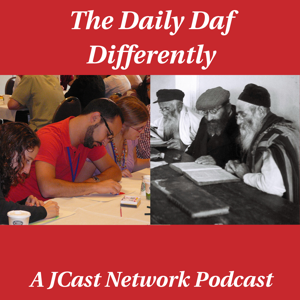


Welcome to the Daily Daf Differently. In this episode, Rabbi Steve Kane looks at Masechet Rosh Hashana Daf 27.
When two people speak at once, can we truly hear either? What if God were to speak two words at the same time, would both words be heard? We look into the practical implications of “trei kalei” (two voices).
The opening and closing music for this podcast is Ufros from The Epichorus album One Bead.
This podcast is a collaboration with The Conservative Yeshiva in Jerusalem.
Welcome to the Daily Daf Differently. In this episode, Rabbi Steve Kane looks at Masechet Rosh Hashana Daf 26.
On this page we examine the question as to why a cow’s horn cannot be used as a shofar. The Gemara states that “an accuser cannot become a defender”. What are we accused of, and what does this have to do not only with a cow’s horn, but also with the gold in the clothing of the cohen gadol? How does this principle apply to our lives?
The opening and closing music for this podcast is Ufros from The Epichorus album One Bead.
This podcast is a collaboration with The Conservative Yeshiva in Jerusalem.
Welcome to the Daily Daf Differently. In this episode, Rabbi Steve Kane looks at Masechet Rosh Hashana Daf 25.
The page begins with one of the most famous stories of rabbinic authority. There is a disagreement between Rabbi Yehoshua and Rabban Gamliel (the head of the Sanhedrin) as to when the month began. To assert his authority Rabban Gamliel orders Rabbi Yehoshua to appear before him on the day Rabbi Yehoshua considered to be Yom Kippur. What does Rabbi Yehoshua do, and what are the implications for both rabbinic authority and the unity of the Jewish people?
The opening and closing music for this podcast is Ufros from The Epichorus album One Bead.
This podcast is a collaboration with The Conservative Yeshiva in Jerusalem.
Welcome to the Daily Daf Differently. In this episode, Rabbi Steve Kane looks at Masechet Rosh Hashana Daf 24.
After discussing what kind of questions one asks witnesses about Rosh Hodesh, we look at the declaration of the new month. What did the Bet Din say, and how did the people respond to the declaration? What was the reason for this ceremony? What is the role of the people versus the role of “heaven” in deciding the calendar?
The opening and closing music for this podcast is Ufros from The Epichorus album One Bead.
This podcast is a collaboration with The Conservative Yeshiva in Jerusalem.
Welcome to the Daily Daf Differently. In this episode, Rabbi Steve Kane looks at Masechet Rosh Hashana Daf 23.
The Gemarah compares one who learns and teaches Torah to the hadas (myrtle) tree in the desert. Why is this beautiful tree used in the comparison, and what are the implications of it being found in the desert? What are the responsibilities of one who has learned Torah to teach it to others?
The opening and closing music for this podcast is Ufros from The Epichorus album One Bead.
This podcast is a collaboration with The Conservative Yeshiva in Jerusalem.
Welcome to the Daily Daf Differently. In this episode, Rabbi Steve Kane looks at Masechet Rosh Hashana Daf 22.
We discuss on this page the question of why certain individuals or groups are unreliable to give testimony for Rosh Hodesh (and in general), and what is the theory behind their rejection. What is the Talmud concerned with when it rejects them as witnesses? What does it say about their nature and character?
The opening and closing music for this podcast is Ufros from The Epichorus album One Bead.
This podcast is a collaboration with The Conservative Yeshiva in Jerusalem.
Welcome to the Daily Daf Differently. In this episode, Rabbi Ute Steyer looks at Masechet Rosh Hashana Daf 21.
We only keep one day of Yom Kippur because it would be too much of a burden on the community to keep a second day of yom tov shel galut on account of Yom Kipur. The Daf also discusses that witnesses are always allowed to transgress Shabbat in order to testify in order to assure that the mitzvah is kept and people don’t become distant to it.
The opening and closing music for this podcast is Ufros from The Epichorus album One Bead.
This podcast is a collaboration with The Conservative Yeshiva in Jerusalem.
Welcome to the Daily Daf Differently. In this episode, Rabbi Ute Steyer looks at Masechet Rosh Hashana Daf 20.
“Maleh” and “chaser” months and is it necessary to desecrate Shabbat for them? We look at the fascinating case of a Beit Din coercing witnesses to prevent them from testifying for the benefit of the community.
The opening and closing music for this podcast is Ufros from The Epichorus album One Bead.
This podcast is a collaboration with The Conservative Yeshiva in Jerusalem.
Welcome to the Daily Daf Differently. In this episode, Rabbi Ute Steyer looks at Masechet Rosh Hashana Daf 19.
Megilat Ta’anit and whether it is still valid after the destruction of the Beit Hamikdash. What is the status of certain holidays: divrei torah or divrei sofrim? Do they need chizuk or not and where do divrei kabbalah fall in the spectrum of legal categories?
The opening and closing music for this podcast is Ufros from The Epichorus album One Bead.
This podcast is a collaboration with The Conservative Yeshiva in Jerusalem.
Welcome to the Daily Daf Differently. In this episode, Rabbi Ute Steyer looks at Masechet Rosh Hashana Daf 18.
The story of Beluria the convert who asked Rabban Gamliel a question regarding a legal interpretation of Scripture and we encounter the principle of “beyn adam l’makom” and “beyn adam l’chavero”
The opening and closing music for this podcast is Ufros from The Epichorus album One Bead.
This podcast is a collaboration with The Conservative Yeshiva in Jerusalem.
From the publisher's feed
14 Listeners
6 Listeners

20 Listeners

0 Listeners

12 Listeners
6 Listeners
20 Listeners
0 Listeners

26 Listeners
2 Listeners