
Sign up to save your podcasts
Or

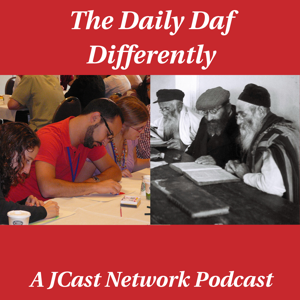


Welcome to the Daily Daf Differently. In this episode, Rabbi Ute Steyer looks at Masechet Rosh Hashana Daf 17.
We learn about the three groups of people that are judged on the final Yom Din: completely righteous, completely wicked, and those in-between and what role suffering plays to atone for one’s wrongdoings. We look at the meaning of the “El Rahum v’Hanun” familiar from the High Holiday and Festival liturgy.
The opening and closing music for this podcast is Ufros from The Epichorus album One Bead.
This podcast is a collaboration with The Conservative Yeshiva in Jerusalem.
Welcome to the Daily Daf Differently. In this episode, Rabbi Ute Steyer looks at Masechet Rosh Hashana Daf 16.
The four occasions on which judgment is passed on the world and the beginning of the discussion about the moral judgment of mankind on Rosh Hashana and Yom Kipur. Which things can change the final decree?
The opening and closing music for this podcast is Ufros from The Epichorus album One Bead.
This podcast is a collaboration with The Conservative Yeshiva in Jerusalem.
Welcome to the Daily Daf Differently. In this episode, Rabbi Ute Steyer looks at Masechet Rosh Hashana Daf 15.
The new year of trees and what determines it? The tithing cycle and how it is determined which fruits are tithed for the past year and the coming year.
The opening and closing music for this podcast is Ufros from The Epichorus album One Bead.
This podcast is a collaboration with The Conservative Yeshiva in Jerusalem.
Welcome to the Daily Daf Differently. In this episode, Rabbi Michael Pitkowsky looks at Masechet Rosh Hashana Daf 14.
Is consistency a requirement for a religious legal system? Today’s daf addresses this very important question. What are the rules according to which rabbinic law work? Autonomy as a value is central to many modern approaches to Judaism and accept by many modern Jews, even if there is disagreement on how far reaching this autonomy should be. But is this good? How much autonomy can a system tolerate before it ceases to function? Listen and hear what the Talmud has to say about this question.
The opening and closing music for this podcast is Ufros from The Epichorus album One Bead.
This podcast is a collaboration with The Conservative Yeshiva in Jerusalem.
Welcome to the Daily Daf Differently. In this episode, Rabbi Michael Pitkowsky looks at Masechet Rosh Hashana Daf 13.
Today’s daf addresses a number of issues relating to the Sabbatical Year. One is how much does something have to grow before it is considered to have grown during the Sabbatical year. Specifically, if towards the end of the Sabbatical year produce or grain has grown a certain amount, at what point will prohibitions from the Sabbatical Year continue to apply to it during the year after the Sabbatical year. This opens the door for a larger discussion about rabbinic measurements, shiurim. Why do we need these measurements? Are they reliable measurements? Can we live without them? To find out, listen to today’s Daily Daf Differently.
The opening and closing music for this podcast is Ufros from The Epichorus album One Bead.
This podcast is a collaboration with The Conservative Yeshiva in Jerusalem.
Welcome to the Daily Daf Differently. In this episode, Rabbi Michael Pitkowsky looks at Masechet Rosh Hashana Daf 12.
Have you ever looked up at the stars and wondered what lies beyond all of those stars and constellations? Well, according to today’s daf, beyond the constellations and stars were the waters that flooded the Earth during the days of Noah. Confused? You won’t be after learning today’s daf.
The opening and closing music for this podcast is Ufros from The Epichorus album One Bead.
This podcast is a collaboration with The Conservative Yeshiva in Jerusalem.
Welcome to the Daily Daf Differently. In this episode, Rabbi Michael Pitkowsky looks at Masechet Rosh Hashana Daf 11.
On today’s daf we go read a detailed list of special dates within Jewish history. We’ll learn on what day the world was created, when were the patriarchs born, and during which month the Children of Israel will be redeemed in the future. There is some disagreement about the dates, and we’ll examine the sources for these disagreements and what they can tell us about Talmudic interpretation of Biblical verses.
The opening and closing music for this podcast is Ufros from The Epichorus album One Bead.
This podcast is a collaboration with The Conservative Yeshiva in Jerusalem.
Welcome to the Daily Daf Differently. In this episode, Rabbi Michael Pitkowsky looks at Masechet Rosh Hashana Daf 10.
I hope that you enjoyed the concept that we are obligated to add to the holy time period of the Sabbatical Year that we learned on yesterday’s daf, because we speak more about it today. Today’s daf addresses the topic of deadlines related to the Sabbatical Year in more detail. A second topic discussed is Orlah, the teaching that during the first three years that a tree bears fruit the fruit is forbidden. Numerous issues related to Orlah are addressed, including certain laws that may apply during the fourth and even fifth year of the life of a fruit tree.
The opening and closing music for this podcast is Ufros from The Epichorus album One Bead.
This podcast is a collaboration with The Conservative Yeshiva in Jerusalem.
Welcome to the Daily Daf Differently. In this episode, Rabbi Michael Pitkowsky looks at Masechet Rosh Hashana Daf 9.
Listen to today’s daf in order to learn how a discussion of the starting point for the Sabbatical Year, the Shemittah year, is used in order to teach an important concept that applies to Shabbat and Jewish holidays. This concept is that we add time from the weekday, the unholy time, to the holy time in order to make the time period of the holy day even long. So if you ever wondered why Shabbat is actually more than 24 hours, give a listen to today’s daf.
The opening and closing music for this podcast is Ufros from The Epichorus album One Bead.
This podcast is a collaboration with The Conservative Yeshiva in Jerusalem.
Welcome to the Daily Daf Differently. In this episode, Rabbi Michael Pitkowsky looks at Masechet Rosh Hashana Daf 8.
Tithing a cattle? Who would have thought. Well, Masekhet Rosh Hashana is very interested in the tithing of cattle and any deadlines that were involved. Our daf addresses these questions along with other important dates in the Hebrew calendar. The first of Elul-check. The first of Tishrei-check. Speaking of the first of Tishrei, a lot apparently happens on this day. Listen to Daily Daf Differently to find out all about these days and other important moments in the calendar.
The opening and closing music for this podcast is Ufros from The Epichorus album One Bead.
This podcast is a collaboration with The Conservative Yeshiva in Jerusalem.
From the publisher's feed
14 Listeners
6 Listeners

20 Listeners

0 Listeners

12 Listeners

6 Listeners
20 Listeners
0 Listeners

26 Listeners

2 Listeners