
Sign up to save your podcasts
Or

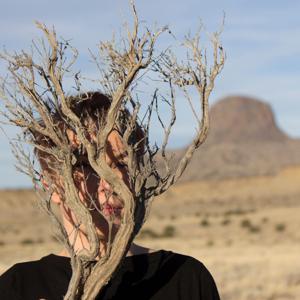


Disability Belongs in Dance
In this episode of DanceCast, Silva interviews Melissa van Wijk, founder and director of Born Dancing, a nonprofit based in New York City that creates performances featuring dancers with and without disabilities, orchestrates dance education opportunities for children with disabilities, and supports the entry of people with disabilities into the dance field. She shares how one day on a train in Manhattan she realized she had never been in a dance class with a person who uses a wheelchair or who is Deaf. It catalyzed an interest in integrating disability, in both performance and education spaces, that would reshape her life. She believes we should be teaching all students that disability belongs in dance.
Melissa van Wijk was born and raised in The Netherlands where she attended Dansakademie Brabant and performed with the Elisabeth Dancers and Dans Studio Gerda Zaandam. She is the founder and director of Born Dancing andserves as choreographer for their original dance productionsand as lead dance educator for their education programs. She holds five NYS Teaching Certifications and has taught dance at NYC Public Schools in all five boroughs, working primarily in special education. Melissa has choreographed performances at The Cunningham Studio and Mulberry Street Theater among others. She is a Doctoral Candidate working on her dissertation research in Dance Education at Columbia University Teachers College. Previously Melissa worked as a Teaching Artist for New York City Ballet and Young Audiences. Melissa served as program director of an infant movement program at Gymtime/York Avenue Preschool and currently works as a SEIT (Special Education Itinerant Teacher) and Early Intervention Specialist in New York City.
To learn more about Born Dancing, visit www.borndancing.org.
In this episode of DanceCast, Silva interviews Gladys Agulhas, a multi-award-winning independent dance artist, choreographer and dance facilitator who has pioneered inclusive dance practices in South Africa. Gladys shares her early love of dance and social work during apartheid and how an introduction to Adam Benjamin's " Table stories" created for Candoco Dance Company changed her trajectory. She describes how she learned from the dancers with disabilities themselves working in relative isolation in South Africa where disability carried stigma and basic access was not met. She created her own ways of working with blind and Deaf artists and people with other disabilities, as well as parents of children with disabilities and how they can find self-care through dance. She reflects on the state of inclusive dance in South Africa.
Gladys Agulhas has more than three decades of experience in Johannesburg thinking of the body as a visual, tactile, spatial, emotional and healing mechanism and auditory medium. Her integrated dance studies started with renowned teacher Adam Benjamin. She has a long history of involvement in dance in education and started The Foundation of Community Arts in Eldorado Park, a platform where community families can access and experience the excellence and transformative elements of the performance arts through active participation and international collaboration. Gladys is a member of various research networking groups that help marginalized community members, especially persons living with disabilities and senior citizens. She is the founder of former Agulhas Theatre Works – Inclusive Contemporary Dance Company which presented work locally and internationally.
In this episode of DanceCast, Silva interviews disabled dance artist and researcher Kate Marsh. Based in the UK, Kate shares her perspective as an assistant professor at Coventry University. She reflects on how the discourse on disability has evolved during her career, from breaking literal barriers to breaking attitudinal barriers, and yet how today’s dance education landscape is experiencing economic cuts. She discusses her personal trajectory and how the pipeline she traversed is the epitome of a successful career in dance, and yet how so much of success in dance is based on luck, especially for those dancers with disabilities. She questions what institutions can learn from the bespoke training that disabled dancers have been giving themselves for a long time.
Kate Marsh is a disabled dance artist and researcher with more than 20 years of experience in performing, teaching, making, and researching dance. Her interests are centered around perceptions of the body in the arts and notions of corporeal aesthetics. Specifically, she is interested in each of our lived experiences of our bodies, and how this does (or doesn’t) inform our artistic practice. Her practice-research focuses on leadership in the context of dance and disability and draws strongly on the voices of artists to interrogate questions around notions of leadership, perceptions and the body. Kate’s work is strongly fed by co-design and co-facilitation, where we all arrive into our practice from our own place and pace, and this informs the ways we work together, privileging all experiences and ways of being, and prioritizing a playful, accessible and generative environment.
In this episode of DanceCast, Silva interviews dance artist Elisabeth Motley, a New York City-based choreographer, scholar, and teacher whose work is concerned with disability as a framework for creative practice. Elisabeth describes how her journey began in rigorous normative dance practice and how she came to disability by way of a recurring brain disease that impacts her physical and cognitive abilities. Her pedagogy revolves around her own experience and her dreams of a curriculum that is not fixed and that centers disabled students. She pushes boundaries as a teacher with a disability in higher education and works in ways that refuse the system.
Elisabeth Motley has a PhD from University of Roehampton in Dance Studies focusing on choreography and disability dance, an MFA in Interdisciplinary Arts from Goddard College, and a BFA in Dance from The Juilliard School. Elisabeth is a 2025 Brooklyn Arts Exchange (BAX) Artist in Residence. She has been a 2023 Movement Research Access. Movement. Play. (AMP) Artist in Residence, a 2019-2021 Movement Research Artist in Residence, a 2020 & 2021 Dance/NYC Disability. Dance. Artistry. Dance and Social Justice Fellow and is a recipient of the 2018-2019 Fulbright US-UK Scholar Award. Elisabeth is the co-creator of Crip Movement Lab (co-created with Kayla Hamilton), a pedagogical framework centering cross-disability accessible movement practice. Her writing has been published in Dance Chronicle and Choreographic Practices Journal.
In this episode of DanceCast, Silva interviews dance artist Devin Hill. Devin describes their experience growing up with a rare eye condition and how it affected their motor skills. Their mother put them in dance to help with balance and coordination. Devin shares their experience pursuing dance in college and learning to be an advocate for themself as a dancer with a disability by communicating their needs. They share how change often starts with just having people with disabilities be in the room. Devin reflects on their undergraduate experience and how institutions need to start taking responsibility for making their dance programs accessible and available to students with disabilities. As Devin has become a teacher and taken on leadership roles, they have been empowered by breaking down ableism in dance and giving others an opportunity to directly express what they need.
This episode is part of a series interviewing institutions with inclusive dance programs and individuals who identify as disabled and have experienced formal dance education as either students or teachers. This series is part of Silva’s ongoing work as the director of Art Spark Texas’ dance program. This year, she is continuing the multi-year community-engaged research project, funded in part by the National Endowment for the Arts, that explores disability-centered accessibility in dance education and how we can create barrier-free dance education for students with disabilities in the US.
Devin Hill is a graduate from the University of Central Oklahoma with a BFA in Dance Performance. Their love of dance began at the age of three and has lasted more than 20 years. Devin set sights on dance as a career during their time at Collin College in Plano, TX. While at Collin College, they were exposed to jazz, ballet, modern, hip hop, tap, African, improvisation, and Latin ballroom. Devin has had the opportunity of working with Christopher K. Morgan, William “Bill” Evans, Clarence Brooks, Brandon Fink, Hannah Baumgarden, Jeremy Duvall, Gregg Russell, Lachlan McCarthy, Kristin McQuaid, and Cat Cogliandro. They were a member of the 2015-2016 award-winning Kaleidoscope Dance Company. Since graduating from UCO, they have continued to further their knowledge of dance by performing, choreographing, teaching, and participating in intensives and workshops across the US. In 2018, Devin had the honor of performing with Liz Lerman’s Dance Exchange at the John F. Kennedy Center for the Performing Arts. They were also a cast member on the hit Facebook Watch series “Dance with Nia.” Devin currently resides in Washington D.C. and New York City, where they perform and educate as a member of catastrophe! Dance Company, ReVision Dance Company, and Kinetic Light. Devin also serves as a board member for Feel The Beat and is an educational specialist for Bodywise Dance. Devin strives to use their artistry to create a more safe, equitable, and accessible dance industry for everyone.
The Value of Studying Dance
DanceCast is a podcast that spotlights non-traditional dance artists. It is produced by Silva Laukkanen, an advocate for inclusive dance based in Austin, TX.
In this episode of DanceCast, Silva interviews Jasmiina Sipilä, who works as a leading teacher in the dance department of Vocational College Live, where they offer the only professional dance degree in Finland for dancers with special needs. The professional degree in dance is aimed for students with special needs, which means these dance students need individual support, modifications, and extra guidance in their studies and working life. The definition of special needs is used in this interview as an umbrella term to mean students who are neurodivergent, have developmental disabilities, have mental health challenges, or have different bodies and motor functions. Jasmiina describes how, in the degree, the students focus on contemporary dance, cooperation, somatic skills, performing, choreographing, and inclusive dance theory, as well as curriculum in dance practice and theory. The students’ degree has many applications after graduation, from dancing professionally to working in the community with different populations.
This episode is part of a series interviewing institutions with inclusive dance programs and individuals who identify as disabled and have experienced formal dance education as either students or teachers. This series is part of Silva’s ongoing work as the director of Art Spark Texas’ dance program. This year, she is continuing the multi-year community-engaged research project, funded in part by the National Endowment for the Arts, that explores disability-centered accessibility in dance education and how we can create barrier-free dance education for students with disabilities in the US.
Jasmiina Sipilä is a dancer (BA Hons in Contemporary Dance, Trinity Laban, City University of London), a dance teacher (Master of Dance, University of the Arts, Helsinki), and a special education teacher (professional teacher training college, Haaga-Helia, Helsinki). She has worked widely for 18 years as a dancer, choreographer and teacher in Finland and Europe. Jasmiina loves exploring inclusive dance practice and its possibilities in improvisation and somatic work.
In this episode of DanceCast, Silva interviews Rhona Coughlan, the artistic director of Inclusive Dance Cork in Cork, Ireland, along with project coordinator Dr. Kaylie Streit. Inclusive Dance Cork is a professional dance training program for people with and without disabilities who want to engage with contemporary inclusive dance. This program is based at Dance Cork Firkin Crane and is the only accredited program of its kind in the Republic of Ireland.
Rhona shares her empowering entrance into dance via co-founding Ireland’s first inclusive dance company, and Kaylie shares how her background as a music teacher led her to think about inclusive practices in the arts. Rhona describes the breadth of Inclusive Dance Cork’s programming and how it is made possible through strong community partnerships, how the program design provides person-centered access, and how her ultimate goal is to never have a person go into a dance class and feel excluded ever again.
This episode is part of a series interviewing institutions with inclusive dance programs and individuals who identify as disabled and have experienced formal dance education as either students or teachers. This series is part of Silva’s ongoing work as the director of Art Spark Texas’ dance program. This year, she is continuing the multi-year community-engaged research project, funded in part by the National Endowment for the Arts, that explores disability-centered accessibility in dance education and how we can create barrier-free dance education for students with disabilities in the US.
Inclusive Dance Cork is currently spearheaded by artistic director Rhona Coughlan, a dancer, advocate, and a full-time wheelchair user herself. She co-founded the first inclusive dance company in Ireland, Wheels in Motion, in 1994, and co-founded the second, Croí Glan, in 2006. Dr. Kaylie Streit is an educator, musician, and arts and culture researcher. Since recording this podcast, Kaylie has shared news she is leaving her role as project coordinator of Inclusive Dance Cork and has accepted the position of lead strings teacher at Cork City Music College.
To learn more about Inclusive Dance Cork, visit dancecorkfirkincrane.ie/inclusive-dance-cork-idc.
Seeking Barrier-Free Dance Education
DanceCast is a podcast that spotlights non-traditional dance artists. It is produced by Silva Laukkanen, an advocate for inclusive dance based in Austin, TX. In this episode of DanceCast, Silva Laukkanen is actually the interviewee. She is interviewed by co-worker April Sullivan and Art Spark Texas’ executive director Celia Hughes. This episode is part of a series interviewing institutions with inclusive dance programs and individuals who identify as disabled and have experienced formal dance education as either students or teachers. This series is part of Silva’s ongoing work as the director of Art Spark Texas’ dance program and their multi-year community-engaged research project, funded in part by the National Endowment for the Arts, that explores disability-centered accessibility in dance education and how we can create barrier-free dance education for students with disabilities in the US. Silva shares her dance history and how she was introduced to inclusive dance spaces as a young person, how the disability dance field is behind in terms of education, and how Art Spark Texas’ research project is assessing what existing opportunities are out there and what more needs to be done.
Silva Laukkanen is a passionate advocate for inclusive dance, aiming to broaden perceptions of who can dance and where dance happens. These questions led her to create DanceCast in 2016, a podcast spotlighting non-traditional dance artists, and to co-author Breadth of Bodies, Discussing Disability in Dance in 2022, a book featuring interviews with dance artists with disabilities globally. As Director of Integrated Dance at Art Spark Texas, Silva Laukkanen leads bi-annual intensives, performance projects, and monthly classes. In 2020, she co-founded Tractus Art with a colleague from South Africa. Together, they produce videos highlighting artists with disabilities and are working on a children’s book about a dance company founder who is Deaf, set for publication later this year. Silva also collaborates with other inclusive dance companies, providing support in arts administration. Silva holds a BFA from North Karelia College and a postgraduate degree from Trinity Laban Conservatoire. A certified DanceAbility teacher since 2003, she has trained with choreographers and companies like Adam Benjamin, AXIS Dance Company, and Dancing Wheels. Currently, she is pursuing an MA in Dance: Participation, Community, Activism at the London Contemporary Dance School and serves as the board president of Kaaos Company, Finland’s leading inclusive dance company.
To learn more, www.artsparkdance.org.
Breadth of Bodies: Discussing Disability in Dance seeks to investigate stereotypes often used to describe professional dancers with disabilities. Spearheaded by Emmaly Wiederholt and Silva Laukkanen with illustrations by visual artist Liz Brent-Maldonado, the team interviewed 35 professional dance artists with disabilities around the country and world, asking about training, access, and press, as well as looking at the state of the field.
Purchase your print copy of Breadth of Bodies: Discussing Disability in Dance on Amazon, Barnes and Noble, Herringbone Books, Green Apple Books, Walmart, and other online retailers.
Purchase your ebook copy on Kindle, Kobo, Scribd, and other platforms.
Purchase your audiobook copy on Audible.
Details: Authored by Emmaly Wiederholt and Silva Laukkanen, illustrations by Liz Brent-Maldonado, design by Christelle Dreyer, edited by Donne Lewis and April Adams, audiobook narrated by Sami Kekäläinen.
Breadth of Bodies: Discussing Disability in Dance seeks to investigate stereotypes often used to describe professional dancers with disabilities. Spearheaded by Emmaly Wiederholt and Silva Laukkanen with illustrations by visual artist Liz Brent-Maldonado, the team interviewed 35 professional dance artists with disabilities around the country and world, asking about training, access, and press, as well as looking at the state of the field.
Purchase your print copy of Breadth of Bodies: Discussing Disability in Dance on Amazon, Barnes and Noble, Herringbone Books, Green Apple Books, Walmart, and other online retailers.
Purchase your ebook copy on Kindle, Kobo, Scribd, and other platforms.
Purchase your audiobook copy on Audible.
Details: Authored by Emmaly Wiederholt and Silva Laukkanen, illustrations by Liz Brent-Maldonado, design by Christelle Dreyer, edited by Donne Lewis and April Adams, audiobook narrated by Sami Kekäläinen.
From the publisher's feed