
Sign up to save your podcasts
Or

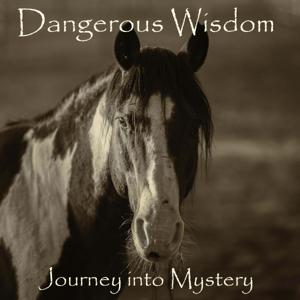


Where do we find Sophia's wild garden of awakening and love? We're it. And we can see that garden in every direction, if we look with awakening eyes, eyes of love, eyes of wisdom, eyes of beauty.
And we need to cultivate that garden, with "Acts of Restorative Kindness". We find references to Sophia as a presence in the Earth, a presence in soil and soul. She calls to us to attend to Her, and to all Her sacred beings.
In this episode, we enjoy a deep dialogue with Mary Reynolds, emissary of Sophia, and botanical bodhisattva of magic and grace—one of my favorite guests! She helps us reflect on the living loving world as our path of wisdom and wonder, and invites us to become the Ark of Being through Acts of Restorative Kindness.
Mary Reynolds is a reformed international landscape designer who launched her career by achieving a gold medal for garden design at the Chelsea flower show in London in 2002, the story of which was made into a 2016 movie called “Dare to be Wild”. Bestselling author of The Garden Awakening, and We are the ARK, she is an occasional television presenter and the founder of the global movement “We are the ARK”. She’s not the worst cook and she likes to campaign against evil corporate/political efforts to cull us all off with pesticides, herbicides, GMO’s, greenwashing, and fossil fuel craziness. Her aim in life is to restore the Earth's native plant and creature communities (her clothing of choice), and remind people that our role here on this beautiful home of ours is one of guardian, not gardener. Find out more:
www.marymary.ie
www.wearetheark.org
Our need for wholeness has revealed itself clearly in many ways, and one of them relates to trauma. And, that puts us in dangerous wisdom territory, because talking about trauma can provoke anxiety and confusion. How can we relate most skillfully to the experiences we consider traumatic, and to our lives and our world as we metabolize those experiences?
We live in a fragmented culture. That means our attempts at holism, including any supposed holism of body and mind, could involve significant fragmentation and ignorance. We need holism and vision in order to make sure our practices of embodiment heal self and world at the same time.
Instead of becoming more “embodied,” we, in some crucial sense, need to become more . . . ecologied, encosmosed, and liberated into the mysteries of interwovenness, liberated into sacredness and wonder. If “embodied” signifies getting “into” our “body,” it misses our true need in a variety of ways.
For a free pdf of practices to help facilitate ecosensual awareness and a more ecological embodiment, visit the Dangerous Wisdom website:
https://dangerouswisdom.org/practices-of-a-sacred-place
Embodiment and somatics are big business. But do our practices of embodiment and somatics subtly maintain the duality between mind and body, Nature and culture, human and the larger community of life? And do we lose track of the fact that what we refer to as "my body" is usually an abstraction?
In the worst case scenario, “embodiment” becomes another form of spiritual materialism, in which we bypass the more serious demands of a philosophical life with rationalizations so perfect they sound like the voice of liberation. An expansive (skillful and realistic) vision can help us to liberate mind and body (mind and Nature), and let the magic that can flow through them begin to find us again.
Embodiment and somatics are big business. We need to recover our balance and our sanity, and heal our wounding in relation to embodiment. How can we do it in a way that minimizes spiritual materialism and prevents all these practices from becoming part of the self-help catastrophe and the continued elaboration of the pattern of insanity? Reflecting on some common errors of embodiment and how we can transcend them might give us some much needed nourishment.
Jay Tompt joins us for some economic reflections in the spirit of E.F. Schumacher. As part of our dialogue, Jay shares an inspiring idea you can put top use in your own community, to germinate sprouts of wisdom, love, and beauty: The One-Day Incubator.
Jay is a co-founder of the Totnes REconomy Centre, a lecturer for Regenerative Economics at Schumacher College, an associate lecturer in economics at Plymouth University as well as a regular teacher on our post-graduate economics programmes. He co-developed the Transition Network REconomy Project’s Local Economic Blueprint course and handbook, co-founded the REconomy Centre, and developed the Local Entrepreneur Forum model.
https://campus.dartington.org/schumacher-college/
https://www.dartington.org/
https://reconomycentre.org/author/jtompt/
What happens when two philosophers and a neuroscientist walk into a podcast? They talk about things they wish more people knew. If people only knew how magical the world is, they might take better care of it, and relate to it with a greater sense of reverence and wonder. It's not that our reverence and wonder should depend on the existence of woo-woo phenomena, but that nature's superness is palpable in every direction if we would only slow down, brush the cobwebs of dogmatism away, and relax into the mind of Nature and the nature of mind. Mystery and magic abound.
Two of my favorite people return to talk about that magic and mystery. Mona Sobhani and Sharon Hewitt Rawlette each joined us earlier in the year, and now they have come together to create a larger ecology of mind and swap stories about the superness of Nature.
Sharon Hewitt Rawlette is a philosopher and interdisciplinary researcher specializing in anomalous phenomena and their implications for our understanding of consciousness. She earned her PhD from New York University in 2008, studying under Thomas Nagel, and taught at Brandeis University before leaving academia for an independent writing career. She currently serves on the advisory board of the Bigelow Institute for Consciousness Studies and is a supporting researcher for the International Centre for Reincarnation Research. Her books include The Source and Significance of Coincidences, Beyond Death, and The Feeling of Value.
sharonrawlette.com
Mona Sobhani is a cognitive neuroscientist, author and entrepreneur. A former research scientist at the University of Southern California, she holds a doctorate in neuroscience from the University of Southern California and completed a post-doctoral fellowship at Vanderbilt University with the MacArthur Foundation Law and Neuroscience Project. She is the author of Proof of Spiritual Phenomena: A Neuroscientist’s Discovery of the Ineffable Mysteries of the Universe. Her work has been featured in the New York Times, VOX, and other media outlets. She lives in Los Angeles.
To support Mona's neuroscience of consciousness symposium go to https://www.gofundme.com/f/donate-to-science-spirituality-consciousness-event
Dangerous Wisdom with a friend from the Emerald Isle. Take a journey to Ireland without leaving home, and take a leap into the sacred wells of wisdom, wonder, and magic.
Join us as we contemplate the power of place and the places of our empowerment. The delightful and insightful Manchán Magan and I read and reflect on passages from his book and other sources of wisdom, inviting you into your own practice of sacred place.
In addition to reading Manchán's beautiful book, you can get some extra, free support on reconnecting to the land using the link below for a free download of "Practices of a Sacred Place," from the Wisdom-Based Teaching, Learning, and Evolution handbook. The wisdom traditions can offer us beautiful guidance on how to begin to reconnect with the mind of Nature and the nature of mind, and this set of practices provides an excellent foundation:
https://dangerouswisdom.org/practices-of-a-sacred-place
About our guest:
Manchán Magan has written books on his travels in Africa, India and South America. He writes occasionally for The Irish Times, and presents the Almanac of Ireland podcast for RTÉ. He has made dozens of documentaries on issues of world culture for TG4, RTÉ, & Travel Channel. His books include Thirty-Two Words for Field; Listen to the Land Speak; Tree Dogs, Banshee Fingers and Other Words For Nature; and Wolf-Men and Water Hounds. With Antic-Ham, he’s collaborated on two art books for Redfoxpress. https://www.manchan.com/
And if you're listening close to the time this episode was released, Manchán's making bread and butter :
https://www.manchan.com/arán---im
Kate Rudd joins us to talk about a short and highly accessible chapter from the classic book seeking to integrate economics and wisdom: Small Is Beautiful, by E.F. Schumacher. In honor of the 50th anniversary of the publication of Small Is Beautiful, Dangerous Wisdom will host a series of dialogues with faculty and alumni of Schumacher College.
Schumacher's book is exceptionally relevant today, as we have continued the pattern of insanity he sought to question, and his insights and suggestions still offer us the possibility to arrive at better ways of knowing and being, better ways of organizing our culture, and better ways of relating with each other and the larger world. Kate joins us to discuss the chapter on scale, and to discuss her own work in regenerative economics.
Kate is a multilingual research consultant, facilitator and writer working at the intersection of inner development, social innovation and transformational change. She supports organisations contributing to social and ecological regeneration to catalyse transformative change through insight, strategy and communication.
She holds and MA in Regenerative Economics with Distinction from Schumacher College and first-class undergraduate degrees in Applied Languages, Economics, and Law from universities in France, Spain and the UK.
At present Kate is:
· Collaborating with the UNDP’s Conscious Food Systems Alliance as a Local Food Systems Leadership Consultant.
· Conducting her own academic research at the intersection of food systems transformation and the inner dimensions of transformative change.
· Engaged in business incubation projects and content creation projects for several grassroots orgs promoting regenerative agriculture in Africa and Latin America.
Here's a link to Kate's research: https://drive.google.com/file/d/1DIVaeZu8BjPVBbDK4lveTq0YTlKO5-Au/view
From the publisher's feed

12 Listeners

1,802 Listeners
2 Listeners

471 Listeners
24 Listeners