
Sign up to save your podcasts
Or

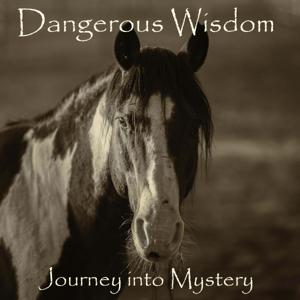


Whether we love horses or not, whether we have contact with horses or not, they can teach us a lot about wisdom, love, and beauty. How do we get close to an honest openness to the potential magic of horses? And what does it even mean?
The horse as a mirror for the soul and a vehicle for the soul could show us our true nature, and carry us into sacred spaces, initiating us into transformational healing and insight. Horses could heal conquest consciousness and help us reindigenize. But, for that to happen, we would have to become initiates. How can we properly seek initiation into the great mystery of life?
Be sure to listen to the full series, starting with How Magic Saved My Life
https://dangerous-wisdom.captivate.fm/episode/dangerous-magic-1-how-magic-saved-my-life
Yeats tells us, "the borders of our memories are as shifting as the borders of our mind, and that our memories are a part of one great memory, the memory of Nature herself." In this contemplation, we consider how that relates to horses, trauma, and the mysteries of remembering something that hasn't happened yet.
The practice of magic is taboo precisely because it draws from the experience of mind as a process that transcends the skin, and the experience of self and world as profoundly relational—which means ecological—rather than solid, or, we could say, economic.
The poet William Butler Yeats had a passion for magic, and he offers us three principles of magic that we will explore through philosophical and scientific perspectives. Can we arrive at a scientific understanding of magic, beyond woo-woo? Following these principles will bring us into an exciting and mind-expanding journey.
In this episode, we go into the wisdom, love, and beauty archives to re-release our series on magic. If you haven’t heard this series, I think you’re in for a treat. It’s like a box of wisdom donuts—paleo superfood wisdom snacks for the soul.
We begin with events from my own life, in which the experience of magic transformed a situation of tension and aggression into spaciousness and wonder.
If you have listened to some or all of this series before, these podcasts usually require more than one listen. We go into ideas that we try to consider in a very accessible way, but those ideas have a lot of nuance and depth in them. Extensive contemplation will bring a lot of benefits, including some inspiration and insight into the nature of magic.
In this series, we try to take a sober look at magic. Can we come to a truly skillful and vitalizing understanding of magic?
As we go along, we begin to see magic is an attitude—an attitude of reverence for the Cosmos.
The experience of magic arises as we enter into the sacredness and interwovenness of life.
The Burning Man phenomenon involves a lot of good intentions and a lot of wonderful experiences—aesthetic, gastronomic, social, and even spiritual. It emerges from, and thus expresses, the incongruencies and general confusion of the pattern of insanity, even as it stands in defiance of that pattern of insanity. In some sense, it gives us an image of conquest consciousness wrestling with itself.
Lia Helena Rubinoff, a friend and fellow philosopher, went to Burning Man this year. She joins us for some reflective dialogue about the wonders and the dangers of the Burning Man phenomenon. We try to honor the good while getting as honest as possible about the not-so-good.
From the Wisdom, Love, and Beauty archives. A breath of fresh air, even if you listened to this one last year.
Sometimes we get lucky enough to experience a shocking moment when the great mystery confronts us so directly that we have to say, "This changes everything!" In this contemplation, we consider the nature of "this changes everything," how the dominant culture tries to keep those experiences at bay, and how we can begin to think about them with greater care—perhaps even begin to invite them in.
Our guide is Dr. Elizabeth Lloyd Mayer. We reflected on some of her work in our very first episode this year, the one on Apocalyptic LoveWisdom. Her experiences and ideas came up again in a recent dialogue with the composer and jazz musician Carole Nelson. That dialogue is already available, and I promised to make this one available here as well. Enjoy!
Composer and musician Carole Nelson helps us contemplate the dangerous wisdom of jazz and her new album, Night Vision. In honor of our dialogue, Carole and I collaborated on a meditative video project. You can check out the two takes we released here:
https://youtu.be/aWN6UDYp86E
https://youtu.be/OrnoYWUkVBw
In our dialogue, we make reference to Thich Nhat Hanh’s book, Zen and the Art of Saving the Planet, as well as The Diamond Sutra.
We also make reference to an older podcast episode titled, “This Changes Everything”. Look for the re-release of that episode soon.
Carole Nelson is a Londoner who has lived in Ireland for nearly 40 years. She is a multi-award winning composer, a jazz and improvising musician, pianist, saxophonist and songwriter. Her most recent work is with the Carole Nelson Trio, with whom she has recorded 3 acclaimed albums. Her music reflects the natural world – the woodlands, river and wildlife in her home in southern Ireland. She endeavours to integrate an authentic ecoliteracy into her creative practice and into her engagement with the world.
She is a long-time meditation practitioner in the tradition of Zen master Thich Nhat Hanh’s socially engaged buddhism and she facilitates days of mindfulness.
A dialogue with the poet Grace Wells, in relation to her latest book of poetry, The Church of the Love of the World (https://www.dedaluspress.com/). Grace is an award-winning eco-poet and nature writer living on the West Coast of Ireland. Nature, spirit-of-place and environmental concern are the large themes of her writing. She is an organic gardener and orchard-planter who hosts The Little Sanctuary a small retreat space for human, plant and creaturely species, and she regularly volunteers with Hometree a native woodland charity, which looks after biodiversity and encourages the reforestation of large landscape areas.
We speak about wonder, grief, the sacredness of the world, the fierceness of love, and the mysteries of grasses. A few references from our dialogue:
Grace refers to the name the Irish call themselves: Tuath Dé. Long before the publication of her book, Grace and I spoke about this name, and I elaborated it briefly in an essay—an elaboration Grace enjoyed very much, so here it is:
---
As the poet Grace Wells recently reminded me, the indigenous Irish called themselves Tuath Dé—one of the most wonderful things a human people have ever called themselves, for the word “Tuath” signifies both people and place, and “Dé” signifies the goddess. Therefore, in a gesture of intimacy, in a gesture of wisdom, love, and beauty, they called themselves “the people of the goddess” and simultaneously called themselves “the place of the goddess”. They wonderstood power and place, wonderstood rootedness in place and intimacy with the vast Cosmos.
They wonderstood that Sophia abides as landscapes, as ecologies, as the sacred powers and inconceivable causes flowing as “power-and-place,” and they wonderstood that when we attune with sacredness and with living places, Sophia abides in us, through us, as us. Meanwhile, the dominant culture seems characterized by, as Underhill put it for us, those who “stand apart, judging, analysing the things which they have never truly known.”
---
https://dangerouswisdom.org/dw-blog/who-is-sophia
The fuller contemplation of, “Who is Sophia?” may resonate with you.
We also discuss Dōgen and his insights into, and pointings toward, the teachings of the world—all beings, including supposedly “insentient” beings—and the essence of meditation. These insights and pointings appear in Keisei Sanshoku—Velley Sounds, Mountain Forms—and Jisho Zanmai. That latter term resists translation, signifying something like Self-Experience or Self-Verifying of Well-Put-Togetherness, or, Well-Put-Togetherness of Self-Experience or Self-Verifying. It is like the meditative state of self-arising experience, not dependent on subject or object, or the self-verification of the mystery of the cosmos by means of intimacy—the mystery verifying or experiencing itself.
The following essay discusses this meditative state in relation to other themes of the dialogue between philosopher and poet, including the seductions of Indo-European languages and worldviews, and the need for all of us to reindigenize:
https://dangerouswisdom.org/dw-blog/hologram-ecogram-mandala-part-iv-drawing-closer-to-visionary-lovewisdom
Dōgen offered related lessons that we can work with as an elaboration of, and invitation into, the special meditative mind that allows us to fully receive the teachings of the world, and receive the magic and medicine of the world as well. Dōgen there refers to the properly well-put-together mind as 自受用三昧, which has to do with the well-put-togetherness of our true mind. 自 (ji) means self—specifically a kind of “so-of-itselfness” or joyful spontaneity. It’s the same as the “ji” above, in Jisho Sanmai. 受 (ju) means receive, accept. 用 (yu) means use. Putting all these characters together, we get a wondrous medicine.
We can’t be certain how Dōgen meant it, but we could translate the full phrase as “the meditative state of the self joyfully and spontaneously receiving and accepting its use”. I always find that simply marvelous. It usually brings the French philosopher Jean Paul Sartre to mind, because he said, “Man is a useless passion.” But Dōgen would say to Sartre, “Nonsense, my friend. You simply have refused to receive and accept your use—and that will lead to suffering for you and countless others.” Our use belongs neither to ourself nor to others. In a way, the use of our life is the place of our life. Dōgen gives us something fresh here, something arising always in transcendence of current concepts but still sensitive to the facts, something that refuses ossification in ideas—a living marrow, living flesh, living skin, living mountains and rivers.
Dōgen says that this meditative state “performs great and wide-ranging” work, a sacred work, a magical and mysterious work that itself arises as the teachings of the sacred. Our practice of place is our fundamental teaching of wisdom, love, and beauty. We don’t just go to a place a sit like some driveller. Rather, we enter the place fully, and let it enter us. We enter into this joyful and profound meditative state, and our activity performs the great and wide-ranging work of placemaking, which manifests the teachings of the sacred, the lessons, prayers, songs, and celebrations of wisdom, love, and beauty.
When we practice like this, Dōgen says,
"The trees, grasses, and land involved in this all emit a bright and shining light, preaching the profound and incomprehensible Dharma; and it is endless. Trees and grasses . . . expound and exalt the Dharma for the sake of ordinary people, sages, and all living beings. Ordinary people, sages, and all living beings in turn preach and exalt the Dharma for the sake of trees, grasses, wall and fence . . . Because of this, when just one person [meditates] even one time, [they become], imperceptibly, one with each and all of the myriad things and [they thus permeate] completely all time, so that within the limitless universe, throughout past, future, and present, [they perform] the eternal and ceaseless work of guiding beings to enlightenment."
Our practice of a sacred place becomes the activity of guiding all beings into mutual liberation, by means of our entrance into mutual nourishment and mutual illumination.
Nusrat Fateh Ali Khan, one of the greatest voices of the 20th century, reportedly said, “We do not sing; we are made to sing.” If we see eye to eye with Dōgen, feel heart to heart with him, we can savor this lovely turn of phrase. Similarly, if we savor this phrase deeply enough, we may see eye to eye with Dōgen, feel heart to heart with him and with profoundly wise, loving, and beautiful sages of all traditions. Can we sense that? We do not dance; we are made to dance.
---
You can find these reflections elaborated in previous and forthcoming work (I have largely copied from those works for these episode notes). For how this meditative state relates to art and life, you might try this essay that uses dance, especially tango, as a metaphor for all life and art:
https://dangerouswisdom.org/dw-blog/tangoart-as-pathway-to-bliss
Other reflections wisdom, love, beauty, place, culture, and education will come out with the publication of What Will We Become: An Outline and Handbook of Wisdom-Based Learning.
We also mentioned how bread illustrates the pattern of insanity that has us all in its grips. You can read more about that here:
https://dangerouswisdom.org/dw-blog/the-mandala-of-mutual-nourishment-the-story-of-bread-and-its-relationship-to-time-and-language
Horses are both a mirror for the soul and a vehicle for the soul. Even if we don't think of ourselves as being really "into" horses, they are still a spiritual keystone species, and they can teach us a lot about ourselves, and lead us into the great mystery.
In this episode, we consider how horses threaten certain aspects of our identity, our sense of love, and in some ways our whole way of life in the dominant culture. Whether you have horses in your life or not, there's a lot to learn here.
From the publisher's feed

12 Listeners

1,802 Listeners

2 Listeners

471 Listeners

24 Listeners