
Sign up to save your podcasts
Or

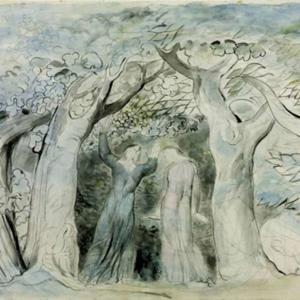


Dante was clear: he wrote so that others might follow him on otherworld journeys. So what might this mean?
With the Scientific and Medical Network, an online conference, Sat 27th Nov, to explore this issue. Join individuals who have studied it and others who have so travelled.
Full details here - https://scientificandmedical.net/events/dr-kayleen-asbo-lorna-byrne-dr-peter-fenwick-mariel-forde-clarke-david-lorimer-felicity-warner-dr-mark-vernon-dante-and-otherworld-journeys/
This lecture was given to the Temenos Academy on Tuesday 19th October 2021 - a particular delight as it was on its perennial philosophy course that the Divine Comedy first began to open up to me. See here for more details - https://www.temenosacademy.org
I make some remarks on the Inferno and Purgatorio first, about how spiritual intelligence recognises the significance of now and knowing yourself.
However, as we live in an age that finds the Paradiso increasingly incomprehensible, most of the lecture looks at the 10 domains of paradise visited by Dante and what they represent for the development of his spiritual intelligence.
In short, he sees how reality is characterised by abundance not scarcity, generosity not possessiveness, and comedy not tragedy - not because of any glib universalism, but because love, light and life can embrace hate, darkness and death.
Dante enters:
- The Moon in which he learns of qualities as guides, over quantities
- Mercury in which he learns of harmonising with divine light
- Venus in which he learns the essence of eros
- The Sun in which he learns of the passion that unites difference
- Mars in which he learns the true nature of sacrifice
- Jupiter in which he learns how individuality links to all
- Saturn in which he learns the necessity of seeing the eternal face
- The Fixed Stars in which he learns of radiating with all beings
- The Primum Mobile in which he learns of speaking with the divine voice
- The Empyrean in which he learns of the nature of eternity.
Today, people feel Dante's Paradiso is irrelevant. It's not. It is the place of true perception and delightful knowledge, and the goal of the Divine Comedy. The question is how to follow Dante's lead and become aware of this domain of reality that is here, now as much as anywhere.
In this illustrated talk, I track how Dante's perceptions expanded as, led by Beatrice, he transhumanised. I ask, too, who I might meet as guides on the way.
My book, Dante's Divine Comedy: A Guide for the Spiritual Journey is out now - https://www.markvernon.com/books/dantes-divine-comedy-book
For further details about Dante's Divine Comedy: A Guide for the Spiritual Journey - https://www.markvernon.com/books/dantes-divine-comedy-book
For further details about the Dante Society of London - https://dantesocietylondon.com/index.html
2:34 Welcome
3:23 Dante’s first 700 years
6:08 Dante Society of London
9:14 Invoking Dante today
10:33 Introducing my new book
18:08 Reading in Italian and English from the Inferno, with some thoughts
27:12 Reading in Italian and English from the Purgatorio, with some thoughts
34:44 Reading in Italian and English from the Paradiso, with some thoughts
43:44 QnA - When did Mark first feel the pang of love for Dante?
45:23 QnA - How is Dante regarded in Italy now?
47:40 QnA - Comments by Owen A Barfield on Owen Barfield, Dante and CS Lewis
50:28 QnA - In what ways is Dante a visionary?
54:00 QnA - Can you compare Dante’s Satan with Milton’s?
58:55 QnA - How does Dante inspire artists; how have artists responded?
1:03:13 QnA - What does Mark make of the Clive James’ translation?
Mark Vernon talks about Dante and his new book, Dante’s Divine Comedy: A Guide for the Spiritual Journey (Angelico Press) at the Church Times podcast.
This year marks 700 years since Dante’s death, and the Church Times of 10 September 2021 includes features by Robin Ward and Alexander Faludy, as well as several reviews of books published to mark the anniversary.
In a Church Times review of Mark’s book, Jonathan Boardman describes it as a “detailed and immensely thoughtful commentary. . . His personal experience as a psychotherapist and student of philosophy, polished further with physics, theology, and ordination, opens . . . a very special reflective door into Dante’s thinking and expression: its dreamlike design is peppered constantly with personal experience and knowledge.”
To preorder Dante's Divine Comedy: A Guide for the Spiritual Journey see - https://chbookshop.hymnsam.co.uk/books/9781621387480/dantes-divine-comedy
To join me and register for the online book launch on 14th September at 6pm BST see - https://www.eventbrite.co.uk/e/mark-vernon-on-dantes-divine-comedy-tickets-168394477415?keep_tld=1
For more details about the book and an excerpt from the introduction see - https://www.markvernon.com/books/dantes-divine-comedy-book
In this 700th anniversary year, the truth of the Divine Comedy is a key issue.
Modern critics may explain its spiritual veracity by putting its impact down to social construction and performativity. But Dante knew about literature as much as he knew about divine life. He is emphatically clear that he has travelled to the high heavens and seeks to write so that we may follow him too.
In this talk, I use Dante's own framework of the literal, allegorical, tropological and anagogic to explore how he doesn't just report his time in heaven, but presents us with an account that opens divine domains to this day.
For more on my book, Dante's Divine Comedy: A Guide for the Spiritual Journey (Angelico Press), see https://www.markvernon.com/books/dantes-divine-comedy-book
Categories like feminine and masculine can constrain as much as illuminate. But there is no denying that men and male entities play a major, often surprising part in Dante's journey through the Divine Comedy.
This talk complements my look at Dante and the Divine Feminine, now considering Dante's encounters with figures such as Belacqua and Statius, Bernard and Cacciaguida. Archetypal qualities such as the warrior, magician, lover and king assist.
The talk ends with the figure of Beatrice, who might be said to integrate the feminine and masculine, and so be the guide Dante needs to understand the human-divine connection.
For more about Mark's work on Dante, including his book, see - https://www.markvernon.com/dantes-divine-comedy.
Categories like feminine and masculine can constrain as much as illuminate. But there is no denying that women and female entities play a major, often surprising part in Dante's journey through the Divine Comedy. Saints including Beatrice, Lucia and Mary, historic figures such as Piccarda, Francesca and Cunizza, and mythological entities like the sirens all figure.
In this talk, I use Erich Neumann's exploration of feminine archetypes, The Great Mother, to deepen a sense of how the one God, freely manifesting in all beings and forms, is experienced by Dante in these women and creatures.
For more about Mark's work on Dante, including his book, see - https://www.markvernon.com/dantes-divine-comedy
The Divine Comedy aims to deepen and broaden our perception of reality, often by exploding preconceptions. Nowhere is this more true than in Dante's take on the Christian perception of the Trinity. For Dante, it is way more than a doctrine. It is a mode of seeing that reveals reality as dynamic and dancing to its depths.
For further talks and details of Mark's book on Dante see - www.markvernon.com
From the publisher's feed
I invite you to experience the odyssey, by accompanying me as I discuss each canto. My book, Dante’s Divine Comedy: A Guide For The Spiritual Journey, is published by Angelico Press for the 700th…

6,731 Listeners

30,207 Listeners
14,361 Listeners

7,604 Listeners
4,973 Listeners
5,716 Listeners

111,852 Listeners
15,581 Listeners
4 Listeners

1,122 Listeners
382 Listeners
0 Listeners
43 Listeners