
Sign up to save your podcasts
Or

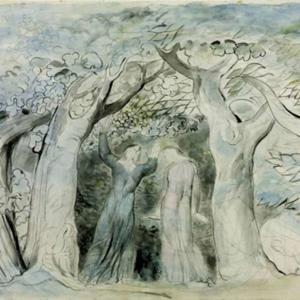


Peter Owen Jones is a writer, broadcaster and priest. His new book is Conversations With Nature.
We discuss falling in love with the natural world once again, what difference this might make to the climate crisis, how Christianity has failed to respond in any significant way to environmental collapse, though also has an answer, if we are prepared to give no thought for the morrow, value the falling sparrow, and follow the way.
William Blake's sense of participation, imagination and divine return are also in the mix.
For more on Peter's book, Conversations With Nature, see https://www.clairviewbooks.com/viewbook.php?isbn_in=9781912992416
For more on Mark Vernon, see www.markvernon.com
Spiritual Intelligence in Seven Steps online course - full details here: https://www.markvernon.com/events/spiritual-intelligence-in-seven-steps
Dante's Divine Comedy online course - full details here: https://www.markvernon.com/events/dantes-divine-comedy-an-introduction-to-the-spiritual-journey
For more about Mark Vernon - www.markvernon.com
Dante coined the word "transhumanise" in the Divine Comedy, 700 years ago. "Trasumanar" is the transformation he will undergo in order to share in the life of paradise.
Today, the word has associations that are strikingly related to Dante's; partly quite similar, though changed in subtle but crucial ways. Understanding those differences illuminates the dangers of transhumanism today and how it might limit, not expand, our humanity.
I consider this constriction across half a dozen areas on the transhumanism agenda: telepathy, happiness, intelligence, stellar living, the superman, and death.
Transhumanising is a religious promise. It becomes a modern threat when that transcendent perspective is eclipsed and lost.
A joy to speak again with Brian, this time on Dante's Divine Comedy.
We talked about what happened to Dante, what happened to Mark that opened up the Divine Comedy, how the poem works as an initiation, what it reveals about Christianity, what happens to Virgil, the nature of paradise, amongst other things.
For more on Brian see http://brianjames.ca
For more on Mark see https://www.markvernon.com
Bernard Carr is a leading cosmologist who worked with Stephen Hawking and now investigates time, multidimensionality and consciousness, amongst other things.
Bernardo Kastrup cites him as at the vanguard of the great task to integrate matter and mind.
So I was delighted to get the chance to ask Bernard about images from Dante.
We talked about relational cosmologies as advocated by Carlo Rovelli, who has talked about being inspired by Dante, and whether alternative images from the Divine Comedy might illuminate his own approaches, as well as our understanding.
This episode of the Sheldrake-Vernon Dialogues continues Rupert and Mark's exploration of Dante’s Divine Comedy, taking a lead from Mark’s book, Dante’s Divine Comedy: A Guide for the Spiritual Journey.
Dante is now guided by Beatrice through the heavenly spheres and into the Empyrean. It is a journey into the abundance of infinity and eternity, which immediately struck Rupert as akin to a DMT trip.
Mark and Rupert explore how that is an apt analogy with Dante enabling us to incorporate the visionary into everyday life and understand how deeper perceptions of being can inform different times and cultures.
The conversation moves over the relationship between the one and the many, the universal message of Christianity, the ways in which love and intellect work in tandem, and how Dante can aid various quests for knowledge today.
Various human experiences are deepened and resolved as Dante travels through hell, purgatory and paradise. The Divine Comedy can be read as an examination of this transfiguring of perception.
From the alienation of hell, through the transforming time of purgatory, to the ever-expanding awareness of paradise: Dante show us how time & love, seeking & suffering, telepathy & transhumanising can change to reveal divine life without limit.
For more on Mark's book on the Divine Comedy - https://www.markvernon.com/books/dantes-divine-comedy-book
This is a contribution to recent dialogues on idealism between Bernardo Kastrup, John Vervaeke, Matt Segall, Philip Goff and others, including myself.
I draw particularly on:
- Dante's account and analysis of his journey to the heart of consciousness in all its fullness - source and manifestation - in the Divine Comedy
- how minds as we know them not only dissociate but also project and introject, and what meaning this might have for Bernardo's thesis
- trinitarian understandings of oneness, and the dynamics of creation.
I start with some concerns that I have with Bernardo's account of analytic idealism, much as I value all that he does. They focus on his sense of mind at large, or God, and his use of the phenomenon of dissociation.
I'm struck that Dante's discovery of his true nature in God goes hand in hand with the increase of his individuality and personhood. Also, he not only experiences dissociation, or a sense of separateness, but projection and introjection - two further mechanisms that minds deploy, which I think are key.
This takes me to trinitarian understandings of oneness, in its eternal and infinite form. In divine life, kenosis is ecstasis; giving is receiving; knowing and unknowing are a mutual unfolding; longing is satisfaction; expansion is the expression of what already is. If the meaning of our life is the discovery of our nature in theosis, that might add to the model.
Beatrice conveys this movement to Dante, overcoming his separateness by discerning his projections, and offering them back to him as introjections of the truth of himself, others and God.
Finally, I raise questions of suffering, the nature of life, and why we experience separateness at all, before the discussion concludes with the hadith beloved by Sufis, another idealist expression of genius:
“I was a Treasure unknown then I desired to be known so I created a creation to which I made Myself known; then they knew Me.”
Paradise. Destiny for a chosen few? Dismissed today by many. Or might it be the end for us all?
Dante tells us to follow closely in the richest, subtlest and most expansive part of the journey conveyed in the Divine Comedy. He shows us how to develop paradisal perception, the way to know this experience of reality now, and to become ready for it in the hereafter.
Paradise is when the deepest truths become clear, the most intimate participation with life is known as divine.
This is the third of three talks, originally hosted by the Fintry Trust.
The talk draws on Mark's book, Dante's Divine Comedy: A Guide for the Spiritual Journey - https://www.markvernon.com/books/dantes-divine-comedy-book
The mode of life called purgatorial is a medieval superstition, according to some, and the very purpose of mortal life, according to others. So what did Dante make of Purgatory and what has it to teach us now?
In the Purgatorio, the essence of the spiritual path is shown in encounters and discussions. Purging itself, for example, is not about being rid of what we don't like, an activity that is another form of vanity. Rather it is about becoming clearer of that which hinders our sight of God and so limits the expansion of our being. Purgatorial living cleanses the doors of perception.
This is the second of three talks, originally hosted by the Fintry Trust.
The talk draws on Mark's book, Dante's Divine Comedy: A Guide for the Spiritual Journey - https://www.markvernon.com/books/dantes-divine-comedy-book
From the publisher's feed
I invite you to experience the odyssey, by accompanying me as I discuss each canto. My book, Dante’s Divine Comedy: A Guide For The Spiritual Journey, is published by Angelico Press for the 700th…

6,731 Listeners
30,207 Listeners
14,361 Listeners

7,604 Listeners
4,973 Listeners
5,716 Listeners

111,852 Listeners
15,581 Listeners
4 Listeners

1,122 Listeners
382 Listeners

0 Listeners
43 Listeners