
Sign up to save your podcasts
Or

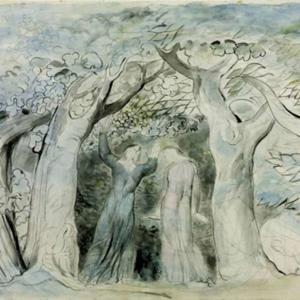


Dante encounters seven popes in the Divine Comedy, five in hell, one in purgatory and one in paradise - that last being Saint Peter. His condemnation of individual popes and, I think, the papacy is extraordinarily strong and discomforting to relate.
But was it all revenge? Did he fall for the politics too? Or was his message one of renewal, revival and reunion with God?
Dante was concerned about salvation, the role of women and friars, the love of the gospel, and the fate of Christianity. His critique presages the Reformation. His vision matters today.
For more on Mark's guide to the Divine Comedy see - https://www.markvernon.com/dantes-divine-comedy
0:00 The context of Dante's critique
6:22 Celestine V and holiness: the resigning pope
9:04 Anastasius II, Aristotle and authority
10:48 Simony: the curse and crime of the church - Nicholas III & Boniface VIII
16:32 Pope Francis and Luke's icon of the Virgin and Child
18:33 The conversion of Constantine and ecclesiastical power
19:54 Dante's mothers - the church or the pagan Virgil?
21:12 Adrian V in purgatory
24:20 The beguines as guides and the whore of Babylon
28:26 Saint Peter's condemnation in paradise
30:04 Beatrice's last words condemning Clement V
32:24 Dante's political conclusions
36:36 Dante's ecclesiastical conclusions
39:14 A Christianity beyond Christianity
This talk was first given to Idler Drinks.
For more on Mark's work on Dante - https://www.markvernon.com/dantes-divine-comedy
“Circles of hell" has become commonplace in language. But what was Dante trying to show us when he wrote the inferno? What has been lost in translation, with this first canticle in Dante’s trilogy now part of a secular culture?
Jason Baxter talks about his new translation of the Inferno with Mark Vernon. They discuss what Dante could convey in language and why the text never ceases to offer fresh insights. How can we understand his encounters with figures from Virgil to Ulysses? What is it truly to be trapped in a hellish state? Why is the road down the necessary precursor to the road into God’s presence?
Jason’s new translation is published by Angelico Press - https://angelicopress.com/products/the-divine-comedy-inferno
Mark’s introduction and guide is too - https://www.markvernon.com/books/dantes-divine-comedy-book
00:00 What Dante could do with language
9:05 Dante and the infernal landscape of today
12:50 Distraction and seeing the truth of ourselves
19:18 Intelligence as reason and love
26:33 Why must Dante descend into hell?
36:08 What was Virgil’s ultimate destiny?
41:30 The fulness of divinity we are called to
48:07 Jason’s translation of the famous opening line
56:20 Jason’s future plans
Rowan Williams and Jesse Armstrong talked at The Idler festival, partly around the idea, caught in the expression, “boring as hell”. But is that right, they asked, when a drama like Succession so clearly appeals to us?
The question is fundamental, for an age inclined to regard hell as appealing or intriguing, is one on the way to being lost.
Drawing on Dante and William Blake, two great diagnostic writers about different states of mind, this talk explores how the passions of the soul, to use Williams’s expression, can hinder and help us on our way.
I then think about how various facets of life change when known from within hellish, purgatorial and paradisal perspectives - movement, words, love, time, memory, possessing, faces, wonder.
Hell is boring, not from its own perspective, which knows nothing else, but from that of purgatory and paradise. A time that thinks hell is the most interesting place to be is in hell; one that can still say “boring as hell” has at least a flicker of hope.
See Dante's Divine Comedy: A Guide for the Spiritual Journey - https://www.markvernon.com/books/dantes-divine-comedy-book
Dante lived through a period of almost total social collapse. Civil war and city-state terror, practiced by the church as much as secular powers, drove him into exile for the last 20 years of his life. For a while, he lost everything. But then, through the trauma, he regained a ground and rediscovered the fullness of life.
The Divine Comedy is the product of that transformation. The journeys through hell, purgatory and paradise hold nothing back, be that terrible tortures of extraordinary delights. He wrote for himself, for his readers including us, but also as a warning to his time and future times, such as our ours.
So what has Dante got to say to now? What does his analysis illuminate? Much, I think, as I explore in this thought.
For more on Dante and my own book see - https://www.markvernon.com/books/dantes-divine-comedy-book
My earlier thoughts on Plato, Aristotle and Jesus are at my podcast, Talks and Thoughts.
Dante's imagery, particularly in the Paradiso, offers powerful prompts to developing the sense of what it is to be intelligent. He wrote for modern times, he said. And now, as AI becomes more pervasive, he can help us understand how machine learning and human intuitions are very different capacities.
This was part of a talk given at the Scientific and Medical Network - https://scientificandmedical.net/webinars/
For more on Mark's work, particularly on Dante, see www.markvernon.com
Reason fails before the greatest spiritual truths. That much is not news. But part of the genius of Dante is his conjuring of images that reach beyond the impasses of paradox and seeming contradiction.
I consider 8 such moments when Dante sees the unsayable and offers images of the ineffable.
- how darkness leads to light
- how appearances can be the opposite of the truth
- how the immediate eclipses wider perspectives
- how all faces are the divine face
- how “I” and “we” coincide
- how divine and creature are one
- how consciousness expands
- how relationship is unity, many is one, movement is the unchangable.
For more on my book Dante’s Divine Comedy: A Guide for the Spiritual Journey see http://www.markvernon.com/dantes-divine-comedy
What is the meaning of Easter? How might Holy Week be more than an occasion for its retelling? Can death and resurrection live today, as they once did, 2000 years ago?
Dante’s journey, in the Divine Comedy, begins on Maundy Thursday, 1300. It continues through the inferno, on Good Friday and Holy Saturday, before he enters purgatory on Easter Sunday morning, at dawn.
The climb up Mount Purgatory, then, takes until Easter Wednesday when, finally, Dante reaches paradise. Though that is really another beginning, as he becomes more capable of knowing the light of Christ in him, and so knowing that light in all that surrounds him.
In other words, the Divine Comedy invites us to consider the story of Easter not as an historical event but as a pattern and path which makes sense of our lives, if we dare to live them deeply.
Augustine once remarked that the joy of being Christian is being a Christ. Easter, then, is not primarily a remembrance of things that happened, but a recollection of who we are called to be. That is the meaning of Easter, needed if Christianity is to live in people’s lives now.
Dante would seem to be a key candidate for infernalism, the doctrine of endless punishment in hell for sinners who failed to turn to Christ.
He’s said to be medieval and isn't that what they believed then? And doesn’t his Divine Comedy clearly, indisputably say as much?
But Dante’s whole point is that nothing is as it seems to the unawakened eye.
I think what Dante is doing is taking evil completely seriously and showing why eternal damnation not only isn't, but can’t be the final result. And yet, this can only be seen when the darkness itself is fearlessly, fully seen.
The Divine Comedy is all about guides - finding guides, following guides, conversing with guides. Virgil and Beatrice are the best known, but there are other modes of guidance that Dante seeks and explores.
Angels, dreams and myths accompanying Dante, even in the darkest moments. He learns to be present to them and trust that whilst in one encounter they can bring fear or shame, in another they inspire wrestling and struggle, and then in another again bring divine light and insight.
For more on Mark's book, Dante's Divine Comedy: A Guide for the Spiritual Journey see - https://www.markvernon.com/dantes-divine-comedy
For more on Mark see - https://www.markvernon.com
From the publisher's feed
I invite you to experience the odyssey, by accompanying me as I discuss each canto. My book, Dante’s Divine Comedy: A Guide For The Spiritual Journey, is published by Angelico Press for the 700th…

6,720 Listeners
30,214 Listeners
14,357 Listeners

7,606 Listeners
4,972 Listeners
5,717 Listeners

111,852 Listeners

15,606 Listeners
4 Listeners

1,127 Listeners
383 Listeners
0 Listeners

43 Listeners