
Sign up to save your podcasts
Or

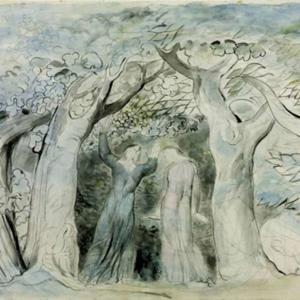


The liberal world and western churches increasingly seem to suffer from the lack of a sophisticated understanding of erotic love - an approach not merely governed by morals but arising from insight into who we are and our deepest nature.
Erotic love can be felt on nearly every page of the Divine Comedy, in perverted and desperate forms, as well as in free and joyous souls.
He understood that eros has a goal as it draws us towards God, though that goal is readily thwarted as we traverse its energies. Rules minimally help because love must be combined with light and learnt about from within experience and reflection.
Love fills the cosmos. It will not let us go. So how can a path be navigated from the passions that can trap us to the delight that is connection with all?
For more on Mark's book, Dante's Divine Comedy: A Guide for the Spiritual Journey, see here - https://www.markvernon.com/books/dantes-divine-comedy-book
The notion of hell is delighted in by some and causes offence in others. So why did Dante write about this infernal domain on his journey through reality? What is its meaning? What might be learnt from it?
The inferno illuminates how desires go awry, the nature of our being is misunderstood, perceptions narrow, and how societies, even civilisations, become lost.
This is the first of three talks, originally hosted by the Fintry Trust. Why Purgatory and Why Paradise follow.
The talk draws on Mark's book, Dante's Divine Comedy: A Guide for the Spiritual Journey - https://www.markvernon.com/books/dantes-divine-comedy-book
This episode of the Sheldrake-Vernon Dialogues continues Rupert and Mark's exploration of Dante’s Divine Comedy, taking a lead from Mark’s book, Dante’s Divine Comedy: A Guide for the Spiritual Journey.
Dante and Virgil have found the way out of hell and a new adventure begins on Mount Purgatory. They first encounter souls who are shocked by their deaths and bemused by the afterlife. Then, the transformative ascent up the various terraces of the mountain begins. On each, souls are reckoning with the part of themselves marked by pride and envy, anger and lust, as well as other feelings and desires that must be cleansed in order to open their perception to the divine life that draws them.
Finally, Dante and Virgil reach the earthy Eden, where Dante experiences a surprising, even shocking, encounter with the love of his life, Beatrice.
Dante’s Divine Comedy famously opens with the poet wakening in a dark wood. His life has seemingly taken a wrong turn. But why must he embark first on a journey through hell, before ascending Mount Purgatory, only then entering paradise? What has the way into darkness to do with the way into light?
He learns to say ‘yes’ to all of reality, and that the light includes the darkness, even as tragedy is integrated into the comedy of divine life.
This event is part of a series looking at dualities with the Pari Centre. For more information - https://paricenter.com/event/dualities/2022-02-05/.
For more on Mark's book, Dante's Divine Comedy: A Guide for the Spiritual Journey - https://www.markvernon.com/dantes-divine-comedy
John Vervaeke, Paul VanderKlay and Paul Anleitner asked what "God" means, with John challenging the Pauls to talk about God via Light, Love, Logos and Life, so as not to hide behind the "g" word.
Drawing on Dante, I offer some thoughts...
The original conversation is here - https://youtu.be/UGq34dLXrFI
More about Dante and my work - http://www.markvernon.com
The Dante exhibition at the Ashmolean Museum, for the 700th anniversary year of 2021, brought together some of the Divine Comedy’s greatest illustrators, living and dead, from Monika Beisner to William Blake and Sandro Botticelli. Here are my reflections on these studies in line and light depicting darkness and life.
Modern works discussed include those by Monika Beisner, Dante and Beatrice in the Earthly Paradise (2001) and Dante and Beatrice and the Mystic Rose of Paradise (2001); Rachel Owen, The Fraudsters (2010-16); and Geoff MacEwan, The Earthly Paradise (2010).
For more on my book, Dante’s Divine Comedy: A Guide for the Spiritual Journey, and other vlogs see www.markvernon.com
Audible have released the audiobook of Dante's Divine Comedy: A Guide for the Spiritual Journey. I hope you enjoy the first chapter, Inferno 1.
For more information go to Audible. And for more on the book as a whole see my website - https://www.markvernon.com.
This episode of the Sheldrake-Vernon Dialogues is the second part of a conversation between Rupert Sheldrake and Mark Vernon on the Inferno of Dante’s Divine Comedy.
Deeper regions of hell are explored, in which individuals aren’t just confused about life but have become wedded to their confusions and the seeming power they bring. The deep ramifications of the worship of Mammon and worlds built on money is part of that addiction, as are the huge risks of spiritual seeking that arise directly from the tremendous goal of the spiritual quest, which is conscious participation in divine life.
The conversation draws on Mark’s book, Dante’s Divine Comedy: A Guide for the Spiritual Journey. Future talks will consider the path Dante charts next, through Purgatory and Paradise!
For other conversations between Rupert and Mark see https://www.sheldrake.org/audios/sheldrake-vernon-dialogues and https://www.markvernon.com/talks.
Dante and Otherworld Journeys was an online conference organised with the Scientific and Medical Network - https://scientificandmedical.net/events/dr-kayleen-asbo-lorna-byrne-dr-peter-fenwick-mariel-forde-clarke-david-lorimer-felicity-warner-dr-mark-vernon-dante-and-otherworld-journeys/
This is the conversation, with extra thoughts, that I had with Lorna Byrne - https://lornabyrne.com
I was particularly glad to compare her experience with those of other angel seers, from Socrates to Dante and William Blake. We heard something of her story, and explored the nature of spiritual perception, as well as what she sees of our now and the future.
The Divine Comedy by Dante is one of the great spiritual works of the Christian tradition. But how can it be read and what does it mean?
In this episode of the Sheldrake-Vernon Dialogues, Rupert Sheldrake and Mark Vernon discuss the first part of Dante’s cosmic pilgrimage. It takes Dante through the circles of hell, until he reaches the lowest point of reality, the region furthest from God.
It becomes clear that descent into darkness is a key part of personal transformation because it helps the individual discern the dark side of experiences such as love, anger and fame, in order that the light they also bring might be discerned. This also explains why the Inferno can comfort as well as disturb: troubling experiences and spiritual emergencies can be as much a part of enlightenment as those that are delightful and satisfying.
Rupert and Mark will talk about the Purgatorio and Paradiso in future discussions.
From the publisher's feed
I invite you to experience the odyssey, by accompanying me as I discuss each canto. My book, Dante’s Divine Comedy: A Guide For The Spiritual Journey, is published by Angelico Press for the 700th…

6,731 Listeners
30,207 Listeners
14,361 Listeners

7,604 Listeners
4,973 Listeners
5,716 Listeners

111,852 Listeners
15,581 Listeners
4 Listeners

1,122 Listeners
382 Listeners
0 Listeners
43 Listeners