
Sign up to save your podcasts
Or

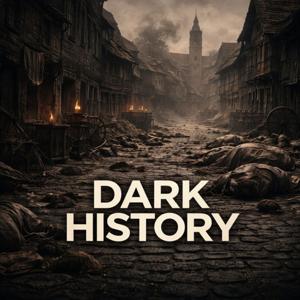


In colonial Massachusetts in sixteen ninety-two, reports of affliction in the household of Salem Village minister Samuel Parris became accusations, warrants, examinations, trials, imprisonment, and executions. This episode follows the documented record from the first accusations against Sarah Good, Sarah Osborne, and Tituba, through the cases of Rebecca Nurse, Bridget Bishop, George Burroughs, Martha Corey, Giles Corey, and many others. It examines how magistrates, juries, ministers, and Governor William Phips handled claims about invisible specters, confessions made under legal pressure, petitions from neighbors, execution warrants, and later doubts about the court’s methods. The central question is not whether the deaths occurred. Nineteen people were hanged, Giles Corey died after pressing, and at least five people died in jail. The harder question is how a local outbreak of accusation became a colonial legal crisis, why spectral evidence became persuasive, and what finally stopped further executions. The episode also weighs major interpretations, including local factional conflict, frontier war and political instability, religious worldview and legal procedure, the disputed ergot theory, and popular claims of fraud or land seizure, while separating established evidence from later speculation.
This podcast uses artificial intelligence in its research, writing, production, and narration. Episodes are editorially reviewed before publication.
#DarkHistory #PersecutionAndMoralPanic #SalemWitchTrials #SpectralEvidence #ColonialMassachusetts
YES OR NO: Did spectral evidence matter more than social conflict in driving the Salem convictions?
In the final hours of April fourteenth and fifteenth, nineteen twelve, Titanic entered a known ice region, struck an iceberg, flooded beyond the limits of its subdivision, and sank with only enough lifeboat space for a little over half the people aboard. This episode reconstructs the disaster through documented testimony: Olaus Abelseth, a Norwegian third-class passenger who encountered a shut gate, gathered companions, entered the sea, and survived on a partly submerged collapsible; Frederick Barrett, a leading stoker who saw water enter a forward boiler room and escaped through a closing watertight door; and John Edward Hart, a third-class steward who guided groups of passengers upward toward the boats. It follows the ice warnings, the bridge decisions, the Marconi distress calls of Jack Phillips and Harold Bride, Captain Rostron’s response aboard Carpathia, and the unanswered rockets seen from Californian. The central question is not whether Titanic hit an iceberg. That is established. The question is how a legally compliant ship, commanded by experienced officers and surrounded by modern systems, produced a catastrophe in which evacuation capacity was inadequate, several boats left underfilled, access differed by route and timing, and help came too late for about fifteen hundred people.
This podcast uses artificial intelligence in its research, writing, production, and narration. Episodes are editorially reviewed before publication.
#DarkHistory #DisasterAndNegligence #Titanic #FinalHours #IcebergCollision
YES OR NO: Did legal safety compliance make Titanic’s owners and regulators share responsibility?
In thirteen forty-eight, the first great wave of the Black Death reached Tuscan cities that had laws, churches, households, burial customs, markets, and councils, but no way to see the organism killing them. This episode follows the documented human experience of the outbreak through Siena, Florence, and Pistoia: Agnolo di Tura’s account of burying five of his children, Giovanni Boccaccio’s near-contemporary description of fear and divided choices in Florence, and Pistoia’s municipal ordinances as officials tried to regulate movement, funerals, sanitation, and civic procedure under pressure. It then follows the aftermath into English manor courts, royal labor law, and modern scientific work on plague-era burials. The evidence is unusually vivid, but incomplete. A father’s testimony preserves one devastating act without naming the children or describing their final days. Civic records show rules being made and revised, but not whether they worked. Ancient DNA strongly identifies Yersinia pestis in plague-associated remains, while debate continues over the exact transmission routes in different places. The central question is not whether the pandemic happened. It is what surviving records can truly show about the choices, losses, and limits of people living through it.
This podcast uses artificial intelligence in its research, writing, production, and narration. Episodes are editorially reviewed before publication.
#DarkHistory #DarkHistoryDocumentedHumanExperience #BlackDeath #PlagueSurvivors #MedievalDailyLife
YES OR NO: Can records this fragmentary truly show what plague survival felt like?
At one twenty-three in the morning on April twenty-six, nineteen eighty-six, Reactor Four at the Chernobyl Nuclear Power Plant was destroyed during a turbine rundown test. This episode reconstructs the final hours inside Unit Four, following the night-shift operators, firefighters from Pripyat, plant workers, residents, Soviet officials, and later investigators. The evidence comes from operating records, the nineteen eighty-six Soviet report to the IAEA, INSAG-seven, UNSCEAR health findings, evacuation records, Swedish radiation detection, trial reporting, declassified Soviet materials, and post-Soviet reassessments. The central dispute is not whether the reactor exploded. It is why an emergency shutdown command, AZ-five, became part of the final power surge, why operators were not adequately warned about that danger, and why the first official explanation placed so much blame on the control-room crew. The story moves from the grid delay and power collapse to the explosions, the fire response, the delayed evacuation of Pripyat, international detection, Soviet acknowledgment, criminal trials, and the later technical revision that changed how responsibility is understood.
This podcast uses artificial intelligence in its research, writing, production, and narration. Episodes are editorially reviewed before publication.
#DarkHistory #NuclearCatastropheInstitutionalFailureSovietDark #ChernobylDisaster #ReactorFour #SovietNuclearSecrecy
YES OR NO: Did Soviet institutions shift too much blame onto the Chernobyl operators?
Protect your online privacy with Proton VPN. Encrypt your connection, hide your real IP address, and help block ads, trackers, and malware. Save up to 70% through our official Proton VPN link:
In the 1950s and early 1960s, psychiatric patients at Montreal’s Allan Memorial Institute entered a respected hospital seeking care for anxiety, depression, psychosis, and other distress. Under psychiatrist Donald Ewen Cameron, some underwent unusually intensive procedures involving electroconvulsive shock, prolonged drug-induced sleep, sensory isolation, psychoactive substances, and repeated recorded messages. Cameron called parts of this work depatterning and psychic driving. Beginning in 1957, his research received covert money through a CIA-linked funding intermediary connected to MKULTRA. Decades later, congressional hearings, surviving financial records, federal litigation, patient testimony, and limited settlements forced a question that remains unsettled: where did aggressive mid-century psychiatric treatment end, and nonconsensual human experimentation begin? This episode follows the documented origin of ECT in Rome, its rapid institutional spread, weak consent practices of the period, Cameron’s published theories, the CIA funding trail, patients including Mr. Weinstein and Velma Orlikow, the destruction of MKULTRA files, and the legal fights that ended without a full trial verdict.
This podcast uses artificial intelligence in its research, writing, production, and narration. Episodes are editorially reviewed before publication.
#DarkHistory #DarkMedicalHistoryPsychiatricInstitutionsHumanEx #ElectroshockExperiments #InstitutionalizedPatients #EwenCameron
YES OR NO: Should Cameron’s Allan Memorial program be classified as human experimentation?
Protect your online privacy with Proton VPN. Encrypt your connection, hide your real IP address, and help block ads, trackers, and malware. Save up to 70% through our official Proton VPN link:
From the early nineteen fifties through nineteen seventy-four, Holmesburg Prison in Philadelphia became a major site for human experimentation. Research associated with Albert M. Kligman, Penn-affiliated investigators, outside companies, prison administrators, and government sponsors used incarcerated men in studies involving fungal infections, dermatological preparations, pharmaceuticals, radioactive isotopes, dioxin, and Army-sponsored chemical research. Many participants were poor, many were Black, and some, including John Roach, were awaiting trial rather than serving sentences. The evidence includes published medical papers, Atomic Energy Commission licensing records, Dow Chemical correspondence, federal court filings, Environmental Protection Agency documents, later survivor testimony, and official apologies from Penn Medicine and the City of Philadelphia. This episode follows how an initial request for help with athlete’s foot became a research system serving academic, commercial, and government projects. It examines the strongest conventional explanation: a decentralized research culture built on weak regulation, institutional cooperation, commercial demand, and prisoner payments. It also considers the documented Army connection while clarifying that CIA-specific Holmesburg claims remain unproven by the reviewed record unless project-specific primary evidence is produced. The central question is whether men confined inside a prison, offered money they could rarely earn elsewhere, and often given limited information about risk, could meaningfully consent.
This podcast uses artificial intelligence in its research, writing, production, and narration. Episodes are editorially reviewed before publication.
#DarkHistory #DarkHistoryMedicalEthicsInstitutionalAbuse #HolmesburgPrison #AlbertKligman #HumanExperimentation
YES OR NO: Did Holmesburg prisoners have meaningful consent in paid experiments?
Protect your online privacy with Proton VPN. Encrypt your connection, hide your real IP address, and help block ads, trackers, and malware. Save up to 70% through our official Proton VPN link:
Beginning in the 1950s, researchers led by pediatrician Saul Krugman studied viral hepatitis at Willowbrook State School on Staten Island, a severely overcrowded New York institution for children and adults with intellectual and developmental disabilities. Hepatitis was already spreading through Willowbrook’s wards. Krugman and his colleagues argued that many new residents were likely to become infected naturally, and that controlled infection could help doctors understand transmission, immunity, prevention, and different forms of the disease. But some children who had not yet contracted hepatitis were intentionally infected, including through preparations made from infectious stool material and later through injections of infectious material. Parents gave permission for participating children, yet critics argued that consent was compromised by waiting lists, institutional pressure, and the possible link between research participation, admission, and access to better care. This episode follows the children, parents, doctors, state officials, critics, journalists, and courts connected to Willowbrook, from the hepatitis studies to Robert Kennedy’s visit, Geraldo Rivera’s televised exposé, the Willowbrook lawsuit, and the Belmont Report. The central fact is not disputed: some children were deliberately infected. The harder issue is how respected medicine came to justify it.
This podcast uses artificial intelligence in its research, writing, production, and narration. Episodes are editorially reviewed before publication.
#DarkHistory #MedicalAbuse #Willowbrook #HepatitisExperiments #SaulKrugman
YES OR NO: Did Willowbrook make deliberate hepatitis infection impossible to justify?
Protect your online privacy with Proton VPN. Encrypt your connection, hide your real IP address, and help block ads, trackers, and malware. Save up to 70% through our official Proton VPN link:
In late nineteen sixty-four, Martin Luther King Jr. was preparing to receive the Nobel Peace Prize when an anonymous package reached his circle. Inside were a typed letter and an FBI surveillance recording. The letter attacked King’s character, threatened exposure, gave him “thirty-four days,” and ended with language congressional investigators later interpreted as urging him to commit suicide. This episode reconstructs how the Federal Bureau of Investigation moved from Cold War surveillance justified by claims of Communist influence to a documented campaign to discredit, intimidate, and politically weaken one of the most important civil-rights leaders in American history. The story follows J. Edgar Hoover, Robert F. Kennedy’s wiretap authorization, Stanley Levison, William C. Sullivan, the Church Committee, the House Select Committee on Assassinations, and the records that exposed the Bureau’s conduct. It separates established facts from disputed questions: who wrote every line of the letter, how much Hoover knew before it was mailed, what the thirty-four-day deadline meant, and why later suspicion about King’s assassination must be distinguished from the documented harassment campaign. The central question is not whether King was personally flawless. It is how far a federal law-enforcement agency went when it decided an American political leader was not simply someone to investigate, but someone to destroy.
This podcast uses artificial intelligence in its research, writing, production, and narration. Episodes are editorially reviewed before publication.
#DarkHistory #MartinLutherKingJr #FBISurveillance #SuicideLetter #MLKSuicideLetter
YES OR NO: Did the FBI’s campaign against King permanently damage public trust in federal surveillance?
Protect your online privacy with Proton VPN. Encrypt your connection, hide your real IP address, and help block ads, trackers, and malware. Save up to 70% through our official Proton VPN link:
In the early Cold War, the United States Army brought servicemen to the Nevada Proving Ground, later known as the Nevada Test Site, for Operation Desert Rock. Soldiers sat in trenches, watched real atmospheric nuclear detonations, and in some exercises moved across terrain affected by the blast. Military records and later government reviews show the purpose: to train troops for a battlefield where nuclear weapons might be used as tactical weapons. This episode follows Desert Rock from Buster-Jangle through Tumbler-Snapper, Upshot-Knothole, Teapot, and Task Force Razor. It examines radiological monitoring, film badges, fallout mapping, troop psychology studies, exposure limits, secrecy, later illness claims, dose reconstruction, and the long fight for recognition by Atomic Veterans.
This podcast uses artificial intelligence in its research, writing, production, and narration. Episodes are editorially reviewed before publication.
#DarkHistory #Documentary #AtomicVeterans #OperationDesertRock #NevadaTestSite
YES OR NO: Was Operation Desert Rock justified by Cold War nuclear battlefield training needs??????
Protect your online privacy with Proton VPN. Encrypt your connection, hide your real IP address, and help block ads, trackers, and malware. Save up to 70% through our official Proton VPN link:
In the early twentieth century, bananas became one of the most ordinary foods in the United States. Behind that cheap fruit stood a system of plantations, railroads, ports, steamships, banks, diplomats, Marines, and client governments across Central America and the Caribbean. This episode reconstructs the Banana Wars, the series of American interventions and occupations from the aftermath of the Spanish-American War to the Good Neighbor Policy of the nineteen thirties. It follows United Fruit, Samuel Zemurray, U.S. Marines in Nicaragua, Haiti, and the Dominican Republic, resistance leaders such as Augusto César Sandino and Charlemagne Péralte, and critics such as Smedley Butler. It also traces the later nineteen fifty four Guatemala coup as a Cold War continuation of the same pattern. The central question is not whether the wars were only about bananas. The evidence points to something broader: a system where corporate property, debt control, canal security, racial ideology, and American foreign policy became tightly connected.
This podcast uses artificial intelligence in its research, writing, production, and narration. Episodes are editorially reviewed before publication.
#DarkHistory #DarkHistoryAmericanEmpireCorporatePowerMilitaryI #BananaWars #UnitedFruitCompany #UnitedFruit
YES OR NO: Were the Banana Wars mainly about protecting corporate power???????
From the publisher's feed
The Dark History Podcast explores hidden crimes, secret scandals, and suppressed events that shaped the modern world. Hosted by Ben Carter, each episode investigates forgotten wars, political corruption, cults, serial killers, and declassified records through a structured, documentary-style approach. Examining evidence, motives, and consequences, the series reveals the darker side of human history and the forces behind events often left out of the official record.
⚠️ Listener discretion is advised.
Unlock bonus content and full video episodes:
https://www.patreon.com/theforbiddenknowledgenetwork

36,246 Listeners
87,051 Listeners
74,897 Listeners
8,297 Listeners
29 Listeners

25 Listeners
4 Listeners
26,072 Listeners

3 Listeners

2 Listeners