Deliberate Life™

Deliberate Life™

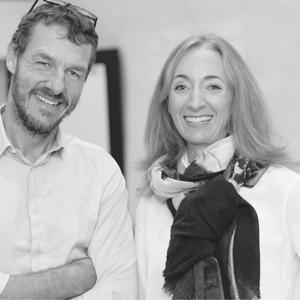
By Pia & BartBusiness
Download on the App Store

Deliberate Life™ episodes

  • 82. Energy Management
    Years ago we used a simple picture in our leadership programmes: the human battery. It has a capacity, it charges, it runs down, and sometimes it leaks. The leak is the part we find most interesting. It's the unresolved conflict, the decision you keep reopening, the email you've read fifteen times and still not answered. None of it looks like work, yet it drains you all the same. We dust the model off, along with the Harvard Business Review line we used to hand out, that energy rather than time is what performance really runs on.
    We talk about how the physical, mental, emotional and spiritual batteries pull on each other. A hard gym session after a day of vibe coding leaves the body tired and the head clear. The end of summer comes as a relief to two introverts who have been out and about for weeks. We compare our own leaks, from a nagging injury to 3 a.m. wake-ups to grief after losing a close friend, and own up to our "false friends": the glass of wine, the chocolate, the Netflix evening that feels like rest but doesn't top anything up. Spiritual energy turns out to be the one we're least sure about, and possibly a blind spot. We finish with a small habit worth trying: ask yourself how charged you are when you wake up, check again later in the day, and let that answer, rather than the gaps in your calendar, decide what you say yes to.

    33 min
  • 81. Solitude vs Loneliness
    We open by untangling three words that are often conflated but point to very different experiences: alone, lonely, and in solitude. Being alone is neutral — a simple fact of circumstance. Loneliness is an unwanted emotional state, a signal that connection is missing. Solitude is something else entirely — an intentional inner state that can happen just as easily in a crowded airport as in an empty room. We share personal examples of loneliness that stay with us precisely because they were so unexpected: feeling like a lost child in a Manila hotel room shortly after losing a mother, and feeling disconnected in a room full of friends — slipping away to the bathroom not to escape people, but to find yourself again.
    We explore loneliness as a signal with a function — much like hunger points you toward food, loneliness points you toward belonging and authentic connection. We discuss why some of the most connected people on earth — CEOs, celebrities, leaders — can feel profoundly lonely, drawing on the concept of loneliness at the top and the particular isolation of never quite knowing whether people are with you for who you are or what you represent. And we examine solitude as its own practice: how introverts and extroverts experience it differently, why the phone is often a bigger obstacle to true solitude than other people, and why being surrounded by noise and movement can sometimes make going inward easier, not harder. We close with two invitations: if loneliness shows up, stay with it long enough to hear what it's telling you — and if solitude appeals, try it somewhere unexpected.
    31 min
  • 80. Intuition
    We open with a reference to The Celestine Prophecy — James Redfield's novel built entirely around a man guided through Peru by intuition and meaningful coincidence — as the perfect entry point into a conversation about what intuition actually is, where it comes from, and how to trust it. We explore the science first: the gut and heart each contain their own neural networks, in constant dialogue with the brain, sending signals that shape our emotions and decisions in ways we rarely consciously register. Intuition, we suggest, may be the subconscious mind surfacing the intelligence of thousands of past experiences we can no longer consciously recall.
    We discuss how intuition is accessed — through slowing down, presence, and creating space — and how it gets blocked when we are over-stimulated, over-scheduled, and over-reliant on analysis. We explore synchronicity as one of the richest languages of intuition: what it means to stay open to meaningful coincidence, how to sit with the harder question of what a synchronicity is actually trying to tell you, and how the meaning we choose to make from these moments can itself become generative. We share personal examples — from a spontaneous trip to Valencia to a carefully considered decision made far from home — where intuition was the first and sometimes only nudge needed. We close with an invitation to experiment: lead with intuition, test it with your thinking mind where needed, and notice what happens when you trust the signal before you talk yourself out of it.
    30 min
  • 79. Elements
    We open with a story told by David Foster Wallace: two young fish swimming along, greeted by an older fish who remarks on the quality of the water. One young fish turns to the other and asks — what is water? It's the perfect entry point into a conversation about what we are so immersed in that we can no longer see. We explore the four classical elements — earth, water, fire, and air — not as abstract philosophy, but as mirrors for understanding ourselves and how we move through life.
    We share our personal attractions and resistances to each element, and what those preferences might reveal: fire as energy, courage, and directed action; water as emotional depth, flow, and the capacity to let go; earth as rootedness, stability, and authenticity; air as clarity, creativity, and the space between stimulus and response. We discuss what happens when any element falls out of balance — too much fire and you're heading for burnout; too little water and emotions go underground; too much earth and life starts to feel stuck. We introduce the Japanese practice of Shinrin-yoku — forest bathing — as a way of bathing the senses in nature one by one, and explore the science behind why time in nature so reliably restores us. We close with a simple invitation: notice which element you're drawn to right now, and consider what that pull might be telling you about where you are — and what you might need.
    30 min
  • 78. Forgiveness
    We open by clearing up one of the most common misunderstandings about forgiveness: that to forgive means to condone. It doesn't. Using the image of a thorn lodged in the body, we explore forgiveness as the act of removing that thorn—not for the person who put it there, but for yourself. We introduce four promises of forgiveness: I will not dwell on this incident; I will not use it against you; I will not speak of it to others; and I will not let it stand between us. We examine each promise honestly, including how rarely all four are truly kept, and what it means when they are.
    We explore forgiveness as a layered, often slow process—closer to emergence than decision—drawing on a deeply personal example of emotional closure reached nearly a decade after a divorce, including a consciously planned journey through psilocybin therapy, a family trip to Singapore, and a four-hour conversation that finally cleared what years of distance could not. We discuss the particular difficulty of self-forgiveness, why the subject and object being the same person makes it harder, and how an idealized self-image can make owning the impact of our choices feel almost impossible. We close by connecting forgiveness to emotional closure—forgiveness as the process, closure as the destination—and acknowledge that sometimes, when the other person isn't ready or available, forgiving yourself is the only path forward that remains in your control.
    33 min
  • 77. Conscientiousness
    We complete our journey through the Big Five personality traits with the fifth and final one: conscientiousness. We explore what it actually means—beyond the obvious associations with being organised and disciplined—examining how it shows up as reliability, self-discipline, integrity, and the drive to follow through on commitments to both self and others. Through personal examples ranging from calendar management and routines to deliberate life planning, we illustrate what high conscientiousness looks and feels like in practice, and why it can be both a superpower and a trap.
    We discuss the flipside—how high conscientiousness can tip into rigidity, perfectionism, and discomfort with chaos—and what people on both ends of the spectrum can learn from each other. We explore the connection between conscientiousness and flow states, the concept of "planned spontaneity" as a conscious workaround for the highly conscientious, and how this trait plays out in leadership contexts. We also reflect on how our relationship with low conscientiousness in others has evolved over time—from irritation to acceptance—drawing on Stoic principles along the way. We close with a simple invitation: identify where more conscientiousness would serve you, and equally, where a little less of it might set you free.
    28 min
  • 76. Heart
    We open with a quote that sets the tone: the longest journey is from the head to the heart. We explore what it truly means to live from the heart—not as a sentimental idea, but as a fuller way of accessing ourselves and connecting with others. We discuss heart intelligence alongside gut and brain intelligence, and introduce the concept of heart coherence: the state in which nervous system, mind, and heart are aligned, playing the same frequency. Drawing on the HeartMath Institute's research on heart rate variability, we explore how coherence can be cultivated individually—and how it extends outward into relationships, teams, and even sixty thousand people singing together in a football stadium.
    We examine the open heart versus the closed heart, and how fear, stress, and judgment trigger a contraction that cuts us off from the fullest version of ourselves. We discuss practical ways to stay open—or return to openness—including naming what we are experiencing out loud, imagining an energetic opening in the chest, and asking the question: what would love see right now? We close with an invitation to reflect on the moments when you felt most truly yourself—because that, we suggest, is usually where head and heart were most in sync.
    25 min
  • 75. Space
    We open with a quote that sets the tone perfectly: if the mind is not overcrowded, not ceaselessly occupied, there is space—and from that space, everything else comes. We explore space as a multi-layered concept, distinguishing between space in the mind, space in time, and space in the physical environment. We discuss how transit time—the in-between moments connecting one event to the next—holds rich potential for stillness and reflection, and how the pandemic illustrated what happens when that space collapses.
    We examine the distinction between functional space, where we operate our lives, and sacred space, where we connect with something deeper. Through personal examples—Ubud as a near-inevitable portal to spiritual connection, the sauna ritual as a gateway to creativity, and a newly moved-into flat as an invitation to consciously design a sacred corner—we explore how physical environments shape our inner states. We touch on neurodesign, the consecrating effect of returning to the same space for the same ritual, and how space and practice reinforce each other over time. We close with two simple invitations: reflect on your transit time, and consider which spaces in your life are functional, which are sacred, and which could become something more.
    20 min
  • 74. Grief
    We explore grief through the immediate and raw experience of losing a parent, beginning with the story of receiving news of a mother's death whilst scuba diving in a remote part of the Philippines. We discuss the intensity of those first nine days—the loneliness of travelling home alone, the profound sadness of missing someone physically, and the complex emotions of being both the griever and the anchor for an extended family's collective grief. Through personal reflection, we examine how grief and love are inseparable partners—there is no grief without love—and how the shared experience of loss can strengthen family bonds. We discuss the power of conscious grieving: using morning pages to process emotions, the cathartic experience of writing a eulogy, and the comfort found in spiritual beliefs about continued presence beyond physical death.
    We broaden the conversation beyond death to examine other forms of grief: lost dreams, children growing up, relationships ending, and futures that will never materialise. We explore how grief for these losses is often more complex and prolonged than grief from death, involving anxiety and uncertainty alongside sadness. We discuss the importance of allowing grief space rather than suppressing it, whilst also recognising the need to progress rather than becoming stuck in difficult emotions. We reflect on the concepts of "good death" and the "say it now" philosophy—expressing love and appreciation whilst people are still alive. We conclude that conscious, deliberate grieving, though profoundly difficult, creates opportunities for deeper learning, stronger connections, and meaningful acceptance of loss in all its forms.
    34 min
  • 73. Deliberate Life
    We share reflections from Bali, where we've spent two weeks recording our long-awaited Deliberate Life programme—a project eight years in the making. We discuss the unique energy of Ubud, Bali's spiritual centre, where ceremonies happen daily and spiritual practices are woven into everyday life. Through personal examples from our time here—cacao ceremonies, sound meditations, temple purification rituals, and tarot card readings—we explore how immersing ourselves in this environment has enriched both our work and our experience of deliberate living. We reflect on the power of setting intentions through ritual, describing how three guiding principles emerged from our opening ceremony: magic, trust, and challenge.
    We examine how the Deliberate Life framework applies to our own lives during this intense period of creation. The week brought both profound joy and unexpected grief, with news of a best friend's terminal cancer arriving mid-project—a stark reminder of memento mori and the importance of seizing the day. We discuss the value of zooming out to see life's bigger picture, appreciating what we have rather than fixating on details to fix. We explore the concept of ikigai—work that combines what you love, what you're good at, what the world needs, and what you can be paid for—and recognise this project as our own ikigai. We conclude by announcing that the podcast will be renamed "Deliberate Life" and that our standalone programme, designed to help others move from autopilot to intentional living, will be available soon.
    29 min

About Deliberate Life™

From the publisher's feed

Executive coaches Pia & Bart on living deliberately. Real conversations for leaders and entrepreneurs — about work, relationships, health, and everything else that matters.