Deliberate Life™

Deliberate Life™

By Pia & BartBusiness
Download on the App Store

Deliberate Life™ episodes

  • 42. Life Design - Part 2
    This episode is a direct response to a request of one of our clients. We suggest you listen to this episode in conjunction with episode 33, which was released the week before Christmas one year ago. We again discuss the Life Design process, but now dive deeper into the framework, the categories and the questions. Listen to episode 33 (Life Design - part 1) first, and make sure you have a notebook and a pen to hand (or a laptop with your favourite note taking app). A friend, partner or coach to do this together with and discuss your insights is optional. Enjoy!
    31 min
  • 41. Personal growth - Part 1
    Another episode where Bart has no idea in advance what we are talking about. This is becoming a bit of a habit for Pia! We start by addressing this question: What are the most interesting questions you get about our work? What is the elevator pitch of our work? Then we go into this issue: How to deal with people at work that are not as passionate and engaged about work as you are? A lot of what we are getting into here is about personal development, personal growth. So we continue the discussion about this and decide to call this episode “Personal Growth”. We discuss why personal growth is so important to us, the work with our clients, and the world. Then we continue discussing some of the most important ingredients of personal growth, such as personal values, curiosity, presence, experimenting and courage. Towards the end we decide there will need to be a part-2 or even a part-3 to this episode, as this is such a massive subject.
    26 min
  • 40. Change
    Interesting episode this, if we say so ourselves. We continue a (not recorded) conversation we had at AfrikaBurn three years ago, where we discussed stuckness and the question: How can stuckness become unstuck? Neither of us could remember the answer we had then, unfortunately. But we are having a go at it today. A part of the episode is taken up by Pia coaching Bart on changes in his life, which was very nice (thank you Pia).
    We (also) discuss: Fear of uncertainty, principle of impermanence, intentional experimenting, the foolishness of clinging, the distinction between moving towards and moving away from, the importance of seeking opportunities for change, the concept of life phases, the importance of solitude (internal time), and the related practices of meditation, reflection, journaling and reading and the believe that it’s ok, even desirable, to be uncomfortable and that we can learn from the negative emotions, when going through big changes.
    Apologies for the bad sound quality on Bart’s side.
    30 min
  • 39. Ageing
    We are still in the South of Spain (on the last morning before flying out), and we are tackling a topic which somehow has come up quite a lot this week: Ageing. (There are a lot of retired people in this part of Spain). We discuss the differences between chronological, mental and biological age. We talk about the benefits of hanging out with people that are half a generation older and half a generation younger than oneself. We discuss the concept of settling point: The point in one’s life when one stops learning, being curious and adventurous. We briefly discuss longevity, lifespan and healthspan. We argue that you are never too old to grow as a human being, whether mentally, emotionally or spiritually.
    21 min
  • 38. Deep Work
    We are in the South of Spain, on our twice-per-year deep work days to prepare for the second half of the year client work. Quite appropriate then to discuss deep work. The why, what, how and so what of deep work. We discuss why it’s important to be deliberate about having rituals and routines around deep work, we define deep work as opposed to shallow work, we discuss how to do it: Plan for it (annually, quarterly, monthly, weekly, daily), how to deal with distractions, the importance of specific time and space, chunking, intentions, agenda building and we give examples of what listeners can do as next steps after listening to this podcast episode.
    27 min
  • 37. Fears
    We are in Stockholm, just after midsummer, when the light is always on. It has been a while since the last recording and we start by discussing what gets in the way of our podcasting: Health, bricks & mortar - very much level-1 stuff. Which then gets us into the topic of this episode: Fears. We remind ourselves of the three lower levels of the Barrett model and how we can use the model to provide a framework for fears. We make the distinction between rational and irrational fears. We discuss the role of the nervous system in fear. What happens when we allow fears to hold us back from our personal development? What is the connection between fear, authenticity, and purpose? How do the body, mind and emotions interact in fear? How can we learn from fear? How can we deal with fear, the thoughts behind the fears and the emotions, the physical sensations in the body? As usual, to illustrate this fascinating topic, we discuss lots of personal examples.
    28 min
  • 36. Openness
    The birth of this episode is quite different. We created it and then put it to rest for a number of months. Then I recently listened to it again when I had one of those rare days of hardly any meetings and lots of time to reflect and create. I suppose I had the space to be open and to follow my curiosity.
    There was a reason we didn’t release the episode at the beginning of the year. You tell us what that reason might be. In the end, the topic Openness is too relevant and important not to engage in and not to have dialogues about. Especially now. If you are familiar with the Big Five personality theory, you also know that Openness is one of the five traits. It indicates how open-minded a person is. High level of openness to experience indicates you enjoy trying new things. You are imaginative, curious, and open-minded. Where do you sit on the scale of openness?
    23 min
  • 35 Nature
    I (Bart) have never felt like I learned so much from recording an episode of our podcast than this one. Nature is something that is very close to Pia’s heart and she has a lot more opportunity to be in nature than most people that live in cities. For me it’s different, city parks are normally the closest I get to nature. In this dialogue, we touch on the importance of nature to us, human beings, for physical and mental health reasons, personal growth, and even leadership and organisational growth. There is a lot in this episode, we hope you enjoy it as much as we did recording it.
    28 min
  • 34 Quality of life
    This episode is quite different to what you are used to: Rather than in our normal mega-professional studio environment (just kidding), we find ourselves recording this in a beach restaurant, with lots of background noises. We discuss quality of life. Why is it
    important? What does it mean to us? For us, health and freedom is important, spontaneity, not too much stress, being able to decide who we spend time with, spending time on what we want to spend time on, choosing experiences we enjoy, really to make our passion
    our work, and making our home what we want it to be.
    We discuss the opportunities the pandemic potentially may have given us to enhance our quality of life, potentially without taking away anything else. We discuss that some enhancements may cost some money, and other opportunities to increase our quality of life
    doesn't have to cost anything. So, quality of life is also related to our relationship with money, and in particular our relationship to spending money. Quality of life is its own important category of Life Design: It is about being aware of what is important
    to us, and to be more deliberate about how we can make that happen.

    17 min
  • 33. Life design
    Our Christmas present to you, a podcast episode on Life Design. This is a process we use with some of our clients and we discuss in general terms how we go about this ourselves and with others, and the benefits of having a structured approach to reflecting on our lives and setting intentions. A naturally appropriate time to do this is around the end of the year and the start of the new year. What are the highs and lows of 2021, in different categories of our lives, and what could be some intentions, actions or routines we may set for these categories for 2022. We can also do this for a longer period, say 5 years, or shorter periods such as quarters of the year, months or even weeks. We give some tips on how to go about this in the coming few weeks. Enjoy!
    22 min

About Deliberate Life™

From the publisher's feed

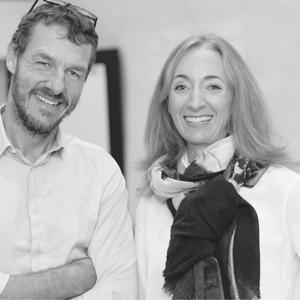
Executive coaches Pia & Bart on living deliberately. Real conversations for leaders and entrepreneurs — about work, relationships, health, and everything else that matters.