Demystifying Microsoft

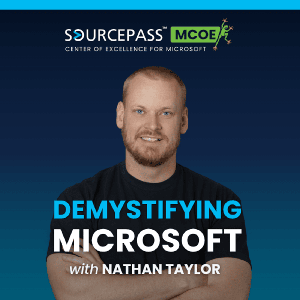
Demystifying Microsoft

By Sourcepass Center of Excellence for MicrosoftNewsTechnologyEducationHow ToTech News
Download on the App Store

Demystifying Microsoft episodes

  • Microsoft 365 Security Simplified: 8 Must‑Do Tenant Hardening Moves to Cut Breach Risk
    In this episode, Nathan Taylor and Tracy Harper discuss the dramatic uptick in phishing volume and the sophisticated "direct send" exploits currently targeting tenants. They move beyond technical configurations to highlight the human element, sharing a cautionary tale about the devastating financial impact of business email compromise.


    The discussion clarifies the often confusing Microsoft Defender landscape, comparing Defender for Business, Plan 1, and Plan 2 across both Endpoint and Office 365. You will understand how to leverage Business Premium as a comprehensive security foundation and why a holistic tenant assessment is the first step toward true resilience. Nathan and Tracy also provide actionable insights into Conditional Access Policies and the transition from basic security to a hardened posture that survives modern identity attacks.


    What you’ll learn:


    • The mechanics of "direct send" phishing attacks and why they bypass standard security controls.

    • A breakdown of the Defender for Business vs. Plan 1 and Plan 2 licensing models.

    • How Business Premium provides 85% of enterprise-level security for organizations under 300 seats.

    • The eight critical Conditional Access Policies every tenant should implement to enforce identity protection.

    • Why accounting controls and human verification remain the final line of defense against social engineering.

    • How a holistic 365 security assessment identifies gaps in SharePoint, Teams, and email configuration.


    About the Guest


    Tracy Harper is a Client Success Manager at Sourcepass MCOE and has spent the last decade acting as a primary advocate for her clients. Drawing on her professional experience in the banking sector, she provides a pragmatic approach to risk management and identity protection. She is focused on simplifying the Microsoft landscape for organizations, ensuring they have the right tools and strategies to defend against sophisticated phishing attacks.


    About the Host

    Nathan Taylor is the Senior Vice President and Global Microsoft Practice Leader at Sourcepass, where he leads the Sourcepass Center of Excellence for Microsoft. His work is grounded in a simple idea: Microsoft should not be complicated. By removing complexity, confusion, and frustration from the Microsoft ecosystem, Nathan helps organizations focus on outcomes while getting the most from their Microsoft investment.

    Episode Resources:


    Contact us here: https://sourcepassmcoe.com/demystifying-microsoft-contact?utm_source=podcast&utm_medium=show-notes&utm_campaign=demystifying-microsoft-show
     
    Learn more about our Microsoft 365 Email Security Assessment  https://sourcepassmcoe.com/microsoft-365-security-assessment-sourcepass-mcoe?utm_source=podcast&utm_medium=show-notes&utm_campaign=demystifying-microsoft-show

    Tracy Harper on LinkedIn

    Nathan Taylor on LinkedIn


    Episode Highlights


    [00:03:56] The Evolution of EDR


    The team explores why antivirus has transitioned into Extended Detection and Response (EDR) through Defender for Endpoint. This integrates traditional protection with advanced capabilities built directly into the Microsoft platform to provide better visibility. It represents a move toward more proactive threat hunting rather than simple reactive scanning.


    [00:06:46] Small Business Security Value
    ]Nathan explains why Business Premium is considered the "hero SKU" for organizations with fewer than 300 seats. This specific license pack includes nearly 85% of the capabilities found in enterprise-level Plan 2 security. It allows smaller teams to maintain a high security posture without the enterprise price tag.


    [00:09:44] The Human Cost of Phishing


    Tracy shares a personal story regarding a $100,000 loss from a sophisticated email scam to highlight the stakes of social engineering. This narrative proves that technology alone cannot solve security if there is no human in the loop for verification. It underscores the necessity of pairing technical tools with robust accounting controls.


    [00:13:51] Securing the Direct Send Vulnerability


    The host warns about a recent surge in attackers exploiting the default direct send function in Microsoft 365 tenants. This legitimate functionality is being used to bypass security filters and send high volumes of internal phishing emails. Nathan notes that this can be disabled with a single PowerShell command to immediately reduce risk.


    [00:17:16] MFA as Table Stakes


    While many organizations feel safe with partial MFA, Nathan insists that it must be enforced for every single user to be effective. Relying only on global admins to have MFA leaves the rest of the environment vulnerable to identity attacks. Using conditional access policies is the most effective way to ensure this protection is consistent across the tenant.


    [00:20:10] Pragmatic Tenant Hardening


    The conversation shifts to how Sourcepass MCOE approaches security through assessments rather than just selling licenses. They focus on "low-hanging fruit" to close immediate gaps in email, SharePoint, and Teams configuration. This pragmatic approach ensures that the most effective controls are implemented quickly to improve overall resilience.


    Episode Resources:


    Contact us here: https://sourcepassmcoe.com/demystifying-microsoft-contact?utm_source=podcast&utm_medium=show-notes&utm_campaign=demystifying-microsoft-show
     
    Tracy Harper on LinkedIn

    Nathan Taylor on LinkedIn


    Demystifying Microsoft is handcrafted by our friends over at: fame.so
    24 min
  • What Microsoft Just Changed and Why It Impacts your IT Roadmap
    Microsoft is moving quickly across AI, security, and licensing. In this episode, Nathan Taylor highlights the updates that will have real operational and financial impact for IT leaders.


    The conversation centers on three key shifts:


    1. AI is becoming embedded and harder to control


    With the introduction of M365 E7, Agent 365, and Copilot enhancements, Microsoft is bundling AI deeper into the platform. While the value is compelling, it also introduces new governance challenges especially around shadow AI, data exposure, and user behavior outside sanctioned tools. New controls in Edge, Purview, and Global Secure Access aim to address this, but they require intentional rollout.


    2. Security is shifting to identity and automation


    Traditional perimeter security is no longer the focus. Microsoft is doubling down on identity-centric security, AI-driven threat detection, and automated response. Updates from RSA including agentic SOC capabilities, voice threat detection, and expanded data loss prevention signal where security investments are heading.


    3. Licensing is getting more complex and more consequential


    Between upcoming price increases, changes to renewal/grace periods, and new constructs like the Extended Service Term (with a 23% premium), licensing decisions are carrying more financial risk. At the same time, new bundled offers like E7 may be cost-effective but only if aligned correctly to usage.


    The episode also highlights practical changes that can improve day-to-day operations, including:


    • Audio playback for Teams meeting recap

    • Entra ID backup and recovery

    • Safer management of enterprise 


    About the Host:


    Nathan Taylor is the Senior Vice President and Global Microsoft Practice Leader at Sourcepass, where he leads the Sourcepass Center of Excellence for Microsoft. His work is grounded in a simple idea: Microsoft should not be complicated. By removing complexity, confusion, and frustration from the Microsoft ecosystem, Nathan helps organizations focus on outcomes while getting the most from their Microsoft investment.


    Episode Highlights:


    [00:01:26] More Than a Product Launch
    Some announcements feel incremental but this one doesn’t. Nathan touches on a release that signals a broader change in how Microsoft is thinking about AI across its ecosystem. It raises questions about how organizations will manage something that is no longer confined to a single tool or workflow.


    [00:04:23] When Meetings Start Turning Into Content
    Catching up on meetings has always been a time tradeoff. This update starts to change how that time can be used. It hints at a future where information flows differently, but also leaves open questions around how teams will adapt to it.


    [00:06:15] The Problem No One Fully Sees Yet
    Shadow AI is not new, but it is expanding faster than most teams can track. Nathan walks through why visibility is still a challenge even with existing tools. The interesting part is how Microsoft is trying to solve it without fully controlling it.


    [00:09:20] A Small Change That Changes Risk Decisions
    Some updates do not get much attention but quietly alter how teams respond to incidents. This is one of them. It introduces a middle ground that did not exist before, which could change how cautious teams approach certain actions.


    [00:12:20] Where Security is Actually Moving
    The conversation moves away from traditional security thinking into where attention is now shifting. Identity, automation, and AI-driven responses start to take center stage. It is not just about protection anymore, but about how fast systems can react.


    [00:15:53] Why Timing is Becoming a Decision Factor
    Pricing changes are expected, but timing them is becoming more complex. Nathan outlines how renewal cycles and pricing updates intersect. It leaves a practical question for teams to consider before making any changes.


    Episode Resources:


    Contact Us:We help teams simplify and optimize Microsoft every day. If you want a clear view of where you stand and what to change, we can work through it with you. 

    Sourcepass MCOE: https://sourcepassmcoe.com/demystifying-microsoft-contact?utm_source=podcast&utm_medium=show-notes&utm_campaign=demystifying-microsoft-show
     
    Nathan Taylor on LinkedIn

    Demystifying Microsoft is handcrafted by our friends over at: fame.so

    28 min
  • Avoiding a Surprise Bill for Expired Microsoft Subscriptions

    Microsoft is officially ending the era of free thirty-day grace periods for expired licenses. In this episode, Nathan Taylor and Austin Kelly break down the mechanics of Extended Service Terms (EST), a new paid month-to-month extension for Microsoft 365, Dynamics, and Power Platform subscriptions.


    They break down how this 23% premium affects organizational budgets and renewal workflows, particularly within the New Commerce Experience framework. The discussion highlights why accidentally falling into EST can lead to unexpected billing surges and how IT leaders can instead use it strategically during complex transitions or leadership changes.


    Beyond the technical shifts, they address specific optimization paths, such as moving from legacy Enterprise SKUs to Business Premium to capture better features at lower costs. Understanding these timelines is essential for maintaining service continuity without overpaying for a state of restricted access.


    What you’ll learn:

    • The financial breakdown of the 23% EST premium compared to standard monthly terms.
    • Critical enforcement dates for CSP and direct MCA customers starting May 2026.
    • How to navigate the restricted state of EST, where license modifications are blocked.
    • Strategies for upgrading from Office 365 E3 to Business Premium for companies under 300 seats.
    • The role of APIs and billing platforms in managing multi-subscription renewal dates.
    • Leveraging Copilot for Business SKUs to reduce per-user costs by nearly ten dollars.


    About the Hosts


    Nathan Taylor is the Senior Vice President and Global Microsoft Practice Leader at Sourcepass, where he leads the Sourcepass Center of Excellence for Microsoft. His work is grounded in a simple idea: Microsoft should not be complicated. By removing complexity, confusion, and frustration from the Microsoft ecosystem, Nathan helps organizations focus on outcomes while getting the most from their Microsoft investment.
    Austin Kelly is a Client Success Manager at Sourcepass MCOE, a company focused on helping organizations simplify, secure, and optimize their Microsoft environments. He works closely with businesses to evaluate licensing, improve security posture, and align Microsoft investments with real operational needs.
    Episode Highlights


    [00:02:43] The Shift to Paid Grace Periods


    The team explores why the transition between license states is becoming more rigid under new Microsoft policies. This shift changes how organizations must view the final days of a subscription term. It introduces a financial layer to what was previously a simple administrative window.


    [00:07:34] Why Free Insurance is Ending


    Austin describes a specific safety net that partners have relied on for years to protect clients from service drops. This mechanism is undergoing a fundamental change in how it is billed and accessed. The discussion centers on why free access is no longer part of the equation.


    [00:10:10] The Cost of Indecision


    Nathan points out a specific percentage increase that might catch unprepared IT departments off guard during their next billing cycle. This premium applies to several major product families, including Dynamics and Power Platform. The conversation suggests a way to calculate the true cost of falling into this new status.


    [00:13:59] Strategic Use of EST


    The host discusses a specific scenario where a more expensive licensing path might actually be the correct strategic choice. This applies to organizations facing internal delays or leadership transitions. It highlights a tool for maintaining access when traditional renewals are not an option.


    [00:17:15] Identifying Obsolete Enterprise Licenses


    There is a specific threshold for seat counts that makes certain legacy enterprise licenses unnecessary. The team examines a better alternative that offers more features for a lower price point. This segment focuses on identifying which organizations are currently overpaying for outdated bundles.


    [00:22:41] The Copilot Pricing Advantage


    A significant price gap exists between different versions of AI productivity tools that many users might overlook. Austin explains how to identify if your organization qualifies for the more cost-effective tier. It turns out that the label on the license dictates the monthly savings.

    Episode Resources:

    Contact Us:Sourcepass MCOE: https://sourcepassmcoe.com/demystifying-microsoft-contact?utm_source=podcast&utm_medium=show-notes&utm_campaign=demystifying-microsoft-show

    Austin Kelly on LinkedIn
    Nathan Taylor on LinkedIn

    Demystifying Microsoft is handcrafted by our friends over at: fame.so
    25 min
  • How Does E7 Change the Way You Plan for Microsoft AI Costs?

    Microsoft’s latest announcements are reshaping the conversation around identity management, cybersecurity, AI governance, and enterprise cost strategy. While much of the attention has focused on new capabilities, the larger shift is happening in how organizations will operate, secure AI workloads, and manage consumption-based pricing at scale.


    Microsoft-focused consultant Mike Hughes joins Nathan Taylor to break down what E7 licensing actually represents and why it is designed for a specific class of enterprise organizations preparing for autonomous AI agents and agentic workflows. As many IT leaders are already seeing, the value of these platforms becomes far more relevant once AI adoption moves beyond experimentation and into operational deployment.


    The discussion explores how Microsoft is evolving from traditional licensing models toward bundled enterprise value combined with AI consumption pricing through tokens, Copilot usage, and agent-based compute. Mike also examines what recent E5 licensing changes may signal about Microsoft’s broader enterprise strategy.


    The conversation also addresses the growing complexity of the AI ecosystem. Rather than relying on a single large language model, enterprises are increasingly being pushed toward multi-model AI environments that require flexibility, interoperability, and stronger governance frameworks. Microsoft’s positioning around AI integration and orchestration reflects that reality.


    The episode closes with a discussion on AI governance, identity security, and operational oversight. As AI agents become embedded across workflows, IT and security leaders will need to manage them with the same rigor applied to human users, including visibility, permissions, access controls, compliance, and lifecycle management.


    What You’ll Learn:

    • Why E7 licensing is built for enterprises deploying autonomous AI agents
    • How AI consumption models are reshaping Microsoft licensing and enterprise costs
    • What recent E5 licensing changes may indicate about Microsoft’s long-term strategy
    • Why multi-model AI environments are becoming the new enterprise reality
    • How agent sprawl introduces new governance, identity, and security challenges
    • What IT and security teams should prioritize now to prepare for AI-driven operations


    About the Guest:


    Mike Hughes works closely with enterprises and MSPs to build and secure Microsoft environments. He previously served as a CTO managing large-scale operations across multiple companies and now focuses on helping organizations navigate Microsoft 365, security, and AI adoption. He also develops frameworks and tools to help organizations mature from basic security setups to advanced AI-driven environments.


    Episode Highlights:


    [00:01:30] Why E7 Isn’t for Everyone
    The conversation starts by setting boundaries around who E7 is built for. It quickly becomes clear that most organizations may not need it yet, which raises a bigger question about where Microsoft expects customers to go next.


    [00:03:20] The Changes In E5 Licensing
    Recent changes to E5 are not just incremental updates. They hint at a broader shift in how Microsoft is packaging security, analytics, and AI into its core offerings.


    [00:06:10] AI Isn’t Free Even When It Looks Bundled
    The discussion moves into how AI is being bundled into licenses, but still carries underlying costs. There’s a tension between accessibility and control that organizations will need to understand early.


    [00:13:15] The Quiet Expansion of Identity and Security
    New additions across identity, access, and infrastructure are expanding what Microsoft covers. It raises questions about where third-party tools still fit in.


    [00:18:29] What It Means to Treat Agents Like Employees
    The idea of agents behaving like users introduces a different kind of complexity. Governance, visibility, and accountability start to look very different in this model.


    [00:25:47] Why IT Teams Can’t Sit This One Out
    The episode closes with a clear message. AI adoption is already happening inside organizations, whether IT teams are ready or not.


    Episode Resources:

    Our team can review and audit your current licenses, helping you align the right licensing strategy to your organization’s needs.

    Contact Us:
    https://sourcepassmcoe.com/demystifying-microsoft-contact ?utm_source=podcast&utm_medium=show-notes&utm_campaign=demystifying-microsoft-show;

    Mike Hughes on LinkedIn
    Nathan Taylor on LinkedIn


    Demystifying Microsoft is handcrafted by our friends over at: fame.so
    40 min
  • How to Choose Between Business Premium, E3, and E5

    Join hosts Nathan Taylor and Austin Kelly from Sourcepass MCOE as they dive into the critical decisions behind Microsoft licensing.


    They break down one of the most common and misunderstood decisions IT leaders face: choosing the right Microsoft 365 license. From Business Premium to E3 and E5, the conversation moves beyond feature lists into real-world decision-making, cost optimization, and security trade-offs.


    The discussion explores when Business Premium is more than enough, why many organizations stay on E3 longer than they should, and how E5 changes the game for companies consolidating security and compliance tools. They also unpack how add-ons like Defender and Purview can bridge the gap without forcing a full upgrade.


    This episode is a guide to cutting through Microsoft licensing complexity and making decisions that actually align with business outcomes.


    What You’ll Learn:

    • Why Business Premium covers more than most organizations think
    • How to evaluate whether E3 is still worth it in 2026
    • When E5 becomes a strategic advantage, not just a cost increase
    • How to use Defender and Purview to unlock advanced security without upgrading fully
    • Why license consolidation reduces both cost and operational complexity
    • How to approach renewals and pricing changes strategically


    About the Guest:


    Austin Kelly is a Client Success Manager at Sourcepass MCOE, a company focused on helping organizations simplify, secure, and optimize their Microsoft environments. He works closely with businesses to evaluate licensing, improve security posture, and align Microsoft investments with real operational needs.


    Episode Highlights:


    [00:01:00] Why Licensing Decisions Are Being Revisited
    Most organizations only rethink licensing when renewal season forces the conversation. The problem is, these decisions are often made reactively, without a clear understanding of current usage or future needs. This creates a cycle of carrying forward suboptimal setups year after year.


    [00:04:00] The Case for Business Premium
    There’s a reason this SKU keeps coming up as a baseline recommendation. It brings together security, device management, and identity in a way that covers most real-world needs. The conversation explores why many organizations underestimate how much it already includes.


    [00:12:50] Extending Capabilities Without Jumping to E5
    Upgrading isn’t always the most efficient path forward. There are targeted ways to layer additional capabilities that address specific gaps without overcommitting. This section reframes how to think about incremental upgrades versus full transitions.


    [00:26:00] The Trade-Offs of Mixing Licenses
    Combining different SKUs can offer flexibility, especially as organizations scale. But it also introduces inconsistencies in features and access across users. This creates edge cases that require more deliberate planning than most teams anticipate.


    [00:30:00] How Licensing Terms Shape Cost Strategy
    It’s not just what you buy, it’s how you buy it. Different commitment models and payment structures can significantly impact cost over time. This segment highlights how organizations can use terms strategically rather than treating them as a formality.


    [00:32:30] When Consolidation Replaces Point Solutions
    Many organizations are running multiple tools across security, compliance, and monitoring. The conversation explores when it makes sense to bring those capabilities into one ecosystem. It’s less about features and more about how data and workflows come together.


    Episode Resources:
    Contact Us:

    Sourcepass MCOE Website: https://sourcepassmcoe.com/demystifying-microsoft-contact?utm_source=podcast&utm_medium=show-notes&utm_campaign=demystifying-microsoft-show

    Austin Kelly on LinkedIn
    Nathan Taylor on LinkedIn

    Demystifying Microsoft is handcrafted by our friends over at: fame.so
    42 min
  • The Microsoft 365 Security Mistakes That Lead to Breaches

    Business email compromise isn’t going away—Nathan Taylor continues the conversation with a focus on how organizations can actually secure their Microsoft 365 environments.


    Most security issues come from gaps in configuration and inconsistent enforcement of basic controls. Nathan walks through how to approach tenant hardening step by step, starting with understanding your current environment through an assessment.


    From there, he breaks down how to prioritize high-impact changes. The focus stays on identity and access, where MFA and conditional access policies play a central role. He explains why identity has become the primary security boundary and how small misconfigurations can create entry points for attackers.


    The episode also covers email security, including DMARC, SPF, and phishing protection, before moving into risks like dormant accounts and unmanaged applications. As the conversation progresses, Nathan touches on more advanced threats like token theft and how approaches like FIDO2 authentication and compliant device policies help reduce exposure.


    What You’ll Learn:
    • How to identify and prioritize Microsoft 365 security gaps
    • Why MFA and identity protection are the foundation of tenant security
    • How email security settings impact phishing and spoofing risk
    • What risks dormant accounts and unused devices create
    • How FIDO2 authentication helps defend against advanced attacks
    • Why security needs to be approached as an ongoing process


    About the Speaker:

    Nathan Taylor is Senior Vice President and Global Microsoft Practice Leader at Sourcepass, where he leads the Sourcepass Center of Excellence for Microsoft, also known as the Sourcepass MCOE. With nearly two decades of experience, he helps organizations navigate complex Microsoft cloud and security decisions by turning technology into secure, scalable outcomes.  

    Episode Highlights:


    [00:05:30] Starting with an Assessment
    The first step in securing a tenant is understanding what exists today. Nathan explains how running an assessment helps identify gaps and focus on improvements that reduce risk quickly without overwhelming teams or disrupting users.


    [00:12:40] Why Identity is the New Security Boundary
    Security has shifted from network perimeters to user identity. This section explores why MFA, conditional access, and authentication methods are now the most critical controls for preventing unauthorized access.


    [00:20:15] Dormant Accounts as a Risk Factor
    Unused accounts often go unnoticed but remain accessible. These accounts are typically not secured with MFA and can be exploited through password resets or social engineering, making them a common entry point for attackers.


    [00:27:10] Strengthening Email Security Controls
    Email continues to be the primary attack vector. Nathan outlines how DMARC, SPF, and Defender policies help reduce phishing and spoofing risks and why many tenants are still misconfigured.


    [00:31:20] Defending Against Token-Based Attacks
    More advanced attacks target authentication tokens instead of credentials. This section explains how FIDO2 authentication and device-based policies make it harder for attackers to gain persistent access.


    Episode Resources:

    Assess your Microsoft 365 Security Posture
    Not sure where identity or access gaps exist in your tenant? A Microsoft 365 Security Assessment helps surface real risk and prioritize the next steps. Get a clear view of your exposure: https://sourcepassmcoe.com/m365-security-assessment-sourcepass-mcoe


    Harden your Microsoft 365 environment
    Many compromises succeed because foundational settings are missed. This checklist highlights the core controls every tenant should review. Validate your hardening baseline: https://sourcepassmcoe.com/articles/microsoft-365-hardening-checklist-sourcepass-mcoe


    Close gaps with critical Conditional Access policies
    Misconfigured Conditional Access remains a common entry point for attackers. This guide outlines the policies every tenant should enforce. Review the must have Conditional Access policies: https://sourcepassmcoe.com/articles/top-conditional-access-policies-for-m365-security-sourcepass-mcoe

    Demystifying Microsoft is handcrafted by our friends over at: fame.so
    29 min
  • Where Microsoft 365 E7 Fits in a Security First AI Strategy

    Nathan Taylor and Lindsay Cowan from Sourcepass Center of Excellence for Microsoft unpack Microsoft’s E7 launch and the broader shift taking place across enterprise AI. As many organizations are already seeing, the introduction of another SKU is less about adding capability and more about consolidating control across AI, identity, and security.


    They explore what is included in E7. It builds on E5 and adds Entra Suite, Copilot for Microsoft 365, and Agent 365. Together, these components reflect a more integrated approach, where AI is embedded into workflows while governance, access, and data controls are addressed alongside it rather than after the fact.


    The conversation then shifts to how AI is changing operational expectations. Tools are moving beyond assistance and beginning to execute tasks independently. Lindsay highlights that, as many IT leaders already recognize, the core concern is not what AI can do, but how it operates within defined policies and boundaries. The episode closes with a practical view on adoption, including testing in controlled environments and preparing for the governance and security implications that follow.


    What You’ll Learn:
    Why Microsoft introduced E7 and what it signals about the evolving AI and security landscape
    How E7 builds on E5 and where the additional control and visibility come from
    What Entra Suite, Copilot, and Agent 365 contribute to a more governed AI environment
    Why AI agents introduce new governance, compliance, and oversight challenges
    How Copilot is evolving from assistance to execution within enterprise workflows
    What to consider before scaling AI across teams and environments


    About the Guest:
    Lindsay Cowan is a Senior Manager, Sales and Business Development at Sourcepass Center of Excellence for Microsoft, focused on helping organizations simplify, secure, and optimize their Microsoft environments. She works closely with clients to evaluate emerging capabilities across AI and security, translating them into practical, governed use cases within enterprise environments.


    Episode Highlights:

    [00:01:19] Why Microsoft is Launching E7 Now
    Organizations are already evaluating multiple AI solutions and, as you know, balancing innovation with risk. Microsoft’s approach with E7 is to consolidate AI, security, and identity into a single SKU that prioritizes both capability and control.


    [00:05:40] What E7 Actually Includes
    E7 builds on E5 and layers in Entra Suite, Copilot for Microsoft 365, and Agent 365. This reflects a shift away from fragmented tooling toward a more unified, policy-driven ecosystem.


    [00:10:41] The Question Organizations Should Be Asking About AI Agents
    The focus is moving from capability to accountability. AI agents can perform tasks, but the real challenge lies in ensuring consistent behavior, auditability, and alignment with organizational policies.


    [00:16:20] AI Moving from Assistance to Execution
    Copilot is beginning to take on more active roles within workflows. As many teams are already seeing, this changes how productivity, ownership, and oversight need to be managed.


    [00:18:21] AI Security is Expanding the Risk Surface
    AI introduces new categories of risk, including data exposure, misuse, and compliance gaps. Microsoft is embedding governance and security controls to address risks that traditional models did not account for.


    Episode Resources:


    Have questions about E7, Copilot Cowork, or your Microsoft licensing stack? Talk to the Sourcepass MCOE team.https://sourcepassmcoe.com/demystifying-microsoft-contact
    Want to dig deeper into the topics covered in this episode? Start here.
    Is Microsoft 365 E7 Worth the Upgrade from E5? https://sourcepassmcoe.com/articles/is-m365-e7-worth-the-upgrade-from-e5
    Copilot Cowork Brings Agentic Automation to Microsoft 365 https://sourcepassmcoe.com/articles/copilot-cowork-brings-ai-automation-to-m365
    How Agent 365 Controls AI Agent Sprawl https://sourcepassmcoe.com/articles/how-agent-365-controls-ai-agent-sprawl
    Demystifying Microsoft is handcrafted by our friends over at: fame.so
    26 min
  • Prevent Business Account Compromise in Microsoft 365
    In this episode of Demystifying Microsoft, Nathan Taylor examines the mechanics behind business email compromise in Microsoft 365. He explains how attackers get access, what they do once inside, and why these incidents often go undetected until real damage occurs. The discussion also covers the scale of financial loss and why Microsoft 365 environments continue to be a prime target.

    The episode then shifts to what happens after an account is compromised. This is where many organizations misjudge the risk. Attackers rarely act immediately. They monitor activity, create mail rules, and wait for opportunities to insert themselves into financial workflows. Nathan outlines the downstream impact, including financial loss, operational disruption, and reputational exposure.

    The takeaway is straightforward. These attacks are common, but they are also preventable when the right identity and security foundations are in place.

    The focus throughout is clear. These attacks are common, but they are also preventable if the right foundations are in place.

    What You’ll Learn:
    • What business email compromise means in real-world scenarios
    • How phishing, token theft, and password reuse enable attacks
    • Why incomplete MFA setups create serious vulnerabilities
    • What attackers do after gaining access to a mailbox
    • The financial and operational consequences of these attacks
    • Why Microsoft 365 is a high value target

    About the Host:
    Nathan Taylor is Senior Vice President and Global Microsoft Practice Leader at Sourcepass, where he leads the Sourcepass Center of Excellence for Microsoft, also known as the Sourcepass MCOE. With nearly two decades of experience, he helps organizations navigate complex Microsoft cloud and security decisions by turning technology into secure, scalable outcomes.


    Episode Highlights:

    [00:07:15] The MFA Problem Most Organizations Miss
    It seems like a solved problem, but it is not. Many teams believe their MFA and phishing protections are fully set up, but small gaps still exist. This moment hints at why those gaps matter more than expected.

    [00:16:30] The Financial Impact You Don’t See Coming
    Did you know a single compromised account can lead to losses in the hundreds of thousands? This part of the episode points to real-world outcomes that show how quickly things can escalate.
    [00:19:45] Why Microsoft 365 is a Prime Target
    Attackers are not choosing platforms randomly. This segment explores what makes Microsoft 365 such an attractive target and why it continues to see high volumes of attacks.

    [00:03:10] What “Hacked” Really Means
    The term gets used loosely, but the reality is more structured. This section teases how business email compromise actually works and why it is so effective.

    [00:11:00] What Happens After Access Is Gained
    Did you know attackers often wait before acting? This moment reveals how they observe, set up rules, and position themselves before making a move.

    Episode Resources:


    •  Assess your Microsoft 365 Security Posture
    Not sure where identity or access gaps exist in your tenant? A Microsoft 365 Security Assessment helps surface real risk and prioritize the next steps. Get a clear view of your exposure: https://sourcepassmcoe.com/m365-security-assessment-sourcepass-mcoe

    • Harden your Microsoft 365 environment
    Many compromises succeed because foundational settings are missed. This checklist highlights the core controls every tenant should review. Validate your hardening baseline: https://sourcepassmcoe.com/articles/microsoft-365-hardening-checklist-sourcepass-mcoe

    •  Close gaps with critical Conditional Access policies
    Misconfigured Conditional Access remains a common entry point for attackers. This guide outlines the policies every tenant should enforce. Review the must have Conditional Access policies: https://sourcepassmcoe.com/articles/top-conditional-access-policies-for-m365-security-sourcepass-mcoe

    Demystifying Microsoft is handcrafted by our friends over at: fame.so
    18 min
  • Microsoft Updates Explained for IT Leaders | Demystifying Microsoft Trailer
    Microsoft releases hundreds of updates every year.

    Some affect your environment. Many do not.

    The challenge is knowing which ones require action.


    Demystifying Microsoft
    is a podcast for IT leaders who want clarity, not complexity, around what matters most.
    No jargon. No fluff. No vendor spin.


    Each episode features direct, practical conversations with Microsoft experts on licensing, security, AI, and the decisions that shape your organization.


    If you want straightforward insight into the Microsoft ecosystem, this podcast is for you.


    🔔 Subscribe so you never miss an episode.


    #DemystifyingMicrosoft #Microsoft365 #ITLeadership #MicrosoftLicensing #CIO #Copilot


    Demystifying Microsoft is handcrafted by our friends over at: fame.so
    1 min

About Demystifying Microsoft

From the publisher's feed

Demystifying Microsoft is a podcast for IT leaders who need clarity and confidence in the Microsoft ecosystem.