
Sign up to save your podcasts
Or



Become an AI engineer in 45 days: https://parsity.io/ai-dev
Luke Miller, founder of DCNY, joins the Develop Yourself podcast to share how his 40+ person engineering team uses agentic engineering to build and deploy software at remarkable speed and scale for nearly 200 clients.
We talk about what agentic engineering actually looks like in practice, how to maintain quality while moving faster, why engineers need to become more product-minded, and what developers should focus on as AI continues to reshape software careers. Luke also shares his perspective on vibe-coded apps, hiring agentic engineers, and why the most valuable skill may simply be learning how to build things that are genuinely useful.
If you’re a developer trying to understand where AI is taking software engineering—and how to adapt without losing yourself in predictions—this episode is for you.
Dallas Davenport is founder of Aivara, an AI automation marketing agency.
We met in a Skool group when I offered to look at her app, and I fully expected a vibe-coded dumpster fire (I've dunked on plenty of those). Instead it was complex, it already had users, and it was pretty freaking good.
The app is dealership software that replies to customer messages, pulls live inventory off the lot, and automates a bunch of other stuff car dealers deal with. She built it with Claude and she's not a software developer (and doesn't want to be).
We talk about how she learned Claude well enough to pull that off, why her site barely mentions AI (dealers just want to sell more cars), how she gets B2B customers without social media, and how she'd vet a developer when she can't read the code herself.
Quite simply, I lay out EXACTLY what I'd build if I were trying to set myself up as an AI engineer. The type of project, the concepts and the tools to learn and why.
I genuinely believe that in 2-3 years, the people who learn this stuff will have a massive advantage in the market.
You can pick up the project here: https://www.parsity.io/ai-eng-side-project
Want to get into the top 10% of your engineering team by leveraging agentic engineering workflows? I'm planning a 2 day workshop here: https://form.typeform.com/to/EDuBEz4U
I shipped a feature with AI in record time.
Then I actually read the code.
60+ files. Weird abstractions. Tests that technically passed but proved almost nothing. Components rebuilt from scratch for no good reason. What looked like a finished feature was probably 70–80% of the way there.
And the worst part? This wasn’t my first time doing this.
I’ve also sat in a code review as a senior engineer and realized I couldn’t properly explain code that “I” had just written.
I use Claude and Codex constantly. I’m not going back to hand-writing everything. But after using AI to build software at startups, inside my own business, and on large production systems, I think we’re learning the wrong lesson from how fast these tools can code.
The question isn’t whether AI can write the code.
It’s how much you need to understand before you’re willing to ship it.
I'm opening 12 spots for a weekend workshop in October for devs who want to ship quality software with agents.
Sign up here: https://form.typeform.com/to/EDuBEz4U
"You're absolutely right, I should have caught that"
I'm one of the top 10% of AI users in a 1,000-person engineering org this year. I'm not an AI hater, I ship with these tools daily and I think they're genuinely fun to use. But I've also watched "customers don't care about the code" turn into an excuse for engineers to stop thinking entirely, and that's how you end up with 5,000 lines nobody can explain, a catastrophic bug in prod, and Claude cheerfully saying on the way down.
Let's explore ways to maintain quality software without becoming a "meat proxy"
Become an AI Engineer at parsity.io
I recruit for AI roles on the side and I pulled real, live forward-deployed engineer postings and broke down exactly what they're screening for. Turns out it's not what most "learn AI" content tells you.
What's actually in these postings:
Want to actually build one of these skills instead of just reading about it? Free RAG project: parsity.io/ai-with-rag
If you're trying to reverse-engineer your way into one of these roles, this is what the actual postings are telling you to build toward.
We teach AI systems engineering at Parsity: parsity.io
In this one I get into why senior is mostly a comp band with a name on it, the three things every senior actually needs to know/have, the big fish / small pond strategy I've been running for seven years, and the single move that gets you promoted faster than getting better at your language.
Also: why you should stop replaying that interview where somebody corrected you.
Become an AI engineer in 45 days. Join Parsity: https://parsity.io
Being a "coder" is getting less and less about coding.
I've been writing code for 12 years and I'm watching skills I worked hard for get automated.
Counter-intuitively, I believe a new brand of software developer is going to be even more valuable and in demand going forward.
Your existing skills aren't disappearing but the ones that matter the most certainly are.
Book a call with me here: https://calendly.com/brianjenney83/15-minute-meeting-your-web-dev-roadmap-clone
No one is hiring.
AI took your job.
Junior developers aren't needed anymore.
I can't tell you how sick I am of hearing this but there is some truth to it.
Things aren't roses and candy canes but they're not all doom and gloom either.
Tom graduated from Parsity's coding bootcamp in 2025 and got hired faster than you might expect.
There's no secret to his success but there are clues. He's got nothing to sell you but a lot to tell you.
Ryan Murphy spent five years as an engineering manager at Yelp on the team that owned the infrastructure behind every dollar moving through the company.
He got the job the way a lot of people do, which is that his boss had no budget for a real engineering manager and asked if he'd try it.
Most of this conversation is about the move from engineer to manager: what the job actually is, what he looks for before he'll move someone into it, and why he calls it a career change instead of a promotion. That last part is something I got told when I made the jump and completely ignored. I thought I was getting a bigger version of my old job.
He also runs EM Accelerator, a training program for engineering managers, and Crying on the Sofa, a set of free mental health events for people in tech. He talks about the night that started the second one, sitting on his couch holding his newborn son.
What we covered:
Find Ryan:
EM Accelerator: https://www.emaccelerator.com/
Crying on the Sofa: https://www.cryingonthesofa.org/
LinkedIn: https://www.linkedin.com/in/ryansmurphy1
Newsletter: https://www.softwareengineeringtimes.com/
From the publisher's feed
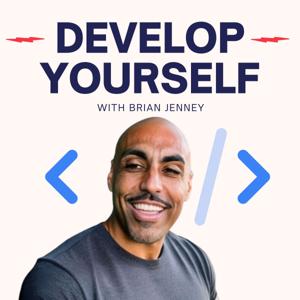
To change careers and land your first job as a Software Engineer, you need more than just great software development skills - you need to develop yourself.
Welcome to the podcast that…

90,949 Listeners
227,576 Listeners
380 Listeners
581 Listeners
286 Listeners

28,027 Listeners

56,432 Listeners
983 Listeners

8,428 Listeners
484 Listeners

46,095 Listeners

15,951 Listeners
74 Listeners
65 Listeners