
Sign up to save your podcasts
Or

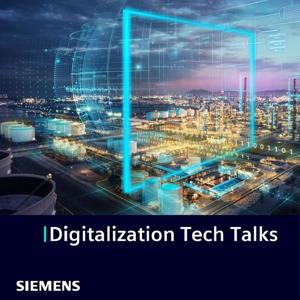


In the 29th episode of the Digitalization Tech Talks podcast, we discuss how industrial operations will transform in the future because of not only new technology, but also in large part due to people and how their roles and interactions evolve.
Key topics covered include:
The role of developing technology on the plant floor. This will include artificial intelligence (AI) and generative AI from tools such as ChatGPT.
The impact of open business platforms that enable better data flows.
The implementation of these new technologies will only be successful if there is close collaboration between teams from operations technology (OT) and information technology (IT).
Young technical professionals that will fill the OT and IT roles are shifting how they select their places of employment. There is much more focus on topics such as sustainability and how it factors into the vision of potential employers.
Join our series hosts, Jonas Norinder and Don Mack, as they discuss the future of industrial operations with Dr. Mathias Oppelt, Vice-President for Customer-driven Innovation at Siemens Digital Industries. In that role, Mathias regularly interviews end users in various industries regarding where they want to go with their operations in the future. He then works to bring that vision to reality.
Show Notes:
Website: Siemens Industrial Operations X (https://www.siemens.com/global/en/products/automation/topic-areas/industrial-operations-x.html)
Website: Future of Industrial Operations co-Innovation request form (https://new.siemens.com/global/en/company/fairs-events/webinars/future-of-industrial-operations/contact.html)
Video: The Future of Industrial Operations - ARC Forum 2023 (https://youtu.be/sCGhwgHlI0U)
Video: Siemens and Dow Collaborate on the Future of Automation (https://www.youtube.com/watch?v=tdp23cMxbh8&t=11s)
Contact us:
Mathias Oppelt ([email protected])
Don Mack ([email protected])
Jonas Norinder ([email protected])
In the 28th episode of the Digitalization Tech Talks podcast, we talk about how important it is for process plants to have a strong reference architecture. Standalone services and applications are no longer enough to make you competitive, so it’s become increasingly critical to create a foundational structure that ties them all together. A reference architecture serves as the backbone of your data transfer between the process manufacturing equipment that produces the data and the system that will be used to analyze it.
Joining your two Siemens digitalization experts and hosts, Don Mack and Jonas Norinder, for this important discussion is Alex Pfalzgraf, a digital transformation consultant with Siemens and a repeat guest on this podcast. Alex has spearheaded and been involved in numerous consulting projects focused on helping companies kickstart their digital transformation journey.
Show notes:
Website: ISA-95 model, ISA 2010 (https://go.siemens.com/31171971)
Website: What are IaaS, PaaS and SaaS?, IBM 2023 (https://go.siemens.com/16805021)
Article: Unified Namespace: The Hub and Spoke Model for Your Data, AutomationWorld 2021 (https://go.siemens.com/78989230)
Article: Converge IT and OT to turbocharge business operations’ scaling power, McKinsey 2022 (https://go.siemens.com/55602021)
Website: Competitive thanks to digital Transformation, Siemens (https://go.siemens.com/38532404)
Contact us:
Alex Pfalzgraf ([email protected])
Don Mack ([email protected])
Jonas Norinder ([email protected])
Sustainability… It is as prevalent a topic in the process industries as it is anywhere in the world today. In this episode of Digitalization Tech Talks we discuss the topic of energy sustainability and explore how process analytics can be used as part of a digitalization strategy to assist manufacturers in their transition to net zero. This is possible using process analytical measurement devices, such as gas chromatographs, oxygen analyzers, and environmental emission monitoring systems, that collect data that can be analyzed through digitalization tools to generate important KPIs related to maintenance, reliability, and calibration and displayed in a dashboard format that alerts plant personnel when action is needed. Additionally, data from a company’s fleet of plants can be combined for a single overall corporate-wide analysis.
Video: Analyzer System Manager from Siemens (https://www.youtube.com/watch?v=cXbMgQm2qHc)
Website: Analyzer System Manager (https://new.siemens.com/us/en/products/automation/process-analytics/communication-and-software.html)
Website: United Airlines Sustainable Aviation Fuel (SAF) program (https://www.united.com/en/us/fly/company/responsibility/sustainable-aviation-fuel.html)
Website: Shell is constructing multiple projects to turn organic waste into renewable natural gas (RNG) (https://www.shell.us/energy-and-innovation/shell-downstream-renewable-natural-gas-biomethane-explained.html)
Website: MAXUM Edition II – Efficiency meets unsurpassed performance (https://new.siemens.com/us/en/products/automation/process-analytics/process-gas-chromatograph.html)
Contact us:
George Thomas ([email protected])
Al Kania ([email protected])
Don Mack ([email protected])
Jonas Norinder ([email protected])
In the 26th episode of our Digitalization Tech Talks podcast, we focus on the latest trends in the process industries related to digital technologies. This episode was inspired by our recent involvement in the 2023 ARC Industry Forum. Each year, this dynamic event brings together experts, practitioners and thought leaders from across the industrial sector to exchange ideas on the newest trends, technologies and solutions shaping the future of industry. It’s a great way to keep your finger on the digital pulse.
Your two Siemens digitalization experts and hosts, Don Mack and Jonas Norinder, are joined by Laura Coates, who is Vice President and General Manager for Process Automation at Siemens Digital Industries in the US. Laura shares the key insights she gained from attending the ARC Industry Forum as well as from the many digitalization conversations she has had with customers over the years.
Show notes:
Website (ARC Industry Forum): ARC Industry Forum Americas 2023 | ARC Advisory Group (arcweb.com) (https://bit.ly/3k9GIeP)
Website (MxD): MxD | The Digital Manufacturing and Cybersecurity Institute (mxdusa.org) (https://www.mxdusa.org/)
Website (Siemens about MxD): MxD Digital Experience Center | Apps and Digital Services for Process Industry | Siemens USA (https://sie.ag/41dp76r)
Video (Siemens): Siemens and MxD (https://bit.ly/3XFXuzG)
Contact us:
Laura Coates ([email protected])
Don Mack ([email protected])
Jonas Norinder ([email protected])
Developed by the User Association of Automation Technology in Process Industries (NAMUR), MTP, or module type package, provides a framework for standardized equipment data models and description language to streamline interoperability.
In practical terms, MTP enables integration of DCS and PLC-based systems more easily. The objectives of MTP are to reduce the time and cost to integrate distributed process and reliability assets and equipment, help accelerate time to market, simplify fulfillment of individualized customer requirements, and improve scalability and flexibility. As MTP continues to evolve, organizations will benefit from interoperability between DCS systems and PLC systems, and asset management for monitoring your assets' health using a variety of available smart digital apps.
Join us for the 25th episode of Digitalization Tech Talks, where Siemens digitalization experts Jonas Norinder and Don Mack explore MTP with Charles Fialkowski, who is a National Process Safety and Automation Consultant for Siemens Industry’s Automation & Engineering Product Marketing Team.
Show Notes:
Website: Modular production with Module Type Package (https://new.siemens.com/global/en/company/topic-areas/digital-enterprise/process-industry/modular-production.html)
Video: Digital Enterprise – Flexibility with modular production and MTP (https://youtu.be/OQl0VEq1CwY)
Video: Plug & Produce with MTP (https://youtu.be/RlX3blJOBQs)
Article (A3P): MTP: What It Is, Why It Matters (https://www.a3p.org/en/mtp-what-it-is-why-it-matters/)
NAMUR Recommendation: NE 148 (https://www.namur.net/en/publications/news-archive/ne-148-is-newly-published.html)
Contact us:
Charles Fialkowski ([email protected])
Jonas Norinder ([email protected])
Don Mack ([email protected])
The introduction of digital technologies is helping the process industries do things better, faster and more efficiently. It’s also creating new challenges for companies as they strive to become digital enterprises by fully incorporating these technologies into all aspects of their operations.
For example, if a deployed solution doesn’t work as intended right out of the gate, any benefits derived from the implementation can be negatively impacted. This is why it’s critical to think about ways to keep your digital enterprise up and running once it’s off the ground. In fact, this step is almost as important as deciding to start on the digitalization journey in the first place.
Join us for the 24th episode of Digitalization Tech Talks, where Siemens digitalization experts Jonas Norinder and Don Mack explore how to care for your digital enterprise using new and innovative approaches. Our special guest is Sajeeve Kalarickal, who is Automation Services Portfolio Manager for Siemens Digital Enterprise Services.
Sajeeve discusses why services are an important part of the digital transformation in process automation, how companies can reduce training time by up to 50% with 3D virtual training, how to address the industrial skills gap, and more.
Show notes:
Website (Siemens): Siemens Digital Enterprise Services (https://sie.ag/3PufF8Y)
Website (Siemens): Siemens Training Services (https://sie.ag/3FrQvDG)
Video (Siemens): 3D Virtual Training Demo (https://customerinfo-siemens.highspot.com/viewer/6397a5e62195843289fcb336)
Slide Deck (Siemens): Industrial Cybersecurity Services
(https://customerinfo-siemens.highspot.com/viewer/6397a6ca9981503a30476fae)
Slide Deck (Siemens): Integration of mobile devices in process plants
(https://customerinfo-siemens.highspot.com/viewer/6397a7548338d932d475d662)
Contact us:
Sajeeve Kalarickal ([email protected])
Jonas Norinder ([email protected])
Don Mack ([email protected])
Companies in the process industries have a constant focus on improving the safety and situational awareness of operators in the field. At the same time, using multiple systems increases the risk of disconnected, incompatible, or outdated information. By implementing connected worker solutions, field workers can gain easy access to the information they need to efficiently execute their job responsibilities providing capabilities such as navigation to the corresponding asset and access to contextual information including the asset's condition, maintenance history, etc.
Join us for the 23rd episode of Digitalization Tech Talks hosted by Jonas Norinder and Don Mack during which we cover the topic “Connected Worker - The next level of digitalization in the field begins”. Our guest is Carlos Alves, Director of Business Development within Siemens Digital Industries Software North America.
Carlos discusses the trends and needs that have led us to these solutions, the benefits for field workers, examples of how these solutions can be used, challenges to overcome, and first steps to take in order to implement a connected worker application.
Show Notes:
Website (Siemens): COMOS Mobile Worker (https://sie.ag/3PtReJ0)
Reference (Siemens): Digital Worker enhances safety and maximizes efficiency (https://sie.ag/3BAMTxO)
Video (Siemens): COMOS Mobile Worker - Augmented Reality Enabled Mobile Data Management (https://youtu.be/HP67hjUuX_0)
Video (Siemens): Addressing Key Challenges in the Field – The Siemens Digital Worker (https://youtu.be/RCWVt6hy7Bk)
Video (Siemens): Benefits of Having a Mobile Worker (https://youtu.be/TUJ7wXnRExk)
Contact us:
Carlos Alves ([email protected])
Jonas Norinder ([email protected])
Don Mack ([email protected])
The concept of the “golden batch” has been around for a long time. With artificial intelligence, however, it is now possible to more easily identify the characteristics of that coveted golden batch so that it can be more easily reproduced repeatedly and at the highest quality. Methods have even been developed that enable detection of negative trends on running batches so that they can be saved rather than being scrapped!
In this episode of Digitalization Tech Talks, Don Mack and Jonas Norinder talk to two experts in artificial intelligence, Ulrike Schulschenk and Moh Elnaamani, about how to apply it to batch production processes.
Show notes:
Video (Siemens): The missing piece of your batch production (https://bit.ly/3MXOx1a)
Website (Siemens): Batch Performance Analytics (https://sie.ag/3Sl8IHl)
Article (Siemens): How can AI take Process Industries into a new age? (https://sie.ag/3Df08FO)
Contact us:
Ulrike Schulschenk ([email protected])
Moh Elnaamani ([email protected])
Jonas Norinder ([email protected])
Don Mack ([email protected])
Process modeling, mostly in the form of process simulation, has been a key tool in the process industries for many decades. Traditionally this has been for offline applications such as front-end engineering design and control system design. But the usage of process modeling has expanded as it is now possible to implement online plant models that contain deep process knowledge; the models are connected to real-time data on operational plants. These so-called digital applications can operate at a unit level, a plant level, a site level, and even a multi-site level, providing significant new information to operations and maintenance that allows them to run at an ‘always optimal’ condition.
In this episode we discuss the benefits and why this is possible now. We also cover how this is possible, challenges to overcome, and first steps to take to implement a digital application. Our guest is Costas Pantelides, CEO of Siemens Process Systems Engineering and Professor of Chemical Engineering at Imperial College London.
Show notes:
Whitepaper (Siemens): Using digital process twin technology to drive Operational Excellence (https://www.psenterprise.com/documents/digitalization-for-the-process-industries-v1.pdf)
Website (Siemens): Advanced Process Modelling Examples (https://www.psenterprise.com/concepts/examples)
Website (Siemens): gPROMS – Deploying deep process knowledge to generate sustainable value (https://new.siemens.com/global/en/products/automation/industry-software/gproms-digital-process-design-and-operations.html)
Video (Siemens): Simulation and Optimization for Process Industries and beyond (https://youtu.be/7KF1CWUupxc)
Video (Siemens): Gain more with gPROMS and SIMIT (https://youtu.be/E9XVqZSjezk)
Contact us:
Costas Pantelides ([email protected])
Jonas Norinder ([email protected])
Don Mack ([email protected])
Supply chain challenges have become a global issue and many companies now consider supply chain issues to be their top short- and long-term concern. This is an area where digitalization can be applied to assist in mitigating some of the risks and concerns. This episode of Digitalization Tech Talks focuses on the application of industrial identification and locating technologies as a method of keeping better track of raw material and asset inventories, locations, and usage in the plant as well as gaining better transparency over the manufacturing process while eliminating the reliance on paper records.
Show notes:
Website and Whitepaper (Siemens): RTLS system for real-time locating (https://new.siemens.com/global/en/products/automation/industrial-identification/simatic-rtls.html)
Website and Whitepaper (Siemens): SIMATIC RFID: Intelligent systems for maximum transparency and efficient planning (https://new.siemens.com/global/en/products/automation/industrial-identification/rfid-systems.html)
Video (Siemens): Introduction to SIMATIC Ident: Industrial RFID and Code Reading Systems (https://youtu.be/ji4_Nx94ZZU)
Video (Siemens): SIMATIC RTLS Real-Time Locating (https://youtu.be/4fInn2HAbvA)
Video (Siemens): SIMATIC RTLS – Transparent electronics production in Fuerth (https://youtu.be/NQyEn2eUTv0)
Contact us:
Ulli Thornton ([email protected])
Nicole Lauther ([email protected])
Jonas Norinder ([email protected])
Don Mack ([email protected])
From the publisher's feed

14 Listeners
0 Listeners

0 Listeners

0 Listeners
0 Listeners

0 Listeners
0 Listeners
0 Listeners

0 Listeners

0 Listeners
0 Listeners

0 Listeners
0 Listeners
0 Listeners
0 Listeners
0 Listeners

0 Listeners
0 Listeners

0 Listeners

0 Listeners