
Sign up to save your podcasts
Or

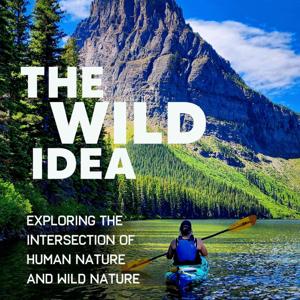

Dillon Osleger is a geologist, conservationist, and trail builder whose debut book, Trail Work: Restoring the Paths and Stories of America's Public Lands, reads as both a love letter and a reckoning. Named after Dillon, Montana, and raised by field geologists who hauled him on their excursions through the Canadian Rockies and the rangelands of southwestern Montana, Osleger grew up learning that the land itself is a kind of map, one that records what came before and what we choose to preserve. This episode continues The Wild Idea's month of stewardship with a wide-ranging conversation about trails, history, and what the act of maintenance actually means.
The conversation moves through the Appalachian Trail and Pacific Crest Trail as case studies in how long-distance trails have drifted from their original purposes, which were economically and socially rooted in rural communities, toward a culture of speed and personal achievement that has little relationship to the land itself. It returns, finally, to the people who maintain the trails: the campground hosts, trail crews, and seasonal rangers who rarely receive the recognition the work deserves. Osleger's argument is not nostalgic. It is a civic one. Stewardship, he says, is one of the few remaining spaces where people from genuinely different backgrounds can work side by side, swinging tools for the same reasons. The question the episode leaves open is how long that common ground can hold if we stop funding the people who tend it.
Learn more about Dillon and today's conversation at our website, thewildidea.com.
 View all episodes
 By Wild Idea Media

4.9
6363 ratings
Dillon Osleger is a geologist, conservationist, and trail builder whose debut book, Trail Work: Restoring the Paths and Stories of America's Public Lands, reads as both a love letter and a reckoning. Named after Dillon, Montana, and raised by field geologists who hauled him on their excursions through the Canadian Rockies and the rangelands of southwestern Montana, Osleger grew up learning that the land itself is a kind of map, one that records what came before and what we choose to preserve. This episode continues The Wild Idea's month of stewardship with a wide-ranging conversation about trails, history, and what the act of maintenance actually means.
The conversation moves through the Appalachian Trail and Pacific Crest Trail as case studies in how long-distance trails have drifted from their original purposes, which were economically and socially rooted in rural communities, toward a culture of speed and personal achievement that has little relationship to the land itself. It returns, finally, to the people who maintain the trails: the campground hosts, trail crews, and seasonal rangers who rarely receive the recognition the work deserves. Osleger's argument is not nostalgic. It is a civic one. Stewardship, he says, is one of the few remaining spaces where people from genuinely different backgrounds can work side by side, swinging tools for the same reasons. The question the episode leaves open is how long that common ground can hold if we stop funding the people who tend it.
Learn more about Dillon and today's conversation at our website, thewildidea.com.

38,063 Listeners

6,814 Listeners

25,800 Listeners

4,039 Listeners
3,542 Listeners

1,256 Listeners

111,962 Listeners

56,518 Listeners
3,422 Listeners
8,092 Listeners

6,564 Listeners

15,967 Listeners

10,770 Listeners
6,207 Listeners
1,411 Listeners