
Sign up to save your podcasts
Or

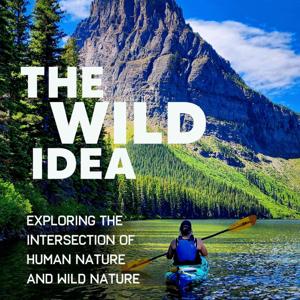


Marshall Johnson, Chief Conservation Officer for the National Audubon Society, joins Bill Hodge and Anders Reynolds to discuss how the Conservation Ranching Program aligns rancher livelihoods with grassland health. Johnson explains why ranchers were the easiest sell for a national certification effort and how birds act as diplomats connecting urban and rural communities. The conversation traces the program’s evolution from a small pilot to a national framework, highlighting collaborations with brands like Thousand Hills and Lifetime Grazed that carry the Audubon Certified Bird-Friendly Land seal.
Johnson applies the concept of realpolitik to explain why voluntary Farm Bill incentives remain the viable path for passing legislation, despite concerns that regulatory measures might be more effective at reversing grassland bird declines. He notes that birds serve as sentinels for environmental health, revealing issues such as the decline of the Ogallala Aquifer years before human impacts become visible. The episode underscores the tension between the need for rapid conservation action and the slow pace of legislative change.
Support our show with a one-time or recurring gift through Buy Me a Coffee.
Full show notes and links at our website, thewildidea.com.
Amy Bowers Cordalis is a Yurok Tribe member, attorney, and executive director of Ridges to Riffles Indigenous Conservation Group. She helped lead the fight to remove four dams from the Klamath River, the largest dam removal and salmon restoration project in U.S. history. In this conversation, she traces that fight from the first covenant of the Yurok creation story through her great-uncle's arrests for fishing on the Klamath, the Supreme Court case that followed, and the grassroots and legal strategy that turned a hostile utility company into a negotiating partner. She also talks about the day her father was saved by the cold waters of Blue Creek, watching salmon return to spawning grounds within days of the final dam coming down, and why she believes indigenous-led sovereignty, not colonial conservation, is the model the rest of the world needs.
Support our show with a one-time or recurring gift through Buy Me a Coffee.
Full show notes and links at our website, thewildidea.com.
Some of the highest-output rural counties in the country are losing population, even as public lands get pitched as the answer to everything from housing to the national debt. Mark Haggerty of the Center for American Progress and Dr. Megan Lawson of Headwaters Economics, two economists who study what public lands do for the communities next door, join Bill and Anders to sort out what the numbers actually say.
They cover why automation and stagnant wages have hollowed out extractive jobs, the "amenity trap" that can price teachers out of thriving outdoor towns, why selling public land is a weak fix for housing affordability, and what happened to the economy around Grand Staircase-Escalante after designation. Haggerty also lays out a proposal to replace annual federal payments to counties with a permanent fund, and both guests take on whether making the economic case for wild places risks losing the moral one.
Support our show with a one-time or recurring gift through Buy Me a Coffee.
Full show notes and links at our website, thewildidea.com.
Fitz Cahall has spent nearly twenty years telling other people's outdoor stories as the host of The Dirtbag Diaries. Now he's leading one himself: Save Public Lands, a coalition campaign racing to collect a million signatures against public land sell-offs, backroom deals, and giveaways before National Public Lands Day on September 26.
Cahall talks with Bill Hodge about the throughline from The Dirtbag Diaries to organizing, including his and Becca Cahall's history with Bears Ears National Monument and the education center they helped build there after its boundaries were first rolled back. They discuss a proposed private resort inside Yosemite National Park, why the campaign's three demands were kept deliberately narrow, and why Cahall believes the fight for public lands isn't as partisan as it looks.
Support our show with a one-time or recurring gift through Buy Me a Coffee.
Full show notes and links at our website, thewildidea.com.
In most Western states, wading a river through private land can get you arrested for trespassing. In Montana, it can't, and three guests join Bill and Anders to explain why.
Jim Klug of Yellow Dog Flyfishing, journalist Hal Herring, and Alex Leone of the Public Land/Water Access Association trace Montana's 1985 Stream Access Law back to its roots in the state's 1972 Constitution and the landowner fights that tested it in court for decades, and explain what the law means for Montana's outdoor economy today. They also connect the dots to other current access fights, from corner crossing to last year's attempted sell-off of federal public land, and close with details on the Montana Stream Access Rally, a September 17 gathering in Bozeman meant to remind lawmakers that Montanans are still watching.
Full show notes and links at our website, thewildidea.com.
Support our show with a one-time or recurring gift through Buy Me a Coffee.
Parks and refuges were built to protect wildlife, but many function as islands, and the species that depend on them can't always survive within borders drawn decades before habitat connectivity was understood. Christian Hunt and Kelly Cox of Defenders of Wildlife join Bill and Anders to break down the Wildlife Corridors and Habitat Connectivity Conservation Act of 2026, a bipartisan bill that would create the first durable, legal framework for connecting fragmented wildlife habitat across federal lands, from national parks and refuges to BLM and Forest Service holdings. They dig into why the bill has drawn support across the political spectrum, from the economics of wildlife-vehicle collisions to a shared instinct that wildlife belongs to everyone, and what listeners can do to help it move in a shortened legislative calendar. The conversation also turns to Defenders' campaign at Cumberland Island National Seashore, where a National Park Service land exchange plan is raising questions about transparency and the island's mandate to remain undeveloped.
Full show notes and links at thewildidea.com.
Support our show with a one-time or recurring gift through Buy Me a Coffee.
Adam Cramer co-founded and now leads the Outdoor Alliance, a coalition of ten organizations, including American Whitewater, the Access Fund, and Winter Wildlands Alliance, that turns climbers, kayakers, mountain bikers, and backcountry skiers into public lands advocates. In this episode, Cramer traces his own path from corporate law to conservation, sparked by a pro bono legal case over a hydropower permit on a favorite whitewater river, and explains how Outdoor Alliance builds consensus among member groups who don't always agree. The conversation turns to what's at stake right now: the Roadless Rule, which protects 45 million acres of national forest, and a wilderness stewardship review with public comments due August 14, 2026. Cramer also makes the case for why showing up, filing a comment, or calling a lawmaker still matters, even when the odds look long, and why he thinks outdoor recreation might be one of the last public lands issues that doesn't split along party lines.
Full show notes and links at our website, thewildidea.com.
Dan Puskar, executive director of the Rock Creek Conservancy, introduces listeners to Rock Creek Park, the 1,754-acre national park running through the heart of Washington, DC, created by Congress the same week as Sequoia and Yosemite in 1890. Puskar explains what it takes to steward an urban national park that draws more than two million visits a year but has seen no real increase in its federal budget in two decades, from a 4,000-volunteer stewardship program to a new DC Water tunnel project aimed at cleaning up the creek itself. He also talks about where the park is investing first as it works to make Rock Creek feel open to every neighborhood it touches, and previews this week's reopening of the Carter Barron Amphitheater, a historic stage dark for a decade, for three nights of live music.
Full show notes and links at our website, thewildidea.com.
Ryan Johnston has spent 24 years as a fly fishing guide, working rivers in California and Idaho and now Montana's Flathead Valley. In this episode, he shares stories from his three books, including the now-legendary "Monster Brown Trout" tale from his first book, A Reel Job, and reflects on what two decades in a drift boat has taught him about people, patience, and the intimacy of sharing a day on the water with a stranger.
Johnston also traces the origin of Cast Hope, the youth mentorship nonprofit he founded in 2009 after a church sermon on giving back to his community, which now takes roughly 1,200 kids fly fishing for free every year across five Western regions. The conversation turns to the outfitter permit systems that govern access to rivers like the South Fork of the Snake, the tension between protecting a fishery and guides making a living, and why moving fish between waters remains one of the biggest threats to Western fisheries today.
Full show notes and links at our website, thewildidea.com.
Please take our listener survey! We'd love to hear from you.
Are America's public lands getting more public, or less? Two of the sharpest legal minds in the field join Bill and Anders to dig in.
Andrew Mergen, faculty director of Harvard Law School's Emmett Environmental Law and Policy Clinic, spent decades litigating public lands cases for the Department of Justice. Justin Pidot teaches environmental law at the University of Arizona and served as general counsel of the White House Council on Environmental Quality. Together they cover the 1872 Mining Law, tribal co-management at national monuments, reacquiring land in the spirit of the century-old Weeks Act, and a proposal to charter a new Public Land Law Review Commission, the first since 1964.
They close with a lightning round on the administration's rollback of Endangered Species Act habitat protections and a fresh round of cuts to Bears Ears and Grand Staircase-Escalante, both breaking as the episode was recorded.
Full show notes and links at our website, thewildidea.com.
From the publisher's feed

38,016 Listeners
6,762 Listeners
25,764 Listeners
4,065 Listeners
3,475 Listeners

1,255 Listeners

111,799 Listeners

56,447 Listeners
3,415 Listeners
8,077 Listeners
6,585 Listeners

15,882 Listeners
10,759 Listeners
6,183 Listeners
1,409 Listeners