
Sign up to save your podcasts
Or

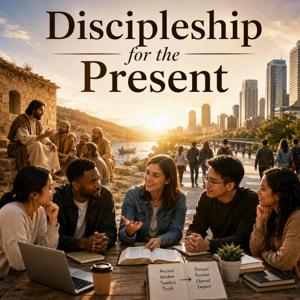


The biblical book of James is often hailed as one of the most intensely practical texts from the ancient world, and for good reason. This episode of "Wisdom for the Present" delves into the transformative insights found within its pages, offering listeners a guide to navigating the chaos of modern life with ancient wisdom.
James opens his letter with a simple yet profound introduction: "James, a servant of God and of the Lord Jesus Christ." Despite being the brother of Jesus, James chooses to identify himself as a servant, setting a tone of humility and service over status. This choice speaks volumes in today’s world, where titles and connections often overshadow genuine character.
The letter addresses the "twelve tribes scattered abroad," a reference to the diaspora of early Christians who faced persecution and displacement. This scattering, while seemingly a result of chaos, is portrayed as a divine strategy to spread faith across nations. For modern listeners, this offers a perspective shift: what feels like fragmentation in our lives may be the very mechanism through which we grow and influence others.
James challenges us to "count it all joy" when facing trials, not because the pain is inherently joyful, but because trials produce patience and maturity. This is not a call to toxic positivity but an invitation to see trials as a forge refining our character. In contrast to Stoicism, which advocates emotional detachment, James encourages a joyful engagement with life's challenges, recognizing them as opportunities for growth.
The episode also explores the distinction between trials and temptations, emphasizing that while trials are external challenges, temptations are internal lures that lead us astray. James warns against blaming God for temptations, highlighting that they originate from our own desires. This insight is crucial in a world where externalizing blame is common.
In a world obsessed with planning and control, James reminds us of our fragility, likening life to a vapor. This humbling perspective encourages us to plan with humility, acknowledging that our lives are subject to a higher will. The episode closes with a call to action: to let trials forge us and to invest in the construction of heavenly wisdom.
In This Episode
* The profound humility of James, who identifies as a servant despite his familial connection to Jesus.
* The scattering of the early Christians as a divine strategy for spreading faith.
* Trials as a forge for character, producing patience and maturity.
* The distinction between trials and temptations, and the internal nature of temptation.
* The call to "count it all joy" in the face of trials, contrasting with Stoic detachment.
* The critique of partiality and the call to love your neighbor as yourself.
* The paradox of faith and works, and the complementary teachings of James and Paul.
* The power of the tongue and the need for divine grace to tame it.
* Earthly wisdom versus heavenly wisdom, and their impact on human behavior.
* The call to patience and humility in the face of life's uncertainties.
Practical Reflection
1. How do you respond to trials in your life? Are you allowing them to forge patience and maturity, or are you resisting their refining work?2. In what ways might you be showing partiality in your relationships or community? How can you align more closely with the royal law of loving your neighbor as yourself?3. Are you planning your life with humility, acknowledging the fragility of life and the sovereignty of God?
Suggested Substack Excerpt
The book of James offers a blueprint for navigating modern chaos with ancient wisdom. From embracing trials as a forge for character to recognizing the power of the tongue, this episode explores how James' teachings challenge us to live with humility, patience, and active faith.
AI Disclosure
This episode was created using Google NotebookLM Audio Overview, based on human-curated source material, structured guidance, and editorial review. AI is used as a tool for clarity and delivery, not as a replacement for thoughtful study or engagement with the original texts.
Copyright
© 2026 Wisdom for the Present / Kamashcu Production Studios. All rights reserved.
In the closing chapters of the Book of Hebrews, we find a profound exploration of faith as a mechanism for enduring the unseen. This episode of "Wisdom for the Present" delves into the heart of these chapters, where faith is redefined not as a blind leap, but as the "substance of things hoped for, the evidence of things not seen." The hosts guide us through the historical and cultural context of first-century Hebrew Christians, who faced severe social exclusion and persecution, much like the slow erosion of conviction seen in modern burnout.
The episode opens with a vivid analogy: faith as a blueprint, akin to an architect’s plan that dictates the construction of a house not yet visible. This metaphor is expanded through the lives of biblical figures such as Abel, Enoch, Noah, Abraham, Sarah, and Moses, each demonstrating how faith acts as a foundation for enduring unseen realities. Abel's legacy, though silenced by violence, speaks through time, while Enoch's nonconformity in a wicked era exemplifies a profound commitment to unseen divine realities.
Noah's unwavering commitment to building an ark amidst ridicule underscores the power of faith to decouple behavior from social validation. Abraham and Sarah's journey illustrates radical displacement and the trading of immediate comfort for ultimate promises. Moses' choice to abandon Egyptian luxury for the affliction of his people highlights the economic logic of faith, weighing eternal rewards against temporal pleasures.
The episode challenges listeners to embrace a "cathedral builder mindset," where the work of faith may not yield immediate results but contributes to a legacy beyond one's lifetime. It transitions into practical application, urging listeners to run the race of life with endurance, shedding both sin and unnecessary weights that hinder progress. The focus shifts to Jesus, the ultimate exemplar of endurance, who endured the cross by anchoring his mind to future joy.
As the discussion unfolds, the hosts tackle the difficult concept of divine discipline, reframing it as intentional training rather than arbitrary punishment. They caution against the root of bitterness, which can defile many, and emphasize the need for radical hospitality, empathy, and integrity within the community. The episode concludes with a call to action: to step outside the comfort of cultural consensus and align with the unshakable kingdom of God.
In This Episode
* Faith as a blueprint: understanding unseen realities as concrete facts
* Abel's enduring legacy and the paradox of posthumous impact
* Enoch's nonconformity and the challenge of living against cultural consensus
* Noah's unwavering commitment amidst ridicule and the decoupling of behavior from social validation
* Abraham and Sarah's radical displacement and the trading of immediate comfort for ultimate promises
* Moses' economic logic of faith: weighing eternal rewards against temporal pleasures
* The cathedral builder mindset: contributing to a legacy beyond one's lifetime
* Running the race with endurance: shedding sin and unnecessary weights
* Jesus as the ultimate exemplar of endurance: anchoring to future joy
* Divine discipline as intentional training, not arbitrary punishment
* The root of bitterness and the importance of radical hospitality, empathy, and integrity
Practical Reflection
1. Where in your life are you clinging to visible security rather than trusting the unseen blueprint of faith?2. How can you reframe your current challenges as intentional training exercises rather than arbitrary hardships?3. What immediate comforts or cultural consensuses might you need to step away from to align with a greater, unseen reality?
Suggested Substack Excerpt
In the closing chapters of Hebrews, faith is redefined as the "substance of things hoped for." This episode explores how biblical figures like Abel, Enoch, and Moses exemplified faith as a foundation for enduring unseen realities, challenging modern listeners to embrace a legacy beyond immediate results and align with the unshakable kingdom of God.
AI Disclosure
This episode was created using Google NotebookLM Audio Overview, based on human-curated source material, structured guidance, and editorial review. AI is used as a tool for clarity and delivery, not as a replacement for thoughtful study or engagement with the original texts.
Copyright
© 2026 Wisdom for the Present / Kamashcu Production Studios. All rights reserved.
In the ancient world, peace of mind came at a steep cost — the blood of a sacrifice. Imagine having to present a living animal to a priest, witnessing its life ebb away, all to bridge the chasm between humanity and the divine. This visceral ritual, central to the old covenant, is where we begin our exploration of Hebrews chapters 8 through 10. These chapters dismantle the old system, introducing a radical internal revolution that redefines the human-divine relationship.
The first-century Jewish audience of Hebrews faced immense pressure to abandon the nascent Christian faith and return to the tangible, structured system of the old covenant. This system, with its physical tabernacle and strict access rules, served as a constant reminder of humanity's alienation from God. The tabernacle's architecture — with its holy place and the impenetrable Holy of Holies — symbolized a dispensation of darkness and dread, where access to the divine was severely restricted.
Hebrews presents a transformative shift: the new covenant, prophesied by Jeremiah, where God's laws are written on hearts, not stone. This internalization of divine law changes human motivation from fear-based compliance to genuine desire. The modern parallel is striking — we often perform for societal approval, maintaining external appearances while neglecting internal transformation. The new covenant invites us to shed this exhausting facade.
Yet, the text doesn't shy away from the uncomfortable reality of blood. Blood, the ultimate currency of life, was central to the old covenant's sacrificial system. Hebrews reinterprets this through the lens of a last will and testament, where the death of the testator — Christ — activates the inheritance of forgiveness. This voluntary, ultimate sacrifice breaks the cycle of guilt, offering a clean conscience and bold access to God.
However, the text warns against willful rejection of this grace. Apostasy, a deliberate abandonment of faith, leaves no alternative sacrifice. This stark warning underscores the seriousness of truth and the irreversible consequences of rejecting the only cure for sin.
In contrast, the new covenant offers boldness — parrhesia — to enter the divine presence, transforming the relationship from alienated subject to reconciled child. This access demands community, as isolation threatens spiritual vitality. The text exhorts believers to provoke one another to love and good works, emphasizing the necessity of endurance in the face of suffering.
Hebrews chapters 8 through 10 guide us from the shadows of religious performance to the reality of a transformed conscience. This journey challenges us to live by faith, enduring life's trials with a clear conscience and a resilient community.
In This Episode
* The visceral reality of ancient sacrificial systems and their psychological impact
* The radical shift from external religious performance to internal transformation
* The architectural symbolism of the tabernacle and its message of alienation
* Jeremiah's prophecy and the internalization of divine law in the new covenant
* The modern parallel of external compliance versus internal authenticity
* The legal and theological implications of Christ's ultimate sacrifice
* The stark warning against apostasy and its irreversible consequences
* The boldness and relational transformation offered by the new covenant
* The necessity of community and endurance in spiritual growth
* Living by faith as a gritty, daily practice of enduring trials
Practical Reflection
1. Where in your life are you maintaining an external facade that doesn't match your internal reality?2. Who in your community challenges you to grow in love and good works, and who do you encourage in return?3. How do you practice endurance in the face of life's trials, and what role does faith play in sustaining you?
Suggested Substack Excerpt
Hebrews chapters 8 through 10 dismantle the old covenant's sacrificial system, introducing a radical internal revolution. This episode explores the shift from external religious performance to a transformed conscience, offering bold access to the divine and emphasizing the necessity of community and endurance.
AI Disclosure
This episode was created using Google NotebookLM Audio Overview, based on human-curated source material, structured guidance, and editorial review. AI is used as a tool for clarity and delivery, not as a replacement for thoughtful study or engagement with the original texts.
Copyright
© 2026 Wisdom for the Present / Kamashcu Production Studios. All rights reserved.
In the ancient text of Hebrews, chapters five through seven, we find a profound exploration of divine empathy and leadership. Imagine a doctor who knows every symptom but has never felt the ache of illness. This is how humanity often perceived the divine—distant, clinical, untouched by human suffering. But the author of Hebrews challenges this view, presenting a radical redefinition of divine leadership through the figure of Jesus as the ultimate high priest.
The original audience, Jewish Christians in the first century, faced severe persecution. They were tempted to retreat to the familiar safety of the Levitical system, a tangible religious structure with visible rituals and legal protections. But the author argues that this new Christian system, though invisible, offers something far superior. The high priesthood of Jesus is not based on genealogy or human frailty but on the power of an endless life.
Hebrews chapter five begins by emphasizing that a high priest must be taken from among men to deal gently with those who are ignorant and going astray. This shared human weakness breeds empathy. Yet, Jesus, though sinless, shares in human suffering, offering prayers with strong crying and tears. This dismantles the notion that true strength is unfeeling. Instead, it invites us to use our own infirmities to connect with others, cultivating deep empathy.
The text warns against spiritual stagnation, urging believers to move beyond the basics of faith. It challenges the modern tendency to consume information without application, emphasizing that true maturity comes from exercising our moral and intellectual muscles in real-world situations. The author uses a stark warning to jolt the audience awake, highlighting the danger of coasting on the basics.
The metaphor of rain falling on land illustrates how the same resources can produce vastly different results depending on the condition of the soil. This challenges us to examine how we use our resources—are we cultivating growth or allowing thorns to take over?
Finally, the text introduces the mysterious figure of Melchizedek, whose priesthood prefigures that of Christ. This priesthood merges the roles of king and priest, offering perfect mediation and ultimate authority. It challenges us to let go of inferior systems and embrace the better hope that draws us near to God.
In This Episode
* The radical empathy of a sinless high priest who shares in human suffering
* The historical context of Jewish Christians facing persecution and isolation
* The temptation to retreat to familiar but ineffective systems
* The warning against spiritual stagnation and the call to maturity
* The metaphor of rain and soil as a reflection on resource use
* The introduction of Melchizedek as a type of Christ's eternal priesthood
* The merging of kingly and priestly roles in Jesus
* The challenge to embrace disruption and let go of inferior systems
* The concept of being saved to the uttermost and the permanence of Christ's priesthood
* The invitation to rest in the completed work of Christ and abandon self-justification
Practical Reflection
1. Where in your life are you acting like an ancient, exhausted priest, making daily sacrifices to prove your worth?2. How are you using your resources—are you cultivating growth or allowing thorns to take over?3. What systems or coping mechanisms are you clinging to that are familiar but ineffective?
Suggested Substack Excerpt
In Hebrews chapters five through seven, we explore the radical empathy of a sinless high priest and the challenge to move beyond spiritual stagnation. This episode invites us to embrace disruption, let go of inferior systems, and rest in the completed work of Christ.
AI Disclosure
This episode was created using Google NotebookLM Audio Overview, based on human-curated source material, structured guidance, and editorial review. AI is used as a tool for clarity and delivery, not as a replacement for thoughtful study or engagement with the original texts.
Copyright
© 2026 Wisdom for the Present / Kamashcu Production Studios. All rights reserved.
Most of us picture the biblical book of Hebrews as a dense theological treatise, but chapters 3 and 4 open with a vivid, architectural metaphor that challenges our deepest assumptions about faith and trust. The episode begins by drawing us into the grandeur of St. Paul's Cathedral, using its imposing structure as a metaphor for the visible institutions we often mistakenly trust. The hosts explore how the true foundation of such structures is not the stone, but the invisible genius of the architect, Sir Christopher Wren. This sets the stage for a profound exploration of the biblical text.
The author of Hebrews uses a similar architectural analogy to contrast the revered figure of Moses with Jesus, the ultimate architect. Moses, though a faithful servant, is part of the structure, while Jesus is the builder, deserving of more honor. This distinction challenges us to reconsider where we place our ultimate trust. In a world where we often idolize human leaders and institutions, the text urges us to anchor our faith in the divine architect, not the visible bricks.
The episode delves into the historical context of first-century Jewish Christians, who faced immense pressure to abandon their faith in Jesus and return to the safety of Judaism's established traditions. The hosts draw parallels to our modern tendency to rely on visible structures for security, highlighting the psychological and spiritual dangers of such misplaced trust.
The discussion then shifts to the wilderness generation, whose failure to trust the divine architect led to their downfall. Despite witnessing miraculous events, their hearts were hardened by unbelief, a cautionary tale for us today. The hosts emphasize the importance of community and daily exhortation to combat the deceitfulness of sin and maintain a soft heart.
In a stunning theological pivot, the author of Hebrews reveals that the ultimate rest promised to God's people transcends physical territory. It is a spiritual sabbatismos, an invitation to participate in the divine satisfaction of a finished work. This rest challenges our addiction to self-justification and calls us to labor against our ego's need for control.
The episode concludes with a powerful image of the divine scalpel, the Word of God, which exposes our deepest motives. This exposure, though terrifying, is essential for spiritual healing. The hosts remind us that we can approach the throne of grace with boldness, receiving mercy for our past and grace for our present needs.
In This Episode
* The architectural metaphor of St. Paul's Cathedral as a lens for understanding Hebrews
* The contrast between Moses and Jesus as servant and builder
* The historical pressures faced by first-century Jewish Christians
* The psychological and spiritual dangers of misplaced trust in visible institutions
* The wilderness generation as a cautionary tale of hardened hearts
* The communal antidote to the deceitfulness of sin
* The concept of sabbatismos as divine rest and satisfaction
* The divine scalpel as a tool for exposing and healing our deepest motives
* The invitation to approach the throne of grace with boldness
Practical Reflection
Where in your life are you placing ultimate trust in visible structures rather than the divine architect?
How might the deceitfulness of sin be hardening your heart, and what steps can you take to soften it?
What would it mean for you to truly enter the sabbatismos rest, ceasing from self-justification and trusting in the finished work of the Creator?
Suggested Substack Excerpt
In Hebrews chapters 3 and 4, the author uses an architectural metaphor to challenge our deepest assumptions about faith and trust. By contrasting Moses with Jesus, the ultimate architect, the text urges us to anchor our faith in the divine, not in visible institutions. This episode explores the historical context, psychological insights, and spiritual implications of this profound message.
AI Disclosure
This episode was created using Google NotebookLM Audio Overview, based on human-curated source material, structured guidance, and editorial review. AI is used as a tool for clarity and delivery, not as a replacement for thoughtful study or engagement with the original texts.
Copyright
© 2026 Wisdom for the Present / Kamashcu Production Studios. All rights reserved.
Before the advent of GPS, navigating an unfamiliar city required piecing together fragmented clues—much like the early Jewish Christians, who grappled with fragmented glimpses of divine truth. In this episode of “Wisdom for the Present,” we delve into the opening chapters of the Book of Hebrews, where the author seeks to guide his audience from the shadows of partial revelation to the blinding clarity of ultimate truth.
The Jewish Christians of the first century faced immense social pressure and persecution, tempted to return to the familiar rituals of their ancestral faith. Yet, the author of Hebrews does not dismiss their past; instead, he validates it while revealing how it has been eclipsed by the Son, who embodies the complete and final revelation of God. This text challenges modern listeners to consider where we, too, might be clinging to outdated maps in our lives, and how we might embrace the full illumination offered by the Son.
The episode explores the seven majestic descriptors of the Son, each revealing a profound truth about the universe and our place within it. From being the heir of all things to the creator of time itself, the Son’s identity is unpacked with theological precision. The hosts draw parallels between ancient and modern contexts, highlighting how our fragmented pursuit of wisdom today mirrors the incomplete revelations of the past.
Listeners are invited to reflect on their own lives: Are we, like the early Christians, tempted to return to comfortable but outdated systems? Are we overwhelmed by the noise of modern life, missing the unified truth that has already been revealed? Through this exploration, the episode offers a path to clarity and peace, urging us to anchor ourselves in the enduring wisdom of the Son.
In This Episode
* The transition from fragmented ancient revelations to the unified truth in Hebrews
* The social and cultural pressures faced by first-century Jewish Christians
* Seven cosmic descriptors of the Son and their implications for understanding divine authority
* The contrast between ancient angelic messages and the ultimate revelation of the Son
* The concept of entropy and how it highlights the immutable nature of the Son
* The danger of passive neglect and the call to earnest heed
* The scandal of the suffering captain and its countercultural implications
* The psychological bondage of the fear of death and the deliverance offered by the Son
* The inherent dignity of humanity and the revolutionary implications for how we view others
Practical Reflection
* Where in your life are you relying on outdated maps, resisting the full illumination of truth?
* How are you allowing the noise of modern life to distract you from the unified wisdom already revealed?
* In what ways can you actively anchor yourself to the enduring truth of the Son amidst a culture of distraction?
Suggested Substack Excerpt
In the opening chapters of Hebrews, the author guides his audience from the shadows of partial revelation to the blinding clarity of ultimate truth. This episode explores how the Son embodies the complete revelation of God, challenging us to abandon outdated maps and embrace the full illumination offered by the Son.
AI Disclosure
This episode was created using Google NotebookLM Audio Overview, based on human-curated source material, structured guidance, and editorial review. AI is used as a tool for clarity and delivery, not as a replacement for thoughtful study or engagement with the original texts.
Copyright
© 2026 Wisdom for the Present / Kamashcu Production Studios. All rights reserved.
The Book of Philemon is a masterclass in resolving the unresolvable. In this episode of "Wisdom for the Present," we delve into this short, intimate letter that addresses a thorny interpersonal drama with explosive, universal principles for reconciliation. The hosts guide us through the text, revealing how the Apostle Paul, writing from a Roman prison, orchestrates a profound psychological and spiritual appeal to Philemon, a wealthy Christian in Colosse. The letter is not merely a plea for forgiveness; it is a radical redefinition of relationships, challenging the cultural norms of the Roman Empire.
Paul's approach is a study in grace and persuasion. He begins by praising Philemon's character, waiving his own authority to foster genuine reconciliation. He appeals to love, highlighting his own vulnerability as an aged prisoner. The letter redefines Onesimus, the runaway, not as a slave but as a beloved brother, subverting the very foundations of the oppressive system of slavery. This ancient text challenges us to reconsider how we handle conflict, urging us to prioritize mutual respect and shared values over authority and demands.
The episode also explores the broader implications of Paul's actions, drawing parallels to modern leadership, conflict resolution, and the transformative power of grace. It raises vital questions about how we view those who have wronged us and the true cost of peace.
In This Episode
* How the Book of Philemon serves as a masterclass in resolving interpersonal conflict
* The strategic brilliance of Paul's letter from a Roman prison
* The radical redefinition of Onesimus from slave to beloved brother
* The subversion of Roman slavery through a "computer virus of grace"
* The profound implications of imputation and suretyship in Paul's offer to cover Onesimus' debt
* The stark contrast between secular mitigation and sacred transformation
* How Paul's approach challenges modern conflict resolution methods
* The Pygmalion effect and the power of positive expectations in reconciliation
* The historical silence of Philemon's response and its implications for us today
Practical Reflection
1. How do you approach conflicts in your life? Do you start with demands or by affirming shared values?2. Who is the Onesimus in your life that you need to see as a brother rather than a problem?3. Are your home and life genuinely open to reconciliation, ready to welcome those with whom you've been in conflict?
Suggested Substack Excerpt
The Book of Philemon is not just an ancient letter; it is a radical redefinition of relationships that challenges cultural norms. In this episode, we explore how Paul's masterful persuasion and subversion of Roman slavery offer timeless lessons in conflict resolution and the transformative power of grace.
AI Disclosure
This episode was created using Google NotebookLM Audio Overview, based on human-curated source material, structured guidance, and editorial review. AI is used as a tool for clarity and delivery, not as a replacement for thoughtful study or engagement with the original texts.
Copyright
© 2026 Wisdom for the Present / Kamashcu Production Studios. All rights reserved.
In a world obsessed with structural precision and organizational charts, the Book of Titus offers a radical counter-narrative: the true foundation of any community is the character of its people. This episode of "Wisdom for the Present" dives deep into the Apostle Paul's letter to Titus, exploring how abstract belief must translate into concrete behavior.
Set against the backdrop of first-century Crete—a geopolitical and moral disaster zone—Paul's instructions to Titus are a survival guide for building a resilient, countercultural community. Crete, known for its piracy and deceit, was a challenging environment for Titus, tasked with establishing ethical leadership amidst chaos. Paul’s solution? Character over charisma. He prescribes a leadership profile that prioritizes internal virtues over external accolades, challenging modern assumptions about what makes a leader.
The episode unpacks the cultural and historical context of Crete, revealing a society notorious for its deceit and aggression. Yet, the real crisis lay within the early Christian communities, where internal corruption threatened the movement's integrity. Paul’s antidote to this chaos is a focus on character, urging Titus to appoint leaders who embody virtues like self-control, hospitality, and fairness.
As we journey through the text, we confront the difficult passages on gender roles and slavery, using historical context to discern timeless wisdom from ancient social structures. The episode explores how the early church navigated the oppressive Roman system, planting seeds of equality that would eventually dismantle the philosophical justifications for slavery.
Paul’s letter also offers a transformative view of grace as the engine of behavioral change. Unlike the transactional nature of ancient religious systems, the gospel in Titus presents grace as the starting point, not the reward. This grace empowers believers to live lives of integrity, impacting both private and public spheres.
In a hyperpolarized world, Paul’s call for civic engagement marked by gentleness and humility offers a disorienting yet necessary alternative. The episode challenges listeners to practice the "empathy pause," recalling their own past flaws to foster gentler interactions.
In This Episode
* The illusion of control in modern organizational structures versus the messy reality of human character
* Crete’s notorious reputation and the challenge it posed for Titus
* Paul's radical focus on character over charisma in leadership
* Navigating the cultural obstacles of ancient gender roles and slavery
* Grace as the transformative engine for behavioral change
* The empathy principle: using past personal flaws to foster gentleness
* The balance between engaging with opponents and setting boundaries with division makers
* The enduring wisdom of integrity across all spheres of life
Practical Reflection
1. Are you operating as a steward or an owner in your leadership roles? How do you handle critical feedback?2. How does your private life reflect your public values? Are you maintaining integrity across all spheres?3. When engaging with others, especially those you disagree with, can you practice the "empathy pause" to foster gentler interactions?
Suggested Substack Excerpt
In a world obsessed with structural precision, the Book of Titus offers a radical counter-narrative: the true foundation of any community is the character of its people. This episode explores Paul's focus on character over charisma, grace as the engine of change, and the transformative power of empathy in civic engagement.
AI Disclosure
This episode was created using Google NotebookLM Audio Overview, based on human-curated source material, structured guidance, and editorial review. AI is used as a tool for clarity and delivery, not as a replacement for thoughtful study or engagement with the original texts.
Copyright
© 2026 Wisdom for the Present / Kamashcu Production Studios. All rights reserved.
Most of us approach the ancient text of 2 Timothy as a theological treatise, but its opening is far more personal and urgent. Imagine receiving a letter from your greatest mentor, penned from a lightless cell on death row. This is the context of Paul's final communication to Timothy, a young leader overwhelmed by the challenges of his time. The episode begins by immersing us in this harrowing setting, where every word is stripped of pleasantries and filled with profound urgency.
Paul's letter is not just a historical document; it is a masterclass in psychological resilience. Facing execution, Paul writes with a clarity that cuts through the noise of both ancient and modern life. He reminds Timothy of his inherited faith, likening it to an entail—a legal inheritance that cannot be sold or lost. This metaphor shatters the modern myth of the self-made individual, offering a stabilizing anchor in the form of ancestral resilience.
The episode explores Paul's directive to "stir up the gift of God," emphasizing the active cultivation required to keep one's talents alive. Albert Barnes's commentary reveals that even divinely imparted gifts require human effort, likening them to coals that need the bellows of discipline to remain hot. This sets the stage for Paul's iconic assertion that "God has not given us a spirit of fear, but of power, love, and a sound mind." This is not a dismissal of fear but a recalibration of how to process it, using love as the ultimate antidote.
Paul's metaphors of the soldier, athlete, and farmer illustrate the inevitability of hardship and the necessity of focus, integrity, and patience. These archetypes are not abstract; they are grounded in the daily realities of the ancient world and offer timeless lessons for modern life. The soldier's radical focus, the athlete's lawful striving, and the farmer's patient endurance are all examined as pathways to resilience.
As the episode progresses, it addresses the external pressures Timothy faces, including the spread of toxic rhetoric likened to gangrene. Paul warns against engaging in futile arguments, advocating instead for gentle instruction aimed at recovery, not conquest. This approach requires immense emotional control, a theme that resonates deeply in today's polarized world.
The episode concludes with Paul's triumphant yet deeply human reflection on his impending death. He claims victory not by denying his humanity but by embracing it fully, asking for his cloak and parchments even as he anticipates his eternal reward. This duality of divine purpose and earthly need offers a profound lesson in how to live and die with integrity.
In This Episode
* The deeply personal and urgent context of 2 Timothy as Paul's final letter
* The concept of inherited resilience and the entail of faith
* The necessity of actively cultivating one's gifts and talents
* The recalibration of fear through power, love, and a sound mind
* The soldier, athlete, and farmer as archetypes of focus, integrity, and patience
* The danger of ideological gangrene and the power of gentle instruction
* The duality of Paul's triumphant faith and human vulnerability
* The enduring relevance of Paul's message in a modern context
Practical Reflection
* Who is your Timothy? Who are you intentionally mentoring and what wisdom are you passing down?
* How are you actively cultivating your gifts, and what disciplines are you using as your bellows?
* What are your cloak and parchments—the simple, grounding things that truly matter to you?
Suggested Substack Excerpt
Before the fairies arrive, A Midsummer Night’s Dream begins with a world of pressure, law, control, and fear. Act 1 shows Athens as a society where love is fragile, authority is coercive, and desire can make people morally blind. In this episode, we explore Shakespeare’s opening act as a study in power, obsession, class anxiety, creative ego, and the dangerous freedom of stepping into the woods.
AI Disclosure
This episode was created using Google NotebookLM Audio Overview, based on human-curated source material, structured guidance, and editorial review. AI is used as a tool for clarity and delivery, not as a replacement for thoughtful study or engagement with the original texts.
Copyright
© 2026 Wisdom for the Present / Kamashcu Production Studios. All rights reserved.
Inheriting a crumbling organization is a nightmare scenario for any leader. Imagine stepping into a CEO role where the internal culture is toxic, egos clash over trivialities, and external pressures threaten your very existence. This isn't a hypothetical business case; it's the reality faced by Timothy in the biblical book of First Timothy. In this episode of "Wisdom for the Present," we explore the deeply personal, high-stakes letter from the apostle Paul to his young protégé, Timothy, left in Ephesus to stabilize a community on the brink of implosion.
Ephesus, a bustling hub akin to a blend of Wall Street, Las Vegas, and a political capital, was a city of wealth, pagan worship, and suspicion towards the new Christian movement. Paul’s letter is a masterclass in leadership, focusing not on administrative checklists but on the underlying motivations that sustain a healthy community. He redefines success not as winning theological arguments but as producing love from a pure heart, a good conscience, and sincere faith.
The episode delves into the toxic elitism of the Ephesian teachers, who were obsessed with status games and trivial debates, akin to modern internet rabbit holes. Paul’s vulnerability in confessing his past as a persecutor demonstrates the power of grace over human failure. He challenges the community to pray for their oppressors, subverting the political reality by recognizing the emperor as a man in need of divine mercy.
Paul’s instructions on leadership prioritize character over charisma, emphasizing emotional regulation and family management. He warns against promoting novices, highlighting the dangers of unchecked pride. The episode also tackles the complexities of public charity, balancing compassion with boundaries to prevent enabling idleness.
Finally, Paul addresses the spiritual dangers of wealth, advocating for contentment over the love of money. He instructs the wealthy to convert their riches into eternal impact through generosity. As we close this deep dive, we are reminded to fight the right battles, seeking contentment and integrity in a world that rewards toxicity.
In This Episode
* The nightmare scenario of inheriting a collapsing organization and its parallels to Timothy’s mission in Ephesus
* Paul’s redefinition of success as love from a pure heart, a good conscience, and sincere faith
* The toxic elitism and trivial debates of the Ephesian teachers, akin to modern internet rabbit holes
* Paul’s vulnerability in confessing his past and the power of grace over human failure
* The radical subversion of praying for oppressors and recognizing the emperor’s humanity
* Leadership qualities prioritizing character over charisma and the dangers of promoting novices
* The balance of public charity with boundaries to prevent enabling idleness
* The spiritual dangers of wealth and the call for contentment over the love of money
* Instructions for the wealthy to convert riches into eternal impact through generosity
* The enduring power of contentment, family care, and rejecting the love of money
Practical Reflection
1. Where in your life are you prioritizing winning arguments over cultivating love from a pure heart?2. How can you practice praying for those you fundamentally disagree with, recognizing their humanity?3. Are you chasing wealth as a primary goal, or are you seeking contentment and generosity?
Suggested Substack Excerpt
Inheriting a collapsing organization is a nightmare scenario, much like Timothy's mission in Ephesus. This episode explores Paul's masterclass in leadership, redefining success as love from a pure heart and challenging the toxic elitism of the Ephesian teachers. We delve into the spiritual dangers of wealth and the enduring power of contentment.
AI Disclosure
This episode was created using Google NotebookLM Audio Overview, based on human-curated source material, structured guidance, and editorial review. AI is used as a tool for clarity and delivery, not as a replacement for thoughtful study or engagement with the original texts.
Copyright
© 2026 Wisdom for the Present / Kamashcu Production Studios. All rights reserved.
From the publisher's feed