
Sign up to save your podcasts
Or

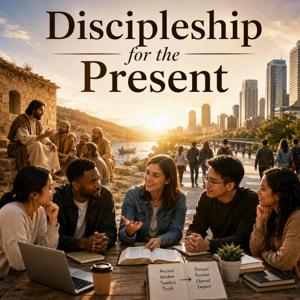


The Gospel of John opens with a cosmic declaration that challenges both ancient and modern paradigms: "In the beginning was the Word, and the Word was with God, and the Word was God." This episode of "Wisdom for the Present" unpacks the profound implications of this statement, exploring how the Logos bridges Greek philosophical ideals and Jewish theological traditions. The text invites us to reconsider our understanding of power, identity, and transformation.
In the ancient world, the term Logos resonated deeply with Greek and Jewish audiences. For the Greeks, it represented divine reason, the hidden order of the universe. For the Jews, it was the creative power of God, as seen in Genesis. The author of John masterfully unites these concepts, presenting the Logos as both the rational structure and the active force behind all existence.
As we journey through the first 12 chapters, we encounter transformative encounters that challenge societal norms and personal identities. From Nicodemus, the religious elite seeking truth under the cover of night, to the Samaritan woman, an outcast finding acceptance and purpose, the narrative reveals the radical inclusivity and transformative power of the Logos.
The episode delves into the tension between institutional authority and spiritual authenticity. Jesus' interactions with the religious leaders highlight the dangers of rigid systems that prioritize rules over compassion. His healing on the Sabbath and his declaration as the "light of the world" provoke hostility, yet they also illuminate the path to true freedom and understanding.
In a world saturated with noise and competing voices, the metaphor of the Good Shepherd offers a poignant reminder of authentic leadership. The true shepherd sacrifices for the flock, while the hireling abandons them in times of crisis. This episode challenges us to evaluate the voices we follow and the roles we play in our own spheres of influence.
In This Episode
* The cosmic implications of "In the beginning was the Word"
* Logos as a bridge between Greek philosophy and Jewish theology
* Nicodemus and the challenge of spiritual rebirth
* The Samaritan woman and the dismantling of religious tribalism
* Healing on the Sabbath and the conflict with institutional authority
* Jesus as the Good Shepherd and the nature of true leadership
* The paradox of glory through sacrifice
* Lazarus' resurrection as a preview of ultimate victory over death
* Mary's extravagant devotion and the critique of pragmatic cynicism
* The triumphal entry and the subversion of worldly power
Practical Reflection
1. Where in your life are you prioritizing rules over compassion, and how can you realign your actions to reflect true empathy?2. What voices are you following, and do they embody the sacrificial leadership of the Good Shepherd or the self-preserving nature of the hireling?3. What aspects of your identity or comfort are you clinging to that need to be surrendered for greater growth and transformation?
Suggested Substack Excerpt
The Gospel of John challenges us to see beyond the surface of ancient texts, revealing a narrative of radical inclusion, transformative power, and sacrificial leadership. This episode explores the cosmic Logos, the dismantling of rigid systems, and the call to authentic, compassionate living.
AI Disclosure
This episode was created using Google NotebookLM Audio Overview, based on human-curated source material, structured guidance, and editorial review. AI is used as a tool for clarity and delivery, not as a replacement for thoughtful study or engagement with the original texts.
Copyright
© 2026 Wisdom for the Present / Kamashcu Production Studios. All rights reserved.
In this episode of Wisdom for the Present, we embark on a transformative journey through the final chapters of the Book of Luke, chapters 19 through 24. We begin with the striking image of Zacchaeus, a wealthy tax collector, climbing a tree to see Jesus—a vivid metaphor for the subversion of dignity and status. Zacchaeus' encounter with Jesus challenges our understanding of wealth, repentance, and transformation, as he willingly dismantles his fortune built on exploitation, illustrating that true change of heart leads to a change of action.
The narrative then shifts to the parable of the minas, where Jesus addresses the fear-based worldview that paralyzes potential. The servant who buries his mina out of fear exemplifies how a flawed perception of reality can lead to inaction and missed opportunities. This parable invites us to audit our own lives, examining how fear might be causing us to hoard our talents and resources instead of investing them for growth.
As Jesus enters Jerusalem, he confronts the systemic corruption of the temple, challenging the religious and economic structures of his day. His actions and teachings redefine power and authority, urging us to serve rather than seek titles and recognition. This theme of servant leadership is further explored during the Last Supper, where Jesus contrasts worldly power with the kingdom he is establishing—a kingdom grounded in genuine service.
The episode delves into the psychological and spiritual resilience required to navigate crises, as Jesus predicts the destruction of Jerusalem and offers wisdom on maintaining inner peace amidst external chaos. His instruction to "possess your souls" becomes a vital tool for modern listeners overwhelmed by the relentless news cycle and global instability.
Finally, we explore the profound moment on the road to Emmaus, where two disciples, disillusioned and grieving, encounter the risen Jesus incognito. Their journey from despair to revelation highlights the power of reinterpreting our own narratives, recognizing that our greatest failures can be the crucibles of growth and transformation. The episode closes with a call to seek those "burning heart" moments where truth becomes deeply transformative, urging us to act with clarity and purpose.
In This Episode
* The subversive image of Zacchaeus climbing a tree and its implications for dignity and transformation
* How Zacchaeus' radical restitution challenges our understanding of wealth and repentance
* The parable of the minas and the dangers of a fear-based worldview
* Jesus' confrontation with the temple's corruption and the call to servant leadership
* The psychological resilience needed to navigate crises and possess one's soul
* The road to Emmaus and the power of reinterpreting our narratives
* The significance of the burning heart moment and its call to action
* Radical forgiveness as a circuit breaker for cycles of vengeance
Practical Reflection
1. How are you managing your resources—money, time, talents—out of fear or abundance?2. In what ways can you shift from seeking titles and recognition to serving others genuinely?3. Where can you find moments of profound internal resonance that move truth from your head to your heart?
Suggested Substack Excerpt
In this episode, we explore the transformative journey of Zacchaeus, the parable of the minas, and the road to Emmaus, uncovering profound insights on wealth, fear, power, and forgiveness. Join us as we delve into the heart of Luke's narrative, seeking wisdom that challenges and transforms our modern lives.
AI Disclosure
This episode was created using Google NotebookLM Audio Overview, based on human-curated source material, structured guidance, and editorial review. AI is used as a tool for clarity and delivery, not as a replacement for thoughtful study or engagement with the original texts.
Copyright
© 2026 Wisdom for the Present / Kamashcu Production Studios. All rights reserved.
In the heart of the Gospel of Luke, chapters 9 through 19, lies a profound journey known as the travel narrative. This episode of “Wisdom for the Present” explores this intense stretch of scripture, where Jesus resolutely sets his face toward Jerusalem, fully aware that he is marching toward his own execution. This journey is not just a physical trek but a deliberate, transformative mission that redefines human understanding of sacrifice, grace, and commitment.
The narrative begins with Jesus’ unwavering decision to head toward Jerusalem, a city that symbolizes both the heart of religious tradition and the epicenter of political hostility. The text tells us that Jesus “steadfastly set his face to go to Jerusalem,” a phrase that conveys an unflinching resolve akin to bracing oneself for an inevitable impact. This decision is not merely about geographical movement; it is a cosmic exodus, a path leading to a deeper liberation from the chains of spiritual bondage.
As Jesus embarks on this journey, he encounters immediate hostility in Samaria, a region steeped in centuries-old ethnic and religious animosity. The refusal of hospitality by the Samaritans highlights the deep-seated tribalism that Jesus’ message seeks to transcend. His rebuke of James and John, who wish to call down fire upon the Samaritans, underscores a radical departure from vengeance and destruction toward a mission of salvation and reconciliation.
Throughout this narrative, Jesus challenges the societal norms and expectations that bind individuals to a life of deferred purpose. His interactions with potential followers reveal the tension between societal obligations and the urgent call to discipleship. The demands he places on those who wish to follow him are stark, yet they illuminate the necessity of prioritizing the Kingdom of God above all else.
The parable of the Good Samaritan further dismantles the boundaries of neighborliness, urging listeners to extend compassion beyond cultural and ideological lines. This story, juxtaposed with the tale of Martha and Mary, illustrates the balance between active service and contemplative presence, a tension that resonates deeply in our modern, hurried lives.
As the narrative unfolds, Jesus addresses the illusion of security found in wealth and accumulation. The parable of the rich fool serves as a cautionary tale against the idolatry of material possessions, while the story of Zacchaeus exemplifies the transformative power of grace that leads to radical restitution and generosity.
In This Episode
* The resolute journey of Jesus toward Jerusalem as a cosmic exodus
* Samaria’s hostility and the challenge of transcending tribalism
* The radical demands of discipleship and the illusion of later
* The Good Samaritan and the redefinition of neighborliness
* Martha and Mary: balancing service and presence
* The rich fool and the illusion of security in wealth
* Zacchaeus’ transformation and the economy of grace
* The parable of the minas and the call to stewardship
* Entitlement versus transformation: lessons from the lepers
* The consistent theme of outsiders embracing grace
Practical Reflection
* Where are you delaying your core commitments due to societal expectations or distractions?
* Who is the “Samaritan” in your life, and how can you show them active compassion this week?
* Are you operating like the older brother, keeping a moral scorecard, or are you embracing radical grace?
Suggested Substack Excerpt
In this episode, we delve into the travel narrative of Luke’s Gospel, where Jesus’ journey to Jerusalem becomes a profound exploration of sacrifice, grace, and commitment. We examine how this ancient text challenges modern notions of security, neighborliness, and discipleship, urging us to prioritize the Kingdom of God above all else.
AI Disclosure
This episode was created using Google NotebookLM Audio Overview, based on human-curated source material, structured guidance, and editorial review. AI is used as a tool for clarity and delivery, not as a replacement for thoughtful study or engagement with the original texts.
Copyright
© 2026 Wisdom for the Present / Kamashcu Production Studios. All rights reserved.
The Gospel of Luke opens not with mystical visions or abstract doctrines, but with a meticulous investigation aimed at uncovering truth. The author, Luke, writes to Theophilus, emphasizing a foundation built on careful inquiry and eyewitness accounts. This sets the stage for a narrative that challenges both ancient and modern perceptions of power, authority, and faith.
In the first nine chapters, we encounter a profound collision of power structures. The text juxtaposes the reigns of Herod and Caesar Augustus with the humble birth of Jesus, highlighting a kingdom that operates on principles radically different from those of the empire. This narrative shift invites us to reconsider how authority and value are defined in our own lives.
Zacharias and Mary provide contrasting responses to divine intervention. Zacharias, entrenched in religious tradition, demands proof and is rendered mute—a severe mercy that forces introspection. Mary, with a beginner's mind, embraces the disruption, embodying the humility that the new kingdom values. Her Magnificat proclaims a reversal of societal norms, elevating the humble and filling the hungry.
John the Baptist's call for repentance is not a call to abstract spirituality but to tangible economic justice. His message redefines repentance as a change of mind that must manifest in ethical living and generosity. This sets the stage for Jesus' own ministry, which consistently prioritizes the marginalized and challenges the status quo.
The temptation of Jesus in the wilderness reveals the seductive nature of power and the integrity required to resist it. By refusing shortcuts to sovereignty, Jesus models a path of authenticity over compromise. His mission statement in Nazareth, invoking the Jubilee, further underscores a commitment to liberation and justice.
As Jesus assembles his disciples, he bypasses traditional power structures, choosing those who recognize their own flaws. This selection process highlights the value of self-awareness and humility over societal status. The parables and teachings that follow challenge listeners to examine their own biases, attachments, and the structures they uphold.
In This Episode
* The epistemological foundation laid by Luke's introduction to Theophilus
* The collision of imperial power with a new kind of authority in the birth narratives
* Zacharias and Mary's contrasting responses to divine announcements
* The Magnificat as a manifesto of societal and spiritual reversal
* John the Baptist's redefinition of repentance as economic justice
* Jesus' temptation in the wilderness and the integrity of mission
* The Jubilee as a framework for liberation and justice
* The radical inclusivity of Jesus' recruitment of disciples
* The parable of the sower and the dangers of distraction
* The challenge of loving enemies and breaking cycles of retaliation
Practical Reflection
Where in your life are you clinging to the old wineskins of ego and self-preservation?
How might the distractions of wealth and comfort be choking out your capacity for growth and generosity?
Are you willing to embrace the discomfort of loving your enemies and forgiving generously, even when it challenges your sense of justice?
Suggested Substack Excerpt
The Gospel of Luke invites us to shatter the glass of ancient perceptions and engage with a narrative that challenges power, authority, and faith. In this episode, we explore the profound collision of imperial power with a new kingdom that values humility, justice, and radical inclusivity.
AI Disclosure
This episode was created using Google NotebookLM Audio Overview, based on human-curated source material, structured guidance, and editorial review. AI is used as a tool for clarity and delivery, not as a replacement for thoughtful study or engagement with the original texts.
Copyright
© 2026 Wisdom for the Present / Kamashcu Production Studios. All rights reserved.
In the final chapters of the Gospel of Mark, we encounter a narrative that is both breathtaking in its pace and profound in its implications. The episode opens with the triumphant entry of Jesus into Jerusalem, a moment of political and cultural zenith that quickly descends into chaos and betrayal. This sequence of events challenges our modern understanding of leadership, authority, and the nature of true power. As the hosts explore, the stark contrast between the Roman triumphs and Jesus’ humble entry on a borrowed donkey serves as a radical subversion of worldly values, prompting us to question the essence of true authority in our own lives.
The narrative swiftly moves into the cleansing of the temple, where Jesus disrupts the economic heart of Jerusalem, exposing the exploitation that had consumed the sacred space. This act of righteous anger invites us to reflect on the boundaries we set in our own lives to protect what is sacred from the relentless noise of modernity. The episode also delves into the enigmatic cursing of the fig tree, revealing it as a powerful parable against performative living—a warning against cultivating an image without substance.
As the story unfolds, we witness the profound isolation of Jesus, abandoned by his closest followers in his darkest hour. The hosts draw a poignant parallel between the disciples’ failure to stay awake in Gethsemane and our own struggles with discipline and intention. The narrative crescendos with the crucifixion, a moment of ultimate vulnerability and sacrifice that redefines the concept of strength and victory.
The episode closes with the resurrection, a moment that shatters the finality of death and invites us into a new way of living. The abrupt ending of Mark’s Gospel, with the women fleeing in fear, places the responsibility of the narrative’s continuation on us, the readers. It challenges us to step into the story, to live out the truth of the resurrection in a world that often feels hostile to such radical hope.
In This Episode
* The triumphant yet humble entry of Jesus into Jerusalem and its implications for modern leadership
* The cleansing of the temple as a critique of economic exploitation and a call to protect sacred spaces
* The cursing of the fig tree as a parable against performative living and the cultivation of genuine substance
* The profound isolation of Jesus in Gethsemane and the universal struggle between intention and execution
* The crucifixion as a redefinition of strength and victory through vulnerability and sacrifice
* The resurrection as an invitation to a new way of living, challenging the finality of death
* The abrupt ending of Mark’s Gospel as a call to action for the reader to continue the narrative
* The role of grace and restoration in the resurrection appearances, particularly in the inclusion of Peter
Practical Reflection
Where in your life are you cultivating leaves without fruit—projecting an image without substance?
How do you protect the sacred spaces in your life from the relentless noise of modernity?
Who in your life needs to hear an “and Peter” message of grace and restoration?
Suggested Substack Excerpt
In the final chapters of Mark, the narrative races from triumph to betrayal, from crucifixion to resurrection. This episode explores the radical subversion of worldly values, the call to protect sacred spaces, and the invitation to live out the truth of the resurrection in a world often hostile to such hope.
AI Disclosure
This episode was created using Google NotebookLM Audio Overview, based on human-curated source material, structured guidance, and editorial review. AI is used as a tool for clarity and delivery, not as a replacement for thoughtful study or engagement with the original texts.
Copyright
© 2026 Wisdom for the Present / Kamashcu Production Studios. All rights reserved.
In this episode of Wisdom for the Present, we embark on a profound exploration of the Gospel of Mark, chapters 8 through 10, a narrative that challenges our deepest assumptions about power, success, and spiritual clarity. The journey begins with a disorienting healing in Bethsaida, where a blind man’s gradual restoration of sight becomes a metaphor for the painful, often murky process of gaining true understanding. This episode delves into the psychological and spiritual implications of this narrative, drawing parallels to our modern lives.
The hosts discuss how our expectations of instant healing and success are upended by the reality that true enlightenment is a gradual, often uncomfortable process. They explore the disciples’ struggle to comprehend the radical teachings of Jesus, who redefines greatness as servanthood and challenges the ego-driven pursuit of power and wealth. The narrative is a masterclass in re-evaluating what it means to be fully realized human beings, as it confronts us with the necessity of ego death and the embrace of radical self-denial.
The episode also examines the rich young ruler’s tragic encounter with Jesus, where his inability to part with his wealth highlights the seductive power of material security. In contrast, the blind beggar Bartimaeus exemplifies the ultimate act of faith, casting aside his only possession to follow Jesus. This juxtaposition forces us to question what we are willing to sacrifice for true spiritual clarity and purpose.
In This Episode
* The disorienting healing in Bethsaida as a metaphor for gradual spiritual enlightenment
* The disciples’ struggle with ego and their misunderstanding of Jesus’ mission
* Peter’s partial sight and the harsh rebuke he receives for his worldly expectations
* The radical call to take up the cross and the true meaning of self-denial
* The rich young ruler’s tragic choice and the seductive power of wealth
* Bartimaeus’ act of faith and the courage to cast aside security for truth
* The danger of transactional relationships and the call to true unity
* Servant leadership as the ultimate inversion of worldly power structures
* The necessity of ruthless prioritization to prevent moral decay
* The profound challenge of following truth once it is revealed
Practical Reflection
* Where in your life are you still seeing “men like walking trees”? Where is your understanding partial?
* What is your “cloak” — the security or identity you cling to that might be hindering your spiritual growth?
* Are you willing to embrace the discomfort of radical self-denial to pursue a higher purpose?
Suggested Substack Excerpt
In this episode, we explore the Gospel of Mark’s narrative arc from Bethsaida to Jerusalem, challenging our assumptions about power, wealth, and spiritual clarity. Through the lens of gradual healing, radical self-denial, and servant leadership, we confront the seductive power of material security and the courage required to follow truth.
AI Disclosure
This episode was created using Google NotebookLM Audio Overview, based on human-curated source material, structured guidance, and editorial review. AI is used as a tool for clarity and delivery, not as a replacement for thoughtful study or engagement with the original texts.
Copyright
© 2026 Wisdom for the Present / Kamashcu Production Studios. All rights reserved.
In the Gospel of Mark, chapters 1 through 8, we encounter a narrative that shatters expectations and redefines leadership, authority, and spiritual integrity. Imagine expecting a savior clad in royal robes, only to meet a figure emerging from the wilderness, clad in camel hair and subsisting on locusts. This is the jarring introduction to John the Baptist, whose presence signals a seismic shift from the expected to the revolutionary.
In a world dominated by Roman occupation, the Jewish anticipation of a messiah was deeply political, yearning for liberation. Yet, Mark's account begins far from the centers of power, in the desolation of the wilderness, where John the Baptist prepares the way for Jesus. This setting underscores a profound truth: true transformation often begins on the margins, away from the entrenched systems of power.
As Jesus emerges, he defies conventional norms by assembling a team not of scholars, but of fishermen—men who understood hard work and resilience. This choice challenges our modern obsession with credentials and invites us to value raw potential over polished resumes. Jesus' ministry then unfolds as a series of confrontations with the religious establishment, dismantling their rigid traditions in favor of mercy and compassion.
The narrative crescendos with Jesus' teaching on the true nature of purity and the cost of discipleship. He challenges the Pharisees' obsession with external rituals, exposing their hypocrisy and redefining purity as an internal reality. This teaching is a direct affront to our modern tendency towards "optical virtue," where external appearances often mask internal deficiencies.
Finally, Jesus presents the paradox of true life: it is found not in gaining the world, but in losing oneself for a higher purpose. This message is a stark challenge to our culture's relentless pursuit of success and status. It calls us to evaluate the true cost of our ambitions and to prioritize integrity and compassion over worldly gain.
In This Episode
* The unexpected introduction of John the Baptist and its implications for leadership
* The historical context of Roman occupation and Jewish expectations of a messiah
* Jesus' unconventional recruitment of fishermen and its challenge to modern credentialism
* The dismantling of Pharisaic traditions in favor of mercy and compassion
* The redefinition of purity as an internal reality, not external ritual
* The critique of "optical virtue" and the call for genuine internal transformation
* The paradoxical wisdom of losing oneself to find true life
* The challenge to modern metrics of success and the call to prioritize integrity
Practical Reflection
1. Where is your "wilderness"—a place away from societal noise where you can clarify your purpose?2. Are you dismissing potential in yourself or others due to a lack of traditional credentials?3. What is your "Corban"—the noble-sounding excuse you use to avoid difficult personal duties?
Suggested Substack Excerpt
In the Gospel of Mark, chapters 1 through 8, we encounter a narrative that shatters expectations and redefines leadership, authority, and spiritual integrity. This episode explores how Jesus' ministry challenges modern metrics of success and calls us to prioritize integrity and compassion over worldly gain.
AI Disclosure
This episode was created using Google NotebookLM Audio Overview, based on human-curated source material, structured guidance, and editorial review. AI is used as a tool for clarity and delivery, not as a replacement for thoughtful study or engagement with the original texts.
Copyright
© 2026 Wisdom for the Present / Kamashcu Production Studios. All rights reserved.
The final ten chapters of the Gospel of Matthew, chapters 19 through 28, offer a profound exploration of human nature, divine purpose, and the radical inversion of societal norms. As Jesus transitions from Galilee to Jerusalem, the narrative shifts dramatically, setting the stage for a confrontation with both religious and political powers. This section is not merely historical; it is a mirror reflecting the complexities of the human condition.
The journey begins with Jesus leaving the familiar safety of Galilee, intentionally heading toward Jerusalem, the epicenter of religious and political tension. This is not a simple change of scenery; it is a deliberate march toward destiny. The narrative tension escalates as Jesus faces a series of challenges that reveal the heart of his mission. He dismantles societal norms, confronts entrenched power structures, and redefines what it means to participate in the kingdom of heaven.
One of the most striking encounters is with the Pharisees, who attempt to trap Jesus with a question about divorce. This seemingly theological debate is a political minefield, reflecting a deeply polarized society. Jesus bypasses their legalistic traps, returning to the Genesis account to highlight the sacred nature of marriage and the human pathology of hardened hearts. This moment is a profound defense of the vulnerable, challenging systems of male privilege and societal norms.
The episode then shifts to the encounter with the rich young ruler, a model citizen who is asked to sell everything and follow Jesus. This demand is not about wealth itself but about the idolatry of security and control. Jesus exposes the illusion of self-sufficiency, revealing that the kingdom requires radical surrender, not transactional merit.
As the narrative unfolds, Jesus continues to challenge the disciples' understanding of power and greatness. The parable of the laborers in the vineyard dismantles the notion of transactional fairness, highlighting the mechanics of grace. The triumphal entry into Jerusalem, riding on a donkey, subverts expectations of a conquering king, while the cleansing of the temple reveals a deep commitment to authentic worship and justice.
The narrative crescendos with the crucifixion and resurrection, the ultimate demonstration of sacrificial love and divine victory. The tearing of the temple veil symbolizes the removal of barriers between humanity and God, while the resurrection entrusts the marginalized with the greatest news in history. The Great Commission expands the mission globally, emphasizing the slow, relational work of disciple-making.
In This Episode
* The intentional journey from Galilee to Jerusalem and its symbolic significance
* Jesus' confrontation with the Pharisees over divorce and the defense of the vulnerable
* The rich young ruler and the challenge of surrendering wealth and control
* The parable of the laborers in the vineyard and the mechanics of grace
* The triumphal entry and the subversion of political expectations
* The cleansing of the temple as a defense of authentic worship
* The crucifixion as the ultimate act of sacrificial love
* The resurrection and the empowerment of the marginalized
* The Great Commission and the call to relational disciple-making
Practical Reflection
* Where in your life are you relying on control and security rather than surrendering to a greater purpose?
* How can you challenge societal norms and defend the vulnerable in your community?
* In what ways are you called to make disciples through authentic relationships rather than transactional interactions?
Suggested Substack Excerpt
The final chapters of Matthew's Gospel challenge societal norms and reveal the radical inversion of power and grace. From confronting entrenched systems to the ultimate act of sacrificial love, this episode explores the transformative journey of Jesus toward Jerusalem and beyond.
AI Disclosure
This episode was created using Google NotebookLM Audio Overview, based on human-curated source material, structured guidance, and editorial review. AI is used as a tool for clarity and delivery, not as a replacement for thoughtful study or engagement with the original texts.
Copyright
© 2026 Wisdom for the Present / Kamashcu Production Studios. All rights reserved.
In this episode of Wisdom for the Present, we explore the profound insights of Matthew chapters 14 through 18, where ancient narratives reveal the complexities of human nature and leadership. Imagine a world where a king's lavish banquet ends in the murder of a prophet, while a humble hillside gathering results in miraculous abundance. This stark contrast sets the stage for a deep examination of power, integrity, and the transformative potential of compassion.
We begin in the court of Herod Antipas, a ruler whose fragile ego leads to the execution of John the Baptist. Herod's story is a chilling reminder of how the fear of losing face can drive leaders to make devastating choices. The narrative then shifts to the Pharisees, whose obsession with ritual purity masks a deeper moral corruption. Jesus confronts their hypocrisy, revealing that true defilement comes from within, not from external adherence to tradition.
The episode takes us on a journey from the political to the personal, as we witness Peter's faltering faith on stormy seas and the unyielding trust of a Canaanite woman seeking healing for her daughter. Her faith, despite cultural barriers, exemplifies the power of relentless belief in the face of exclusion.
As we delve deeper, the text challenges us to reconsider our own ambitions and the societal norms that drive them. Jesus' teachings on humility and forgiveness offer a radical departure from the world's competitive ethos. His parable of the unforgiving servant underscores the necessity of infinite grace, reminding us that our own debts have been forgiven beyond measure.
In This Episode
* The toxic leadership of Herod Antipas and the political machinations that led to John the Baptist's execution
* The Pharisees' ritualistic purity and Jesus' radical redefinition of true defilement
* Peter's moment of doubt on the water and the unwavering faith of the Canaanite woman
* The juxtaposition of Herod's banquet with Jesus' miraculous feeding of the multitude
* The law of honor and its modern parallels in corporate and social culture
* Jesus' call to radical humility and the pruning of destructive ambitions
* The parable of the unforgiving servant and the infinite nature of grace
* The practical implications of Jesus' teachings on conflict resolution and community
Practical Reflection
1. Where in your life are you allowing the fear of losing face to override your integrity?2. How can you bring your meager resources to a seemingly insurmountable problem, trusting in the process of multiplication?3. In what areas do you need to practice radical forgiveness, releasing the debts others owe you?
Suggested Substack Excerpt
In Matthew chapters 14 through 18, we witness a stark contrast between Herod's toxic leadership and Jesus' model of participatory compassion. This episode explores the dynamics of power, integrity, and the transformative potential of humility and forgiveness.
AI Disclosure
This episode was created using Google NotebookLM Audio Overview, based on human-curated source material, structured guidance, and editorial review. AI is used as a tool for clarity and delivery, not as a replacement for thoughtful study or engagement with the original texts.
Copyright
© 2026 Wisdom for the Present / Kamashcu Production Studios. All rights reserved.
In the Gospel of Matthew, chapters 8 through 13, we witness a dramatic shift from philosophical discourse to a series of rapid-fire encounters that challenge societal norms and redefine authority. Imagine living in a world where societal laws demand you to announce your own uncleanliness, a world where a leper, the ultimate outcast, approaches Jesus and is met not with disdain but with a transformative touch. This touch is more than a gesture; it is a profound act of empathy that defies the rigid purity laws of the time, illustrating that true authority is rooted in compassion.
The narrative then pivots to the Roman centurion, a symbol of oppression, who demonstrates a faith that astonishes Jesus, suggesting that profound understanding can often be found on the margins, among those we least expect. This theme of unexpected wisdom continues as we explore the storm on the Sea of Galilee, where the disciples' panic is met with a lesson in trust and perspective, reminding us that the true danger lies not in external chaos but in internal disconnection from our foundations.
As we delve deeper, we confront the societal structures that prioritize economic stability over human restoration, as seen in the townspeople's reaction to the healed demoniacs. This critique extends to the religious elite, whose legalism turns the Sabbath from a gift of rest into a burden of compliance. Jesus' radical redefinition of the Sabbath challenges us to prioritize human flourishing over rigid adherence to rules.
The episode culminates in the parables of the soils and the wheat and tares, offering a profound exploration of human psychology and the complexities of growth. These parables invite us to examine the soil of our own hearts and the entangled nature of good and evil in our world, urging patience and trust in the ultimate process of growth.
In This Episode
* The radical empathy of Jesus' touch and its challenge to purity laws
* The centurion's faith as a critique of in-group arrogance
* Navigating internal storms through anchored trust
* The societal preference for economic stability over human restoration
* The Sabbath as a gift corrupted by legalism
* The parables of the soils and their psychological insights
* The wheat and tares as a critique of purity spirals
* The mustard seed as a metaphor for small acts of mercy
Practical Reflection
1. Who are the "modern untouchables" in your life, and how can you reach out to them with empathy?2. What internal storms are disconnecting you from your foundations, and how can you anchor yourself in trust?3. How do the cares of this world and the deceitfulness of riches choke out your pursuit of wisdom?
Suggested Substack Excerpt
In Matthew 8-13, we explore a world where societal norms are shattered by acts of radical empathy and unexpected wisdom. This episode delves into the transformative power of touch, the critique of in-group arrogance, and the profound insights of Jesus' parables on human growth and societal structures.
AI Disclosure
This episode was created using Google NotebookLM Audio Overview, based on human-curated source material, structured guidance, and editorial review. AI is used as a tool for clarity and delivery, not as a replacement for thoughtful study or engagement with the original texts.
Copyright
© 2026 Wisdom for the Present / Kamashcu Production Studios. All rights reserved.
From the publisher's feed