
Sign up to save your podcasts
Or

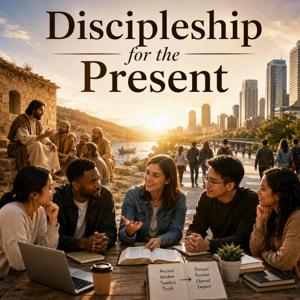


In the bustling, morally complex city of ancient Corinth, the Apostle Paul addresses a community fractured by pride and misunderstanding. Imagine a place where the relentless innovation of Silicon Valley meets the indulgent nightlife of Las Vegas, topped with the intellectual snobbery of an Ivy League campus. This is Corinth, a city humming with ambition, wealth, and unchecked indulgence. Amidst this chaos, a small community of believers struggles to live out a radically new way of life, yet they are tearing each other apart from within.
Paul's First Letter to the Corinthians, chapters 1-6, reveals a community blind to its own dysfunction, believing itself to be thriving while drowning in intellectual arrogance and scandalous behavior. Paul confronts their tribalism, where factions claim allegiance to different leaders—Paul, Apollos, Cephas, and even Christ—turning the gospel into a status game. He dismantles their pride by reminding them that leaders are merely instruments, and true growth comes from God alone.
The Corinthians' obsession with appearing culturally elite reveals a deeper misunderstanding of wisdom. Paul declares that "the foolishness of God is wiser than men," challenging their expectations of power and intellect. He preaches a crucified Christ, a message scandalous to Jews and foolish to Greeks, yet it is this very message that holds transformative power.
Paul's radical redefinition of wisdom and leadership calls into question modern meritocracy, where success is often measured by credentials and status. He warns against building lives on the cheap materials of human approval and ego, urging instead for the costly, enduring materials of truth and humility.
In This Episode
* The chaotic, morally complex environment of ancient Corinth and its parallels to modern cities
* How Paul's First Letter to the Corinthians addresses internal division and pride
* The tribalism within the Corinthian church and its modern parallels in leadership and celebrity culture
* Paul's radical redefinition of wisdom and power through the message of the cross
* The dangers of building one's life on superficial success and human approval
* The metaphor of building with gold versus wood, and the ultimate test of fire
* The role of a steward in ancient households and its implications for modern leadership
* The severe moral failure in Corinth and the necessity of community discipline
* The yeast metaphor and its application to maintaining community integrity
* The profound sanctity of the human body as a temple of the Holy Spirit
Practical Reflection
1. Where in your life are you tying your identity to a specific leader or ideology, rather than seeking the ultimate source of truth?2. What aspects of your life would be revealed as trivial if tested by the fire of absolute truth?3. How would your daily habits change if you truly treated your body as a sacred temple?
Suggested Substack Excerpt
In ancient Corinth, a city buzzing with ambition and indulgence, the Apostle Paul confronts a community blind to its own dysfunction. Through his First Letter to the Corinthians, Paul challenges their tribalism and redefines wisdom, urging them to build lives on the enduring materials of truth and humility.
AI Disclosure
This episode was created using Google NotebookLM Audio Overview, based on human-curated source material, structured guidance, and editorial review. AI is used as a tool for clarity and delivery, not as a replacement for thoughtful study or engagement with the original texts.
Copyright
© 2026 Wisdom for the Present / Kamashcu Production Studios. All rights reserved.
In the heart of the Roman Empire, a fledgling community of believers received a letter that would serve as their survival guide amidst a world of power, suspicion, and cultural clash. This episode of "Wisdom for the Present" delves into chapters 12 through 16 of the biblical book of Romans, where the Apostle Paul shifts from dense theological discourse to practical, actionable wisdom. Imagine being handed a manual on how to coexist peacefully with those who hold the power to destroy you. This is the reality for the early Christians in Rome, a city that was the epicenter of political, economic, and cultural influence.
Paul's message begins with a radical call to personal transformation: "present your bodies as a living sacrifice." This paradoxical command challenges the ancient concept of sacrifice, demanding not death, but a vibrant, ongoing dedication of one's life. The episode explores how this internal transformation is crucial for resisting the pervasive pressure to conform to societal norms, urging listeners to renew their minds and reclaim their autonomy from modern cultural forces.
The narrative then transitions to the communal aspect, emphasizing the metaphor of the body to illustrate the necessity of humility and interdependence within a diverse community. Paul’s list of spiritual gifts underscores the value of every role, challenging both ancient and modern hierarchies that prioritize visibility over substance. The text calls for sincere love, devoid of hypocrisy, as the glue that holds the community together.
As the discussion progresses, the episode tackles the seemingly impossible command to overcome evil with good, drawing parallels to Stoic philosophy and modern nonviolent resistance. The idea of heaping "coals of fire" on an enemy's head is reinterpreted as a transformative act of conscience, not revenge. This profound wisdom is extended to civic duties, where love is portrayed as the ultimate fulfillment of the law, reframing obligations as acts of neighborly love.
The episode concludes with a deep dive into the necessity of mutual forbearance and the power of a supportive network, as illustrated by Paul’s personal greetings in chapter 16. This section reveals the vibrant, interconnected community that supported Paul’s mission, highlighting the indispensable roles of women and the profound interdependence that fueled the early church.
In This Episode
* The radical shift from theological theory to practical living in Romans 12-16
* The paradox of being a "living sacrifice" and its implications for modern autonomy
* The pressure to conform and the call for mind renewal in a digital age
* The metaphor of the body and the value of diverse gifts in community
* The challenge of overcoming evil with good and the role of nonviolent resistance
* Love as the fulfillment of the law and the reframing of civic duties
* The principle of mutual forbearance and the danger of secondary disputes
* The vibrant, supportive network behind Paul's mission and the role of women
* The enduring principle of genuine, warm community relationships
Practical Reflection
1. Where are you currently sacrificing your autonomy to a modern empire, and how can you reclaim your operating system?2. Are you using your strengths to elevate yourself or to build up those around you with sincere love?3. Identify a doubtful disputation in your life. Can you choose to prioritize the relationship over being right?
Suggested Substack Excerpt
In a world of power, suspicion, and cultural clash, Romans 12-16 offers a survival guide for a fledgling community. This episode explores the radical call to be a "living sacrifice," the pressure to conform, and the transformative power of sincere love and mutual forbearance.
AI Disclosure
This episode was created using Google NotebookLM Audio Overview, based on human-curated source material, structured guidance, and editorial review. AI is used as a tool for clarity and delivery, not as a replacement for thoughtful study or engagement with the original texts.
Copyright
© 2026 Wisdom for the Present / Kamashcu Production Studios. All rights reserved.
The Book of Romans, chapters 9 through 11, presents one of the most profound theological discussions in the New Testament, tackling the tension between human free will and divine sovereignty. This episode of "Wisdom for the Present" delves into the Apostle Paul's exploration of these themes, offering a rich tapestry of insights into the nature of grace, the illusion of merit, and the sovereign plan of God.
Imagine holding a VIP pass, a generational inheritance, only to find yourself outside as others enter freely. This analogy captures the crisis faced by early Jewish Christians as Gentiles embraced the promises of God. Paul addresses this crisis with raw emotion, expressing a willingness to be "accursed from Christ" for the sake of his people, the Israelites. This episode unpacks Paul's profound love and the historical context of a Jewish nation grappling with the Messiah's rejection.
The episode explores the paradox of God's promises seemingly failing, as the Jewish nation largely rejects Jesus while Gentiles embrace the faith. Paul navigates this tension by dismantling the notion of biological entitlement, illustrating through the stories of Isaac and Ishmael, Jacob and Esau, that God's covenant is based on grace, not lineage or merit.
Paul's argument reaches a climax with the metaphor of the olive tree, symbolizing the inclusion of Gentiles into the covenant community. The natural branches, representing Israel, were broken off due to unbelief, making room for the wild branches, the Gentiles. Yet, Paul warns against arrogance, reminding Gentile believers that they are supported by the root, not the other way around.
The episode concludes with a doxology, a spontaneous eruption of worship as Paul contemplates the depth of God's wisdom and knowledge. This profound reflection invites listeners to surrender their illusions of control and trust in the divine orchestration of history and their own lives.
In This Episode
* The crisis of fairness in Romans 9-11 and the VIP pass analogy
* Paul's emotional plea and the historical context of Jewish rejection of Jesus
* The dismantling of biological entitlement through the stories of Isaac and Jacob
* The olive tree metaphor and the inclusion of Gentiles into the covenant
* The warning against arrogance and the importance of humility
* The role of grace in salvation, beyond human merit or effort
* The accessibility of the gospel and the simplicity of faith
* The doxology as a response to the unsearchable wisdom of God
Practical Reflection
1. Where in your life are you trying to establish your own righteousness through effort or achievement?2. How can you cultivate a holy fear that acknowledges your dependence on the divine root?3. What small anxieties or illusions of control do you need to surrender to God's infinite wisdom?
Suggested Substack Excerpt
Romans 9-11 confronts the crisis of fairness as Gentiles embrace the promises once held by Israel. This episode explores Paul's emotional plea, the dismantling of biological entitlement, and the profound metaphor of the olive tree, inviting listeners to trust in the divine orchestration of history and their own lives.
AI Disclosure
This episode was created using Google NotebookLM Audio Overview, based on human-curated source material, structured guidance, and editorial review. AI is used as a tool for clarity and delivery, not as a replacement for thoughtful study or engagement with the original texts.
Copyright
© 2026 Wisdom for the Present / Kamashcu Production Studios. All rights reserved.
In the heart of Paul's letter to the Romans, chapters 6 through 8, we find a profound exploration of human nature, spiritual transformation, and the mechanics of change. This episode of "Wisdom for the Present" delves into the Apostle Paul's masterful discourse on justification and sanctification, offering listeners a roadmap for navigating the internal war between old habits and new identities.
Paul begins by addressing the tension between justification — the legal declaration of righteousness — and sanctification, the ongoing process of becoming holy. He uses vivid imagery, likening baptism to a funeral for the old self, emphasizing the necessity of mortification before vivification. This transformation is not merely legal but organic, akin to grafting a branch onto a tree, where believers are intimately united with Christ.
The episode highlights Paul's rhetorical question, "Shall we continue in sin that grace may abound?" and his vehement rejection of such logic. This leads to a discussion on the divided self, where Paul candidly describes the struggle between the desire to do good and the pull of sin. This internal conflict is not unique to Paul; it resonates with the universal human experience of cognitive dissonance.
Listeners are invited to consider the metaphor of slavery to sin versus righteousness, challenging the modern illusion of autonomy. Paul argues that humans are always serving a master, and the choice lies in whether that master leads to life or death. The episode further explores the Spirit of adoption, contrasting the spirit of bondage with the intimate relationship of calling God "Abba, Father."
Finally, the episode culminates in the assurance of no condemnation for those in Christ, the Spirit's intercession in our weaknesses, and the unbreakable golden chain of divine purpose. Paul's cosmic perspective on suffering and future glory offers a transformative view of our physical bodies and the material world, urging listeners to reconsider their relationship with the tangible aspects of life.
In This Episode
* The transition from justification to sanctification and its implications for daily life
* Paul's vivid imagery of baptism as a funeral for the old self
* The rhetorical question of sinning to increase grace and its modern parallels
* The divided self and the universal struggle with cognitive dissonance
* Slavery to sin versus righteousness and the illusion of autonomy
* The Spirit of adoption and the intimate relationship with God as "Abba, Father"
* The assurance of no condemnation and the Spirit's intercession in our weaknesses
* The golden chain of divine purpose and the cosmic perspective on suffering
* The future redemption of our physical bodies and the material world
Practical Reflection
1. Where in your life are you still serving an old master who no longer has authority over you?2. How does the concept of being "dead to sin" challenge your current habits and thought patterns?3. In what ways can you embrace the Spirit of adoption and deepen your relationship with God as "Abba, Father"?
Suggested Substack Excerpt
In this episode, we explore Romans 6-8, where Paul masterfully addresses the tension between justification and sanctification. Through vivid metaphors and profound insights, we uncover the internal war between old habits and new identities, offering a transformative view of our relationship with God and the material world.
AI Disclosure
This episode was created using Google NotebookLM Audio Overview, based on human-curated source material, structured guidance, and editorial review. AI is used as a tool for clarity and delivery, not as a replacement for thoughtful study or engagement with the original texts.
Copyright
© 2026 Wisdom for the Present / Kamashcu Production Studios. All rights reserved.
In this episode of Wisdom for the Present, we embark on an intellectually rigorous journey through the first five chapters of the biblical book of Romans, penned by the apostle Paul. The text is a profound exploration of human nature, morality, and the radical concept of grace. Imagine standing in the heart of ancient Rome, a city that epitomized the pinnacle of human achievement, yet beneath its marble facade lay a society riddled with vice and moral decay. Paul addresses this paradox, offering a diagnosis of humanity's internal collapse and a revolutionary proposal for redemption.
Paul's letter to the Roman Christians, written in 58 AD, confronts a fractured community grappling with cultural and religious tensions. The Jewish Christians, returning from exile, clashed with Gentile believers who had developed their own customs. Into this volatile mix, Paul introduces a radical theological argument: all of humanity, regardless of religious adherence, is fundamentally broken and in need of a transformative grace.
The episode delves into Paul's argument that humanity's inherent idolatry—placing finite things at the center of our lives—leads to societal and personal degradation. This ancient diagnosis resonates with modern listeners as we navigate a world obsessed with status, wealth, and self-optimization. Paul's assertion that both the religious and the secular are equally flawed challenges us to confront our own biases and self-righteousness.
We explore the concept of justification by faith, a revolutionary idea that dismantles the notion of earning divine favor through adherence to the law. Paul uses the example of Abraham to illustrate that faith, not ritual, is the true path to righteousness. This episode invites listeners to consider how this ancient wisdom can reshape our understanding of identity, worth, and the pursuit of a meaningful life.
In This Episode
* The paradox of Rome: external progress paired with internal collapse
* Paul's diagnosis of humanity's moral and spiritual decay
* The cultural and religious tensions within the Roman church
* The radical concept of justification by faith, independent of the law
* Abraham as a case study in faith over ritual
* The psychological and societal implications of idolatry
* The transformative power of grace and its challenge to human pride
* The alchemy of affliction: suffering as a tool for character development
* The cosmic narrative of the first and second Adam
* The overwhelming superiority of grace over sin
Practical Reflection
1. Where in your life are you using your moral or religious correctness as a shield to hide your own flaws?2. How can you reframe personal suffering as a tool for developing character and resilience?3. If your worth is already infinitely secured by grace, how would it change your response to criticism and failure?
Suggested Substack Excerpt
In this episode, we explore the profound insights of Romans 1-5, where Paul diagnoses humanity's internal collapse and offers a radical rescue plan through grace. This ancient wisdom challenges modern listeners to reconsider their understanding of identity, worth, and the pursuit of a meaningful life.
AI Disclosure
This episode was created using Google NotebookLM Audio Overview, based on human-curated source material, structured guidance, and editorial review. AI is used as a tool for clarity and delivery, not as a replacement for thoughtful study or engagement with the original texts.
Copyright
© 2026 Wisdom for the Present / Kamashcu Production Studios. All rights reserved.
In the Book of Acts, chapters 13 through 28, we witness a seismic shift in the early Christian movement, one that reverberates through history and into our modern lives. This episode of "Wisdom for the Present" explores how a small, localized group of believers in Antioch sparked a transformation that disrupted the Roman Empire's social and economic structures. The narrative begins in Antioch, a cosmopolitan hub where diverse cultural and philosophical backgrounds converge, setting the stage for a universal message that transcends its Judean roots.
The hosts delve into the radical sociological shock of this early community, highlighting figures like Manaen, a foster brother of Herod the Tetrarch, who walked away from royal privilege to join a movement that flattened social hierarchies. This episode challenges listeners to consider the implications of such radical inclusivity in today's world, where power dynamics often remain rigid and exclusionary.
As the narrative unfolds, we encounter Elymas the sorcerer, whose resistance to the new message mirrors the internal and external obstacles we face when stepping into new roles or breaking free from entrenched systems. The hosts draw parallels between Elymas' blindness and the self-imposed limitations we often place on ourselves, urging listeners to confront their own "Elymas" with decisive action.
The episode also examines the internal conflicts within the early church, particularly the Jerusalem Council's debate over cultural assimilation versus core mission. This tension between tradition and innovation is a timeless challenge, one that resonates in today's rapidly changing organizational and cultural landscapes.
In Athens and Ephesus, Paul's encounters with philosophers and tradesmen reveal the complexities of communicating transformative ideas in environments resistant to change. The hosts explore how Paul's strategic use of cultural translation and rhetorical skill offers a blueprint for engaging diverse audiences today.
Finally, the narrative's culmination in Paul's imprisonment and shipwreck underscores the theme of resilience in the face of adversity. Despite external constraints, Paul remains anchored to his mission, demonstrating that true agency lies not in controlling circumstances but in maintaining purpose amidst chaos.
In This Episode
* The transformative shift from a localized movement in Antioch to a universal message
* Manaen's radical departure from royal privilege and its implications for modern social hierarchies
* Elymas the sorcerer as a metaphor for internal and external resistance to change
* The Jerusalem Council's debate on cultural assimilation versus core mission
* Paul's strategic engagement with Athenian philosophers and Ephesian tradesmen
* The economic and ideological upheaval triggered by the new message in Ephesus
* Resilience and agency in the face of imprisonment and shipwreck
* The enduring challenge of distinguishing core mission from cultural baggage
Practical Reflection
1. Who or what is your "Elymas"—the internal or external force resisting your growth?2. In what ways are you confusing your cultural comfort zone with your core mission?3. How can you maintain your internal anchor and purpose amidst life's storms?
Suggested Substack Excerpt
The Book of Acts, chapters 13 through 28, chronicles a transformative shift that disrupted the Roman Empire's social and economic structures. This episode explores how the early Christian movement's radical inclusivity and resilience offer timeless lessons for navigating change and maintaining purpose amidst adversity.
AI Disclosure
This episode was created using Google NotebookLM Audio Overview, based on human-curated source material, structured guidance, and editorial review. AI is used as a tool for clarity and delivery, not as a replacement for thoughtful study or engagement with the original texts.
Copyright
© 2026 Wisdom for the Present / Kamashcu Production Studios. All rights reserved.
In the heart of ancient Jerusalem, the early followers of Jesus faced a brutal crackdown following the execution of Stephen, a prominent voice of the movement known as "the Way." This episode of "Wisdom for the Present" delves into Acts chapters 8 through 12, exploring how this fledgling community not only survived but thrived amidst persecution. The narrative unfolds with Saul's relentless pursuit of believers, described as making "havoc of the church," a term that evokes the image of a wild beast tearing apart its prey. Yet, paradoxically, this persecution catalyzed the movement's expansion beyond Jerusalem.
As the believers scattered, they carried their message into Samaria, a region fraught with historical animosity. Here, Philip's ministry brought healing and joy, challenging deep-seated ethnic and religious barriers. The episode contrasts Simon the Sorcerer's transactional mindset with the Ethiopian eunuch's vulnerability, highlighting the transformative power of humility and openness to guidance.
The narrative then shifts to Saul's dramatic conversion on the road to Damascus, a profound psychological and spiritual upheaval that dismantles his violent crusade against the church. Ananias's courageous act of forgiveness and inclusion underscores the episode's central theme: the internal barriers of prejudice and fear are often more formidable than external persecution.
Peter's vision of unclean animals and his subsequent encounter with Cornelius, a Roman centurion, further illustrate the dismantling of systemic religious boundaries. The episode examines how these events paved the way for a radical redefinition of community, culminating in the believers being called Christians for the first time in Antioch.
Finally, the episode addresses the collapse of earthly power through Herod Agrippa's demise, juxtaposed with the unstoppable growth of the word of God. This exploration challenges listeners to reflect on their own internal barriers and the ways in which they might be hindering personal and communal growth.
In This Episode
* The brutal persecution following Stephen's execution and its paradoxical role in spreading the gospel
* Saul's relentless pursuit of believers and his dramatic conversion on the road to Damascus
* Philip's ministry in Samaria and the challenge of crossing deep-seated ethnic boundaries
* The contrasting responses of Simon the Sorcerer and the Ethiopian eunuch to the gospel
* Ananias's courageous act of forgiveness and inclusion of Saul
* Peter's vision and the dismantling of systemic religious boundaries with Cornelius
* The believers' new identity as Christians in Antioch and its implications for community
* Herod Agrippa's demise and the unstoppable growth of the word of God
Practical Reflection
* What internal prejudices or fears might be acting as barriers to your own growth or the growth of your community?
* How can you cultivate the humility and openness to guidance exemplified by the Ethiopian eunuch?
* In what ways might you be called to extend forgiveness and inclusion to those who have caused harm?
Suggested Substack Excerpt
In the aftermath of Stephen's execution, the early church faced brutal persecution, yet this very pressure catalyzed its expansion. This episode explores how internal barriers of prejudice and fear were dismantled, paving the way for a radical redefinition of community and identity.
AI Disclosure
This episode was created using Google NotebookLM Audio Overview, based on human-curated source material, structured guidance, and editorial review. AI is used as a tool for clarity and delivery, not as a replacement for thoughtful study or engagement with the original texts.
Copyright
© 2026 Wisdom for the Present / Kamashcu Production Studios. All rights reserved.
In the aftermath of a brutal execution, a small, disoriented group of followers in Jerusalem undergoes a transformation that defies all odds. This episode of "Wisdom for the Present" dives into the first seven chapters of the Book of Acts, exploring how a marginalized community sparked one of the most significant socio-political and spiritual shifts in history.
Imagine the psychological upheaval: witnessing your leader's execution, hiding in fear, only to emerge weeks later as a bold, thousand-strong movement. How did they achieve this? The narrative begins with the followers of Jesus experiencing "many infallible proofs" of his resurrection, a foundation that propelled them beyond their initial political ambitions. Yet, their journey was not without internal and external challenges.
The episode examines the apostles' strategic waiting in Jerusalem, a counterintuitive pause that laid the groundwork for explosive growth. The day of Pentecost marks a miraculous linguistic breakthrough, reversing the chaos of Babel and uniting diverse cultures through radical communication. This act of "linguistic hospitality" dismantled social hierarchies and challenged the establishment's intellectual gatekeepers.
As the movement grows, it faces internal tensions and external threats. The apostles' response to systemic bias in the daily distribution of resources showcases a profound act of institutional trust, empowering marginalized voices to lead. Meanwhile, the apostles' defiance of the Sanhedrin's gag order reveals a superpower: the freedom from needing establishment approval.
The narrative crescendos with Stephen's martyrdom, a stark reminder that true alignment with divine truth often invites persecution. Yet, Stephen's unwavering conviction and forgiveness in the face of death plant the seeds for a future transformation, embodied in the conversion of Saul to Paul.
In This Episode
* The psychological transformation from fear to boldness among Jesus' followers
* The significance of "many infallible proofs" in grounding the early movement
* The strategic pause in Jerusalem and its role in the movement's growth
* Pentecost as a reversal of Babel and a masterclass in communication strategy
* The apostles' defiance of the Sanhedrin and the power of civil disobedience
* The internal challenge of systemic bias and the apostles' innovative response
* Stephen's martyrdom as a test of conviction and its impact on Saul
* The enduring wisdom of aligning with truth despite persecution
Practical Reflection
1. Where in your life are you rushing to act when strategic waiting might be more impactful?2. How can you translate your truth into a language that others can intuitively understand?3. Are you willing to suffer the consequences of speaking an unpopular truth?
Suggested Substack Excerpt
In the wake of a leader's execution, a small group in Jerusalem defies all odds to ignite a socio-political and spiritual revolution. This episode explores the Book of Acts, revealing how strategic waiting, radical communication, and unwavering conviction transformed fear into a movement that reshaped history.
AI Disclosure
This episode was created using Google NotebookLM Audio Overview, based on human-curated source material, structured guidance, and editorial review. AI is used as a tool for clarity and delivery, not as a replacement for thoughtful study or engagement with the original texts.
Copyright
© 2026 Wisdom for the Present / Kamashcu Production Studios. All rights reserved.
Before the dawn of resurrection, the Gospel of John chapters 18 through 21 plunge us into a narrative of profound human extremes. This episode of "Wisdom for the Present" opens with a chilling scene: a solitary figure in a garden, surrounded by a thousand armed men, yet wielding a power that transcends physical force. As Jesus speaks his name, "I am he," the soldiers stagger backward, illustrating a redefinition of power that challenges our modern understanding of authority and crisis management.
The narrative unfolds through a series of intense contrasts: the physical terror of a midnight arrest, the political theater of a rigged trial, and the agonizing crucible of crucifixion. Each scene is a masterclass in human psychology and spiritual insight. We explore how Jesus, in the face of imminent torture, negotiates the safety of his disciples, demonstrating leadership that prioritizes others even in crisis.
Peter's impulsive sword swing and subsequent denial highlight the tension between human panic and divine purpose. The episode draws a parallel to modern life, where our instinctive reactions often escalate conflict rather than resolve it. We are invited to pause, reflect, and choose responses aligned with our core values rather than fear.
As the narrative shifts to the resurrection, we witness the disorienting shock of an empty tomb and the personal encounter that transforms grief into recognition. Mary Magdalene's moment of revelation, when Jesus calls her by name, underscores the personal nature of truth and the challenge of embracing new realities.
The episode concludes with Peter's restoration and the toxic trap of comparison. Jesus' sharp rebuke to Peter's curiosity about John's fate—"What is that to thee? Follow thou me"—serves as a timeless reminder to focus on our unique paths without being paralyzed by envy.
In This Episode
* The overwhelming power of Jesus' voice during his arrest and its implications for modern leadership
* Historical and symbolic significance of the Kidron Valley and its echoes of betrayal
* The psychological dynamics of Peter's denial and its modern parallels in social environments
* Pilate's political dilemma and the nature of truth in a post-truth world
* The physical and psychological dimensions of crucifixion and its redefinition of suffering
* The resurrection as a personal encounter with truth and the challenge of embracing change
* Peter's restoration and the importance of focusing on one's own path
* The dangers of comparison and the freedom found in running your own race
Practical Reflection
1. Where in your life are you reacting out of fear rather than aligning with your core values?2. Are you currently demanding absolute proof before taking a necessary step of faith?3. How can you interrupt the cycle of comparison and focus on your unique path?
Suggested Substack Excerpt
In the Gospel of John, chapters 18 through 21, we explore the extremes of human experience—from the terror of a midnight arrest to the disorienting shock of resurrection. This episode examines power, crisis, suffering, and the toxic trap of comparison, offering profound insights for modern life.
AI Disclosure
This episode was created using Google NotebookLM Audio Overview, based on human-curated source material, structured guidance, and editorial review. AI is used as a tool for clarity and delivery, not as a replacement for thoughtful study or engagement with the original texts.
Copyright
© 2026 Wisdom for the Present / Kamashcu Production Studios. All rights reserved.
In the Farewell Discourse of Jesus, found in John chapters 13 through 17, we encounter a narrative dense with transformative wisdom and profound emotional depth. This episode of "Wisdom for the Present" immerses us in the historical and human context of this poignant moment. As the disciples gather for what they perceive as a pre-victory banquet, they are instead confronted with a farewell dinner, a preparation for an ending they do not anticipate.
The geopolitical tension of first-century Jerusalem during Passover sets the stage for this discourse. The city is teeming with pilgrims, and the Roman garrison is on high alert, aware of the festival's celebration of liberation from past oppressors. Amidst this volatile atmosphere, Jesus prepares his disciples not for a military uprising, but for his own execution—a complete collapse of their immediate hopes.
The episode delves into the radical subversion of social hierarchy as Jesus, fully aware of his divine authority, performs the menial task of washing his disciples' feet. This act challenges the power structures the disciples have invested in, revealing a new paradigm where leadership is defined by service and humility.
As the narrative unfolds, Jesus introduces a new commandment: to love one another as he has loved them. This love, exemplified by washing the feet of even his betrayer, Judas, redefines the standard from common courtesy to agonizing sacrifice. It becomes the identity marker of his followers, transcending traditional external markers of belonging.
The discourse also addresses the disciples' impending anxiety and fear. Jesus promises the coming of the Paraclete, the Spirit of truth, as an internal guide and comforter, transforming their understanding of divine presence from external to internal. This internal gyroscope is essential for navigating the inevitable external hostility they will face.
The metaphor of the true vine illustrates the necessity of abiding in Christ for spiritual vitality. Pruning, though painful, is revealed as an act of deep investment by the master gardener, channeling life energy into producing enduring fruit. This reframing of suffering as productive pain offers listeners a lifeline in their own trials.
Finally, Jesus' High Priestly Prayer emphasizes unity as the ultimate apologetic. The unity of his followers, reflecting the perfect unity of the Father and Son, serves as the undeniable proof of his message. This unity, based on shared spiritual purpose rather than uniformity, challenges listeners to evaluate their own contributions to community and division.
In This Episode
* The geopolitical tension of Passover in first-century Jerusalem
* Jesus' radical act of foot washing as a subversion of social hierarchy
* The new commandment to love as Jesus loved, redefining relational standards
* The promise of the Paraclete as an internal guide and comforter
* The metaphor of the true vine and the necessity of abiding in Christ
* Pruning as a painful but productive process of spiritual growth
* The external hostility faced by the disciples and the promise of peace
* Jesus' High Priestly Prayer and the emphasis on unity as the ultimate apologetic
Practical Reflection
1. How are you actively serving those around you, especially those who cannot repay you?2. In what areas of your life might you be experiencing pruning, and how can you reframe this pain as an investment in your growth?3. Are your actions contributing to the unity of your community, or are they feeding division and tribalism?
Suggested Substack Excerpt
In the Farewell Discourse, Jesus redefines leadership, love, and peace, challenging the disciples' understanding of power and unity. This episode explores how these ancient teachings remain profoundly relevant, offering a new paradigm for navigating modern life's complexities.
AI Disclosure
This episode was created using Google NotebookLM Audio Overview, based on human-curated source material, structured guidance, and editorial review. AI is used as a tool for clarity and delivery, not as a replacement for thoughtful study or engagement with the original texts.
Copyright
© 2026 Wisdom for the Present / Kamashcu Production Studios. All rights reserved.
From the publisher's feed