
Sign up to save your podcasts
Or

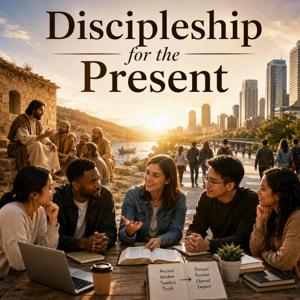


The Gospel of Matthew opens with a genealogy that defies all expectations, introducing Jesus with a lineage that includes Tamar, Rahab, Ruth, and Bathsheba—women whose stories are marked by scandal, foreignness, and moral complexity. This deliberate choice sets the stage for a narrative that systematically dismantles traditional ideas of power and success, replacing them with a heart-driven metric. This episode of "Wisdom for the Present" explores the first seven chapters of Matthew, revealing a profound shift in human consciousness.
Matthew's genealogy is a manifesto that challenges the notion of perfection as a prerequisite for divine purpose. By including outsiders and morally complex figures, the text argues that true significance often emerges from unlikely and imperfect circumstances. This theme continues with the Magi, foreign scholars who recognize Jesus' significance while the religious and political insiders remain blind. The narrative suggests that truth often comes from the margins, challenging our modern reliance on established authority.
The Sermon on the Mount, presented in chapters 5 through 7, offers a radical blueprint for life that contradicts societal norms. Jesus declares the poor in spirit, the meek, and the peacemakers as blessed, redefining success as internal character rather than external achievement. The discourse demands a profound internal transformation, urging listeners to build their lives on the solid rock of actual obedience rather than mere intellectual assent.
In This Episode
* How Matthew's genealogy subverts expectations by including scandalous and foreign figures
* The Magi as outsiders who recognize truth, contrasting with the blindness of insiders
* The Sermon on the Mount's radical redefinition of success and happiness
* The Beatitudes as a call to internal character over external achievement
* The concept of metanoia as a paradigm shift in thinking and living
* The temptations of Jesus as a rejection of shortcuts and immediate gratification
* The call for radical amputation of toxic influences in life
* The challenge of forgiving others as a prerequisite for receiving divine grace
* The danger of performing righteousness for public applause
* The ultimate test of wisdom: building on the rock of obedience
Practical Reflection
1. Where in your life are you trying to curate a perfect image, and what might happen if you embraced your imperfections as a foundation for significance?2. Identify a person or situation that has compelled you recently. What would it look like to go the second mile for them, injecting grace into a toxic dynamic?3. Are your good deeds primarily for public consumption, or are you comfortable doing profoundly good things that no one will ever know about?
Suggested Substack Excerpt
The Gospel of Matthew opens with a genealogy that defies expectations, introducing Jesus with a lineage marked by scandal and foreignness. This episode explores how Matthew's narrative challenges traditional power structures and redefines success through the Sermon on the Mount, urging a profound internal transformation.
AI Disclosure
This episode was created using Google NotebookLM Audio Overview, based on human-curated source material, structured guidance, and editorial review. AI is used as a tool for clarity and delivery, not as a replacement for thoughtful study or engagement with the original texts.
Copyright
© 2026 Wisdom for the Present / Kamashcu Production Studios. All rights reserved.
Imagine standing in the shadow of a colossal, seemingly invincible imperial war machine. The enemy is so staggeringly confident of victory that they haven't just planned their parade; they’ve already invited coastal merchants to the battlefield, set a bulk discount price on your head, and are simply waiting for the fighting to stop to bag the bodies and pay off a corporate debt. This isn't just psychological warfare; it's the absolute pinnacle of dehumanization, stripping you of agency before a single sword is drawn. Your resistance, they communicate, has already been monetized.
This is the exact historical reality we plunge into today, exploring a deeply dramatic, often controversial ancient text: chapters 8 through 15 of the apocryphal book of 2 Maccabees. Our mission is to sift through a narrative packed with supernatural battles, gruesome acts of political resistance, and profound moments of human resilience, extracting practical wisdom for 21st-century realities. 2 Maccabees functions simultaneously as history, profound theology, intense psychological drama, and a masterclass in narrative framing.
To unlock its wisdom, we first ground ourselves in the 2nd century BCE, where the Jewish people in Judea are under the oppressive thumb of the Syrian Seleucid Empire, led by King Antiochus Epiphanes. Antiochus isn't merely a tax collector; he’s driven by a violent policy of Hellenization—a systemic weapon of assimilation designed to erase Jewish identity, banning Sabbath, outlawing circumcision, and desecrating the Temple. This is a total existential crisis, an attempt at cultural and physical annihilation, which ignites the famous Maccabean revolt.
But the lens through which we view this revolt in 2 Maccabees is incredibly specific and heavily edited. Unlike the straightforward military history of 1 Maccabees, our author—a Pharisaic epitomist—comes with a massive, undeniable bias. He deliberately omits Mattathias, the founding father of the rival Hasmonean dynasty, from the historical record. Instead, he elevates Judas Maccabeus, portraying him not as a political king, but as a pious, law-abiding warrior perfectly aligned with Pharisaic ideals. This is propaganda in its truest sense: utilizing the past to make a sharp ideological point about the present. It’s a profound reminder that knowing who is in the editing room and why they are telling the story is just as critical as the narrative itself.
Chapter 8 opens with the ultimate asymmetric conflict: Judas Maccabeus’s 6,000 men against Nicanor’s 20,000 imperial troops, backed by slave merchants. Nicanor uses economics to define reality, telegraphing absolute certainty that the Jewish defeat is already factored into the imperial budget. The psychological weight is almost unimaginable, causing some of Judas’s men to desert. Judas, however, recognizes he cannot win a "math war." He must instantly and forcefully shift the battlefield to a meaning war. True leadership in a crisis, the episode argues, requires reframing the narrative from statistical despair to historical and moral strength. Judas anchors his men in their past, reminding them that being hopelessly outnumbered is their historical baseline, not an anomaly. He then redirects their emotional energy toward moral outrage, giving them the watchword “God’s help”—a theological statement that audibly reinforces the core meaning of their resistance. This is the pivot from "we are going to be crushed" to "this is the exact environment where our values are forged."
The text then explores the downfall of oppressors, notably King Antiochus Epiphanes (Chapter 9) and the corrupt high priest Menelaus (Chapter 13). The author uses shockingly visceral, body horror descriptions to mirror extreme moral corruption. Antiochus, struck by an invisible pain, is thrown from his chariot, his flesh rotting and swarming with worms, his stench unbearable. Menelaus, the ultimate insider threat, is suffocated in a massive tower of smoldering ashes. Modern readers often find these descriptions primitive and vindictive, like a revenge fantasy. However, the episode argues that while we don't adopt the ancient theological assumption of immediate physical punishment for sin, we must recognize the literary device of poetic justice. In an honor-shame culture, where tyrants seemed invincible, poetic justice was a profound form of political resistance literature, asserting that the universe has a moral architecture and unchecked power is not immune to consequence. The modern insight is the profound danger of the paranoia of power: unchecked arrogance creates an unsustainable ecosystem where toxic leaders insulate themselves from truth, surrounded by sycophants, leading to internal decay and self-destruction.
This leads to one of the starkest contrasts between 1 Maccabees and 2 Maccabees: the theology of the non-negotiable boundary. In Chapter 8 and 15, Judas’s men halt their pursuit of a fleeing enemy army because the Sabbath is approaching, prioritizing a calendar day over ending a war. This contrasts sharply with 1 Maccabees, where Mattathias pragmatically rules that fighting on the Sabbath is permissible for self-preservation. The Pharisaic author of 2 Maccabees utterly rejects this pragmatism, portraying uncompromising Sabbath observance not as a tactical liability, but as the very source of their supernatural strength. For him, the survival of the biological body is secondary to the survival of the identity. If a boundary is negotiable the moment it becomes costly, it isn't actually a boundary; it's merely a preference. The radical challenge is to define what is truly sacred in your own ethical framework, identifying your "Sabbath boundary"—one core principle you will not cross, even if it costs you dearly.
To sustain such rigid integrity, the text injects the supernatural. Chapters 10, 11, and 15 are flooded with literal visions of angels, golden swords, and prophets intervening. While modern listeners may view these as "ancient CGI," the episode explores their sociological and psychological function: they are the manifestation of a mandate. As the text explains, the vision of Jeremiah armed the men "not so much with confidence in shields and spears as with the heartening which comes from apt words." This is the absolute essence of visionary leadership: providing a shared vision, a golden sword of moral clarity, that elevates struggle from mere survival to a cosmic imperative. A modern leader must ask how they are deploying the unseen in their own context—their ethos, core mission, and underlying "why"—to sustain momentum when physical reality is bleak.
However, relying on a grand vision creates vulnerability when it’s compromised from within. Chapter 12 presents a deeply controversial twist: after a battle, Judas’s men discover pagan amulets hidden on their fallen comrades—a direct violation of the law they fought to protect. The text explicitly states this hidden idolatry was the reason for their defeat. While modern instinct is damage control, Judas exposes the failure to the entire army as a stark warning. He then takes a seismic theological step, instituting communal atonement by collecting funds for a sin offering for the dead, explicitly "bearing in mind the resurrection." This is one of the earliest, clearest instances of belief in bodily resurrection, serving as the necessary engine for the theology of martyrdom. Judas’s action challenges us to embrace communal responsibility when a group member fails morally, aiming for collective restoration rather than isolation and PR spin.
Finally, the episode confronts the most difficult narrative: the story of Razis in Chapter 14. Nicanor targets Razis, a respected elder, intending a public, humiliating execution. Rather than be captured, Razis falls on his sword, then hurls himself from a tower, and in a scene of unimaginable visceral horror, tears out his own bowels, throwing them into the crowd of imperial troops, declaring his belief in the resurrection. While modern readers view suicide as tragedy, the text frames it as a soaring, heroic victory. The episode emphasizes cultural translation: in an honor-shame culture, Razis’s act was the supreme assertion of agency, denying Nicanor the spectacle and weaponizing his body as a terrifying symbol of unbreakable defiance. He proved that even when external forces remove every option for physical survival, you retain ultimate agency over your spiritual and moral compliance. This forces a metaphorical yet deeply challenging question: what do you hold so dear, so fundamental to your integrity, that you would sacrifice everything rather than surrender it to a corrupt system?
Throughout 2 Maccabees, we see a relentless drumbeat of maintaining a non-negotiable identity in the face of overwhelming imperial pressure. The paradox is that while the heroes rely entirely on divine intervention, they never passively wait to be rescued. They pray for the angelic mandate, but they still pick up their rusted swords, march into the terrifying dark, and physically engage the enemy. True belief, the episode concludes, is the courage to take massive, terrifying action in the physical world, exerting absolute maximum effort while trusting the unseen for the ultimate outcome.
In This Episode
* The psychological warfare of the Seleucid Empire and the dehumanization of the Jewish people.
* 2 Maccabees as a Pharisaic "epitome" and a work of political propaganda.
* The critical importance of understanding the author's bias and agenda in any historical narrative.
* Judas Maccabeus's leadership in shifting from a "math war" of statistics to a "meaning war" of purpose.
* The power of historical anchoring and watchwords in unifying a group against overwhelming odds.
* The visceral "poetic justice" in the downfall of tyrants like Antiochus and Menelaus.
* The modern insight into the "paranoia of power" and the internal decay of toxic leadership.
* The radical challenge of the "non-negotiable boundary" and the theology of Sabbath observance in 2 Maccabees.
* The role of supernatural visions and "golden swords of moral clarity" in visionary leadership.
* Judas's response to internal compromise (pagan amulets) and the concept of communal atonement.
* The emergence of the doctrine of bodily resurrection as an engine for martyrdom.
* The story of Razis as an assertion of dignity and agency in an honor-shame culture.
* The paradox of faith: relying on divine intervention while taking maximum physical action.
Practical Reflection
What is your internal watchword when facing seemingly insurmountable odds, helping you pivot from statistical despair to profound purpose?
Where are you insulating yourself from the truth, operating with an unexamined arrogance that treats people as instruments for your success, and how can you actively cultivate humility and seek honest feedback?
What is your "Sabbath boundary"—one core principle, one ethical line in the sand that you absolutely will not cross, even if maintaining it costs you a massive client, alienates a powerful network, or guarantees a short-term failure?
Suggested Substack Excerpt
Plunge into the dramatic world of 2 Maccabees 8-15, where ancient psychological warfare meets profound human resilience. This episode explores how Judas Maccabeus reframes despair into purpose, the visceral downfall of tyrants, the radical challenge of non-negotiable boundaries, and the ultimate assertion of dignity in the face of overwhelming imperial pressure. Discover the paradox of faith: taking terrifying action while trusting the unseen for victory.
AI Disclosure
This episode was created using Google NotebookLM Audio Overview, based on human-curated source material, structured guidance, and editorial review. AI is used as a tool for clarity and delivery, not as a replacement for thoughtful study or engagement with the original texts.
Copyright
© 2026 Wisdom for the Present / Kamashcu Production Studios. All rights reserved.
Imagine being 90 years old, a pillar of your community, suddenly dragged into a public square by a hostile empire. They demand you violate your deepest convictions or face agonizing torture. But then, old acquaintances offer a tempting loophole: just pretend. Fake compliance, and you can walk away. This is the ultimate test of integrity, and it’s where we begin our deep dive into the ancient text of Second Maccabees, specifically chapters one through seven. This isn’t a dry history lesson; it’s a gritty, high-stakes political thriller that explores impossible dilemmas and the ultimate test of personal integrity.
The world of Second Maccabees is the second century BCE, where the Jewish people in Judea live under the powerful Seleucid Empire. The primary threat isn’t initially military, but a creeping, pervasive cultural assimilation known as Hellenization. This wasn’t just about learning Greek; it was a total lifestyle package—the ancient equivalent of aggressive, globalized corporate culture. To be Hellenized was to be modern, civilized, and relevant; to resist was to be a backward, stubborn relic. The author, an epitomist tasked with summarizing a massive five-book history, is remarkably transparent about his struggle, admitting it was “no light business, but rather a matter of sweat and watching late into the night.” He’s a content curator, cutting through the “flood of statistics” to make core meaning accessible, a brilliantly modern complaint in an age of information overload.
Surprisingly, the narrative begins not with battle, but with official letters sent from Jerusalem to the thriving Jewish diaspora in Egypt. These letters, urging strict observance of the Feast of Tabernacles (which becomes Hanukkah), serve a vital rhetorical purpose: establishing an unbreakable chain of sacred legitimacy. They recount vivid legends, like Nehemiah finding the sacred fire, hidden in a dry well and seemingly turned to “mud,” only to blaze miraculously when brought into the light. This powerful metaphor for the preservation of truth—that the sacredness hasn’t been lost, merely hidden—is a desperate plea to remember who they are. Yet, the tragic irony is that this beautiful continuity is precisely what gets threatened from within.
The rot begins in Jerusalem, a city initially at peace under the godly high priest Onias. But then, Simon, an ambitious Benjamite, instigates a petty turf war over the city market. Unable to defeat Onias politically, Simon resorts to catastrophic betrayal, inviting the Syrian Greek governor, Apollonius, with a calculated lie about the temple treasury. This sets up a cinematic scene where Heliodorus, the king’s chancellor, attempts to plunder the temple, only to be spectacularly deflected by divine intervention: a terrifying horse and two glorious youths scourging him into “thick darkness.” This reassures the reader that the spiritual realm is vastly more powerful than the material empire, yet the internal threat of assimilation only deepens.
As the story moves into chapter four, Onias’s own brother, Jason, commits the unthinkable: he literally buys the high priesthood with hard cash from the new king, Antiochus Epiphanes. This act of simony is compounded by Jason’s promise to establish a Greek gymnasium in Jerusalem and register its inhabitants as citizens of Antioch. This wasn’t just administrative paperwork; it was the sharpest edge of Hellenization, granting prestige and economic advantages but requiring abandonment of ancestral laws and participation in Greek religious rites. The episode draws a powerful analogy to a “ruthless, hostile corporate takeover,” where a beloved legacy company’s values are tossed out overnight for a toxic, hyper-competitive culture. The priests themselves, meant to be the moral compass, abandon their sacred duties for the “discus-throwing games,” esteeming “the glories of the Greeks above all else.”
This betrayal immediately breeds more betrayal. Jason is outbid by Menelaus, who is described as having “the passions of a cruel tyrant and the rage of a wild beast.” Menelaus not only neglects the temple but actively steals its sacred golden vessels to pay his bribes. When Onias, the righteous high priest, publicly calls him out, Menelaus has him assassinated in cold blood. This murder is the point of no return, showing how far the moral rot has spread, from cultural assimilation to the outright murder of the nation’s most righteous man. The core wisdom here is the profound existential danger of the illusion of compromise. The author argues that when leaders prize social climbing, wealth, and political expediency over ethical duties, they hollow out the community, inviting destruction.
This top-down corruption is brilliantly contrasted with Eleazar, a 90-year-old principal scribe, who faces the same pressure but makes a radically different choice. When Antiochus decrees forced pagan rituals and the public eating of swine’s flesh, Eleazar flat out refuses, choosing “death with renown rather than life with pollution.” His old acquaintances, the guards, offer him a tempting loophole: pretend to eat the forbidden meat by secretly swapping it for clean meat. It’s the voice of pragmatic compromise, asking, “Why die over a technicality?” But Eleazar’s response is breathtaking: “It ill becomes our years to dissemble.” He recognizes that faking compliance is still compliance, damaging his own soul and setting a terrible, cowardly precedent for the younger generation watching. His integrity isn’t just private; it’s a public responsibility to the moral fabric of his community.
However, reading Second Maccabees requires discernment, especially regarding the author’s theology of divine justice. After a horrific massacre where Antiochus slaughters 80,000 people and plunders the temple, the author pauses to tell his readers not to be discouraged. He argues these calamities are a sign of God’s “kindness,” a “chastening” to punish sins immediately rather than letting them accumulate. To a modern reader, this sounds like horrific victim blaming. Yet, the episode distinguishes between the author’s ancient theological mechanics and the profound psychological survival mechanism he employs. In the face of absolute trauma, the author refuses to surrender to nihilism, reframing suffering not as proof of a meaningless universe, but as a severe demand to return to moral standards, maintaining agency and hope.
This “armor” is desperately needed as the text moves to chapter seven, the intensely graphic story of a mother and her seven sons. Forced to eat swine’s flesh, each son is systematically tortured and fried alive, while their mother is forced to watch. Our modern, pain-avoidant culture instinctively labels this “insane fanaticism.” But the immense value of this text lies in its radical challenge to our comfortable assumptions. These young men don’t just endure; they boldly taunt the king, believing in a resurrection that completely robs him of his power. They force us to ask: Is there anything in my life—any principle, truth, cause, or love—that I would willingly sacrifice my comfort, status, or even biological survival for?
The emotional and philosophical core of this chapter is the mother. She is an astonishing, formidable figure, exhorting each son not to give in. Her reasoning is a masterclass in transcendent hope: “I cannot tell how you came into my womb... ‘Twas the Creator of the world who fashioneth men, and He it is who in mercy will restore to you the breath of life.” This is a breathtaking abdication of possessive parenthood, stripping the king of his ultimate weapon: the fear of death. When the king tries to bribe her youngest son, she leans in and, “befooling the cruel tyrant,” tells her son, “Fear not this butcher.” She reduces the most powerful monarch to a common slaughterhouse worker, and her son dies unpolluted by compromise. This is the eternal grinding struggle between material expediency and spiritual idealism, a clash echoed in Stoicism, early Christianity, and Buddhism.
So, how does this ancient text apply to us today? We aren’t facing Antiochus, but the subtle, systemic psychological pressure of Hellenization is everywhere. It’s the quiet pressure in workplaces or social circles to abandon our ethical altars for the modern gymnasium of clout, profit, or simply fitting in. It’s the “slow, incredibly comfortable erosion of your core values.” Jason and Menelaus didn’t wake up as villains; they just wanted to fit in, compromising “a little bit and then a little bit more.” To resist, we need the no-pretending rule (Eleazar’s refusal of the loophole), the mother’s long view (zooming out from immediate pain to consider long-term legacy), and to ask: What is the ptesis you are being pressured to wear right now? What symbol, uniform, mindset, or ethical compromise is your culture demanding to prove you belong? The line between minor cultural compromise and total soul-destroying corruption is thinner than we admit.
As we wrap up, remember the legend of Nehemiah’s fire: the sacred fire, hidden and seemingly turned to “mud,” blazed miraculously when brought into the light. Perhaps your own convictions, your sense of truth, or your moral courage feels dormant, diluted by cultural pressure or hidden by exhaustion. But this ancient text suggests your core integrity is never truly lost. True wisdom, when you finally decide to draw it up and bring it back into the light of day, has the exact same power to ignite as it did in the beginning.
In This Episode
* The epitomist’s ancient struggle with information overload as a modern content curation challenge.
* The legends of Nehemiah’s fire and Jeremiah’s hidden relics as establishing sacred continuity and legitimacy.
* The internal rot of Simon, Jason, and Menelaus: from petty feuds to buying the high priesthood and assassination.
* Hellenization as a “ruthless, hostile corporate takeover” of cultural and spiritual identity.
* The profound existential danger of the illusion of compromise and its slow-acting poison.
* Eleazar’s “no-pretending rule” and his acute awareness of social responsibility and legacy.
* Distinguishing the author’s “uncomfortable” theology of chastening from its psychological survival mechanism.
* The mother’s “long view” and breathtaking abdication of possessive parenthood in the face of torture.
* The monumental clash between material expediency and spiritual idealism in human history.
* Identifying the modern “ptesis”—the symbol of ethical compromise demanded by culture.
Practical Reflection
Where in your life are you currently pretending to go along with a toxic culture or corrupt practice just to stay comfortable? What loophole are you tempted to take?
When faced with a painful ethical choice, are you taking the “mother’s long view” and considering your legacy 50 years from now, or are you shrinking the threat by comparing it to the vastness of your principles?
What is the “ptesis”—the symbol, uniform, mindset, or ethical compromise—that your industry, peers, or culture is quietly demanding you adopt to prove you belong to them? And are you going to put it on?
Suggested Substack Excerpt
Second Maccabees 1-7 is a high-stakes political thriller revealing the profound danger of cultural assimilation and the illusion of compromise. From internal betrayal to the ultimate test of integrity, this episode explores how ancient wisdom challenges our modern comfort, urging us to resist the “ptesis” and embrace a “no-pretending rule” in a world that constantly pressures us to conform.
AI Disclosure
This episode was created using Google NotebookLM Audio Overview, based on human-curated source material, structured guidance, and editorial review. AI is used as a tool for clarity and delivery, not as a replacement for thoughtful study or engagement with the original texts.
Copyright
© 2026 Wisdom for the Present / Kamashcu Production Studios. All rights reserved.
When a colossal tree falls in an ancient forest, the ground shakes, the canopy tears open, and a blinding flood of sunlight reveals a brutal scramble for survival. Every sapling, every vine, every weed rushes in to fill the power vacuum. This is the visceral image that opens our exploration of 1 Maccabees 9:23-16:24, a section of ancient history that mirrors the chaos and desperate resilience of our own modern world.
The episode drops us into the immediate aftermath of a catastrophic loss: the death of Judas Maccabeus, the legendary revolutionary leader. His fall leaves a fractured nation facing a perfect storm of crises: a massive power vacuum, an empire bearing down, severe internal division, and a devastating famine. As the hosts note, "the great canopy tree of this historical text has just crashed to the earth." In this environment, the "wicked began to put forth their heads," those who had been hiding in the shadows, now emboldened to step out. The Syrian general Bacchides ruthlessly hunts Judas’s supporters, installing Hellenizing factions—locals willing to abandon ancestral laws for Greek culture—as the new lords. This wasn't just an external war; it was a "vicious civil war, neighbor against neighbor." Adding to the despair, a "very great famine" forces the populace to capitulate to Bacchides, as "you can't eat ideology."
In this desperate moment, the remaining loyalists turn to Judas’s brother, Jonathan, asking him to be their "prince and captain." But Jonathan, unlike the expected Hollywood hero, does not give a rousing speech and march on the capital. Instead, he demonstrates profound strategic pragmatism. Recognizing they "cannot win this fight right now," he and his followers retreat to the "wilderness of Tekoa," leading "from the margins." This challenges the conventional wisdom of constant offense, suggesting that true leadership, especially after catastrophic loss, sometimes requires retreating to rebuild strength away from the spotlight. The wilderness, a place of testing, becomes a place of preservation.
However, the text then presents a deeply uncomfortable obstacle to modern sensibilities: the brutal ambush and slaughter of a wedding party by Jonathan and Simon in retaliation for their brother John’s murder. As the hosts acknowledge, "modern listeners will and absolutely should rightly resist this violent retribution." This is a crucial moment for "wisdom with discernment," separating enduring lessons from the "harsh, brutal realities of ancient blood feuds." While the action itself is not a template for leadership, it captures the "consuming, cyclical nature of grief and retaliation." It reveals that these heroes were not sanitized figures but "deeply traumatized men operating in a world of normalized violence," an impulse to "turn someone else's melody into lamentation because your own heart is broken."
Translating this ancient context, the episode asks us to consider inheriting a failing project or stepping into leadership after a beloved figure departs. The pressure to "win a quick, highly visible victory" can be immense. Jonathan’s wisdom, however, is the "strategic retreat"—the patience to assess resources and let the initial chaos pass, rather than compromising core values "just to get bread."
This strategic patience sets the stage for a massive geopolitical shift. Jonathan’s survival in the margins makes him the most stable force in the region, turning the "margins into the most valuable real estate." Two rival Syrian kings, Demetrius and Alexander Epiphanes, engage in an "incredible, almost unbelievable bidding war" for Jonathan’s loyalty. Demetrius offers sweeping tax exemptions and political concessions, while Alexander offers "institutional status," appointing Jonathan as high priest, sending a "purple robe and a crown of gold," and declaring him "friend of the king." The purple robe, a rare and costly symbol of royalty, signifies a permanent seat at the imperial table.
Jonathan’s response is a masterclass in discernment. Despite Demetrius’s "extravagant spreadsheet of promises," Jonathan and the people "gave no credit unto them," remembering "the great evil that he had done." They chose Alexander, who, though an opportunist, had no such historical baggage. This highlights a crucial distinction: "character versus circumstances." A bad actor with a great offer is still a bad actor. The episode challenges us: when faced with competing offers or rival factions, are we swayed by "the sudden flattery of a purple robe," or do we look at the historical behavior of those making the deal?
Yet, even Jonathan, the brilliant tactician, falls victim to the "trap of flattery." After nearly two decades of hypervigilance, Tryphon, a new rival, offers him a "mirage of peace"—an easy way out of a lifelong struggle. Jonathan, exhausted, dismisses his army and walks into a trap, losing his life. This "catastrophic mistake" is "deeply, painfully, psychologically true," illustrating how "fatigue makes the flattery irresistible." Constant vigilance degrades decision-making, making one vulnerable to a "slow punch he would have easily dodged in the first round."
This leads to the agonizing choices of leadership that fall upon Simon, the last remaining brother. Tryphon, holding Jonathan captive, demands a ransom and hostages, knowing Simon "knew that they spake unto him deceitfully." Simon is caught in an "impossible public relations nightmare," forced to choose between two terrible options: pay the ransom, knowing it’s a sham and his nephews will die, or refuse and lose the trust of the entire nation. He makes the horrifying, pragmatic choice, preserving the nation even if it means breaking his own family. This reveals the "often hidden burden of making impossible choices" in high-level leadership, where private knowledge clashes with public perception.
Despite this profound loss, Simon doesn't break. He retrieves Jonathan’s body and builds a magnificent monument, a "massive beacon of defiance and memory," projecting power to the entire coastal world. This ushers in the "golden age of Simon," a period of cultivating peace. He secures full immunity from the new king, Demetrius II, marking a "monumental turning point" where "the yoke of the heathen was taken away from Israel." The text celebrates this peace with poetic imagery: "Every man sat under his vine and his fig tree, and there was none to fray them."
Simon, unlike his brothers, is an "infrastructure guy." He fortifies cities, cleanses the citadel, and establishes a lasting legal and social framework. The people institutionalize his authority, moving from a charismatic militia to a structured government. The text, however, contains a "massive exaggeration" about Simon sending a "thousand-pound gold shield" to Rome. This "ancient political propaganda" teaches us to look beyond literal facts to the "underlying meaning": the profound transition from a mindset of survival to one of flourishing.
This offers a deep reflection: many know how to fight, but "what happens when you actually win?" We often lack the tools for cultivation, self-sabotaging in peacetime. Simon shows that peace requires "deliberate, methodical efforts"—building infrastructure, searching out the law, caring for the low. We must actively build the "vine and fig tree reality."
But in the volatile world of 1 Maccabees, success is fragile. A new king, Antiochus VII, turns on Simon. Simon, now an elder statesman, delivers a "magnificent enduring response," refusing to yield ancestral land: "We hold the inheritance of our fathers." He sends his sons, John and Judas, to fight, and they rout the invading army. Yet, the real threat comes "from within the family." Simon’s son-in-law, Ptolemy, driven by "unchecked pride, nepotistic wealth, and naked ambition," murders Simon and his two sons at a banquet.
This "bloody Shakespearean betrayal" is a "massive punch to the gut," revealing that "external success... does not insulate you from human greed and the darkness of the human heart." You can build the highest walls, but "you cannot legislate away the pride and ambition of a family member sitting at your own dinner table." The most profound betrayals often come from within trusted circles. Simon, who defended his nation from an empire, "completely failed to see the danger in his own son-in-law." This is the "extreme fragility of success."
The story ends abruptly with Simon’s remaining son, John Hyrcanus, inheriting this "incredibly complex, blood-soaked legacy." He steps into the same power vacuum, inheriting both triumph and immense trauma. The episode concludes by asking us to examine the legacy we inherit—the beautiful and the toxic. "Do you have the self-awareness and the power to stop the cycles of betrayal and trauma you are handed? Or are you doomed to repeat them in the chronicles of your own life?" While we cannot control the chaos of the power vacuum, we can choose how we grow: when to retreat, when to reject false flattery, and how to actively cultivate the soil for peace.
In This Episode
* The chaotic aftermath of Judas Maccabeus's death: power vacuum, famine, and internal strife.
* Jonathan's pragmatic leadership: strategic retreat to the wilderness of Tekoa to rebuild strength.
* The uncomfortable reality of ancient retribution: the ambush of the wedding party and the cycle of grief and violence.
* Translating ancient survival tactics to modern leadership: the wisdom of strategic patience over immediate victory.
* Jonathan's geopolitical leverage: the "bidding war" between rival kings and the significance of the "purple robe."
* The crucial distinction between character and circumstances in forming alliances.
* Jonathan's tragic fall: how exhaustion and flattery can lead even brilliant leaders to catastrophic mistakes.
* Simon's agonizing choice: navigating public perception versus private knowledge in an impossible leadership dilemma.
* The "golden age of Simon": cultivating peace, building infrastructure, and the "vine and fig tree" reality.
* The fragility of success: Simon's betrayal by his son-in-law Ptolemy and the danger of internal threats.
* Inheriting a legacy: the challenge of breaking cycles of trauma and ambition in our own lives.
Practical Reflection
When you are thrust into a crisis or a new leadership role, do you feel compelled to immediately win and prove yourself, or can you allow yourself the strategic patience to retreat to your own "wilderness" to gather strength?
Think about the alliances in your life: are you being swayed by extravagant promises and flattery, or are you evaluating the actual historical character and behavior of the people making the deal?
What is the "vine and fig tree" you are actually fighting for in your own life? If you achieved your ultimate goal, do you have the tools to cultivate a peaceful, meaningful life, or do you only possess the tools for conflict?
Suggested Substack Excerpt
From the chaotic aftermath of Judas Maccabeus's death to Simon's tragic betrayal, 1 Maccabees 9-16 offers a raw, unflinching look at leadership, survival, and the human condition. This episode explores strategic retreats, the dangers of flattery, impossible choices, and the profound challenge of cultivating peace amidst perpetual volatility.
AI Disclosure
This episode was created using Google NotebookLM Audio Overview, based on human-curated source material, structured guidance, and editorial review. AI is used as a tool for clarity and delivery, not as a replacement for thoughtful study or engagement with the original texts.
Copyright
© 2026 Wisdom for the Present / Kamashcu Production Studios. All rights reserved.
Imagine, for a moment, voluntarily undergoing a primitive, agonizing medical procedure without anesthesia, simply to reverse a physical marker of your heritage. Now imagine doing this not because someone held a sword to your throat, but just because you wanted to gain access to the right local networking club, the ancient equivalent of the most exclusive gym in town. This “terrifying level of desperation” is exactly how desperate people were to assimilate in the year 167 BC.
This episode of Wisdom for the Present jumps into an incredibly rich and often shocking ancient text: the first book of Maccabees, specifically chapters one through nine, verse 22. This isn’t just a historical account; it reads like a “geopolitical thriller” that echoes loudly into our present day, exploring the profound desperation to fit into a dominant culture. To truly mine the wisdom from these chapters, we first build the world the author inhabited, a world still reeling from the fractured empire of Alexander the Great. Judea, a narrow land bridge between the rival Ptolemaic and Seleucid dynasties, became a highway for trade and, more often, war.
The primary antagonist of this narrative is Antiochus IV Epiphanes, a Seleucid king desperate for cash and control after a defeat by the rising Roman Republic. He sought to “flatten the culture” of his diverse empire, issuing a decree that “all should be one people.” While this sounds like a “beautiful utopian ideal,” the rhetoric of empires always sounds utopian. The reality was uniformity, not unity. Antiochus aimed to eradicate Judea’s unique cultural, legal, and religious identity, banning their laws, sacrifices, Sabbath observance, and sacred texts, culminating in the desecration of the Jerusalem sanctuary.
First Maccabees is part of the Apocrypha, a collection of texts from the intertestamental period, revered by some traditions, but often omitted by others. Yet, it’s a foundational text for understanding this era. A striking literary quirk is that the author “never mentions God by name,” instead consistently using the word “heaven.” This isn’t a contradiction but reflects a profound theological and psychological evolution. It signals a growing reverence for God’s transcendent holiness and a shift in perspective: the divine was becoming more cosmic, less a localized deity for immediate miracles. The belief embedded in this text is that “divine providence, heaven, operates primarily through the courage, the strategy, and literal actions of human beings.” This is the “absolute philosophical core of the book”: a deeply pragmatic approach to faith and survival, rejecting both secular skepticism and fatalism. You can’t just pray and expect the Syrian empire to disappear; “you actually have to pick up a sword. You have to do the work.”
The most uncomfortable part of chapter one isn’t Antiochus’s violence, but the “voluntary, eager assimilation” that preceded it. “Lawless men who came out of Israel” persuaded many to “make a covenant with the nations,” admitting that “since we separated ourselves from them, many evils have come upon us.” They were “exhausted by the daily grinding friction of being different,” trading heritage for the convenience and social mobility of Hellenization. The physical anchor of this assimilation was the gymnasium in Jerusalem, the “absolute epicenter of Hellenistic life,” where athletic training was performed entirely naked. For Jewish men, this meant exposing their circumcision to ridicule, leading to painful surgical procedures (epispasm) to reverse it. The author’s “ruthless verdict” is that “they sold themselves to do evil,” paving the road for violent oppression by signaling their culture was negotiable. This maps perfectly onto “the subtle creep of modern conformity,” where we “shave off our unique edges” to fit algorithms, corporate cultures, or political tribes. The wisdom here is to “identify your non-negotiables,” locating your “personal gymnasium” where you might be compromising core beliefs to avoid friction.
The narrative shifts when social pressure turns into violent mandate, bringing us to Mattathias in Modin. King’s officers demand public pagan sacrifices as a loyalty test, offering Mattathias immense wealth and the title of “king’s friend”—an “ancient corporate buyout.” But Mattathias makes a “stunning refusal”: “Though all the nations... obey him... yet will I and my sons and my brethren walk in the covenant of our fathers.” The situation escalates into “absolute chaos” when another Judean steps forward to sacrifice. Mattathias “absolutely snaps,” murdering the man and the king’s commissioner, and tearing down the altar. This scene is “deeply alienating” to modern sensibilities, which recoil from lethal violence over religious ritual, categorizing it as extremism. To understand it, we must step into the ancient mindset where community survival was tied to the covenant; abandoning it was “spiritual rot.” Mattathias saw the man as “pulling the trigger on the destruction of their entire society.” While we “unequivocally do not endorse the ancient violence,” beneath the bloodshed is a “profound psychological and moral truth about the necessity of drawing absolute boundaries.” Mattathias represents the “psychological breaking point” where one says, “no, not one step further,” defining an “absolute no” in advance to avoid saying yes to everything.
Mattathias’s next major leadership decision requires him to bend a sacred rule. After a thousand Judean refugees are massacred by the Syrian army on the Sabbath because they refused to fight, Mattathias realizes that “rigid adherence to it in this specific, extreme context has transformed it into a suicide pact.” He distinguishes between “the letter of the law and the spirit of the law,” understanding the law’s original intent was to preserve life, not mandate extermination. This is “the hallmark of profound wisdom,” akin to a legacy company breaking a strict SOP during a cyberattack. We all have “self-imposed Sabbath rules”—rigid routines or ideological stances we cling to, even when they actively harm us. The practice is to examine our “dogmatic thinking” and find the courage to pivot, recognizing that “the rule was made to serve me. I wasn’t made to blindly serve the rule.”
The torch of leadership passes to Mattathias’s son, Judas, surnamed Maccabeus, “the hammer.” Framed as a “larger-than-life warrior,” Judas faces massive professional armies. His leadership style is a “fusion of ultimate faith and ultimate preparation.” Before the Battle of Bethhoron, his men are terrified by the overwhelming enemy. Judas delivers a “masterful speech”: “It is no hard matter for many to be shut up in the hands of a few. And with the God of heaven it is all one, to deliver with a great multitude or a small company. For the victory of battle standeth not in the multitude of an host, but strength cometh from heaven.” This isn’t passive waiting; it’s trusting preparation and surrendering the result. He immediately “leaps suddenly upon the enemy.” This combination is seen again at Emmaus, where Judas’s tactical masterclass involves spiritual preparation (fasting, prayer) followed by meticulous military organization, “literally builds a corporate organizational chart in the middle of the night.” His faith fuels his strategy. When overwhelmed by obstacles, the wisdom is to “stop staring at the enemy’s numbers. Prepare your small company... and then stop waiting for perfect conditions and leap upon the problem.”
However, brilliant strategy for the wrong reasons is disastrous. Chapter five presents a “devastating failure of leadership” with Joseph and Azarias. Left to guard Judea, they disobey Judas’s explicit orders not to engage in offensive warfare. Driven by “middle management FOMO,” they say, “let us also get us a name.” Their ego-driven vanity leads to a tactical disaster at Jamnia, where 2,000 men are killed, “not to defend a town... but simply because two men wanted to be famous.” The author explicitly contrasts this “ego-driven failure” with Judas’s service-driven motivation. This “pathology we see constantly” in modern workplaces: executives launching projects for resume-building, managers picking turf wars. Before your next major conflict, “do a brutal audit of your own ego.” If your primary driver is “just trying to get a name,” “have the maturity to hold the fort and do the unglamorous work of protecting what you already have.”
Chapter eight is “one of the most historically ironic chapters in the entire biblical corpus.” Exhausted by years of war, Judas hears rumors of the rising Roman Republic. The author “gushes about Rome,” projecting hopes for a savior onto this distant power. Judas sends ambassadors to propose a mutual defense pact. The Romans, “ever the geopolitical pragmatists,” gladly agree to a “one-sided contract”: Judea must help Rome with “all their heart,” but Rome will help Judea “as the occasion shall prescribe to them.” Rome viewed Judea as a “useful tool,” a “speed bump for their enemies,” not a friend. This is a “profound cautionary tale.” We know this “very Roman power, which they invited in as a protector, would eventually occupy Judea... and ultimately... completely destroy the temple.” It’s like “inviting a hungry wolf into your house to protect you from a bear.” The wisdom is the “profound danger of outsourcing your internal security and sovereignty to a massive external power.” We project hopes onto external institutions that only care about their own power. The practice: “Audit your dependencies.” Where are you relying on a “Roman senate to save you”? Reclaim your independence and diversify your strength.
In chapter nine, Judas faces his “final, ultimate test entirely alone.” His forces are depleted to 800 exhausted insurgents against 22,000 professional soldiers. His men beg him to retreat, but Judas refuses: “God forbid that I should do this thing and flee away from them... let us die manfully for our brethren, and let us not stain our honor.” He charges into battle and is killed. This is a “devastating, tragic conclusion.” While modern logic might see this as foolish pride, within the text’s moral universe, it’s a “profound distinction.” Judas was the “beating heart of the rebellion,” a symbol of “absolute, uncompromising faith.” If he had run, it “would have shattered the psychological foundation of the rebellion.” His “good failure” preserved the “moral core of a cause,” proving that their identity was “worth dying for.” This legacy provided his brothers, Jonathan and Simon, the moral authority to continue the war. In a culture “pathologically obsessed with winning,” sometimes “taking the loss while standing firmly by your principles is infinitely more valuable.” The question: “Are you willing to lose on your own terms to preserve your integrity? What does a good failure look like in your current struggles?”
From eager assimilation to Mattathias’s zeal, Judas’s brilliance, and his ultimate sacrifice, the author’s ultimate human failing is “passivity. Complacency. Letting things happen to you without a fight.” The heroes, despite their flaws, are defined by their “fierce agency,” like Eleazar, who died charging an elephant. They “refuse to let history simply happen to them.” We don’t have to be perfect or win every battle, but we must be “active participants in our own lives, refusing to quietly assimilate into the background when our values are on the line.”
In This Episode
* The extreme desperation to assimilate in 167 BC and its modern echoes.
* How First Maccabees, a “geopolitical thriller,” emphasizes human agency over immediate divine intervention.
* The “cultural meat grinder” of voluntary assimilation and the agonizing practice of epispasm in the gymnasium.
* The wisdom of identifying your “non-negotiables” and locating your “personal gymnasium.”
* Mattathias’s “stunning refusal” of an “ancient corporate buyout” and his violent act of defiance.
* Distinguishing ancient zeal from modern extremism to understand the necessity of “absolute boundaries.”
* Mattathias’s pragmatic leadership in bending the Sabbath law to preserve the community.
* The challenge of examining our “self-imposed Sabbath rules” and dogmatic thinking.
* Judas Maccabeus’s fusion of ultimate faith and ultimate preparation in battle.
* The tactical brilliance of Emmaus and the call to “leap upon the problem” when overwhelmed.
* The “devastating failure of leadership” by Joseph and Azarias, driven by “middle management FOMO” and ego.
* The “brutal audit of your own ego” before pursuing glory over purpose.
* The “historically ironic” alliance with Rome and the “profound danger of outsourcing internal security.”
* The wisdom of “auditing your dependencies” and reclaiming independence.
* Judas’s “good failure” at Eleasa: choosing honorable defeat to preserve the movement’s ethos.
* The clarifying question: “Are you willing to lose on your own terms to preserve your integrity?”
* The ultimate human failing as passivity, and the virtue of fierce agency in shaping your life.
Practical Reflection
Where in your life are you quietly compromising a core belief just to avoid the friction of being different, essentially undergoing a modern form of epispasm?
What is a dogmatic rule or rigid policy in your life or organization that you are fiercely defending, even though it is actively harming you or your mission?
Are you willing to lose on your own terms to preserve your integrity, or are you pathologically obsessed with winning at any cost? What does a “good failure” look like for you right now?
Suggested Substack Excerpt
First Maccabees is a geopolitical thriller that reveals the profound desperation to assimilate and the fierce agency required to resist. This episode explores ancient wisdom on defining non-negotiables, distinguishing the letter from the spirit of the law, fusing faith with strategy, auditing ego-driven ambition, and the power of choosing an honorable defeat over compromised survival.
AI Disclosure
This episode was created using Google NotebookLM Audio Overview, based on human-curated source material, structured guidance, and editorial review. AI is used as a tool for clarity and delivery, not as a replacement for thoughtful study or engagement with the original texts.
Copyright
© 2026 Wisdom for the Present / Kamashcu Production Studios. All rights reserved.
Most of us remember that gut-wrenching feeling: staring at the ceiling at 3 a.m., the weight of a colossal error crushing us. It’s not a minor misstep, but a catastrophic mistake that shatters a reputation, derails a career, or breaks a relationship. The damage feels beyond repair, and forgiveness seems off the table. We build our lives avoiding this space, but how do we come back from such a massive failure?
This episode of "Wisdom for the Present" opens a 2,000-year-old psychological roadmap built specifically for that absolute worst-case scenario: the Prayer of Manasses. This short, obscure, yet profoundly beautiful piece of ancient apocryphal literature doesn't flinch from the darkness of guilt and the terror of facing consequences. Our mission is to extract practical wisdom from this text, because the mechanics of human psychology—the experience of profound guilt—remain remarkably consistent across millennia.
The man at the center of this prayer, King Manasseh of Judah (7th century BCE), is far from a hero. Historical texts like 2 Kings and 2 Chronicles portray him as the ultimate cautionary tale. Inheriting the throne from the righteous King Hezekiah at just 12 years old, Manasseh didn't just reverse his father's reforms; he detonated them. He rebuilt idolatrous shrines, erected Asherim, practiced sorcery, and most horrifyingly, engaged in child sacrifice, "filling Jerusalem with innocent blood." He dragged his entire nation into an ethical and spiritual abyss, violating every foundational principle of his society.
By all accounts, Manasseh should have faced an immediate, disastrous downfall. Yet, he reigned for an astonishing 55 years—the longest reign of any king in Judah or Israelite history. This longevity created a massive crisis of faith for his people. How could the worst man live the longest? This anomaly threatened to dismantle their entire understanding of Deuteronomic theology, a binary cause-and-effect framework where obedience brought blessings and disobedience brought curses. If the contract was broken, was the universe arbitrary and chaotic?
The ancient historians grappled with this, leading to a fascinating split in the historical record. 2 Kings offers no resolution, portraying Manasseh as wicked from beginning to end, his reign the final straw guaranteeing Jerusalem's destruction. But 2 Chronicles, written later, introduces a dramatic twist: Manasseh is captured by the Assyrians, bound with iron fetters and hooks, and dragged to a dungeon in Babylon. Stripped of every defense, every shred of ego, he repents. Miraculously, God hears his prayer, and Manasseh is restored to his throne. The text concludes, "Then Manasseh knew that the Lord is God."
Skeptics might view this as a convenient plot device, a "theological spin" by the Chronicler to harmonize Manasseh's anomalous longevity with retribution theology. However, the historical framework of Assyrian capture and reinstatement was plausible. Regardless of whether it's literal history or a theological narrative, the story's impact is undeniable: it creates an extreme case study of divine forgiveness, shattering the limitations people placed on grace.
Yet, a massive historical and emotional void remained: the Chronicler tells us Manasseh prayed, but doesn't give us the words. This "narrative vacuum" set the stage for the Prayer of Manasses. Centuries later, an anonymous Hellenistic Jewish writer penned this prayer, a piece of "spiritually motivated historical fan fiction," to give voice to that missing moment. The author adopted Manasseh's persona as an extreme proxy for contemporaries who felt compromised or too far gone to return, essentially saying, "If Manasseh could find his way back, so can you."
The linguistic detective work surrounding the text is equally fascinating. While generally believed to be composed in Koine Greek, a "translation glitch" in verse 7—"forgiveness of repentance"—strongly suggests a lost Hebrew or Aramaic original, where a common translator's error could have occurred. This "linguistic forensics" points to a deeper textual history.
The text's survival is a story in itself. Not included in the Septuagint, it floated as an independent devotional piece until it was embedded as a massive quote in the 3rd-century Syrian Christian text, the Didascalia Apostolorum—an instructional guidebook for early church leaders. This "textual lifeboat" preserved it, and its popularity exploded in the Eastern Christian Church, appearing in the Codex Alexandrinus and appended to the Book of Psalms as a Canticle, sung by monks and congregations. In the West, St. Jerome ignored it for his Vulgate, but it quietly slipped into Latin Bibles during the Middle Ages. During the Protestant Reformation, the Council of Trent rejected it, yet the Protestants, ironically, embraced it for its theological depth, including it in the Geneva Bible for "the instruction of godly manners." It perfectly articulated their core tenet: total human depravity met by unmerited infinite grace.
This 15-verse prayer is a masterclass in liturgical writing, taking the reader on a complete psychological and spiritual arc from terror to surrender to hope. It breaks down into three distinct sections: the invocation of the deity (verses 1-7), the confession of sin (verses 8-10), and the entreaty for forgiveness (verses 11-15).
The prayer begins not with Manasseh's chains, but by zooming out to the architecture of the cosmos. The author invokes the God who "made heaven and earth with all the ornament thereof," who "bound the sea by the word of thy command, who has shut up the deep and sealed it with thy terrible and glorious name." To an ancient mind, the "deep" (abyssos) was primeval, watery chaos. God's power is absolute; he literally puts a lid on chaos. The text leans into this terror: "For the majesty of thy glory cannot be borne, and the anger of thy threatening against sinners is unendurable." This maps perfectly onto modern psychology: when we mess up, our brains magnify the anger of those we hurt, projecting it onto the universe, bracing for cosmic justice.
But then, a beautiful "whiplash pivot" occurs in verses 6 and 7: "But thy merciful promise is unmeasurable and unsearchable, for thou art the Lord Most High, of great compassion, longsuffering, very merciful, and repentest of the evils of men." The fundamental insight here is that our anxious, guilt-ridden perception of the universe is wrong. The baseline of reality isn't wrath; it's unmeasurable compassion. God's mercy is infinite, dwarfing the scale of physical creation itself. Our catastrophic mistakes are finite, but the compassion of the universe is infinite. This reframing is an absolute prerequisite for true repentance, as only the belief in fundamental mercy makes confession safe enough to attempt.
The second section, the confession, begins with a massive stumbling block for modern readers: Manasseh prays, "For thou, O Lord, art God of the just, and hast not appointed repentance unto the just, as to Abraham, Isaac, and Jacob, who have not sinned against thee." Anyone who has read Genesis knows the patriarchs were deeply flawed. This feels like "ancient institutional whitewashing" or historical revisionism. However, to extract the wisdom, we must understand the ancient context. By the 2nd century BCE, a rich Midrashic tradition had elevated the patriarchs to near perfection, a social assumption to honor the founders of their faith. The author uses this not as a historical claim, but as a rhetorical foil to maximize Manasseh's isolation and self-abasement. The contrast is what matters: grace and repentance weren't designed for the perfect; they are specifically engineered for the broken. This mirrors our modern experience of comparing our chaotic reality to the curated, "sinless" highlight reels of others on social media. The prayer forces us to confront this: "Grace wasn't built for the highlight reel. Repentance is a tool custom-built, specifically engineered, for the person who is currently sitting in the dirt knowing they are broken." It strips away the excuse of comparison.
The mechanism of confession itself is deeply physical and visceral. Manasseh cries out that his sins are "more in number than the sands of the sea," that he is "bowed down with many an iron chain, so that I cannot lift up mine head by reason of my sins, neither have I any respite." This physical captivity in a Babylonian dungeon perfectly reflects the psychological captivity of deep, unaddressed guilt. The internal landscape of shame and anxiety feels physical, looping the mistake over and over.
The prayer offers a specific pivot point in verse 11, perhaps the most poetic and transformative phrase in the entire Apocrypha: "Now therefore I bow the knee of mine heart, beseeching thee of grace." This shifts the dynamic from external to internal. Manasseh, a king, knew how to perform rituals, how to "bow his physical knee" hypocritically. Physical compliance is easy to fake; it's the "classic PR apology" or the "I'm sorry you feel that way" non-apology. It's a calculated move to avoid pain while the ego remains armored. Bowing the knee of the heart is the total dismantling of those internal defense mechanisms, the absolute surrender of the ego. It's not just slapping paint on a boiling boiler; it's opening the pressure release valve.
The author provides a two-step roadmap for this internal yielding. Step one is unflinching honesty: "I have sinned, O Lord, I have sinned, and I acknowledge mine iniquities." There is a complete absence of deflection, caveats, or historical excuses. It's total, brutal ownership, the non-negotiable requirement for bowing the knee of the heart. Step two is adopting this internal posture itself, asking if we are merely bowing our physical knee to keep the peace, or if we have surrendered our desperate need to be right, letting go of our need to defend our ego. True grace, the kind that transforms a life and restores a relationship, is only unlocked when the heart itself yields.
The final section maps out the cosmic geography of this transaction. Manasseh pleads, "neither condemn me to the lower parts of the earth." This references Sheol, the ancient Hebrew underworld—not Dante's Inferno, but a remote, shadowy region of departed spirits, characterized by dust, silence, and absolute distance from light, life, and the praise of God. It was the ultimate suffocating isolation. Manasseh fears being permanently cut off from grace, forgotten in the dark. This is masterfully contrasted with the "powers of the heavens," the angelic hosts constantly singing praise to God.
This ancient map translates perfectly to our modern psychological landscape. We know what it feels like to be in the "lowest parts of the earth": crushing depression, total isolation, feeling unlovable, beyond the reach of grace. We feel we've sunk so low that no signal could ever get out. And this is where the ultimate profound claim of the Prayer of Manasses lands: even in the absolute lowest parts of the earth—a literal dungeon or a mental prison—the signal of bowing the knee of your heart still reaches the highest heights of the cosmos. The signal doesn't degrade in the dark. The infinite distance between the shadows of Sheol and the heights of heaven is instantly bridged by the posture of a yielding heart. Because, as the prayer beautifully titles the Creator in verse 14, He is "the God of them that repent." He is specifically tuned to be the God of the broken person sitting in the dark. Your lowest point isn't a barrier; it's the exact frequency the universe is tuned to listen for. Failure is not the end of the narrative; it is the necessary precursor to genuine transformation.
This changes everything about how we view our own failures. We often see repentance as a transactional punishment, a humiliating groveling to get back to zero. But the Prayer of Manasses suggests something radically different: repentance is actually in alignment with reality. If the universe was created by a power whose fundamental nature is "infinite and unsearchable mercy," then acknowledging our faults isn't self-destruction. It's the only way to tap into the very power that holds the stars in place. When you drop your defenses, stop blaming, and finally bow the knee of your heart, you aren't just apologizing; you are clicking into the deepest, truest architecture of the cosmos. You are stepping out of the exhausting, fragile illusion of your own perfection and into the solid, unshakable reality of infinite grace.
In This Episode
* The 3 a.m. feeling of catastrophic failure and the ancient roadmap for recovery.
* King Manasseh: the ultimate cautionary tale of wickedness and child sacrifice.
* The "historical anomaly" of Manasseh's 55-year reign and the crisis of Deuteronomic theology.
* The split historical record: 2 Kings vs. 2 Chronicles' dramatic account of capture, hooks, and dungeon repentance.
* The "narrative vacuum" and the "spiritually motivated historical fan fiction" of the Prayer of Manasses.
* Linguistic forensics: the "forgiveness of repentance" glitch hinting at a Hebrew original.
* The miraculous survival of the text: from Syrian Christian manual to Eastern Canticle to Protestant embrace.
* The prayer's structure: invocation, confession, and entreaty as a psychological and spiritual arc.
* God's power to "bind the sea" and the "unendurable anger" of justice, mirrored in modern guilt.
* The "whiplash pivot" to "unmeasurable and unsearchable mercy" as the baseline of reality.
* The "sinless patriarchs" as a rhetorical foil, showing grace is engineered for the broken, not the perfect.
* The "psychological captivity" of guilt, mirrored by Manasseh's iron chains.
* "Bowing the knee of my heart": the dismantling of ego vs. mere physical compliance or PR apologies.
* The two-step roadmap for internal yielding: unflinching honesty and surrendering the need to be right.
* The "cosmic geography" of Sheol (the "lower parts of the earth") as ultimate isolation.
* The profound claim: the signal of a yielding heart reaches the highest heavens, bridging infinite distance.
* "The God of them that repent": failure as a precursor to transformation, not a barrier to grace.
* Repentance as alignment with the deepest architecture of the cosmos, not transactional punishment.
Practical Reflection
Where in your life are you letting the "sinless patriarchs" or the curated highlight reels of others prevent you from seeking genuine repentance for your own failures?
Are you currently bowing your physical knee (performing an apology or compliance) while your heart remains armored and defensive, or have you truly surrendered your need to be right?
When you feel in the "lowest parts of the earth," cut off from hope, can you trust that the signal of your yielding heart still reaches the highest heights of the cosmos?
Suggested Substack Excerpt
When catastrophic failure leaves you staring at the ceiling at 3 a.m., the ancient Prayer of Manasses offers a profound roadmap for recovery. This episode explores how a wicked king's dungeon prayer reveals that the universe's baseline is unmeasurable mercy, that grace is engineered for the broken, and that bowing the knee of your heart can bridge the infinite distance between your deepest failure and infinite compassion.
AI Disclosure
This episode was created using Google NotebookLM Audio Overview, based on human-curated source material, structured guidance, and editorial review. AI is used as a tool for clarity and delivery, not as a replacement for thoughtful study or engagement with the original texts.
Copyright
© 2026 Wisdom for the Present / Kamashcu Production Studios. All rights reserved.
Imagine stepping into a gold-plated temple, the heart of an ancient empire, where high priests meticulously lay out a colossal offering: 54 gallons of fine wine and the butchered meat of 40 sheep. The emperor himself seals the doors with his royal ring. Yet, by morning, the seal is untouched, but every drop of wine and every scrap of meat is gone. Is this the terrifying appetite of a living god, or the greatest institutional heist ever recorded?
This is the exact puzzle facing the protagonist in the ancient, highly unusual text of Bel and the Dragon, the focus of this episode of “Wisdom for the Present.” Far from a mere fable, this narrative is a survival manual for navigating institutional deception, cultural assimilation, and visceral fear in a world that demands unquestioning loyalty.
The text, an addition to the Book of Daniel, was written during the Hellenistic period, around the second century BC. This was a time when Alexander the Great’s conquests had not only blurred physical borders but also intellectual ones, leading to immense cultural homogenization and religious syncretism. For Jewish communities in places like Alexandria or Antioch, this meant crushing psychological pressure. It wasn’t just about trying new foods; it was about being forced to adopt a comprehensive way of life—philosophy, pantheon, and ethos—where refusing to “drink the Kool-Aid” meant being viewed as antisocial, a threat to the culture, and ultimately, erased. The prevailing attitude wasn’t to stop worshipping your God, but to simply add him to the collection, right alongside Zeus and Marduk. “Why are you being so exclusive? Just play along.”
Bel and the Dragon is, therefore, an internal piece of protest literature, a polemic aimed at fellow Jews exhausted by the friction of standing out, tempted to assimilate and quietly bow to local idols for social and economic survival. The first confrontation centers on the idol of Bel, representing the god Marduk. The king’s argument for Bel’s divinity is based entirely on the staggering scale of resources the idol consumes: 12 measures of fine flour, 40 sheep, and 54 gallons of wine daily. This is not a symbolic gesture; it’s an industrial-scale extraction of wealth, a massive tax on the populace. The king’s pragmatic logic is that an institution commanding such wealth must be divine.
Daniel’s response is a masterpiece of counter-cultural wisdom. He doesn’t cower, preach, or pray for a lightning bolt. He laughs, declaring, “Do not be deceived, O king. This thing is clay on the inside and bronze on the outside.” The image of a hollow bronze shell over a heavy clay core is a literal manifestation of “having feet of clay”—impenetrable on the surface, but with a foundation of dirt. When the enraged king challenges Daniel to prove his claim, Daniel doesn’t ask for divine intervention. He asks for ashes.
Daniel approaches Babylon’s theology like a crime scene investigator. He has his servants scatter fine wood ashes across the temple floor. The priests, confident in their hidden trapdoors beneath the offering table, consume the feast with their families. But the next morning, the pristine ash layer is covered in hundreds of footprints—men, women, and children. The invisible architecture of the fraud is illuminated by the most basic, mundane material on earth. The king, who thought the intact seal on the door proved the miracle, realizes it was merely protecting the fraud. The untouchable divine institution was nothing more than an elaborate mechanism for a powerful bureaucratic class to gorge themselves at the empire’s expense.
This leads to the core wisdom: if a system, institution, or philosophy requires a massive, unceasing, gluttonous input of your resources merely to sustain the illusion of its own power, it is a hollow idol. Our modern Bels aren’t statues demanding butchered sheep; they are ideological frameworks, corporate structures, and algorithmic architectures that demand absolute compliance and continuous sacrifice. Think of a hypertoxic corporate culture demanding your weekends and health while promising purpose it cannot deliver, or the attention economy’s algorithms consuming your time, focus, and psychological well-being. Daniel’s Ash Test is a profound practice of radical empiricism: stop listening to the marketing and rigorously track the actual tangible outcomes. The “intact seals” in our lives—unchallenged assumptions about financial systems, technological habits, or social hierarchies—often protect the very frauds that exploit us.
The king, having seen Bel dismantled, pivots to a fundamentally different challenge: the living dragon, a massive, terrifying serpent revered by the Babylonians. This is not a hidden tax scheme but an apex predator, representing the primal, chaotic forces of the universe. The king’s argument is visceral: “You cannot use your forensic logic on this. Look at it. It respires. It eats. It drinks. It is empirically, undeniably alive, and it is capable of destroying you. Therefore, you must worship it.” This is the argument of every bully and every panic attack: bow to me because I have the capacity to destroy you.
Daniel accepts the challenge but renounces traditional weapons. Instead, he takes pitch, fat, and hair, boils them together, forms them into cakes, and feeds them to the dragon. The dragon swallows this congealed mass and bursts asunder from the inside out. The absurdity of the method is the entire theological point. By refusing a sword, Daniel refuses to grant the dragon the dignity of a mythic battle, stripping it of its mythology. By feeding it indigestible junk—mundane, gross realities of human industry—he weaponizes the profound, fatal dose of the mundane. The mythic system attempts to digest unvarnished reality, and the friction causes it to rupture. Daniel doesn’t kill the monster with magic; he kills it with the profound, fatal dose of the mundane.
Our modern dragons are the visceral, undeniable intimidations in our lives: loud fears, aggressive bullies, looming catastrophes. Intimidation relies on us adopting the aggressor’s paradigm of combat. Daniel’s method teaches us to defeat it by feeding it something it cannot digest: absolute, unblinking, mundane reality. If your dragon is paralyzing financial fear, fight it with a spreadsheet. If it’s a manipulative person, feed them a calm, impenetrable boundary. Bullies cannot process a lack of fear. Just because a threat is alive and capable of causing harm does not mean it is divine, nor is it entitled to your worship or surrender.
The story then takes a dark, incredibly realistic turn. The populace, rather than celebrating their liberation, reacts with apocalyptic rage. “The king has become a Jew, he has overthrown Bel, he has slain the dragon, and he has slaughtered the priests!” They riot, demanding Daniel’s life. The king, the most powerful man in the world, capitulates to the mob, throwing Daniel into a subterranean den with seven starving lions. This is a profound obstacle to growth: human beings possess an almost biological aversion to having their foundational worldviews shattered. When Daniel exposed the lie, he detonated the entire socioeconomic and psychological foundation of their society. It is far easier to violently destroy the truth-teller than to dismantle the architecture of your own life and start over. This ancient text offers a harsh, countercultural warning: acting with ultimate integrity might not result in applause; it might result in you being thrown to the lions by the very people you were trying to help.
Daniel spends six days starving in the lions’ den. Suddenly, the narrative smash-cuts to Judea, where the prophet Habakkuk is making lunch. An angel teleports Habakkuk, by his hair, across hundreds of miles to deliver a humble bowl of pottage to Daniel. This scene, often seen as jarring and a later interpolation, is a vivid, surrealist metaphor for isolation and providence. When you are in that place of absolute, principled isolation, sustenance can arrive from the most unimaginable, distant, and illogical sources. The pottage, a taste of home, represents the profound idea that even trapped in the deepest dungeon, the quiet, humble nourishment of your roots, your truth, and your unseen community can cross any distance to keep you alive.
The story culminates with Daniel’s miraculous survival. The king, filled with guilt, pulls Daniel from the den. But the ending is deeply problematic for a 21st-century reader: the king throws Daniel’s accusers, along with their families, into the same den, where the starving lions devour them instantly. This is a celebration of absolute bloody vengeance, contradicting modern ethical standards. Here, rigorous discernment is required. We must separate the enduring universal wisdom from the limited, brutal social assumptions of the ancient world. The violent retaliation reflects the ancient Near Eastern concept of justice, the lex talionis—the pit you dig for your neighbor is the pit you fall into. The enduring wisdom is not the violence itself, but the underlying mechanism it represents: destructive, malicious intentions ultimately and inevitably consume the people who harbor them. Malice cannot be controlled; it eventually devours the person who feeds it.
Zooming out, Bel and the Dragon resonates with broader human concerns. The Bel narrative, with Daniel using physical evidence and logical deduction to disprove a supernatural claim, is a watershed moment in ancient literature—the first locked-room mystery. It’s a stunningly early argument for the absolute compatibility of faith and reason, suggesting God gave humanity intellect to see through illusions of corrupt power. It’s the birth of forensic rationality within a theological framework. Furthermore, Daniel’s dragon-slaying myth is a subversive twist on a ubiquitous archetype. Unlike other heroes who match violence with violence, Daniel refuses the sword. He uses pitch, fat, and hair, audacity, rationality, and an unshakable grounding in reality. It’s the victory of reason and grounded faith over paralyzing mythic superstition, telling us we don’t need a magic sword to defeat chaotic terrors; we just need the audacity to see reality clearly and the courage to feed the fear a dose of the mundane.
As you step back into the architecture of your own life, look closely at the dominant systems, undeniable fears, and unquestioned institutions demanding your time, money, emotional bandwidth, and unquestioning loyalty. The ones where the doors are shut, the seals are intact, and everyone else is bowing down. What if the bravest thing you can possibly do in the 21st century isn’t fighting a loud physical battle, but simply having the quiet audacity to scatter some ashes on the floor, wait for the dawn, and refuse to bow to the illusions that everyone else accepts as reality?
In This Episode
* The ancient puzzle of Bel and the Dragon: institutional heist or divine miracle?
* The crushing psychological pressure of Hellenistic syncretism and cultural assimilation.
* Bel as a hollow idol: how systems of power extract wealth under the guise of divinity.
* Daniel’s Ash Test: radical empiricism and exposing hidden fraud with mundane reality.
* The “intact seals” as a metaphor for unchallenged assumptions that protect exploitation.
* The Dragon as visceral intimidation: confronting apex predators and paralyzing fears.
* Daniel’s “pitch, fat, and hair”: weaponizing the mundane to strip away mythic power.
* The mob’s apocalyptic rage: why truth-telling can lead to persecution, not praise.
* Habakkuk’s surreal intervention: isolation, unexpected providence, and the nourishment of roots.
* Discernment in ancient texts: separating enduring wisdom from brutal social assumptions.
* The self-devouring nature of malice and destructive intentions.
* Bel and the Dragon as the birth of forensic rationality and an inversion of the dragon-slaying myth.
Practical Reflection
Where in your life are you letting “intact seals” prevent you from critically examining systems, habits, or relationships that might be exploiting your resources?
What “dragon” in your life—a loud fear, an intimidating person, or a looming catastrophe—are you allowing to demand your psychological surrender, and how might you feed it a dose of “pitch and hair” (mundane reality) to expose its finite limits?
Considering the mob’s reaction, where might you be tempted to protect a comfortable illusion in your own life rather than face the discomfort of a shattered worldview?
Suggested Substack Excerpt
Bel and the Dragon is an ancient survival manual for navigating institutional deception, visceral fear, and the crushing pressure to assimilate. This episode unpacks Daniel’s forensic methods for exposing hollow idols and his bizarre strategy for defeating terrifying dragons, revealing profound wisdom for confronting modern illusions and intimidations. It’s a journey through ancient protest literature that challenges us to scatter ashes, feed fears with mundane reality, and reckon with the unexpected costs of truth-telling.
AI Disclosure
This episode was created using Google NotebookLM Audio Overview, based on human-curated source material, structured guidance, and editorial review. AI is used as a tool for clarity and delivery, not as a replacement for thoughtful study or engagement with the original texts.
Copyright
© 2026 Wisdom for the Present / Kamashcu Production Studios. All rights reserved.
Imagine being completely isolated in your own private garden, suddenly cornered by the two most powerful, most respected judges in your entire city. They tell you that if you scream for help, they will use their unquestioned authority to frame you for a capital crime, and the community will believe them. Your only other option is to stay silent, submit to their demands, and lose your soul. This isn't a modern psychological thriller or a leaked #MeToo story; it is a 2,000-year-old courtroom drama from the apocryphal book of Susanna, a text that shatters stereotypes of ancient literature with its intense, sophisticated storytelling.
This episode of Wisdom for the Present acts as your guide through this gripping narrative, extracting practical wisdom, moral insight, and real-life application. The struggles Susanna faces—the weaponization of authority, blackmail, and fighting for truth in an echo chamber—are uncomfortably relevant today. The author grappled with systemic corruption, the failure of justice systems, and the profound vulnerability of innocent people. To understand how they tackled these massive themes, we first examine the meticulous trap set for Susanna.
The story drops us into Babylon during the Jewish exile, where Susanna, devout and raised in the law of Moses, is married to the wealthy and respected Joakim. His estate serves as an unofficial courthouse, a place where community leadership constantly walks through the front door, creating a dangerous combination of unchecked power and extreme privacy. Here, we meet the antagonists: two elders, judges at the pinnacle of religious and civic authority, who become utterly consumed by lust for Susanna. Their conspiracy begins not with a villainous pact, but with individual shame, as they hide their illicit thoughts from each other. Yet, the moment they realize they share the same intent, that shame evaporates, replaced by the validation of a shared conspiracy.
The trap springs on a hot day when Susanna bathes in her garden, assuming complete privacy. The elders, having smuggled themselves inside, rush her with a horrifying ultimatum: consent to their demands or they will publicly testify that they saw her with a young man, a capital crime under Mosaic law. They hold all the cards: institutional power, societal trust, and control of the narrative. Susanna is squeezed between losing her life and losing her soul. Her response is a profound statement of moral clarity: "I am straightened on every side." She chooses integrity over safety, screaming for help, knowing it guarantees her ruin. The text insists that true integrity is forged in this squeeze, in terrifying moments where doing the right thing offers no earthly reward.
The episode translates this ancient garden into 21st-century realities, where today’s "elders" are toxic workplace cultures, corrupt institutional boards, or abusive relationships. It’s the powerful executive demanding a falsified report, or the community leader demanding silence about misconduct. The genius of Susanna's response is that her decision was made long before the crisis; her internal moral framework was already set. She knew instantly that preserving her integrity before God was more important than preserving her reputation before a corrupt society. The text also offers a brilliant diagnosis of how powerful men justify their actions: they "perverted their own mind and turned away their eyes that they might not look into heaven nor remember just judgments." This "practical atheism" is a conscious choice to compartmentalize, to ignore accountability in the moment of temptation, even while holding religious titles.
Susanna’s scream leads to her public trial, where the elders confidently deliver their fabricated lie. The crowd's reaction is chilling: "Then the assembly believed them, as those that were the elders of the people and judges, so they condemned her to death." There is no investigation, no critical questioning; they outsource their critical thinking entirely to the status of the accusers. This blind trust is emphasized by the author, who wrote this narrative as a fierce, highly political piece of protest literature, directed at the corrupt justice system of Judea during the brutal reign of King Alexander Jannaeus (95-80 BC). This was an era of civil war between the aristocratic Sadducees, who controlled the courts, and the populist Pharisees, who championed legal reform. The story directly mirrors the personal tragedy of Pharisee leader Simon ben Shetach, whose son was framed and chose to be wrongfully executed to expose the Sadducean court's fatal procedural flaw: their reliance on the prestige of witnesses without rigorous cross-examination.
The Book of Susanna is a Pharisaic manifesto, championing Simon ben Shetach’s principle: "Make full examination of the witnesses." It is a desperate warning about the deadly danger of the echo chamber of authority. In our own media landscapes and corporate structures, we often instantly believe narratives from "verified" sources, outsourcing our critical thinking. This ancient text warns that when a community adopts that shortcut, innocent people get crushed.
Just as Susanna is led to execution, a disruptor enters: Daniel. He halts the procession, aggressively challenging the crowd and calling them fools. Applying Simon ben Shetach's legal philosophy, Daniel doesn't offer a competing character witness; he targets the structural flaw in the trial itself, demanding the elders be separated and cross-examined. He asks each elder, "Under what tree saw'st thou them companying together?" The first elder says a mastick tree (Greek: skinos), to which Daniel replies he will be "cut in two" (Greek: sise). The second elder, guessing, says a holm tree (Greek: prinos), and Daniel declares he will be "cut in two" (Greek: cataprise). These brilliant Greek tree puns expose the lie, demonstrating how a conspired narrative fractures when minute peripheral details are probed.
The episode then confronts the "obstacles to growth" in this ancient narrative, acknowledging its brutality. The penalty for adultery was death by stoning, and the elders' command to unveil Susanna was a nauseating abuse of power, perverting religious law for voyeuristic gratification. The resolution—the elders being put to death according to lex talionis (an eye for an eye)—is jarring to modern sensibilities. While revolutionary for its time, as it championed the Pharisaic view that the intent to slay by false witness merited the death penalty regardless of the victim's survival (a direct critique of Sadducean legal flaws), we must practice wisdom with discernment. We are not called to adopt ancient judicial systems or patriarchal assumptions. Instead, we carry forward the demand for moral rebalancing, the absolute accountability of power abusers, and the sanctity of truth in public life. The story screams that no one, no matter their rank, is above the truth.
Finally, the episode explores the enduring legacy of Susanna. Excluded from the official Jewish canon due to its internal critique of leadership, it was fiercely embraced by the early Christian church as a profound spiritual allegory. Theologians like Hippolytus saw Susanna as the persecuted church, Joakim as Christ, and the elders as corrupt worldly powers. Its influence extended to secular Roman law, with Emperor Antoninus Pius issuing rulings echoing the Pharisaic principle of punishing malicious informers as they intended for the accused. From the catacombs of Rome to Renaissance masterworks by Rembrandt and Artemisia Gentileschi, artists have depicted Susanna, highlighting the terror and the #MeToo aspects of the assault. This story survived for two millennia because it touches on something primal: the universal human nightmare of the innocent victim facing a corrupt system, and the hope that truth will find a voice, that justice isn't entirely blind, and that lies will eventually tear themselves apart under their own weight.
In This Episode
* The chilling scenario of Susanna's trap: cornered by powerful judges and forced to choose between life and soul.
* Susanna's profound moral clarity and pre-decided internal framework in the face of an impossible choice.
* The elders' "practical atheism": deliberately turning away their eyes from heaven to justify their actions.
* The terrifying reality of an "echo chamber of authority" where a community's blind trust condemns the innocent.
* The historical context: Alexander Jannaeus, the Sadducees vs. Pharisees, and Simon ben Shetach's son's martyrdom.
* Daniel's role as a disruptor, applying rigorous cross-examination to expose the elders' perjury.
* The brilliant Greek tree puns (skinos/sise, prinos/cataprise) as a literary device to reveal the lie.
* Confronting the brutality of ancient law (stoning, public unveiling) and the lex talionis resolution.
* Distinguishing enduring wisdom (accountability for power abusers, sanctity of truth) from ancient judicial practices.
* The enduring legacy of Susanna: its allegorical interpretation by early Christians, influence on Roman law, and impact on art.
Practical Reflection
When the "squeeze comes" in your own life—a moment where integrity is costly—have you cultivated the kind of internal fortitude and pre-decided moral clarity that can withstand the "elders of our day"?
When you encounter a unified, overwhelming narrative threatening to destroy someone's character, do you have the courage to pause, separate the status of the speaker from the evidence, and "ask for the trees"?
Where in your life might you be operating with "practical atheism," deliberately turning away your eyes from accountability in moments of temptation or convenience?
Suggested Substack Excerpt
The apocryphal book of Susanna is a 2,000-year-old courtroom drama about blackmail, systemic corruption, and the fight for truth against weaponized authority. This episode explores Susanna's impossible choice, the "practical atheism" of her accusers, the community's blind trust, and Daniel's brilliant cross-examination that exposes a lie with a pair of Greek tree puns. It's a searing critique of power, a demand for justice, and a timeless call to courage in the face of an echo chamber.
AI Disclosure
This episode was created using Google NotebookLM Audio Overview, based on human-curated source material, structured guidance, and editorial review. AI is used as a tool for clarity and delivery, not as a replacement for thoughtful study or engagement with the original texts.
Copyright
© 2026 Wisdom for the Present / Kamashcu Production Studios. All rights reserved.
In the fiery crucible of Daniel 3, the story of Shadrach, Meshach, and Abednego has long captivated readers with its dramatic narrative of faith under fire. But beneath the surface of this familiar tale lies a profound exploration of identity, resilience, and the inner architecture of the soul. As we delve into the Prayer of Azariah and the Song of the Three Children, we uncover a narrative gap that ancient scholars sought to fill with transformative spiritual insight.
Imagine standing in the midst of a life where every external structure you rely on for identity vanishes. This is the existential terror faced by the Jewish exiles, and it is the backdrop against which Azariah's prayer unfolds. Stripped of the temple, sacrifices, and the visible apparatus of their faith, the exiles are forced to confront a radical question: How do you connect with the divine when the bridge is blown up?
Azariah's answer is revolutionary. He introduces the concept of the inner altar, declaring that a contrite heart and a humble spirit are the true sacrifices acceptable to God. This shift from external rituals to internal posture challenges us to examine our own modern equivalents of rams and bullocks — the external metrics we use to prove our worth.
Yet, the journey to inner resilience is fraught with obstacles. The prayer's theme of collective guilt presents a philosophical challenge to our hyper-individualistic society. Azariah's acceptance of communal responsibility, even amid persecution, offers a countercultural perspective on agency and meaning in the face of chaos.
As the narrative transitions to the Song of the Three Children, we witness a cosmic zoom-out, a call for the entire universe to join in praise. This shift from penitence to jubilant worship underscores a resilient joy that transcends suffering, reminding us that the universe is infinitely larger than our immediate trials.
In This Episode
* The existential terror of losing external identity structures
* Azariah's radical shift to the inner altar and internal resilience
* The philosophical challenge of collective guilt in modern society
* The cosmic zoom-out of the Song of the Three Children
* The enduring wisdom of internal peace amid external chaos
* The psychological mechanism of accepting guilt to maintain order
* The role of humility and lowliness in spiritual resilience
* The historical context of the Maccabean struggle and Antiochus Epiphanes
* The theological arc from brokenness to cosmic praise
* The unseen choir of resilience across human history
Practical Reflection
1. What are your modern rams and bullocks — the external metrics you rely on for worth? How can you practice letting go of them to cultivate a spirit of lowliness?2. How can you shift your perspective from individual blame to collective responsibility in your community?3. When faced with a personal crisis, do you focus on extinguishing the external fire, or are you seeking the internal wind of dew?
Suggested Substack Excerpt
In the fiery crucible of Daniel 3, Shadrach, Meshach, and Abednego's story reveals profound insights into identity and resilience. This episode explores the Prayer of Azariah and the Song of the Three Children, uncovering a radical shift from external rituals to internal posture, and a cosmic call to praise that transcends suffering.
AI Disclosure
This episode was created using Google NotebookLM Audio Overview, based on human-curated source material, structured guidance, and editorial review. AI is used as a tool for clarity and delivery, not as a replacement for thoughtful study or engagement with the original texts.
Copyright
© 2026 Wisdom for the Present / Kamashcu Production Studios. All rights reserved.
In the heart of ancient Babylon, amidst the towering ziggurats and gold-plated idols, lies a profound lesson for our modern age. This episode of "Wisdom for the Present" delves into the Letter of Jeremiah, a satirical text that exposes the folly of human idolatry. As we explore this ancient letter, we uncover its enduring relevance, revealing how it mirrors our own entanglement with the systems we've created — from digital algorithms to corporate hierarchies.
The Letter of Jeremiah, part of the Apocrypha, serves as a survival guide for those overwhelmed by the dominant culture of their time. It challenges us to recognize the idols we serve today, whether they are economic systems, technological constructs, or societal norms. The text's biting humor and sharp critique dismantle the illusion of power these idols hold over us, urging us to reclaim our agency and see the systems for what they truly are: human-made constructs, vulnerable to rust and decay.
The episode invites listeners to reflect on the psychological mechanisms that lead us to worship our own creations. It highlights the exhausting effort required to maintain these illusions and the economic engines that profit from our devotion. By drawing parallels to modern institutions, we are encouraged to question who benefits from our allegiance and to seek authenticity over artifice.
In This Episode
* The Letter of Jeremiah as an ancient survival guide against cultural conformity
* The historical context of Babylonian idolatry and its psychological impact
* How modern systems like the global economy and digital algorithms mirror ancient idols
* The satirical critique of human-made systems and the illusion of their power
* The economic exploitation behind religious and modern institutions
* The importance of internal sanctuary and cognitive freedom in resisting cultural pressure
* The contrast between authentic natural elements and artificial human systems
* The enduring wisdom of valuing genuine utility over empty prestige
Practical Reflection
1. Where in your life are you treating a human-made system as if it were an unchangeable law of nature?2. What lifeless thing in your life are you constantly maintaining just to keep up appearances?3. What internal mantra can you formulate to resist the pressure to conform to empty idols?
Suggested Substack Excerpt
In the Letter of Jeremiah, an ancient text holds a mirror to our modern world, exposing the folly of serving the very systems we create. This episode explores how the idols of Babylon parallel today's digital and economic constructs, urging us to reclaim our agency and seek authenticity over artifice.
AI Disclosure
This episode was created using Google NotebookLM Audio Overview, based on human-curated source material, structured guidance, and editorial review. AI is used as a tool for clarity and delivery, not as a replacement for thoughtful study or engagement with the original texts.
Copyright
© 2026 Wisdom for the Present / Kamashcu Production Studios. All rights reserved.
From the publisher's feed