
Sign up to save your podcasts
Or

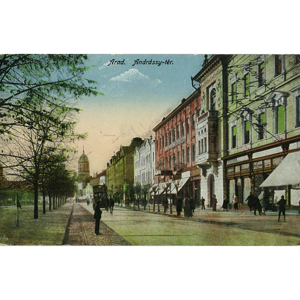


These texts provide information about the Neolog Synagogue in Arad, outlining its history, architecture, and practical details for visitors. They detail its construction period (1828-1834), the initial challenges faced due to local authorities, and its eventual completion under imperial protection. The texts also list contact information for the Jewish Community of Arad, the visiting schedule and fees (on request, no fee), and nearby points of interest. Additionally, the architect Domokos Helm and the neoclassical, Tuscan architectural style are noted. Read the article and the Fact sheet here: https://www.arad.zone/blog-ar/sinagoga-neolog%C4%83-arad
This biographical sketch translated in English by Gabriel Roman focuses on Sava Arsić, a prominent figure in Arad during the late 18th and early 19th centuries. It highlights his early life as the son of craftsmen who gained knowledge through observation and self-education. The text details his rise to prominence as a wealthy and generous citizen known for contributing to public works, particularly the construction of a church. Arsić is also presented as a civic leader, serving as a city captain and, most notably, as a founding member and key benefactor of the Romanian Preparandial School in Arad, an institution that became a significant educational center. The document concludes by recognizing his service as Mayor of Arad for two terms, during which he was known for his rigor and dedication. Read the full article here: https://www.arad.zone/blog-ar/sava-arsi%C4%87-primar-al-aradului-%C8%99i-membru-fondator-al-preparandiei-din-arad
These sources translated into English by Gabriel Roman discuss two significant artworks housed in the Art Gallery of the Cultural Palace in Arad, Romania. One document focuses on Árpád Feszty's monumental triptych, "The Burial of Christ," detailing its creation, exhibition history, period of concealment due to its religious theme, and its eventual restoration and return to public display in 2022. The other source examines Sándor Liezen-Mayer's large historical painting, "The news of the election of Matthew Corvinus as king is announced by the Hungarian delegation at the Podjebrad court in Prague," placing it within the context of 19th-century Hungarian academic and historical painting and discussing the portrayal and cultural significance of King Matthias Corvinus during that era. Both sources highlight the importance of these works to Hungarian art and history and their presence within the Arad museum collection. Full articles here: https://www.arad.zone/blog-ar/eveniment-istoric-pentru-cultura-aradului-la-muzeul-de-art%C4%83-a-rev%C4%83zut-lumina-zilei-tripticul-lui-feszty
This collection of excerpts translated into English by Gabriel Roman provides short biographical information on several prominent members of the Budapest Diet (the Hungarian Parliament) around the year 1910. It includes details about their political affiliations, the constituencies they represented, their careers in politics and other fields, and notable achievements or political actions. The text specifically highlights members of the Romanian National Party and the National Labour Party, offering glimpses into the lives and political roles of individuals such as Andrássy Gyula, Apponyi Albert, Bánffy Dezső, and various other deputies from different parties. The source also includes a list of Labour Party Members of Parliament elected in 1910 and their constituencies. More details here: https://www.arad.zone/blog-ar/scurte-biografii-ale-unor-membrii-marcan%C8%9Bi-ai-dietei-de-la-budapesta-inclusiv-membrii-partidului-na%C8%9Bional-rom%C3%A2n-%C8%99i-membrii-ai-partidului-muncii-de-na%C8%9Bionalitate-rom%C3%A2n%C4%83
This historical document translated in English by Gabriel Roman provides a detailed account of the construction and operation of the first railway lines in Transylvania, focusing primarily on the main line from Arad to Alba Iulia and the secondary line connecting Simeria to Petroșani. It discusses the financial and political factors influencing the railway's development, including initial challenges and the eventual nationalization by the Hungarian State Railways (MÁV). The text also describes the technical aspects of the construction, such as bridge building and track laying, and highlights the architectural style of the railway buildings and stations, particularly the Romantic influences evident in the early structures. Furthermore, the document briefly mentions the construction of the Simeria-Hunedoara line, detailing its purpose in connecting mines and steelworks and its integration into the railway network. Full historical writing here: https://www.arad.zone/blog-ar/prima-cale-ferat%C4%82-din-transilvania-linia-principal%C4%82-arad-alba-iulia-%C8%98i-linia-secundar%C4%82-simeria-petro%C8%98ani
This academic text translated into English by Gabriel Roman; "TIMIȘOARA AND ARAD AT THE END OF THE 19TH CENTURY," draws upon a study by Bogoly József Ágoston to examine urban life and development in Timișoara and Arad around 1890. It centers on analyses of articles from the literary journal "Magyar Salon" written by Róbert Tábori and Károly Méray-Horváth. These authors offered literary and social perspectives on the physical space, culture, and societies of the two cities, highlighting their multinational character, urbanization, and the process of Hungarianization. The source further explores how these narratives contribute to understanding the cultural memory and historical geography of the region. Entire document here: https://www.arad.zone/blog-ar/timi%C8%98oara-%C8%98i-aradul-la-sf%C3%82r%C8%98itul-secolului-xix
These document drafted by Károly Sándor offer an insightful look into the city of Arad during the interwar period, detailing its social, cultural, and economic stagnation despite a smooth transition to Romanian administration. The sources highlight Arad's diverse population and its historical lack of ethnic tension, yet emphasize a general inertia and resistance to change that persisted through significant political shifts. While the arts scene experienced a decline, the press and literary life remained vibrant, and local social interactions largely moved from cafes to clubs. Economically, Arad suffered from bankruptcies and declining industry, struggling to compete with neighboring cities and hampered by its border location, ultimately failing to undergo significant development or urbanization during this era. Read the full story here: https://www.arad.zone/blog-ar/aradul-%C3%8En-perioada-interbelic%C4%82-metamorfoza-aradului
This episode based on a chapter written by Király András and translated by Gabriel Roman describes the history of the city of Arad, tracing its origins back to the medieval settlement of Orod. It discusses Orod's development around a fortress and ecclesiastical center, its mention in royal documents from the 12th century, and its later decline, including its fate during Tatar and Ottoman invasions. The text highlights the formation of the new city of Arad in a different location under Ottoman rule, its subsequent control by the Habsburgs, and its growth into a multi-ethnic settlement, including distinct Serbian and German quarters. It details the challenges the city faced, such as wars, floods, and epidemics, before finally achieving the status of a Royal Free City in 1834, which brought significant self-governing rights and spurred further development. Read the extensive story, full with captivating details at: https://www.arad.zone/blog-ar/de-la-vechiul-orod-la-ora%C8%99ul-liber-regal-arad-opt-secole-pe-drumul-anevoios-al-urbaniz%C4%83rii
This episode based on chapters written by Puskel Péter and Muntean Tibor and translated by Gabriel Roman provides an in-depth look at the economic development and modernization of the city of Arad during the Austro-Hungarian Monarchy. It details the evolution of public works, such as the implementation of sophisticated sewerage and water supply systems and the introduction of public lighting. The text also examines Arad's economic life, highlighting its position as a significant banking, industrial, and transport hub compared to neighboring cities. Furthermore, it discusses the challenges and changes faced by various industries and social classes, illustrating the city's rapid growth and the impact of early capitalism and urbanisation. Read the full extensive, very detailed articles at: https://www.arad.zone/blog-ar/via%C8%9Ba-economic%C4%83-a-ora%C8%99ului-arad and https://www.arad.zone/blog-ar/sistematizarea-aradului and https://www.arad.zone/blog-ar/performan%C8%9Be-industriale-ar%C4%83dene-de-top
This episode based on an extensive text written by Muntean Tibor and translated by Gabriel Roman examines the development of the educational system in Arad, Austro-Hungary, during the era of dualism (late 19th and early 20th centuries). It details the government's increasing investment in education, the creation of a new school system to address illiteracy and train professionals and scientists, and the structure and subjects taught in different types of schools, including kindergartens, primary schools, civil schools, vocational schools, commercial academies, and pedagogical institutions. The document also highlights the significant role of religious and ethnic communities in establishing and running schools, particularly the Orthodox, Lutheran, and Jewish communities, and discusses notable educators and graduates who contributed to the city and wider region. Finally, it touches upon teacher training, social standing, and the eventual impact of the education system on literacy rates and the proportion of high school graduates in Arad compared to other cities. Read the full extensive article here: https://www.arad.zone/blog-ar/institu%C5%A3ii-ar%C4%83dene-de-educa%C5%A3ie
From the publisher's feed
Step into the heart of Central Europe and uncover the untold stories of Arad, Western Romania — a city brimming with history, culture, and charm. Our “Arad – A City Through Time” podcast…
Through captivating episodes, we reveal the city's historical milestones, incredible success stories, and legendary figures who shaped Arad during its golden era. From its architectural gems to the bold individuals who left their mark, you’ll be taken on a journey that brings the past to life in the most engaging way.
A must-listen for curious minds:
Whether you’re a student eager to dive into history, a tourist searching for hidden gems, or a history enthusiast exploring new perspectives, academic research, educational projects, or cultural tourism development, our podcasts are a treasure trove of knowledge — all for free. With each episode, you’ll discover fascinating facts, inspiring stories, and little-known details that will make you see Arad in a whole new light.
Explore more:
Our podcasts are based on years of research and collaboration with trusted local historians, ensuring every story is backed by solid facts. Plus, for those who want to go deeper, all the detailed resources are available for free in both Romanian and Hungarian on our blogs:
Arad.zone and Aradvaros.com are professional resources dedicated to the city of Arad in Western Romania, offering comprehensive information about the city's history, architecture, cultural heritage, and attractions in both Romanian and Hungarian languages.
Don’t miss the chance to explore Arad’s rich past and vibrant present — one episode at a time. Start listening today and let your curiosity lead the way!
Read the full story in extensive details here: https://www.arad.zone
https://www.aradvaros.com