
Sign up to save your podcasts
Or

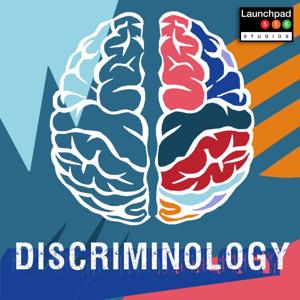


Cultural competency is for some a new buzzword that has become prevalent in many different institutions and professions. Cultural competency in medicine however is something that has emerged during a time when there was not a focus on diversity issues in the United States. What is cultural competency? What is structural competency? Why do doctors need it? Does it really have an impact on healthcare outcomes? Helping us discuss this topic today is returning guest Dr. Oni Blackstock.
Hosted by Malik Seelal, Steve Kramer and Sydney Pinn.
Follow us @discriminology_podcast on Instagram, @discriminology3 on Facebook and Twitter.
Discriminology is produced by Launchpad 516 Studios.
Subscribe to Discriminology on Apple Podcasts and get notified of new episodes: https://podcasts.apple.com/us/podcast/discriminology/id1521770510
Last season we introduced a reduced version of our typical episode model for the first time, airing a podcast that was under 10 minutes long. It ended up being one of our more popular episodes so we decided to expand it into an ongoing miniseries called, what Black Twitter taught me. Black Twitter is good for anything from pop culture, sports commentary, and intense sociopolitical discourse. With this series, we will share what we learned from insightful threads on various sociopolitical topics. Today we will be discussing Hattian history as it relates to colonialism and their strife for independence
Haiti has endured some tumultuous periods throughout its history. You may have seen some of the nation's recent struggles and inability in the news, political assassinations, and natural disasters have created an influx of Haitian refugees attempting to enter the united states. Troubling images of refugees being met with less than empathetic border enforcement went viral while this story was circulating. There was one in particular where a border patrol officer forcefully grabbed one of the refugees, in his hand it seemed like he was holding a whip. While the whipping aspect of the photo ended up not being the case, the point remains the same. There is a basic lack of humanity and a lack of historical context in terms of how Haiti ended up in such a tumultuous situation to begin with.
Hosted by Malik Seelal, Steve Kramer and Sydney Pinn.
Follow us @discriminology_podcast on Instagram, @discriminology3 on Facebook and Twitter.
Discriminology is produced by Launchpad 516 Studios.
Subscribe to Discriminology on Apple Podcasts and get notified of new episodes: https://podcasts.apple.com/us/podcast/discriminology/id1521770510
Recently we read a book called Raising LGBTQ Allies by Chris Tompkins. One of the major concepts that stood out to us was the analogy of a universal playground that we have all experienced. The “playground” is a symbolic metaphor for our minds and the messages we receive reflect dominant societal world views. As children, we absorb conscious and unconscious messages that ultimately shape our beliefs and perspective on the society in which we live.
Many adults experience apprehension and discomfort introducing complex concepts like heteronormativity, homophobia, transphobia, etc, to young children. What we often fail to realize is that children are introduced to these concepts whether we discuss them explicitly or choose to remain silent. We have discussed socialization on the podcast before, but Chris’ book gives an in-depth explanation as it relates to the LGBTQ community in a thoughtful and digestible manner. Today Chris Tompkins joins us to help us discuss this topic further.
Hosted by Malik Seelal, Steve Kramer and Sydney Pinn.
Follow us @discriminology_podcast on Instagram, @discriminology3 on Facebook and Twitter.
Discriminology is produced by Launchpad 516 Studios.
Subscribe to Discriminology on Apple Podcasts and get notified of new episodes: https://podcasts.apple.com/us/podcast/discriminology/id1521770510
Welcome to Part 2 of our "Paris Massacre and the Algerian Struggle for Equality" conversation. On October 17, 1961, one of the “most violent acts of repression ever applied to a street protest in Western Europe” took place. The streets of Paris, France were filled with peaceful, pro-independence Algerian protesters demonstrating against an imposed curfew on “Algerian Muslim” workers. This community has also been referred to in France as “French Muslims” or “French Muslims of Algeria.” As we alluded to before, this protest was met with state-sanctioned violence, the official death toll is in dispute, historians now agree that the death toll was at least 48 people. Many believe that it was “well over 100.” How could something like this happen? Why? Helping us cover this topic today is special guest Melissa Chemam, author of the article I just paraphrased from, “Paris Massacre: 60 years on, France must face its colonial past.”
Hosted by Malik Seelal, Steve Kramer and Sydney Pinn.
Follow us @discriminology_podcast on Instagram, @discriminology3 on Facebook and Twitter.
Discriminology is produced by Launchpad 516 Studios.
Subscribe to Discriminology on Apple Podcasts and get notified of new episodes: https://podcasts.apple.com/us/podcast/discriminology/id1521770510
On October 17, 1961, one of the “most violent acts of repression ever applied to a street protest in Western Europe” took place. The streets of Paris, France were filled with peaceful, pro-independence Algerian protesters demonstrating against an imposed curfew on “Algerian Muslim” workers. This community has also been referred to in France as “French Muslims” or “French Muslims of Algeria.” As we alluded to before, this protest was met with state-sanctioned violence, the official death toll is in dispute, historians now agree that the death toll was at least 48 people. Many believe that it was “well over 100.” How could something like this happen? Why? Helping us cover this topic today is special guest Melissa Chemam, author of the article I just paraphrased from, “Paris Massacre: 60 years on, France must face its colonial past.”
Hosted by Malik Seelal, Steve Kramer and Sydney Pinn.
Follow us @discriminology_podcast on Instagram, @discriminology3 on Facebook and Twitter.
Discriminology is produced by Launchpad 516 Studios.
Subscribe to Discriminology on Apple Podcasts and get notified of new episodes: https://podcasts.apple.com/us/podcast/discriminology/id1521770510
We have covered Malcolm X in previous seasons. We alluded to how the narrative that surrounds his legacy tends to be tarnished in the eyes of some. He has been the victim of revisionist history in many regards. According to the paper “The Vilification of Malcolm X” by Greg Tull, this was done systematically with intention. On this episode, we look to expound upon his vilification with the paper’s author and returning guest Greg Tull.
Hosted by Malik Seelal, Steve Kramer and Sydney Pinn.
Follow us @discriminology_podcast on Instagram, @discriminology3 on Facebook and Twitter.
Discriminology is produced by Launchpad 516 Studios.
Subscribe to Discriminology on Apple Podcasts and get notified of new episodes: https://podcasts.apple.com/us/podcast/discriminology/id1521770510
Historically, there have obviously been opportunity gaps across many different professions and disciplines. The tech industry, like others, has a significant underrepresentation regarding people of color. Black people make up 7% of the tech industry while making up 13% of the U.S population. Latinx people are even more underrepresented making up 8% of the tech industry while having an 18% total U.S population. Why is this the case? What is being done to close the gap? What can we do?
Hosted by Malik Seelal, Steve Kramer and Sydney Pinn.
Follow us @discriminology_podcast on Instagram, @discriminology3 on Facebook and Twitter.
Discriminology is produced by Launchpad 516 Studios.
Subscribe to Discriminology on Apple Podcasts and get notified of new episodes: https://podcasts.apple.com/us/podcast/discriminology/id1521770510
The conversation concerning whether activism has a place in sports is a frequent topic in the media. Conservative TV personalities like Laura Ingraham have made derisive statements like “Shut Up and Dribble” about modern day athletes, claiming that they lack the credentials to speak out on socio-political topics. Activism in sports however is not a new occurrence, which tends to be left out of the discourse. In today’s episode, we will cite major historical examples of social justice demonstrations in the sports world. Helping us do so is returning guest Olivia Gordon.
Hosted by Malik Seelal, Steve Kramer and Sydney Pinn.
Follow us @discriminology_podcast on Instagram, @discriminology3 on Facebook and Twitter.
Discriminology is produced by Launchpad 516 Studios.
Subscribe to Discriminology on Apple Podcasts and get notified of new episodes: https://podcasts.apple.com/us/podcast/discriminology/id1521770510
There is a large racial wealth gap in the United States overall and it’s especially large in the pop culture/entertainment arena. This is additionally troubling considering the insurmountable contributions Black people have made to pop culture and digital content creation. Today our special guest Anuli Akanegbu (Ah-noo-lee A-ka-nay-boo) joins us to help us discuss this matter, particularly as it relates to Black women in content creation.
Hosted by Malik Seelal, Steve Kramer and Sydney Pinn.
Follow us @discriminology_podcast on Instagram, @discriminology3 on Facebook and Twitter.
Discriminology is produced by Launchpad 516 Studios.
Subscribe to Discriminology on Apple Podcasts and get notified of new episodes: https://podcasts.apple.com/us/podcast/discriminology/id1521770510
On this episode we will be discussing the hiring practices of educators, specifically on Long Island NY. There is a visible lack of diversity in high school educators in this region and nationally. We invited Roslyn U.S history teacher Greg Tull to discuss his experience pursuing the education profession from his time as a student through his experience interviewing for positions.
Hosted by Malik Seelal, Steve Kramer and Sydney Pinn.
Follow us @discriminology_podcast on Instagram, @discriminology3 on Facebook and Twitter.
Thank you to Greg Tull for joining us.
Discriminology is produced by Launchpad 516 Studios.
Subscribe to Discriminology on Apple Podcasts and get notified of new episodes: https://podcasts.apple.com/us/podcast/discriminology/id1521770510
From the publisher's feed
This podcast analyzes inequities by examining the intersections of sociology, culture, politics, economics, and history. Our cross-disciplinary subject matter ultimately aims to dismantle…
Instagram: @discriminology_podcast
Twitter/Facebook: @Discriminology3

53 Listeners
2 Listeners

57 Listeners
4 Listeners
9 Listeners
49 Listeners
36 Listeners
32 Listeners