
Sign up to save your podcasts
Or

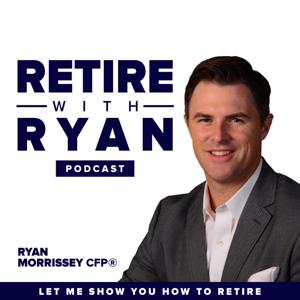

When it comes to planning for retirement, one of the most commonly faced decisions is how to invest for long-term growth and stability. In turbulent times, market volatility often generates renewed debate on whether index funds, or their actively managed counterparts, offer the better path for accumulating wealth. On this episode of the show, I'm unpacking what index funds are, how they stack up against actively managed funds, and what the latest data reveals about performance during both quiet and volatile markets.
You will want to hear this episode if you are interested in...
Understanding Index Funds and Active Management
The conversation focused on clarifying the definitions and roles of both index funds and actively managed funds in a portfolio. Index funds are mutual funds or exchange-traded funds (ETFs) specifically designed to track an index, such as the S&P 500, which comprises the 500 largest companies in the U.S. However, indexes extend well beyond large-cap U.S. companies to include mid-size, small-cap, international, emerging markets, real estate, and various bond markets.
Actively managed funds, in contrast, are overseen by managers aiming to outperform their index benchmarks by selectively choosing investments they believe will generate higher returns. Several points were raised, including that these managers may focus on only a subset of the companies in an index, relying on research, forecasts, and periodic rebalancing in an attempt to add value.
The Cost Factor: Why Fees Matter
Management expenses are an ongoing drag on returns. Index funds typically charge extremely low fees, often around 0.1% annually, because they passively track an index and involve little decision-making. In contrast, actively managed funds average around 1% or more per year, reflecting the higher costs of professional research, trading, and active oversight. This fee gap means that even if an active manager chooses well, they must first clear a substantial hurdle just to keep pace with an index fund.
What the Data Shows About Performance in Volatile Markets
In the volatile year of 2025, only 38% of actively managed funds outperformed their passive benchmarks in the U.S. stock market. For large-cap stocks like those in the S&P 500, the number was even lower—just 30%. International stock managers fared slightly better, with a 48% success rate, and emerging market funds did the best, at 64%.
However, over longer periods, the active management advantage all but disappears. Over 10 years, only 8.1% of large-cap blend active managers beat their benchmarks, with small-cap and international funds performing marginally better, and bond managers seeing a 41% success rate. But for 20-year periods, even those slim advantages deteriorated further.
Should Index Funds Still Be the Core of a Retirement Portfolio?
The data strongly supports favoring index funds for most of a retirement portfolio, especially for stock allocations. Index funds keep costs low, are simple to implement, and historically have delivered better risk-adjusted returns for the vast majority of investors across long time horizons. While some areas, such as certain bond categories or emerging markets, may occasionally offer pockets of relative opportunity for active managers, these successes are rare, short-lived, and hard to identify in advance. For most retirees, sticking primarily with index funds and maintaining a diversified, long-term approach remains the prudent and statistically advantageous strategy, regardless of temporary episodes of market turmoil.
Resources Mentioned
Connect With Morrissey Wealth Management
www.MorrisseyWealthManagement.com/contact
Subscribe to Retire With Ryan
 View all episodes
 By Ryan R Morrissey

4.9
3838 ratings
When it comes to planning for retirement, one of the most commonly faced decisions is how to invest for long-term growth and stability. In turbulent times, market volatility often generates renewed debate on whether index funds, or their actively managed counterparts, offer the better path for accumulating wealth. On this episode of the show, I'm unpacking what index funds are, how they stack up against actively managed funds, and what the latest data reveals about performance during both quiet and volatile markets.
You will want to hear this episode if you are interested in...
Understanding Index Funds and Active Management
The conversation focused on clarifying the definitions and roles of both index funds and actively managed funds in a portfolio. Index funds are mutual funds or exchange-traded funds (ETFs) specifically designed to track an index, such as the S&P 500, which comprises the 500 largest companies in the U.S. However, indexes extend well beyond large-cap U.S. companies to include mid-size, small-cap, international, emerging markets, real estate, and various bond markets.
Actively managed funds, in contrast, are overseen by managers aiming to outperform their index benchmarks by selectively choosing investments they believe will generate higher returns. Several points were raised, including that these managers may focus on only a subset of the companies in an index, relying on research, forecasts, and periodic rebalancing in an attempt to add value.
The Cost Factor: Why Fees Matter
Management expenses are an ongoing drag on returns. Index funds typically charge extremely low fees, often around 0.1% annually, because they passively track an index and involve little decision-making. In contrast, actively managed funds average around 1% or more per year, reflecting the higher costs of professional research, trading, and active oversight. This fee gap means that even if an active manager chooses well, they must first clear a substantial hurdle just to keep pace with an index fund.
What the Data Shows About Performance in Volatile Markets
In the volatile year of 2025, only 38% of actively managed funds outperformed their passive benchmarks in the U.S. stock market. For large-cap stocks like those in the S&P 500, the number was even lower—just 30%. International stock managers fared slightly better, with a 48% success rate, and emerging market funds did the best, at 64%.
However, over longer periods, the active management advantage all but disappears. Over 10 years, only 8.1% of large-cap blend active managers beat their benchmarks, with small-cap and international funds performing marginally better, and bond managers seeing a 41% success rate. But for 20-year periods, even those slim advantages deteriorated further.
Should Index Funds Still Be the Core of a Retirement Portfolio?
The data strongly supports favoring index funds for most of a retirement portfolio, especially for stock allocations. Index funds keep costs low, are simple to implement, and historically have delivered better risk-adjusted returns for the vast majority of investors across long time horizons. While some areas, such as certain bond categories or emerging markets, may occasionally offer pockets of relative opportunity for active managers, these successes are rare, short-lived, and hard to identify in advance. For most retirees, sticking primarily with index funds and maintaining a diversified, long-term approach remains the prudent and statistically advantageous strategy, regardless of temporary episodes of market turmoil.
Resources Mentioned
Connect With Morrissey Wealth Management
www.MorrisseyWealthManagement.com/contact
Subscribe to Retire With Ryan

810 Listeners

1,333 Listeners
536 Listeners
750 Listeners

548 Listeners
700 Listeners

582 Listeners

930 Listeners

833 Listeners

204 Listeners
145 Listeners

1,069 Listeners

185 Listeners

142 Listeners
101 Listeners