
Sign up to save your podcasts
Or

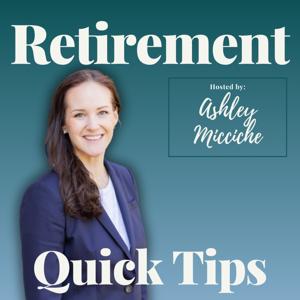

The theme this week on the Retirement Quick Tips Podcast is: Are You Sabotaging Your Investments Because Of Your Political Views?
Today, I’m talking about how elections really impact the markets, and by extension, your investments.
In election years, there is a lot of discussion and speculation about who will take power and what potential policy changes will mean for markets.
I remember in 2020 in the months leading up to the presidential election, gunmaker smith and Wesson shot up in value. People were worried that their 2nd amendment rights would be taken away if Trump lost, and it became a record-breaking year for gun sales.
Other industries driven by policy changes - like healthcare and military contractors - can be heavily influenced by election outcomes. So elections do matter in some cases depending on how you’re invested.
But if you’re invested in a well-diversified portfolio and you don’t have heavy concentrations in a particular industry or company, then the outcomes of the election shouldn’t matter all that much.
And history bears this out. There is some variation in historical returns depending on which party is in power, but when you look under the hood and look at other factors influencing the economy and markets over the years, there isn’t a strong correlation between who controls the white house, the house, or the senate and what the stock market returns look like.
One thing to keep in mind though is that the stock market tends to perform best when there is a divided government. If there’s a democrat in the white house, and republicans control the house and the Senate, or vice versa, that’s likely to lead to the best outcomes for the economy and markets.
Why? There’s policy gridlock, and neither party can get much done. This eliminates the possibility of big policy changes that could create sweeping changes for the economy and that is a good thing for the markets.
That’s it for today. Thanks for listening! My name is Ashley Micciche and this is the Retirement Quick Tips podcast.
----------
>>> Subscribe on Apple Podcasts: https://apple.co/2DI2LSP
>>> Subscribe on Amazon Alexa: https://amzn.to/2xRKrCs
>>> Visit the podcast page: https://truenorthra.com/podcast/
----------
Tags: retirement, investing, money, finance, financial planning, retirement planning, saving money, personal finance
 View all episodes
 By Ashley Micciche

4.9
5252 ratings
The theme this week on the Retirement Quick Tips Podcast is: Are You Sabotaging Your Investments Because Of Your Political Views?
Today, I’m talking about how elections really impact the markets, and by extension, your investments.
In election years, there is a lot of discussion and speculation about who will take power and what potential policy changes will mean for markets.
I remember in 2020 in the months leading up to the presidential election, gunmaker smith and Wesson shot up in value. People were worried that their 2nd amendment rights would be taken away if Trump lost, and it became a record-breaking year for gun sales.
Other industries driven by policy changes - like healthcare and military contractors - can be heavily influenced by election outcomes. So elections do matter in some cases depending on how you’re invested.
But if you’re invested in a well-diversified portfolio and you don’t have heavy concentrations in a particular industry or company, then the outcomes of the election shouldn’t matter all that much.
And history bears this out. There is some variation in historical returns depending on which party is in power, but when you look under the hood and look at other factors influencing the economy and markets over the years, there isn’t a strong correlation between who controls the white house, the house, or the senate and what the stock market returns look like.
One thing to keep in mind though is that the stock market tends to perform best when there is a divided government. If there’s a democrat in the white house, and republicans control the house and the Senate, or vice versa, that’s likely to lead to the best outcomes for the economy and markets.
Why? There’s policy gridlock, and neither party can get much done. This eliminates the possibility of big policy changes that could create sweeping changes for the economy and that is a good thing for the markets.
That’s it for today. Thanks for listening! My name is Ashley Micciche and this is the Retirement Quick Tips podcast.
----------
>>> Subscribe on Apple Podcasts: https://apple.co/2DI2LSP
>>> Subscribe on Amazon Alexa: https://amzn.to/2xRKrCs
>>> Visit the podcast page: https://truenorthra.com/podcast/
----------
Tags: retirement, investing, money, finance, financial planning, retirement planning, saving money, personal finance

1,952 Listeners
446 Listeners

806 Listeners

1,328 Listeners
532 Listeners

753 Listeners

546 Listeners
695 Listeners

613 Listeners

930 Listeners

827 Listeners

205 Listeners

586 Listeners
428 Listeners

1,068 Listeners