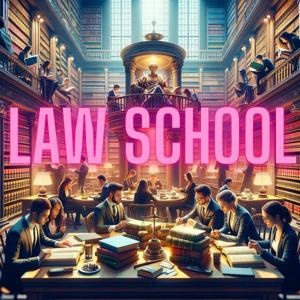
Law School

Double Jeopardy


Listen Later

Double Jeopardy

Source: Excerpts from "Double Jeopardy: A Fundamental Protection in Criminal Law"

Main Themes:

  • Protection from Government Overreach: Double jeopardy serves as a safeguard against prosecutorial abuse by preventing repeated prosecutions for the same offense. This ensures fairness and promotes public trust in the justice system.
  • Fairness and Finality: The principle of double jeopardy aligns with the doctrine of res judicata, promoting finality in legal proceedings. It prevents endless litigation and allows individuals to move on with their lives after a verdict.
  • Balancing Individual Rights and Public Interest: While crucial for protecting individuals, double jeopardy faces criticism regarding exceptions like the dual sovereignty doctrine and its potential impact on victims seeking justice.
  • Most Important Ideas and Facts:

    Definition: Double jeopardy, enshrined in the Fifth Amendment, protects individuals from being prosecuted or punished multiple times for the same offense. It encompasses three key protections:

    • Protection against subsequent prosecutions after an acquittal.
    • Protection against subsequent prosecutions after a conviction.
    • Protection against multiple punishments for the same offense.
    • Purpose: Double jeopardy promotes:

      • Fairness: "The policy behind double jeopardy is based on principles of fairness, finality, and avoiding government overreach."
      • Finality: "Finality is not just about conserving judicial resources; it also respects the emotional and psychological well-being of defendants."
      • Reduced Strain: "Repeated trials can have devastating consequences for a defendant, both emotionally and financially."
      • Key Protections:

        • Retrial After Acquittal: A person acquitted of a crime cannot be retried even if new evidence emerges.
        • Retrial After Conviction: A convicted person cannot be prosecuted again for the same crime, regardless of how the conviction is disposed.
        • Multiple Punishments: Prohibits cumulative sentences for the same crime unless statutorily authorized.
        • Mistrials: Protections may not apply in cases of mistrials, especially if due to a hung jury or manifest necessity.
        • Exceptions:

          • Separate Sovereignties Doctrine: Different jurisdictions (state and federal) can prosecute for the same act as they are considered separate offenses.
          • Civil vs. Criminal Proceedings: Double jeopardy applies only to criminal prosecutions, not civil or administrative actions.
          • Retrials After Successful Appeal: If a conviction is overturned on appeal, retrial is permissible.
          • Mistrials Due to Manifest Necessity: Retrials are justified in cases of mistrials caused by juror misconduct or other necessities.
          • Continuing Offenses: Repeated similar offenses over time can be prosecuted separately.
          • Case Law:

            • Blockburger v. United States (1932): Established the "Blockburger test" to determine if offenses are distinct for double jeopardy purposes.
            • United States v. Dixon (1993): Reaffirmed the Blockburger test, emphasizing unique elements in offenses.
            • Heath v. Alabama (1985): Reaffirmed the dual sovereignty doctrine.
            • Blueford v. Arkansas (2012): Emphasized the importance of a final verdict for double jeopardy to apply.
            • Criticisms and Controversies:

              • Dual Sovereignty Doctrine: Seen as a loophole allowing multiple prosecutions for the same conduct, potentially undermining fairness.
              • Impact on Victims: Potentially hindering justice when new evidence surfaces after acquittal, raising questions about victims' rights.
              • Blockburger Test: Criticized for being overly technical and inconsistent, potentially allowing for circumvention of protections.
              • Civil Cases Following Acquittals: Allowing civil litigation after criminal acquittal seen as a potential form of double punishment, blurring the lines between civil and criminal justice.
              • Importance:

                • Limits Government Power: Prevents abuse and promotes fair trials.
                • Promotes Judicial Efficiency: Ensures finality and prevents overburdening the justice system.
                • Protects Defendants: Shields individuals from undue har
                • ...more
                  View all episodesView all episodes
                  Download on the App Store

                  Law SchoolBy The Law School of America

                  • 3.1
                  • 3.1
                  • 3.1
                  • 3.1
                  • 3.1

                  3.1

                  54 ratings


                  More shows like Law School

                  View all
                  Bloomberg Law by Bloomberg

                  Bloomberg Law

                  383 Listeners

                  Above the Law - Thinking Like a Lawyer by Legal Talk Network

                  Above the Law - Thinking Like a Lawyer

                  488 Listeners

                  The Law School Toolbox Podcast: Tools for Law Students from 1L to the Bar Exam, and Beyond by Alison Monahan and Lee Burgess - Law School Toolbox, LLC

                  The Law School Toolbox Podcast: Tools for Law Students from 1L to the Bar Exam, and Beyond

                  512 Listeners

                  Sexy Unique Podcast by What's Your Journey?

                  Sexy Unique Podcast

                  3,332 Listeners

                  Law to Fact by Professor Leslie Garfield Tenzer

                  Law to Fact

                  193 Listeners

                  The Bar Exam Toolbox Podcast: Pass the Bar Exam with Less Stress by Bar Exam Toolbox

                  The Bar Exam Toolbox Podcast: Pass the Bar Exam with Less Stress

                  437 Listeners

                  Calm it Down by Chad Lawson

                  Calm it Down

                  714 Listeners

                  Civil Procedure by Prof. Thomas Main

                  Civil Procedure

                  78 Listeners

                  The Law of the United States by Mark Shope

                  The Law of the United States

                  2 Listeners

                  Basic Contract Law for Students by The Contract Tutor

                  Basic Contract Law for Students

                  20 Listeners

                  Law School in Plain English: Torts & Criminal Law. by Jeff Brown

                  Law School in Plain English: Torts & Criminal Law.

                  12 Listeners

                  Law Schoolers by Law Schoolers

                  Law Schoolers

                  9 Listeners

                  American Law Cafe by Pre-Law Productions

                  American Law Cafe

                  10 Listeners

                  Study for the Bar in Your Car by Angela Rutledge, LLM, LLB

                  Study for the Bar in Your Car

                  5 Listeners