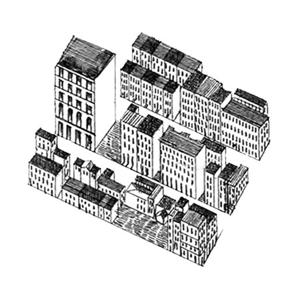
Doug Allen's History of Urban Form

Doug Allen's History of Urban Form

Download on the App Store

Doug Allen's History of Urban Form episodes

  • Bonus Lecture: Savannah
    This bonus lecture from Doug Allen's History of Urban Form series tells the story of Savannah, Georgia. He describes the region of Georgia before Savannah was conceived – with the ambition of early Americans to grow silk and the eventual abandonment of the estate that eventually led to the genesis of this brilliant town.
    45 min
  • Lecture 39: New Urbanism and Landscape Urbanism
    The thirty-ninth lecture in Doug Allen's History of Urban Form series brings the timelines and lessons of the course up to the modern day. It describes the Congress for the New Urbanism and larger New Urbanist movement as a reaction to the 20th Century's Athens Charter and CIAM. The lecture explores Seaside, Florida, the differences between "East Coast" and "West Coast" New Urbanist factions, and how New Urbanism compares to Landscape Urbanism. Finally, this lecture concludes with Doug's best and most eloquent summary of the course.
    59 min
  • Lecture 38: Edge Cities and the Crisis of the Object
    The thirty-eighth lecture in Doug Allen's History of Urban Form series draws cities firmly into the modern age. It begins with Radburn, New Jersey, and then explores Le Corbusier's Villa Savoye, Plan Voisin, and Ville Radieuse as exemplary works of the Modern era. The lecture identifies key elements of the Modernist movement and connects them to city planning principles during the 20th Century.
    Note: Unfortunately the audio for this lecture is truncated, but the later slides address modern-day planning and urban processes.

    57 min
  • Lecture 37: Equity, Race, and Place
    The thirty-seventh lecture in Doug Allen's History of Urban Form series continues discussions on urbanism by focusing on the initial land use regulation and zoning in America. Doug refers to examples form Atlanta where he discusses how regulatory design standards drove streets away from having an economic purpose to one solely focused on the movement of traffic. The lecture gets into great details about Housing, Subdivisions, and Zoning.
    1 hr 3 min
  • Lecture 36: Expansion of the Regulatory Framework
    The thirty-sixth lecture in Doug Allen's History of Urban Form series traces the expansion of regulatory frameworks in the 20th Century. It beings with the Zoning Enabling Statute and early foundations of urban planning in the United States and then walks through the key legal cases of Euclid v. Ambler and Nectow v. Cambridge, focusing on the differences between application and constitutionality of laws.
    Note: Unfortunately a significant amount of audio is missing from this lecture.
    15 min
  • Lecture 34: Block, Superblock, & Space of Flow
    The thirty-fourth lecture in Doug Allen's History of Urban Form series examines the transition between late 19th Century and early 20th Century American cities. It details the development of Modernism, the introduction of automobiles in cities, and advancement of planned cities. The lecture explores a number of American and international cities but focuses primarily on Radburn, New Jersey, and that city's influential plan.
    53 min
  • Lecture 30: Reactionary Tactics of Parks and the Suburbs, Part 2
    The thirtieth lecture in Doug Allen's History of Urban Form series explores reactions to the industrial cities of the 19th Century, specifically the development of residential suburbs. This lecture includes the introduction of Fredrick Law Olmsted's new "parkway" streets in Boston and his development of Riverside, Illinois.
    1 hr 3 min
  • Lecture 29: Reactionary Tactics of Parks and the Suburbs, Part 1
    The twenty-ninth lecture in Doug Allen's History of Urban Form series compares the early developments of Amsterdam and New York / Manhattan. Doug walks us through the first suburbs and their eventual spread throughout the Western world. Towards the end of the lecture, the focus shifts to discussing public parks and the formation of Central Park as the center of NYC.
    52 min
  • Lecture 27: The City of the Dreadful Night
    The twenty-seventh lecture in Doug Allen's History of Urban Form series captures the time period of urban development between the 1700s and 1800s and explores a transition from traditional forms of urban design to one of rail dependence and garden suburbs.
    47 min
  • Lecture 26: The City in the Enlightenment
    In the twenty-sixth lecture of Doug Allen's History of Urban Form series, Doug describes how broader changes in science, society, and political systems impacted city form, referencing examples such as Versailles, Bath, and London.
    40 min

About Doug Allen's History of Urban Form

From the publisher's feed

The History of Urban Form was one of the most influential courses ever taught at Georgia Tech: one year it was voted the most popular elective on the entire campus. For many of his students it was enough to change their career paths to urban design and city planning.