
Sign up to save your podcasts
Or

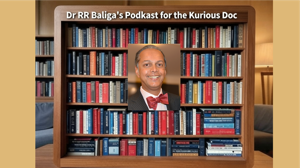


Genes. Glands. Vessels. 💊
Hypertension therapy is entering a new era. The latest Lancet review highlights RNA-based silencing of angiotensinogen, selective aldosterone synthase inhibition, non-steroidal mineralocorticoid receptor antagonists, endothelin receptor blockade, and natriuretic peptide enhancement.
These therapies move beyond ACE inhibitors and ARBs toward durable, mechanism-driven blood pressure control—especially for resistant hypertension and multimorbidity.
The future may not be just lowering pressure, but reshaping pathways. 🔬🫀
☕🧠 Can your daily coffee protect your brain?
In a JAMA study of 131,821 adults followed for up to 43 years, moderate caffeinated coffee and tea intake was associated with a lower risk of dementia and modestly better cognition.
The sweet spot: 2–3 cups of coffee or 1–2 cups of tea per day. Notably, decaffeinated coffee showed no benefit.
A compelling population-level prevention signal—simple habits, long horizons, meaningful impact.
Bertrand Russell showed that clear thinking is a moral act 🧠✨
As a founder of analytic philosophy, he taught us to question assumptions, sharpen language, and let logic guide both ideas and action 📐📘
From Principia Mathematica to public debates on freedom and peace, Russell reminds us that clarity, courage, and doubt belong together 🕊️📚
🧠🩸 A finger-prick may change how we detect Alzheimer's disease.
A new Nature Medicine study shows that dried capillary blood spots can reliably measure key Alzheimer's biomarkers—p-tau217, GFAP, and neurofilament light—with strong concordance to venous plasma and cerebrospinal fluid results.
📊 In the DROP-AD multicenter study (7 sites, 337 participants), capillary p-tau217 correlated strongly with plasma (r≈0.74) and predicted amyloid pathology with good accuracy (AUC ≈0.86).
🚀 Why this matters:
• Enables minimally invasive, scalable, and potentially remote testing
• Expands access for population screening, prevention trials, and underserved groups (including Down syndrome)
• Moves us closer to earlier, equitable detection—though not yet ready for routine clinical decision-making
Small drop. Big signal. The future of Alzheimer's research may be at our fingertips. ✨
🧬 Why Coronary Artery Disease Runs in Families
Coronary artery disease is not just lifestyle—it is deeply genetic. Rare monogenic disorders like familial hypercholesterolemia and hundreds of common variants together shape lifelong risk, with polygenic risk scores identifying individuals whose inherited risk rivals traditional factors 🫀.
The good news: genetic risk is modifiable. Early LDL lowering, healthy lifestyles, and precision prevention deliver the greatest benefit in those at highest inherited risk 🔬.
A timely synthesis from The New England Journal of Medicine (2026) that reframes CAD—from destiny to opportunity.
🧬⚖️ Cancer and Acute Coronary Syndromes: Precision Where It Matters Most
As cancer survival improves, more patients live long enough to face acute coronary syndromes (ACS)—often with competing risks of death, bleeding, and ischaemia. Yet these patients have been largely excluded from ACS trials, leaving clinicians to navigate uncertainty.
A landmark Lancet study introduces ONCO-ACS, the first cancer-specific, externally validated risk tool that simultaneously predicts 6-month mortality, major bleeding, and ischaemic events using 11 routine admission variables. 📊🧠
The result: actionable, bedside precision—helping tailor invasive strategy, antiplatelet intensity, and duration to the dominant risk for each patient.
This is a major step toward personalised cardio-oncology care, moving beyond one-size-fits-all scores to nuanced, patient-centred decisions. 🎯💡
🫀 Rethinking DCD Heart Transplantation
A new JAMA Original Investigation reports encouraging early outcomes using rapid recovery with extended ultraoxygenated preservation (REUP) for donation after circulatory death (DCD) heart transplantation—without donor heart reanimation or machine perfusion.
🔬 In a 24-patient case series, REUP achieved 96% 30-day survival, low primary graft dysfunction (4%), and minimal early rejection, even with older donors and prolonged ischemic times.
⚖️ By avoiding reanimation, REUP may reduce ethical concerns, cost, and logistical complexity, while expanding the usable donor pool.
🌍 A potentially scalable, globally relevant step forward in transplant medicine.
Sometimes progress is not about doing more—but about doing just enough, better.
⏰🧬 Timing matters in cancer.
A superb JCI Review, Rhythms of risk: the intersection of clocks, cancer, and chronotherapy, shows how circadian clocks regulate cell cycle, DNA repair, metabolism, immunity, hypoxia, and even metastasis—and how circadian disruption (e.g., night-shift work) can reshape cancer risk and treatment response. ⚖️💊
The takeaway: clock biology is context-specific, and aligning therapy with circadian phase may enhance efficacy while reducing toxicity—an underused lever in precision oncology. 🎯
Worth a careful read for clinicians, scientists, and trialists thinking about the fourth dimension of cancer: time. ⏱️
🫀 Residual Risk in Coronary Artery Disease
Even after "optimal" therapy, many patients remain at risk. Why? Because atherosclerosis is more than LDL—it's thrombosis 🩸, inflammation 🔥, and metabolism ⚖️ working in concert.
This FAQ-based slide deck distills contemporary insights on residual thrombotic, lipid, metabolic, and inflammatory risk, and highlights emerging therapies—from dual-pathway inhibition 💊 to GLP-1 receptor agonists 🧬 and colchicine—that help close the gap between treatment and outcomes.
📊 Key message: precision, not complacency.
#Cardiology #SecondaryPrevention #ResidualRisk #CAD #PrecisionMedicine
Swami Vivekananda reminded the world that spiritual strength and social service are inseparable 🕉️🔥
From Chicago in 1893 to India's national awakening, his message was simple yet radical: each soul is potentially divine—and serving humanity is serving the Divine 🌍🤝
More than a monk or philosopher, Vivekananda remains a timeless call to courage, compassion, and inner awakening ✨📚
From the publisher's feed
893 Listeners
3,347 Listeners

19,223 Listeners