The desire to categorise all those seeking refuge throws up continuing challenges to traditions of hospitality and to the realisation of migrants' rights.
The most probable outcome of the 2011 referendum is that Southern Sudan secedes from the North, breaking Sudan into two independent nation states. Creative Commons Attribution-Non-Commercial-Share Alike 2.0 UK: England & Wales; http://creativecommons.org/licenses/by-nc-sa/2.0/uk/
After international agreements covering the return of refugees to Equateur and North Kivu, the challenge is to create local structures that can make the agreements work. Creative Commons Attribution-Non-Commercial-Share Alike 2.0 UK: England & Wales; http://creativecommons.org/licenses/by-nc-sa/2.0/uk/
Durable returns of IDPs and refugees into some of the most densely populated areas in eastern DRC are never going to be a simple exercise. Creative Commons Attribution-Non-Commercial-Share Alike 2.0 UK: England & Wales; http://creativecommons.org/licenses/by-nc-sa/2.0/uk/
Since independence, violent conflicts in eastern DRC have been linked to access to land, affirmation of ethnic identities and competition for political control. Creative Commons Attribution-Non-Commercial-Share Alike 2.0 UK: England & Wales; http://creativecommons.org/licenses/by-nc-sa/2.0/uk/
The cascade training model has brought clinical training closer to the areas in DRC most in need of skilled staff to serve conflict-affected women experiencing complications in pregnancy and childbirth. Creative Commons Attribution-Non-Commercial-Share Alike 2.0 UK: England & Wales; http://creativecommons.org/licenses/by-nc-sa/2.0/uk/
19 min
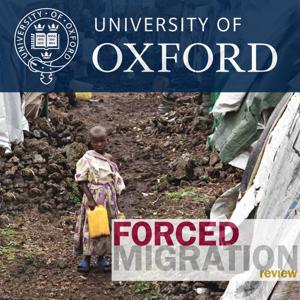
About DRC: Past. Present. Future? (Forced Migration Review 36)
From the publisher's feed
The Democratic Republic of Congo is unfortunately synonymous with its dreadful past and its terrible present, despite its beauty, complex history and unachieved potential. Locked not only into its own internal troubles but also into those of the Great Lakes region, it has provided more than enough material on forced migration, violence and political quagmires for the latest issue of FMR.
While the articles contained in this issue of FMR make grim reading, they also offer glimmers of hope for better outcomes, at least potentially, alongside analysis of how and why these things have been happening. Authors come from Congolese civil society, UN agencies and NGOs, Congolese and donor governments, and international research – and include articles by the former UN Relief Coordinator John Holmes and the former Humanitarian Coordinator in DRC Ross Mountain. This issue also contains a further seven articles on other forced migration-related subjects.
See more at: http://www.fmreview.org/DRCongo#sthash.AyUW37UP.dpuf
More shows like DRC: Past. Present. Future? (Forced Migration Review 36)