Cash vouchers offer flexibility, enabling payment for school fees as well as for basic necessities. They also empower people who, in displacement, have been deprived of choice. Creative Commons Attribution-Non-Commercial-Share Alike 2.0 UK: England & Wales; http://creativecommons.org/licenses/by-nc-sa/2.0/uk/
Effective provision of aid and protection for those displaced in eastern DRC requires reliable data which the new Data Centre in North Kivu is helping to provide. Creative Commons Attribution-Non-Commercial-Share Alike 2.0 UK: England & Wales; http://creativecommons.org/licenses/by-nc-sa/2.0/uk/
Central to Iraqi refugees' efforts to resolve the question of their immediate future is their access to good information about resettlement and return.
Parties to the protracted Congolese conflict have long promoted fear of 'the other' and a thirst for revenge; these attitudes must be addressed if peace is to have a chance.
After international agreements covering the return of refugees to Equateur and North Kivu, the challenge is to create local structures that can make the agreements work.
Since independence, violent conflicts in eastern DRC have been linked to access to land, affirmation of ethnic identities and competition for political control.
The cascade training model has brought clinical training closer to the areas in DRC most in need of skilled staff to serve conflict-affected women experiencing complications in pregnancy and childbirth.
In the Democratic Republic of Congo, the International Committee of the Red Cross (ICRC) combines its protection and assistance activities and focuses on 'priority zones' where armed actors are present.
17 min
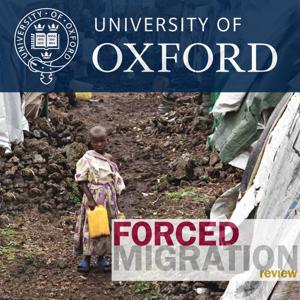
About DRC: Past. Present. Future? (Forced Migration Review 36)
From the publisher's feed
The Democratic Republic of Congo is unfortunately synonymous with its dreadful past and its terrible present, despite its beauty, complex history and unachieved potential. Locked not only into its own internal troubles but also into those of the Great Lakes region, it has provided more than enough material on forced migration, violence and political quagmires for the latest issue of FMR.
While the articles contained in this issue of FMR make grim reading, they also offer glimmers of hope for better outcomes, at least potentially, alongside analysis of how and why these things have been happening. Authors come from Congolese civil society, UN agencies and NGOs, Congolese and donor governments, and international research – and include articles by the former UN Relief Coordinator John Holmes and the former Humanitarian Coordinator in DRC Ross Mountain. This issue also contains a further seven articles on other forced migration-related subjects.
See more at: http://www.fmreview.org/DRCongo#sthash.AyUW37UP.dpuf
More shows like DRC: Past. Present. Future? (Forced Migration Review 36)