
Sign up to save your podcasts
Or

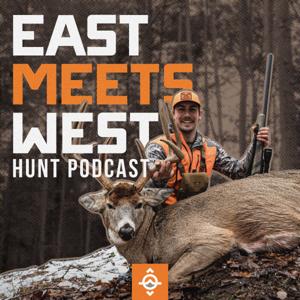
By Beau Martonik


4.9
789789 ratings


The podcast currently has 516 episodes available.
The most played episodes among Podcast App listeners.
Beau Martonik sits down with Lee Ellis of Seek One, who has been at this since 2015 and says roughly 90 percent of the deer on his wall are deer he had more than a year of history with before he killed them. Lee is upfront that it’s very rare for him to kill a deer he hasn’t been following, and this conversation is mostly about what that actually costs. They get into the buck he called Derp, four years of waking up every day thinking about that deer, and the night after he finally killed him when it hit him hard enough that he couldn’t sleep. Lee explains why he thinks a fresh camera picture of a buck working a scrape means you’re already behind him, and how finding one center point in a deer’s rut range beat chasing that deer across seven or eight camera locations. He also talks about a 188 inch public land buck he knew for about four hours and why he says a 140 would have gotten the exact same reaction out of him. Also covered: taking February through May completely off from deer hunting for the first time in years, patterning Pokémon card restocks with the same brain that patterns deer, what changes when your team grows and other families depend on the season going well, deer that show back up on almost the exact same date year after year, the summer reconnaissance lap he sees in the third week of August, twenty years of door knocking for 95 percent no’s, and why he doesn’t think you call a truly big deer in. This is part one of two. Part two is one long story, the buck Lee killed in a blizzard at the end of last season, and it lands September 15th, right after Seek One’s film on that deer. Topics: 00:00:00 — Intro 00:14:16 — The room, and what every mount in it represents 00:18:16 — Obsession, Pokémon, and stepping away from deer hunting 00:31:05 — Burnout, and what changes when people depend on your season 00:40:13 — Branching out, and why a 140 hits the same as a 188 00:48:36 — Derp: four years, and the night it finally hit him 00:57:08 — Why hunting one deer makes you better on every other deer 01:04:01 — Storytelling, the two and a half hour video, and putting the phone down 01:20:41 — Does Lee track any of this, or is it all in his head 01:26:45 — Deer that show up on the same date, and the third week of August lap 01:32:11 — Twenty years of door knocking for 95 percent no's 01:36:24 — Leaving a camera a full year, and the spot in the middle of a rut range 01:44:29 — Cell cameras made a lot of good hunters worse 01:47:56 — Deer personalities, communication, and why you don't call in a big one 01:55:16 — Part two is coming Lee's IG: https://www.instagram.com/the_roy/ Seek One IG: https://www.instagram.com/seek1productions/ Seek One YouTube: https://www.youtube.com/@SeekOneProductions Seek One Website: https://seek-one.com/ Instagram: @eastmeetswesthunt @beau.martonik Facebook: East Meets West Outdoors Shop Hunting Gear and Apparel: https://www.eastmeetswesthunt.com/ YouTube: Beau Martonik - https://www.youtube.com/channel/UCQJon93sYfu9HUMKpCMps3w Partner Discounts and Affiliate Links: https://www.eastmeetswesthunt.com/partners Amazon Influencer Page https://www.amazon.com/shop/beau.martonik Learn more about your ad choices. Visit megaphone.fm/adchoices

Beau Martonik sits down with Dr. Karl Miller of the University of Georgia, where he spent 40 years leading deer research and mentoring close to 100 graduate students. Karl grew up hunting the Pennsylvania big woods before he went south for his PhD, and much of what hunters take for granted about rubs and scrapes came out of his lab. The core of this conversation is signpost communication. Karl walks through why bucks make rubs in the first place, and what one of his students found when he ran a chemical analysis on forehead gland secretions: 67 different compounds, and not one of them in higher concentration in dominant bucks than in subordinate ones. No dominance signal at all. What varies is the mix, deer to deer, which means every buck is leaving something closer to a name than a rank. He also explains why the loser of a sparring match will walk up and lick the winner’s forehead. Then he gets into scrapes, and the finding he clearly loves most. Scraping activity peaks about two weeks before peak breeding in almost every study ever run on it. Karl’s hypothesis is that this isn’t coincidence or anticipation. It’s that buck urine deposited in scrapes may be acting as a priming hormone on the does, pulling their cycles into synchrony, and the two-week lag matches the length of a doe’s follicular wave. He and a graduate student demonstrated the same mechanism in Eld’s deer using a control group and a group exposed to male urine, and the treated group entered estrus together with enhanced hormone profiles. Then he flips it and explains flehmen, the vomeronasal organ, and how a buck taking doe urine into his mouth routes it past the smelling part of his brain entirely and straight to the part that runs his reproductive physiology. Both sides priming each other. Also covered: 3,600 rubs per square mile on an unhunted Georgia herd, roughly six per acre; the interdigital gland and the 11 compounds that actually do track with maturity; why a tarsal gland’s smell comes from bacteria and not from the gland; the staph and listeria living on it; the castrated buck that ran an entire rut in two weeks on a testosterone dose they overshot; young bucks making 15 percent as many scrapes as mature bucks; and a stretch where he and Beau land in different places on whether there’s any point in doctoring a scrape. This is part one of two. Part two is deer vision and camo, and it’s out Tuesday, September 1st. Topics: 00:00:00 — Intro 00:19:25 — What everybody had wrong about rubs in the seventies 00:25:04 — 67 compounds, and why a rub isn't a dominance display 00:26:09 — Why the loser of a sparring match licks the winner's forehead 00:38:32 — 3,600 rubs per square mile, and how many one buck makes in a year 00:49:08 — The three things a buck does at a scrape 00:52:56 — Why a tarsal gland actually stinks 01:01:45 — 39 bucks on one scrape, and 85 percent of visits after dark 01:04:30 — Scrapes peak two weeks before the rut 01:06:24 — Priming hormones, and synchronized estrus 01:10:09 — Flehmen, and the does priming the bucks right back 01:21:59 — Adding scent to a scrape, and whether it does anything 01:35:00 — What a broken age structure does to the rut you're hunting Dr. Karl Miller’s published research: Google Scholar, search “Karl Miller deer UGA” Instagram: @eastmeetswesthunt @beau.martonik Facebook: East Meets West Outdoors Shop Hunting Gear and Apparel: https://www.eastmeetswesthunt.com/ YouTube: Beau Martonik - https://www.youtube.com/channel/UCQJon93sYfu9HUMKpCMps3w Partner Discounts and Affiliate Links: https://www.eastmeetswesthunt.com/partners Amazon Influencer Page https://www.amazon.com/shop/beau.martonik Learn more about your ad choices. Visit megaphone.fm/adchoices
Every time a mature buck shows up on your trail camera, GPS collar research says he's probably been in that area six or seven times. That one stat changes how you think about cameras, bedding, and whether you're actually hunting the right spots. This is from the Mountain Bucks Scouting Camp where we break down big woods buck bedding from every angle — GPS home range data, how mature bucks choose beds, doe bedding patterns, morning hunting strategy, and why mid-October may be the most underrated window for killing a mature buck. Topics: 00:00 – Intro 00:51 – Buck bed characteristics — size, shape, rubs on entry and exit 03:06 – Why mature bucks have the best spots (and what happens when one dies) 04:10 – Hunting mornings aggressively over beds 06:28 – Finding scrapes on the fringes of bedding to hunt 07:04 – Camera placement near bedding 07:35 – GPS data: for every camera appearance, a buck's been there 6-7 times 08:44 – The egg-shaped home range — how wind orients a buck's entire world 09:50 – Buck excursions — why they disappear and where they go 14:09 – Buck bedding: smell, auditory, visual 17:37 – Doe bedding — why it's overlooked and how it changes your rut setup 20:01 – Mid-October: the most underrated window for killing a mature buck 24:32 – Second estrus cycle Enter the Deer Camp Giveway! - https://eastmeetswesthunt.com/pages/deer-camp-giveaway Instagram: @eastmeetswesthunt @beau.martonik Facebook: East Meets West Outdoors Shop Hunting Gear and Apparel: https://www.eastmeetswesthunt.com/ YouTube: Beau Martonik - https://www.youtube.com/channel/UCQJon93sYfu9HUMKpCMps3w Partner Discounts and Affiliate Links: https://www.eastmeetswesthunt.com/partners Amazon Influencer Page https://www.amazon.com/shop/beau.martonik Learn more about your ad choices. Visit megaphone.fm/adchoices
Beau Martonik sits down with Ryan Leary, a PA hunter who has been grinding big woods public land for six years and put together back-to-back mature buck kills including a 7.5 year old eight point in 2025. Ryan breaks down both hunts — the 2025 buck he killed at 10 yards after trusting his gut on fresh sign mid-morning, and the 2024 deer he killed the same evening he bumped on foot while hunting with a broken shoulder he probably shouldn't have been in the woods on. They also get into how he reads finger ridges and micro terrain, why getting into the nasty stuff changed his success rate, how the gypsy moth acorn wipeout forced him to rethink his whole approach, and what he's learned about mature bucks in the Pennsylvania mountains. Topics: 00:00:00 – Intro 00:04:34 – Background and How Ryan Got Into Big Woods Hunting 00:14:29 – The 2025 Buck — Setup, Sign, and the Kill 00:23:41 – Breaking Down the Terrain and Why the Tree Made the Difference 00:29:48 – Trusting Your Gut in the Big Woods 00:39:13 – Reading Mature Buck Bodies vs. Antlers 00:49:52 – The 2024 Season — Broken Shoulder, Big Encounters, and the Kill 01:00:22 – How Late October 2024 Was Unlike Any Season Recently 01:02:33 – Time in the Woods — Why It Changes Everything 01:13:40 – Micro Points, Buck Beds, and Reading Terrain 01:23:54 – Advice for Guys Getting Into Big Woods Public Land Hunting 01:28:50 – Closing Instagram: @eastmeetswesthunt @beau.martonik Facebook: East Meets West Outdoors Shop Hunting Gear and Apparel: https://www.eastmeetswesthunt.com/ YouTube: Beau Martonik - https://www.youtube.com/channel/UCQJon93sYfu9HUMKpCMps3w Partner Discounts and Affiliate Links: https://www.eastmeetswesthunt.com/partners Poncho Outdoors - Poncho Outdoors makes tough, sharp-looking, no-BS apparel for hardworking outdoorsmen who put in the time year-round. Go to ponchooutdoors.com/EASTMEETSWEST to save $10 and free shipping Amazon Influencer Page https://www.amazon.com/shop/beau.martonik Learn more about your ad choices. Visit megaphone.fm/adchoices
Beau Martonik sits down with Johnny Stewart -- a PA-based DIY public land hunter with 30+ years of big woods experience across Pennsylvania, New Hampshire, West Virginia, Ohio, and North Dakota. This one is all about summer scouting. Johnny breaks down how he runs trail cameras from April through September purely for inventory (confirming a buck survived the winter), why he almost never moves cameras in summer even if they are not producing, and the pattern he and Beau figured out for why bucks vanish from cuts the moment archery season opens. Turns out it is not always pressure. Sometimes it comes down to food, and not the food sources you would expect. They also dig into the mature forest / mature buck correlation -- including a story about a late-season WV buck that left his bed specifically to eat shelf mushrooms off a downed cherry log -- glassing velvet bucks from road vantage points, and Johnny's philosophy on mid-October scouting and hunting where the deer isn't. Plus gear talk on the Timber Ninja Kunai and new Mini Kunai, the advantage of hunting with a cameraman, and a teaser on a University of Georgia study showing that fresh scrapes glow in UV light. Topics: 00:00:00 — Intro 00:13:38 — Self-filming and upcoming YouTube content 00:17:55 — Mountain hunting traditions and the NH drag-out story 00:21:22 — How each year compounds; building a 30-year catalog with Spartan Forge 00:27:13 — Summer vs. fall deer locations; camera placement; cuts vs. mature woods 00:42:42 — Why deer leave cuts on opener (wild cherries and mushrooms) 00:47:56 — Mushrooms and the mature forest / mature buck correlation 01:18:13 — Camera soaking strategy; velvet transition window; early October shift 01:29:42 — Trail cam tips; spring seeps; summer scrape activity; UV scrape study teaser 01:44:54 — Glassing cuts in late July/August; velvet growth timeline 01:55:02 — Timber Ninja gear talk: Kunai, Mini Kunai, C2 sticks 02:10:00 — Wrap-up Resources: Johnny's IG - https://www.instagram.com/thejohnnystewart/ Johnny's YT - https://www.youtube.com/@TheJohnnyStewart Johnny's website - https://johnnystewarthunt.com/ Instagram: @eastmeetswesthunt @beau.martonik Facebook: East Meets West Outdoors Shop Hunting Gear and Apparel: https://www.eastmeetswesthunt.com/ YouTube: Beau Martonik - https://www.youtube.com/channel/UCQJon93sYfu9HUMKpCMps3w Partner Discounts and Affiliate Links: https://www.eastmeetswesthunt.com/partners Poncho Outdoors - Poncho Outdoors makes tough, sharp-looking, no-BS apparel for hardworking outdoorsmen who put in the time year-round. Go to ponchooutdoors.com/EASTMEETSWEST to save $10 and free shipping Amazon Influencer Page https://www.amazon.com/shop/beau.martonik Learn more about your ad choices. Visit megaphone.fm/adchoices
The podcast currently has 516 episodes available.
4,822 Listeners

2,932 Listeners
38,037 Listeners
1,490 Listeners

772 Listeners
641 Listeners
638 Listeners
1,421 Listeners
6,758 Listeners

547 Listeners
1,215 Listeners

364 Listeners
7,428 Listeners
1,887 Listeners
451 Listeners