
Sign up to save your podcasts
Or

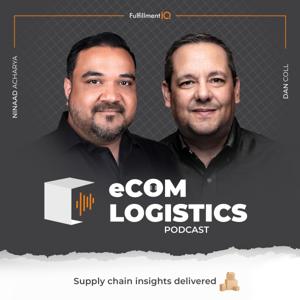


For this episode of the eCom Logistics Podcast, we welcome Essa Al-Saleh, CEO and Board Member of Volta Trucks. Today, Essa shares his experience as a leader in the logistics space and how he used this background to innovate in the electric fleet market.
He talks about building a culture as a leader that encourages creativity and drive especially during challenging moments like economic crises. He also tackles how fleet owners and operators can smoothly transition to the electric models from the traditional combustion engine systems.
Essa recognizes how much of a challenge this change can be but also discusses the overall benefit of the sustainable truck for urban distribution.
ABOUT ESSA
Essa Al-Saleh is the CEO and a Board Member of Swedish electric-vehicle manufacturer Volta Trucks, an electric commercial vehicle company that is leading the transition from the Internal Combustion Engine (ICE) ecosystem to a safe and sustainable truck for urban distribution. Volta Trucks is driving the transition with its re-imagined, superior product and its “Truck as a Service” solution which seeks to de-risk the transition for fleet operators.
He previously spent more than two decades at Agility Global Integrated Logistics in Baar, Switzerland, where he was appointed president and CEO in 2007. During his time at Agility, he transformed the company from a 300-person, single-country operation into one of the top ten global logistics businesses, operating in over 100 countries, employing more than 18,000 people, and with over $4 billion in revenues.
HIGHLIGHTS
QUOTES
13:46 The elements that allow you to "punch above your weight" - Essa: "We want everybody in the organization and find ways to make everybody in the organization feel empowered to make the right decision, not be afraid to make the decision, and if they do make a mistake they own up to that mistake and learn from it. That's an empowerment opportunity."
38:56 Utilizing fleet management services in their platform - Ninaad: "Most of what we have seen up until now is there is a truck mount solution that is running a Zebra Terminal Insight in there using LTE or 5G, communicating through a software that does not really communicate with the truck other than the GPS information. Now, the truck itself starts becoming a device that gives you the information in real-time."
Find out more about Essa in the links below:
Subscribe and Keep Learning!
If you’re a logistics leader looking to scale sustainably, don’t miss out! Subscribe for more expert strategies on tackling modern supply chain challenges.
Be sure to follow and tag the eCom Logistics Podcast on LinkedIn and YouTube
Dan Coll and Ninaad Acharya welcome Mike Simpson, Vice President of E-Commerce at NFI, joined for this episode of the eCom Logistics Podcast. They discussed Mike's impressive career, which began with him serving in the Army and went on to include him becoming President of Retail and E-Commerce for Jenko, which was later acquired by FedEx and is now known as FedEx Supply Chain. Mike is now the executive sponsor for NFI Veterans Committee and is leading FedEx's expansion in the E-Commerce fulfillment space.
The three start off their conversation about the peak season, which had just ended. Mike shared his insights on the importance of automation and scalability in this new era of eCommerce, and why it's important to find the right balance between labor and technology. He also discussed the need to invest in people and facilities to ensure success in a market that is growing rapidly and becoming increasingly competitive. Learn more from Mike in this latest episode of the eCom Logistics Podcast.
ABOUT MIKE
Michael Simpson is the Vice President of eCommerce at NFI. He graduated from the University of Connecticut and was an Officer in the US Army stationed in Louisiana prior to moving to Texas to start his supply chain career.
Has spent over 20 years in supply chain leadership roles, mostly in the Retail and eCommerce industry.
Vast experience in eCommerce, forward, reverse, repair, inventory management, value-added services, quality control, customer service, team development, and many other areas to support growing businesses.
Exec sponsor for Veterans committee at NFI. Supports attracting veterans to NFI, and then supporting, retaining, and developing Veterans that join NFI, as well as supporting the local Veterans community.
HIGHLIGHTS
QUOTES
39:51 Deeper understanding of scalability’s definition - DAN: "Scalability isn't just I went from 100 orders a day to 5000 orders a day Scalability means I might have gotten into different sales channels. And maybe I was digital, native, and all direct to consumer. Now I'm heavily involved in marketplace and Amazon, I'm also doing some retail distribution and drop shipping."
43:46 Use niche tools to prevent supplier misses - MIKE: "What we've done is we've taken that time to really listen to the customer, the voice of the customer piece that you had mentioned, Dan, a big component of that was making sure we knew what the market wanted and needed, and how do we modify and enhance our offerings and NFI."
Find out more about Mike in the links below:
Subscribe and Keep Learning!
If you’re a logistics leader looking to scale sustainably, don’t miss out! Subscribe for more expert strategies on tackling modern supply chain challenges.
Be sure to follow and tag the eCom Logistics Podcast on LinkedIn and YouTube
For this episode of the eCom Logistics Podcast, we welcome Sarah Scudder, Chief Marketing Officer of SourceDay and host of the What the Duck podcast. Today, Sarah digs into building partnerships between suppliers and procurement organizations.
She discusses how the sheer volume of orders makes first-mile critical in the operations of manufacturers and the role of technology in automating manual processes. Sarah also gives actionable tips on how to build partnerships, from hiring the right talent to making it easy for suppliers to work with procurement to reevaluating payment terms to become more attractive as a partner.
Sarah also talks about how midmarket companies and suppliers can utilize a tech stack to reduce risk. By utilizing niche software, the back and forth that happens with line item changes can be tracked to avoid supplier misses. Finally, Sarah gives advice to brands with seasonal products and how they can plan for 2023 and beyond.
ABOUT SARAH
Sarah Scudder is a self-proclaimed manufacturing supply chain nerd. She is a sustainability nut and loves all things Bradley Cooper. In fact, she has been trying to get a dinner date with him for over two years. The struggle is real. She is good at loading the dishwasher but can’t keep potted plants alive. Green is her favorite color.
Sarah hosts the direct materials podcast What the Duck?! and a monthly Voice of Supply Chain show that features people in supply chain doing extraordinary things. She also hosts monthly Manufacturing Woes and Women In ERP shows and enjoys speaking about marketing and supply chain-related topics.
Follow her hashtags #ManufacturingMaven and #WomenInERP to get daily manufacturing and direct materials supply chain news.
HIGHLIGHTS
QUOTES
26:31 Price should no longer be a top consideration in selecting suppliers - Sarah: "The days of trying to save a penny here and then on price are, just in my opinion, gone. And if I were running a procurement organization, I don't even think costs would be in my top three focus areas. Now, of course, do you need to make sure that what you're buying is market competitive? Absolutely. But I think there are many more priorities than looking at price. And one of the main ones is supply. And if you can't get supply, no matter how much it costs, it does you no good because you're not gonna have anything to manufacture."
30:54 Use niche tools to prevent supplier misses - Sarah: "When a company is issuing a purchase order, 52% of the time, our research has shown from the usage of our platform that line items change. So if I'm issuing a purchase order with a hundred line items, we're saying that on average, 52 of those hundred line items are going to have have changes, and that means then, significant back and forth via email and spreadsheet with your supplier, and then we go back to that risk."
37:55 Brands with seasonal products must assess their supplier base - Sarah: "One of the most important things you can do to prepare is one, do a full assessment of your supplier base. Who are your suppliers? What is their availability? What sort of relationship do you have with those suppliers? Anything that's questionable or a red flag, I would go immediately start sourcing alternative suppliers to make sure you can have supply."
Find out more about Sarah in the links below:
Subscribe and Keep Learning!
If you’re a logistics leader looking to scale sustainably, don’t miss out! Subscribe for more expert strategies on tackling modern supply chain challenges.
Be sure to follow and tag the eCom Logistics Podcast on LinkedIn and YouTube
For this episode of the eCom Logistics Podcast, we welcome Dusty Holcomb, CEO of Red Stag Fulfillment. Today, Dusty drills into everything about increasing client value. He talks about how he quickly found a common mission with Red Stag in being people-focused, client-centric, and having a get-stuff-done mindset.
Dusty discusses how being people-first is also a strategy for a business's longevity and becoming a 3PL partner that people want to work with. He then focuses on creating a customer experience by doubling down on areas of expertise and gives technical and financial considerations if you are planning on going big and bulky.
ABOUT DUSTY
Dusty Holcomb, an exemplary executive with a 20+ year senior leadership career, is passionate about building innovative and high-performance leadership teams. He is known for solving complex competitive challenges and being able to “connect the dots” between what currently exists and what can and should exist in the future. He has leveraged these skills to reimagine products, services, and systems utilizing his extensive expertise in leadership, technology, and logistics. Dusty is known for his deep belief in the value of creating a differentiated customer experience as the primary driver of predictable recurring revenue growth.
As the CEO of Red Stag Fulfillment, a rapidly growing third-party ecommerce fulfillment and logistics services provider, Dusty has a breadth of experience in logistics, strategic governance, and the navigation of dynamic and fast-moving industries. Throughout his extensive career, Dusty held numerous roles at AAA, a multi-billion-dollar organization, including VP Operations, CMO, President, Head of Innovation, and more.
Dusty is Board experienced, currently serving as an Independent Director and compensation committee member for HeroWear Exo, an innovative wearable technologies company. Additionally, he has given back to six different non-profit organizations during his career. He enjoys educating CEOs and leaders on the value of building exceptional and intentional customer experiences as a speaker. He is available for select private or public company engagements.
Dusty earned a BBA in Business Administration from Columbus State University, and later completed the MBA program at Auburn University. He also completed the Advanced Management program at the Kellogg School of Management, Northwestern University. Dusty is an active member of the National Association of Corporate Directors (NACD). He resides with his family in Knoxville, TN, is an avid sportsman, triathlete, and 5-time Ironman Finisher.
HIGHLIGHTS
QUOTES
15:18 Create client value by removing the logistical hassle from customers - Dusty: "I think it really comes down to a mutual alignment of what value creation is. And so what I mean by that is I think a brand has to understand what their core competencies are, and they have to understand the value that they are creating for their customer. And what is debiting that value? So our mission statement as an organization is to do the heavy lifting of e-commerce so our clients can focus on what they do best."
26:10 Your core values will enable technical competencies - Dusty: "There are certain core values that are absolute buzz saws. And if you run into that one, it's a buzz saw. You're not gonna make it here if you just don't believe that. So looking for people that are core-value-focused, are people-focused, they understand that what we do is done through the hard work of people, who have a get-stuff-done bias or just GSD, it was get it done, and are client-centric. So it was kind of four big buckets of things that I'm looking for that transcends or enables technical competency."
Find out more about Dusty in the links below:
Subscribe and Keep Learning!
If you’re a logistics leader looking to scale sustainably, don’t miss out! Subscribe for more expert strategies on tackling modern supply chain challenges.
Be sure to follow and tag the eCom Logistics Podcast on LinkedIn and YouTube
For this episode of the eCom Logistics Podcast, we welcome Maia Benson, Partner and Managing Director at Forum Ventures. Today, she shares her journey as an entrepreneur and the different levels of investment Forum offers to founders.
She discusses her insights on how Shopify became the catalyst for reaching new markets in fast-growing segments, as well as the prospect of new tech helping create a new and affordable delivery promise that drives conversion. Maia also digs into the unit economics of parcels and the challenges of bringing them down.
Maia then discusses Amazon's unique DNA, the obstacles that software-only solutions encounter today, and how focusing on creating a great product should be every SaaS company's first principle, especially with the recent double-digit layoffs in the tech world.
ABOUT MAIA
Maia Benson is a Partner and Managing Director at Forum Ventures where she invests in and works with early-stage B2B SaaS founders from inception to scale. She has spent over 20 years founding, building, and scaling award-winning SaaS products and platforms for entrepreneurs and SMBs at places like LexisNexis, Pitney Bowes (SendPro platform/apps) and most recently at Shopify.
For over 5 years, she helped found, launch, and scale their shipping and fulfillment products from inception to 60%+ merchant adoption and $Bs of transportation spend. In addition to her venture work at Forum Ventures, Maia continues to angel invest and advise next-gen ecommerce and logistics tech founders.
HIGHLIGHTS
QUOTES
15:30 Asking for help and partnering are especially important in the logistics space - Maia: "I think founders with a DNA of asking for help are naturally outsize winners, period hard stop. And the advisors they can attract to support them in the journey and to unlock opportunities faster for them is really a reflection of them fundamentally understanding that DNA."
24:40 Today's environment is characterized by innovation and creating optionality - Maia: "We are in a state of innovation and fragmentation right now that is making the what, so the what strategy of I need a great, affordable delivery promise, that's what I need, I need a delivery promise that drives conversion that I can afford at a unit economic level, period hard stop."
"Does that mean it's a space race to 1 or 2 day for everyone? No, that's not what it means. But that is the end state and there has been so much exciting innovation and then the birth of so many different companies to empower that, that we're now looking at a how that has optionality."
Find out more about Maia in the links below:
Subscribe and Keep Learning!
If you’re a logistics leader looking to scale sustainably, don’t miss out! Subscribe for more expert strategies on tackling modern supply chain challenges.
Be sure to follow and tag the eCom Logistics Podcast on LinkedIn and YouTube
For this episode of the eCom Logistics Podcast, we welcome Steven Ciemcioch, President of Warehouse Anywhere. He discusses how they created a preferred partner network of other mid-sized to large independent storage operators.
This network allowed them to source storage for their customers from 12,000 different locations. In order to make this process more efficient, they also developed RFID technology to help manage the process and provide real-time updates on inventory.
Steven, along with Dan and Ninaad, also discusses the Amazon Effect, how consumer expectations have changed due to this, what brands and logistics companies must do to keep up, and the various factors that influence if and when they should match this speed of fulfillment.
ABOUT STEVEN
Steven Ciemcioch was named President of Warehouse Anywhere, a Life Storage Company, in 2018 and previously served as Corporate Alliance Manager in which he developed and headed the corporate sales division at Life Storage.
He has extensive experience in building and scaling businesses in a high-growth environment. He has leadership experience across a diverse set of disciplines including sales and marketing, customer service, operations, supply chain, real estate, and finance.
HIGHLIGHTS
QUOTES
30:54 The Amazon Effect is most apparent in general merchandise - Ninaad: "If you're a general merchandise and that stuff exists on walmart.com, amazon.com, and you have these sites and marketplaces that are giving you the next-day, 2-day delivery experiences, consumers will pay couple of extra dollars and get it with that options."
31:48 MFCs maintain a boutique feel that is lost in Amazon Effect - Steven: "One thing I like about the MFC model, and you guys can appreciate this is, in our smaller centers, it allows a little bit of a more boutique-y feel and right now we're handling a lot of various products in the MFCs from our large fulfillment center. A lot of apparel like Ninaad talked about but I see the MFCs evolving more into that health and beauty, that craft beer space, especially we talk about dense marketplace. People sitting around in a large city, Thursday, Friday, Saturday, big demand weeknights and weekends where they just want something and they just want it quick."
Find out more about Steven in the links below:
Subscribe and Keep Learning!
If you’re a logistics leader looking to scale sustainably, don’t miss out! Subscribe for more expert strategies on tackling modern supply chain challenges.
Be sure to follow and tag the eCom Logistics Podcast on LinkedIn and YouTube
For this episode of the eCom Logistics Podcast, we welcome George Wojciechowski, the CEO of Manifest, an e-commerce fulfillment provider. He is on a mission to tackle the sustainability problems of e-commerce logistics while simultaneously providing brands and merchants with a better fulfillment experience.
George talks about his professional journey starting in finance and then starting ShipBob to cater to a new segment of online merchants. In 2021, George founded Manifest which is committed to finding sustainable alternatives to fulfillment. He shares their green initiatives and how they are disrupting fulfillment with the end goal of protecting the environment that we collectively share.
ABOUT GEORGE
Prior to launching Manifest, George cofounded ShipBob, a predominant name in the global e-commerce fulfillment space. Before ShipBob, George worked as a trader at Goldman Sachs. George attended DePaul University.
HIGHLIGHTS
QUOTES
47:50 Sustainable packaging is actually not more expensive to manufacture - George: "A lot of the packaging companies told me that it's actually not more money to produce the sustainable packaging but because everyone just asks for the same things that they've always asked for, the manufacturing is more expensive. It's cheaper for the traditional goods because it's just manufactured in much higher volume."
52:56 Common sense and innovation will create the disruption needed for sustainable fulfillment - George: "We can talk about sustainability, we can talk about environmentally friendly, we can talk about regenerative, but nothing beats common sense and figuring out ways how to keep up with mass fulfillment, high-velocity fulfillment, but also do it in a way that is packaging efficiency is going to move mountains in terms of how sustainable we are as an industry."
Find out more about George in the links below:
Subscribe and Keep Learning!
If you’re a logistics leader looking to scale sustainably, don’t miss out! Subscribe for more expert strategies on tackling modern supply chain challenges.
Be sure to follow and tag the eCom Logistics Podcast on LinkedIn and YouTube
For this episode of the eCom Logistics Podcast, we welcome Alok Ahuja, CEO and Co-Founder of Trexity. Being the true last mile partner where orders are delivered the same day they pick it up has been the goal of Alok's company. They wanted to be hyperlocal and empower local SMBs to be able to compete with the Amazons of the world.
Alok digs into why different last-mile solutions exist to address the needs of different types of buyers. He also explains that, given their low barrier for entry, that local shops can be given a low risk alternative to see how they can offer a comparable solution to Amazon and grow their business.
ABOUT ALOK
Alok has over 15 years in software, technology and e-commerce. Along with his co-founders, Alok has created a platform, in Trexity, that makes it possible for any small business to deliver quickly and locally. Alok is a serial entrepreneur who encourages and supports like-minded individuals to succeed in their business.
Alok began imagining a platform that could make it possible for any small business to deliver local and fast, and one that is fair and takes advantage of neither merchants nor couriers. He believes that filling this need will help disrupt our over-reliance on faraway e-commerce giants and help small businesses stay in business.
HIGHLIGHTS
QUOTES
07:50 Perfecting hyperlocal delivery opened up national markets for Trexity - Alok: "We started out empowering your favorite store on your favorite street of your favorite neighborhood. The local mom and pop. And on of the things that was really important to us when we started out, we said, let's be the true last mile partner. The same day we pick it up, it's the same day we're going to drop it off, as fast as our merchants are willing to fulfill it, it's as fast as we will deliver it. And let this be the one thing that we do so perfectly well that no one else can touch us on it."
13:25 Owned-infrastructure and gig economy have their own pros and cons - Alok: "It's not one or the other. Both of those FedEx models exist for a reason because there's an addressable market for both of them. And I don't think it has to be warehousing or direct from merchant. It doesn't have to be one or the other. And what I do love about some of the bigger brands that we work with, some of our national brands is they do a combination of both and it's because they're catering to different personas of customers and users."
Find out more about Alok in the links below:
Subscribe and Keep Learning!
If you’re a logistics leader looking to scale sustainably, don’t miss out! Subscribe for more expert strategies on tackling modern supply chain challenges.
Be sure to follow and tag the eCom Logistics Podcast on LinkedIn and YouTube
For this episode of the eCom Logistics Podcast, we welcome Brittain Ladd, Strategy Advisor Shatranj Capital Partners. Brittain's no-holds-barred insights on management and logistics have not only captured people's attention, but they have also even proven to be accurate given how many of his predictions have come true.
He discusses some of the biggest companies in the world like Amazon, Twitter, and TikTok, and gives hot takes on what they are doing wrong and how they can make it right. He comments on the recent layoffs at Amazon and how he believes it is only the beginning and a symptom of a much larger shift that will affect entire industries worldwide.
Brittain then digs into how partnerships can change e-commerce by providing social commerce platforms the established fulfillment infrastructure they need to deliver goods to the consumer. He also discusses in great detail the flaws of the quick commerce model and how fulfillment should be a question of accurate delivery versus quick delivery.
ABOUT BRITTAIN
Brittain has 20 years of experience in supply chain management and logistics. He has lived and worked in China, India, Africa, Saudi Arabia, Europe, and the United States. Brittain is a global strategy and supply chain consultant and a writer for Forbes and his own website, brittainladd.com. Brittain is also recognized as being one of the most accurate analysts in business.
He successfully predicted multiple major acquisitions more than a year in advance of them occurring, including Amazon’s acquisition of Whole Foods, Microsoft and Walmart partnering to bid on TikTok, and most recently, Microsoft’s acquisition of Activision Blizzard. Brittain is frequently quoted in the press and often appears on major news networks like CNN, Fox Business, and the BBC.
HIGHLIGHTS
- 01:37 Posting thought-provoking ideas and predictions on social media
- 08:52 Amazon's mistake and getting down to its optimal fighting weight
- 18:47 Twitter can change e-commerce with shoppable videos
- 25:43 Instead of creating their own fulfillment, TiktTok should partner with Amazon/Walmart/Target/Shopify
- 35:42 Quick commerce is a failure: Fast delivery vs accurate delivery
QUOTES
23:51 Shoppable videos can save Twitter - Brittain: "I believe the way that Elon Musk saves Twitter and makes Twitter completely different is through shoppable videos and, I think, absolutely, that what Elon Musk should be doing is we need short-form videos, shoppable videos, and for every shoppable video we put on Twitter, we take 12% of all sales, and I think the goal should be for every shoppable video that Elon Musk puts on Twitter, that it generates 100 to 250 million in sales."
25:50 TikTok should acquire Shopify for its fulfillment infrastructure - Brittain: "I think, number one, TikTok needs to do something above and beyond than just opening up their own fulfillment centers. I think what TikTok needs to do is, again, change how commerce is done on the platform. So I think what would be very interesting is if TikTok acquires Shopify, so where now I have Shopify, I have a Shopify storefront on TikTok, and so then what happens is I immediately see a video come across but it's a video from a storefront, and without having to go to a website, I see it, I buy it. And that's how I refer to what I think is the next big thing in commerce. I say see, buy. I see it, I buy it. I'm not going to websites."
Find out more about Brittain in the links below:
Subscribe and Keep Learning!
If you’re a logistics leader looking to scale sustainably, don’t miss out! Subscribe for more expert strategies on tackling modern supply chain challenges.
Be sure to follow and tag the eCom Logistics Podcast on LinkedIn and YouTube
For this episode of the eCom Logistics Podcast, we welcome Brian Glick, Founder and CEO of Chain.io. He digs into the complexity of global B2B market logistics and how it can be difficult for new players to enter due to EDI and compliance issues.
Brian also dives into the differences between fulfilling an order in the US and fulfilling orders in Southeast Asia where more than 100 parties are involved—and these parties change with every transaction.
He gives advice on how midmarket brands are best matched with midmarket service providers, as well as how to peel apart the different services to optimize payment terms or routing, an uncomfortable yet necessary process as the company grows.
ABOUT BRIAN
As founder and CEO of Chain.io, Brian Glick has made a career of simplifying complex supply chain and trade compliance IT challenges. Whether analyzing complex coding issues or rationalizing the compliance impacts of a vendor direct drop ship program, Brian brings a rare combination of executive perspective and deep technical knowledge to today’s supply chain challenges.
From the early days of web-based visibility platforms and into today’s connected ecosystem, Brian has been an active leader in each phase of the connected supply chain evolution. With a focus on retail and apparel supply chains, Brian has brought his expertise to bear as an IT leader both within logistics service providers and through independent software companies.
HIGHLIGHTS
QUOTES
10:21 Midmarket companies are best served by midmarket service providers - Brian: "The companies that are more midmarket that you have to do some research and find often will give you an account manager. You'll be a big enough account to them that they will treat you well and help you, when all of this chaos is going on, help you understand, take the time with you that the biggest guys can't."
25:58 Supply chain companies must establish trust with brands - Brian: "Supply chain is a very trust-based industry, whether if you're a service provider or software that supports a service provider, people are putting their brand in your hands. It's not a consumer app that if you screw up... If you screw up Twitter tomorrow, just stop using Twitter. If you screw up the thing that delivers my product to Macy's, I got a problem. So you need investors who understand that."
Find out more about Brian in the links below:
Subscribe and Keep Learning!
If you’re a logistics leader looking to scale sustainably, don’t miss out! Subscribe for more expert strategies on tackling modern supply chain challenges.
Be sure to follow and tag the eCom Logistics Podcast on LinkedIn and YouTube
From the publisher's feed

145 Listeners