
Sign up to save your podcasts
Or



Based on Podcast App listening data
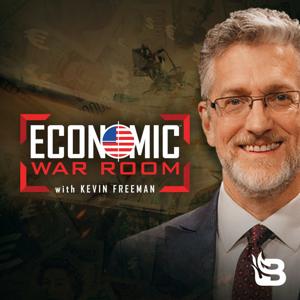
A stark assessment of demographic decline, surging debt, currency vulnerabilities, and immigration without assimilation as converging threats to American stability. Kevin Freeman outlines how “red, green, blue, and yellow” forces exploit debt, dollar attacks, CBDC, wealth gaps, and falling birth rates to pressure U.S. institutions. The discussion highlights coordinated strategies — from CCP migration tactics to Islamist hijrah and globalist policies — framed as an endgame against national sovereignty. A call to understand and counter systemic pressures before they cement irreversible change.
America’s birth rate has fallen below replacement, fueling a vicious cycle of aging, debt strain, and widening wealth gaps. Kevin Freeman connects monetary policy, inflation, cultural shifts, and environmental factors to delayed marriage, fewer children, and long-term national fragility. He outlines solutions centered on affordability, sound money, faith and family renewal, and community-based economic support. This installment sets the stage for the final segment on immigration and assimilation.
Kevin Freeman connects soaring debt, fiat money, and financialization to America’s widening wealth gap, tracing its roots back to 1971. He outlines how cronyism, big government, and global power blocs exacerbate inequality and destabilize society. Historical case studies show why socialist “solutions” entrench elites while harming the middle and working classes. Actionable remedies focus on smaller government, true free markets, and honest money anchored to tangible value.
Start the year with a clear look back and a forward-focused plan. Kevin Freeman and Mike Carter assess politics, economics, and money — what worked, what didn’t, and what’s next. From tariffs and inflation trends to AI-fueled markets, gold and silver performance, and border policy impacts, this briefing prioritizes facts over spin. Get actionable insights on portfolio positioning, the risks of escalating debt and CBDC pushes, and the rise of transactional gold across multiple states. Explore new initiatives — the Economic Justice Board and SCAN — to counter structural threats and expand real on-ramps to prosperity.
From "It’s a Wonderful Life" to "Die Hard," uncover timeless financial lessons — bank runs, inflation, generosity, and customer-first capitalism — hidden in your favorite Christmas films. Kevin and Marnie connect nostalgia with real-world economics, highlighting middle-class pressures, ethical business, and the true spirit of giving. Hear how "Rudolph the Red-Nosed Reindeer," "The Grinch," and "Miracle on 34th Street" showcase markets, charity, and community in action. A festive, thoughtful guide to celebrating Christmas with wisdom, warmth, and sound money insights.
Kevin Freeman traces the arc from 1980s optimism — thousands of investable public companies and rapid innovation — to today’s halved stock count amid soaring GDP and population. He argues that financialization, heavy regulation (SOX, Dodd-Frank), and abundant private capital pushed companies to stay private, widening the wealth gap and fueling socialist sentiment. Examples like Uber illustrate how gains accrue privately while retail investors face late access and higher risk; meanwhile, dollar debasement and the Cantillon Effect amplify inequality. Freeman advocates restoring opportunity via sound money (state gold/silver initiatives), lighter but fair regulation, stronger IP protection, and expanded public access to high-growth firms, urging policy action to revive broad-based capitalism.
Discover how soaring debt, a coordinated dollar assault, and rapid CBDC adoption could consolidate financial power and erode economic freedom. Hear admissions from BIS, IMF, and WEF leaders on programmability, unified ledgers, and policy-conditioned money — and why this threatens privacy and liberty. Explore the risks of private “shadow CBDC” stablecoins, the push toward cashless systems, and how social credit-like controls could spread through banking. Learn state-level alternatives, including cash protections and gold and silver “pirate money,” as opt-outs to centralized control.
Kevin Freeman outlines how mounting debt, geopolitical alliances, and de-dollarization efforts threaten U.S. reserve currency status — and what that could mean for inflation, markets, and everyday Americans. He traces the dollar’s arc from Bretton Woods to Nixon’s closure of the gold window, the petrodollar, and today’s multipolar finance led by BRICS. The analysis details coordinated pressure from communist, Islamist, and globalist actors, plus domestic failures — framing a potential sequence from bond sell-offs to hyperinflation. Practical mitigations include disciplined fiscal policy and strategic gold initiatives at the state and personal levels.
From Brazil’s COP30, Craig Rucker alleges U.N.-driven top-down control, massive wealth transfers, and political theater that sidelines indigenous voices while rewarding grifters and ideologues. He claims NGOs and activists frame climate as a quasi-religion to justify sweeping policies and funding goals, including a proposed $300 billion-per-year climate fund scaling toward $1.3 trillion by 2035. Rucker argues that many scientists privately temper their alarm. At the same time, public pressure and grants enforce orthodoxy, and he says public skepticism is rising as EV pullbacks and renewed interest in nuclear power challenge green mandates. He urges the Senate to formally reject legacy climate treaties to end the policy “ping-pong” for America.
A little over 400 years ago, a small group of Pilgrims made the hazardous journey across the Atlantic. After a challenging first year, in the fall of 1621, the survivors and the indigenous people shared three days of feasting, games, and exercises. After the first year, what remained was a small group of 50 people: 22 men, four married women, and 25 children and teenagers. Soon their celebration became an annual tradition for Americans. In 1863, Abraham Lincoln officially named the last Thursday of November a national holiday. Believe it or not, this history has some critical economic lessons for today.
From the publisher's feed
Ranked by our users in the last 21 days
1,402 Listeners

2,568 Listeners

2,184 Listeners
26,044 Listeners

11,847 Listeners

63,387 Listeners

159 Listeners
5,591 Listeners

1,461 Listeners

1,808 Listeners

6,490 Listeners
6,844 Listeners

8,410 Listeners
623 Listeners
1,267 Listeners