
Sign up to save your podcasts
Or



Based on Podcast App listening data
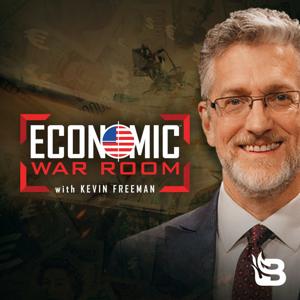
America faces coordinated threats — communism, Islamism, global governance, and internal betrayal — converging with an unsustainable national debt nearing $40 trillion. Kevin Freeman outlines seven critical truths about debt, from who holds it to why spending cuts, asset sales, or taxing billionaires won’t fix the trajectory. He explains why monetization, unfunded liabilities, and entrenched interests amplify risk, and he proposes managed inflation, productivity growth, deregulation, and sound money as the only viable paths forward. This first installment sets the foundation for the Six Trials by Fire and the urgent need for political will and practical safeguards.
As America approaches 250 years, Kevin Freeman and Mike Carter link modern geopolitical and economic risks with themes from Revelation to highlight six urgent “trials by fire.” From the national debt bomb and currency challenges to CBDCs, inflation-driven wealth gaps, demographic decline, and immigration without assimilation, the stakes are high but manageable. They propose constitutional and market-based solutions, including transactional gold and silver (“Pirate Money”), investor alignment, and proactive civic engagement. A neutral, data-driven framework helps assess threats, prepare wisely, and bolster American resilience.
China’s grip on rare-earth refining poses a strategic risk to U.S. defense and technology, but new American capacity and allied projects are accelerating. Kevin Freeman and Rod Martin outline policy shifts, emerging processing hubs, and the geopolitical pressures reshaping supply chains from Afghanistan to Australia. Explore key companies, ETFs, and regions positioned to benefit as the U.S. rebuilds refining and magnet production. Learn how liberty-, security-, and values-focused investing aligns with critical materials independence.
Why gold is surging: Soaring U.S. debt, inflation from rapid money creation, de-dollarization trends, and CBDC concerns are reshaping portfolios. Kevin Freeman and Mike Carter unpack gold’s role as money, central bank moves, and why allocations are shifting toward 15-20%. Practical ways to own gold — coins, bars, ETFs, IRAs, miners, jewelry, and transactional gold solutions — are compared with historical context from Fort Knox to constitutional money. Learn how states are reviving gold and silver as legal tender and what that means for your wealth strategy.
Kevin Freeman and former CIA officer Sam Faddis outline how China’s “unrestricted warfare” strategy targets undersea internet cables, cellular networks via SIM farms, and satellites to paralyze U.S. communications and commerce. They warn that 99% of global data flows through vulnerable subsea cables, now threatened by specialized Chinese vessels and ROVs capable of deepwater cuts — actions tantamount to acts of war. Recent SIM farm busts near the U.N. highlight MSS-run operations capable of jamming 911, conducting fraud, and launching denial-of-service attacks with off-the-shelf gear. The discussion urges rapid decoupling from Chinese-made critical components, hardening the grid, rebuilding U.S. industrial capability, and reorienting investments to strengthen national resilience.
From the League of Nations to the U.N., Kevin Freeman and Alex Newman trace the architecture of global governance and its collision with American sovereignty. They unpack the red-green-blue axis — communism, radical Islamism, and unchecked globalism — linking it to climate policy, mass migration, ESG finance, and cultural capture. Learn how media complicity, corporate power, and transnational institutions model a centralized system inspired by the CCP. Action steps focus on local engagement, education, family protection, and faith-driven resilience.
Charlie Kirk’s legacy takes center stage as Kevin Freeman and TPUSA board member Doug DeGroote reflect on his impact, leadership, and faith-driven mission to inspire young Americans. They recount the rapid response to his assassination, the resilience of the Turning Point USA team, and Erica Kirk’s emergence as a unifying leader. Powerful clips showcase Kirk’s critiques of socialism, calls for personal renewal, and warnings about national decline — paired with a hopeful blueprint for cultural revival and sound governance. The discussion underscores how TPUSA will expand Kirk’s voice and mission across campuses, churches, and civic life.
Kevin Freeman and Jason Cozens, founder and CEO of Glint, explain how modern fintech and state-level legal frameworks can enable gold and silver to function as everyday spending money without replacing the dollar. They highlight challenges with traditional gold ownership — high entry cost, trust, storage, taxes, and spendability — and show how Glint’s app, vault-backed holdings, and Mastercard integration solve them with wholesale pricing and fractional ownership. The discussion covers inflation, the Cantillon effect, central bank gold accumulation, and a growing U.S. state movement to protect and enable transactional gold. Viewers learn how users can adopt a personal gold standard today while broader legal adoption accelerates across key states.
Kevin Freeman uses the Battle of the Bulge to warn against post-victory complacency, drawing parallels to current fights over CBDCs, debt, immigration, and cultural policy. He and Mike Carter highlight progress on state-level “pirate money” legal tender laws in Arkansas, Florida, Louisiana, Texas, and Missouri, while stressing that implementation and sustained grassroots engagement are essential. Despite executive actions and legislative wins, they argue that threats persist through hidden DEI programs, banking restrictions, and policy reversals — demanding vigilance, relationships with lawmakers, and principled advocacy. The call to action: Stay engaged, build legislative relationships, and advance liberty, security, and values with practical next steps from the Economic War Room.
Kevin Freeman traces the arc from 1980s optimism — thousands of investable public companies and rapid innovation — to today’s halved stock count amid soaring GDP and population. He argues that financialization, heavy regulation (SOX, Dodd-Frank), and abundant private capital pushed companies to stay private, widening the wealth gap and fueling socialist sentiment. Examples like Uber illustrate how gains accrue privately while retail investors face late access and higher risk; meanwhile, dollar debasement and the Cantillon effect amplify inequality. Freeman advocates restoring opportunity via sound money (state gold/silver initiatives), lighter but fair regulation, stronger IP protection, and expanded public access to high-growth firms, urging policy action to revive broad-based capitalism.
From the publisher's feed
Ranked by our users in the last 21 days
1,402 Listeners
2,568 Listeners
2,184 Listeners
26,044 Listeners
11,847 Listeners

63,387 Listeners

159 Listeners
5,591 Listeners

1,461 Listeners
1,808 Listeners
6,490 Listeners
6,844 Listeners
8,410 Listeners
623 Listeners
1,267 Listeners