
Sign up to save your podcasts
Or

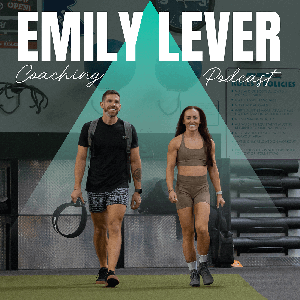


After back-to-back long shifts, AJ and Emily couldn't think of a better topic than sleep — and for good reason. In this episode, they do a deep dive into why sleep is the most overlooked tool for fat loss, muscle growth, hormone health, and overall performance. From growth hormone surges to hunger hormones gone haywire, they break down the real science behind what happens to your body while you sleep, how chronic sleep deprivation quietly sabotages your goals, and the practical bedtime habits (aka sleep hygiene) that can transform your health — no supplements required.
5 Key Takeaways
" Sleep is boring. It's super boring, but it is actually, it's not just downtime. It's one of the most powerful things that you can do to enhance your performance at the gym, enhance your performance in day-to-day life." - Emily
Connect with Emily and AJ
Website: https://www.emilylevercoaching.com/
Instagram: https://www.instagram.com/bedellever/
References
https://link.springer.com/article/10.1186/s44410-025-00011-9
https://pubmed.ncbi.nlm.nih.gov/31377851/
Enjoyed the Episode?
If this conversation resonated with you, make sure to subscribe, leave a review, and share this episode with a friend who's stuck in the start-over cycle. Your support helps more people find the podcast and build healthier habits that last.
Until next time—keep showing up, stay consistent, and remember: small steps add up to big change.
Summer heat can make every workout feel harder, but that doesn't mean you're losing progress. In this episode, we break down what's actually happening in your body when you train in high temperatures, how to adjust your expectations and intensity, and practical strategies for hydrating, recovering, and modifying your workouts so you can stay consistent, and keep moving forward, all season long.
5 Key Takeaways
Heat is a real training stressor
Higher temperatures spike your heart rate at the same workload and drain energy faster, so feeling "sluggish" in the heat is physiological, not a lack of effort.
You can still progress with lower numbers
In the heat, you may lift less weight or run slower, but if you're taking muscles to true fatigue and maintaining effort, you're still driving adaptation and progress.
Mindset matters as much as metrics
Instead of chasing PRs in hot conditions, shift your focus to consistency, pacing, and form so you don't misinterpret tough sessions as "failure."
Hydration and electrolytes are non‑negotiable
Heat training increases sweat, fluid, and electrolyte loss. Front-loading hydration, salting meals, and using electrolytes (especially for longer sessions) support performance and recovery.
Recovery drives long-term gains
Under-eating plus heat is a recipe for burnout. Matching your fueling, fluids, and rest to your training load is essential to avoid regression and protect both strength and endurance.
"Heat changes your performance, but it doesn't mean that just because it's changing your performance that it's not progressing you." - Emily
Connect with Emily and AJ
Website: https://www.emilylevercoaching.com/
Instagram: https://www.instagram.com/bedellever/
References
https://link.springer.com/article/10.1186/s44410-025-00011-9
https://pubmed.ncbi.nlm.nih.gov/31377851/
Enjoyed the Episode?
If this conversation resonated with you, make sure to subscribe, leave a review, and share this episode with a friend who's stuck in the start-over cycle. Your support helps more people find the podcast and build healthier habits that last.
Until next time—keep showing up, stay consistent, and remember: small steps add up to big change.
Dive deep into the science of hunger, how sleep, hormones, blood sugar, and meal composition all work together to influence how hungry we feel and the choices we make around food. They explain the roles of leptin and ghrelin, why lack of sleep and chronic dieting can backfire, and how building balanced, protein-forward meals can stabilize energy, reduce cravings, and support sustainable fat loss. The conversation wraps with practical strategies for reframing snacks, eating mindfully, and learning to view hunger as information rather than something to fear.
5 Key Takeaways
Sleep powerfully affects hunger hormones
Lack of sleep lowers leptin (fullness hormone) and raises ghrelin (hunger hormone), making you feel hungrier and crave high-calorie, sugary foods.
Chronic dieting can harm metabolism and health
Years of cutting calories, skipping meals, and overusing caffeine can lead to constant hunger, lab abnormalities, and a body that clings to fat as a protective mechanism.
Blood sugar swings drive cravings and crashes
Sugary, low-fiber, low-protein foods cause sharp spikes and drops in blood glucose, triggering intense hunger and making it hard to sustain a calorie deficit.
Build balanced, satisfying plates
Start with a full hand-sized portion of protein, add half a plate of veggies and/or a quarter plate of fruit, include a carb source (like rice, potatoes, or quinoa), and finish with a small portion of healthy fats (about 2 tbsp to ¼ cup).
Eat consistently and mindfully, not fearfully
Don't skip meals or hoard calories for dinner. Treat snacks like smaller balanced meals, stay hydrated, prioritize sleep, and pause to ask, "Am I physically hungry or just stressed/bored?" to make more intentional food choices.
"A good reframe would be: instead of 'How do I eat less?' think 'How do I stay full for longer? " - AJ
Connect with Emily and AJ
Website: https://www.emilylevercoaching.com/
Instagram: https://www.instagram.com/bedellever/
References
https://link.springer.com/article/10.1186/s44410-025-00011-9
https://pubmed.ncbi.nlm.nih.gov/31377851/
Enjoyed the Episode?
If this conversation resonated with you, make sure to subscribe, leave a review, and share this episode with a friend who's stuck in the start-over cycle. Your support helps more people find the podcast and build healthier habits that last.
Until next time—keep showing up, stay consistent, and remember: small steps add up to big change.
Emily and AJ break down why you might feel hungry all the time, even when you're eating regularly or trying to lose weight. They unpack the difference between physical hunger and other forms like emotional, habit, and environmental hunger, and explain how dieting extremes can create fear around feeling hungry at all. The conversation then shifts into practical, science-backed strategies: prioritizing protein and fiber, choosing less ultra-processed foods, and using mindful eating and hydration to better honor your body's true needs.
5 Key Takeaways
"Having hunger cues, feeling hungry before meals is very healthy. It probably means your metabolism is moving well." - Emily
Connect with Emily and AJ
Website: https://www.emilylevercoaching.com/
Instagram: https://www.instagram.com/bedellever/
References
https://link.springer.com/article/10.1186/s44410-025-00011-9
https://pubmed.ncbi.nlm.nih.gov/31377851/
Enjoyed the Episode?
If this conversation resonated with you, make sure to subscribe, leave a review, and share this episode with a friend who's stuck in the start-over cycle. Your support helps more people find the podcast and build healthier habits that last.
Until next time—keep showing up, stay consistent, and remember: small steps add up to big change.
In this episode, we dive into why resistance training is one of the most powerful, underappreciated tools for lifelong bone health. You'll learn how bones actually function as living, adaptable tissue, why osteoporosis disproportionately affects women, especially after menopause, and how lifting weights can dramatically reduce fracture risk, preserve muscle, improve balance, and help you stay independent as you age. We also break down practical, approachable ways to start resistance training, even if the gym feels intimidating or you're starting later in life.
5 Key Takeaways
"The only thing that matters is that it's challenging for you. It doesn't matter what anyone else is doing, if it's challenging you, then it's doing you good." - Emily
Connect with Emily and AJ
Website: https://www.emilylevercoaching.com/
Instagram: https://www.instagram.com/bedellever/
References
https://link.springer.com/article/10.1186/s44410-025-00011-9
https://pubmed.ncbi.nlm.nih.gov/31377851/
Enjoyed the Episode?
If this conversation resonated with you, make sure to subscribe, leave a review, and share this episode with a friend who's stuck in the start-over cycle. Your support helps more people find the podcast and build healthier habits that last.
Until next time—keep showing up, stay consistent, and remember: small steps add up to big change.
In this episode,Emily and AJ break down the truth about creatine, what it is, how it works, and why it's one of the most researched and safest supplements available. They explain how creatine supports ATP production for high-intensity training, helps preserve and build muscle mass, and indirectly supports fat loss by improving metabolism and workout quality. The conversation also covers cognitive benefits, addressing brain energy and mental fatigue, and highlights why creatine can be especially powerful for women, postpartum and menopausal populations, and aging adults who want to protect muscle and bone health. They wrap up with clear guidance on dosing, timing, and how to use creatine consistently for maximum benefit without obsessing over short-term water weight.
5 Key Takeaways
"Creatine does not directly burn fat. What it does is help you train more intensely, support your muscle retention, and maintain your metabolism so the more muscle mass you have, the more efficient your fat loss is going to be." — Emily
Connect with Emily and AJ
Website: https://www.emilylevercoaching.com/
Instagram: https://www.instagram.com/bedellever/
References
https://link.springer.com/article/10.1186/s44410-025-00011-9
https://pubmed.ncbi.nlm.nih.gov/31377851/
Enjoyed the Episode?
If this conversation resonated with you, make sure to subscribe, leave a review, and share this episode with a friend who's stuck in the start-over cycle. Your support helps more people find the podcast and build healthier habits that last.
Until next time—keep showing up, stay consistent, and remember: small steps add up to big change.
In this episode, Emily and AJ tackle one of the most common summer fitness dilemmas: should you change your goals when the season shifts? They explore why summer feels so different — from kids being home to packed social calendars — and why that pressure to look a certain way often leads to yo-yo behavior and short-lived results. Instead of chasing extreme transformations, they make the case for realistic, life-aligned goals, the underrated power of maintenance phases, and setting non-scale minimums that keep you moving forward no matter how chaotic life gets.
5 Key Takeaways
Quote of the Episode
"Consistency will always bring you much, much further with time over someone who's going to have an on switch and then an off switch when summer comes."
— Emily & AJ
Connect with Emily and AJ
Website: https://www.emilylevercoaching.com/
Instagram: https://www.instagram.com/bedellever/
References
https://link.springer.com/article/10.1186/s44410-025-00011-9
https://pubmed.ncbi.nlm.nih.gov/31377851/
Enjoyed the Episode?
If this conversation resonated with you, make sure to subscribe, leave a review, and share this episode with a friend who's stuck in the start-over cycle. Your support helps more people find the podcast and build healthier habits that last.
Until next time—keep showing up, stay consistent, and remember: small steps add up to big change.
In this episode, Emily and AJ break down why simply knowing your macro targets is very different from actually hitting them consistently. They frame macro tracking as a learned skill—much like learning an instrument—that takes time, repetition, and strategy. The hosts share practical systems for planning meals, using pause-points throughout the day, building plates around protein, and avoiding common tracking mistakes, all with the goal of creating long-term freedom and confidence around food.
5 Key Takeaways"You don't expect to learn how to play a symphony on the piano in a week... this is a skill, and you need repetition and practice to obtain that skill." – AJ
Connect with Emily and AJ
Website: https://www.emilylevercoaching.com/
Instagram: https://www.instagram.com/bedellever/
References
https://link.springer.com/article/10.1186/s44410-025-00011-9
https://pubmed.ncbi.nlm.nih.gov/31377851/
Enjoyed the Episode?
If this conversation resonated with you, make sure to subscribe, leave a review, and share this episode with a friend who's stuck in the start-over cycle. Your support helps more people find the podcast and build healthier habits that last.
Until next time—keep showing up, stay consistent, and remember: small steps add up to big change.
In this episode, Emily and AJ break down the truth about electrolyte supplements, who actually needs them, when they're genuinely beneficial, and when they're just expensive flavored water. Drawing on their backgrounds as nurse practitioners and fitness coaches, they walk through real-life scenarios like flying, hard training, illness, low-carb diets, and GLP-1 medications. They also highlight how most people can meet their needs through smart nutrition, why gut health and overall calorie intake matter more than "optimization" powders, and how to evaluate health claims using actual scientific research instead of influencer anecdotes.
Essential Lessons:
"The question with any supplement should always be: Why am I taking this, and what does the actual data—not Instagram—say about it?" – Emily
Connect with Emily and AJ
Website: https://www.emilylevercoaching.com/
Instagram: https://www.instagram.com/bedellever/
References
https://link.springer.com/article/10.1186/s44410-025-00011-9
https://pubmed.ncbi.nlm.nih.gov/31377851/
Enjoyed the Episode?
If this conversation resonated with you, make sure to subscribe, leave a review, and share this episode with a friend who's stuck in the start-over cycle. Your support helps more people find the podcast and build healthier habits that last.
Until next time—keep showing up, stay consistent, and remember: small steps add up to big change.
On this episode of the EMILY LEVER COACHING PODCAST, hosts Emily and AJ break down what electrolytes actually do in the body, the difference between being hydrated vs. just drinking water, and when (if ever) you truly need electrolyte supplements. Drawing from both clinical experience and current research, they explain why most people can meet their electrolyte needs through food, when supplementation may make sense for endurance athletes or extreme conditions, and why blindly following wellness trends can be a waste of money, or even risky, without understanding the science behind them.
Essential Lessons:"You can't say electrolytes don't play a balance in hydration—they absolutely do. It's just that, for the most part, in most human beings, you should be able to get them fully from your diet." – Emily
Connect with Emily and AJ
Website: https://www.emilylevercoaching.com/
Instagram: https://www.instagram.com/bedellever/
References
https://link.springer.com/article/10.1186/s44410-025-00011-9
https://pubmed.ncbi.nlm.nih.gov/31377851/
Enjoyed the Episode?
If this conversation resonated with you, make sure to subscribe, leave a review, and share this episode with a friend who's stuck in the start-over cycle. Your support helps more people find the podcast and build healthier habits that last.
Until next time—keep showing up, stay consistent, and remember: small steps add up to big change.
From the publisher's feed