
Sign up to save your podcasts
Or

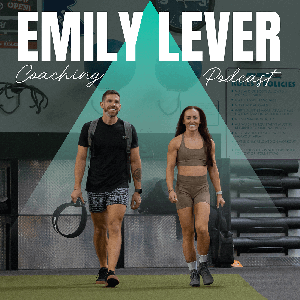


Getting enough protein doesn't have to mean complicated meal plans or extreme dieting. In this episode, Emily and AJ break down practical, everyday ways to boost protein at every meal without unintentionally pushing carbs or fats too high. From simple breakfast upgrades like egg whites and Greek yogurt to easy lunch and dinner options like pre-cooked meats, protein pasta, and creative ways to use cottage cheese or protein powder, they share realistic strategies for hitting protein goals, even during busy weeks when cooking feels impossible.
What You'll Walk Away With:
"If you're just asking for general sources of protein, like fairly lean sources that people tend to eat at breakfast time, smoked salmon is another good one. A little bit fattier but not bad and also pretty good fats."- AJ
Connect with Emily and AJ
Website: https://www.emilylevercoaching.com/
Instagram: https://www.instagram.com/bedellever/
Enjoyed the Episode?
If this conversation resonated with you, make sure to subscribe, leave a review, and share this episode with a friend who's stuck in the start-over cycle. Your support helps more people find the podcast and build healthier habits that last.
Until next time—keep showing up, stay consistent, and remember: small steps add up to big change.
Continuing from the previous episode, Emily and AJ unpack the real-life side of sustainable fat loss: it's beyond quick fixes and extreme diets. Between hospital shifts, family responsibilities, and everyday mental fatigue, they reveal how small, consistent habits like meal planning, tracking food, improving sleep, and cutting back on alcohol helped create lasting momentum and long-term results.
What You Need to Know:
"Big changes are overwhelming. Big changes are scary, but really small changes actually shouldn't feel that different." - AJ
Connect with Emily and AJ
Website: https://www.emilylevercoaching.com/
Instagram: https://www.instagram.com/bedellever/
Enjoyed the Episode?
If this conversation resonated with you, make sure to subscribe, leave a review, and share this episode with a friend who's stuck in the start-over cycle. Your support helps more people find the podcast and build healthier habits that last.
Until next time—keep showing up, stay consistent, and remember: small steps add up to big change.
In Part 1 of this two-part episode, Emily and AJ unpack one of the biggest reasons people struggle with fitness: not actually starting. Through an honest, real-life conversation, they explore how life events, shifting priorities, and overwhelming circumstances can delay progress—even for someone who has always been active. By sharing a deeply personal journey that includes demanding work, parenting, and major life stressors, the episode reveals how readiness, small intentional changes, and a mindset shift toward long-term health can help people finally begin and build sustainable momentum.
What You'll Take Away:
"I want you to be ready to some extent. It should be scary, it should be uncomfortable. But I want you to be ready because you have to have the bandwidth" - Emily
Connect with Emily and AJ
Website: https://www.emilylevercoaching.com/
Instagram: https://www.instagram.com/bedellever/
Enjoyed the Episode?
If this conversation resonated with you, make sure to subscribe, leave a review, and share this episode with a friend who's stuck in the start-over cycle. Your support helps more people find the podcast and build healthier habits that last.
Until next time—keep showing up, stay consistent, and remember: small steps add up to big change.
In this episode, nurse practitioners and fitness coaches Emily and AJ break down the science behind artificial sweeteners—how they impact fat loss, insulin, gut health, and cravings. Drawing from clinical trials and meta-analyses, they separate fear-based myths from evidence-based nuance, and share how they coach real clients to use (or reduce) artificial sweeteners in everyday life.
What You'll Learn in This Episode
Artificial sweeteners help with calorie control, not magic fat loss. They support fat loss only when used to replace sugar and reduce total calories.
Insulin impact is minimal in healthy adults. Most artificial sweeteners cause only a small, inconsistent insulin response that doesn't meaningfully change metabolism in metabolically healthy people.
Gut health is the bigger concern—especially for kids. Lab-made sweeteners like sucralose and saccharin can unfavorably change the gut microbiome, with stronger effects seen in younger subjects.
Plant-based options are generally better. Stevia and monk fruit tend to have milder, more favorable microbiome effects compared with aspartame and sucralose.
Cravings are complex, but a sweetener "reset" can help some people. Temporarily cutting artificial sweeteners—while eating more whole, unprocessed foods—often helps reduce cravings, though stress and sleep also play big roles.
"The point is that artificial sweeteners don't magically burn fat. They just reduce calories if they replace sugar in certain items." - Emily
—-----
Connect with Emily and AJ
Website: https://www.emilylevercoaching.com/
Instagram: https://www.instagram.com/bedellever/
Enjoyed the Episode?
If this conversation resonated with you, make sure to subscribe, leave a review, and share this episode with a friend who's stuck in the start-over cycle. Your support helps more people find the podcast and build healthier habits that last.
Until next time—keep showing up, stay consistent, and remember: small steps add up to big change.
In this episode, Emily and AJ, nurse practitioners and fitness coaches, break down why macros matter more than just calories when it comes to how you feel, perform, recover, and progress toward your goals. They simplify protein, carbs, and fats in real-life terms, explain why low-carb and "clean eating" can still stall progress, and highlight how proper macro distribution and food quality impact hormones, stress, sleep, and long-term results.
What You'll Learn in This Episode
Why calories are only a starting point—and how macros change how you feel and perform
The key roles of protein, carbs, and fats in metabolism, hormones, and recovery
How low‑carb approaches can raise stress (cortisol) and stall fat loss
Why fats are essential but easy to overdo, even when they're "clean"
How macro distribution and food quality impact energy, hunger, and sleep
Why individualized macro coaching beats generic calculators and cookie‑cutter plans
"Just because you're hitting your macros, it doesn't mean you can rely on your macros to feel amazing. You still have to manage your stress, think about sleep, training, and digestive health." - Emily
—-----
Connect with Emily and AJ
Website: https://www.emilylevercoaching.com/
Instagram: https://www.instagram.com/bedellever/
If this conversation resonated with you, make sure to subscribe, leave a review, and share this episode with a friend who's stuck in the start-over cycle. Your support helps more people find the podcast and build healthier habits that last.
Until next time—keep showing up, stay consistent, and remember: small steps add up to big change.
February hits differently.
The excitement of New Year's resolutions starts to fade, motivation dips, and real life sets back in — work, kids, schedules, snowstorms, rotating shifts, and all the mental load that comes with it. In this episode, Emily and AJ break down what real consistency actually looks like — and why it's not about perfection.
They dive into the concept of decision fatigue, how too many choices drain our energy, and why building simple systems (instead of relying on motivation) is the key to long-term progress.
If you've ever felt like January was strong but February feels "blah," this one's for you.
What You'll Learn in This Episode:
Why motivation fades after January — and why that's normal
What consistency actually looks like (hint: it's not 100%)
The power of aiming for 80% instead of perfection
How decision fatigue silently derails your progress
Why systems > motivation for long-term success
Practical ways to reduce daily decisions around food, workouts, and routines
The "marble jar" mindset shift that changes everything
How rotating schedules (nurses, first responders, shift workers) can still build structure
Why coaching removes mental load and increases clarity
"Motivation is a great way to start a new habit or a new routine, but then your system is what sustains it long term."
—-----
Connect with Emily and AJ
Website: https://www.emilylevercoaching.com/
Instagram: https://www.instagram.com/bedellever/
If this conversation resonated with you, make sure to subscribe, leave a review, and share this episode with a friend who's stuck in the start-over cycle. Your support helps more people find the podcast and build healthier habits that last.
Until next time—keep showing up, stay consistent, and remember: small steps add up to big change.
In this episode, Emily and AJ unpack the hidden forms of stress that often sabotage progress — even when you're doing "everything right." From training load and sleep to nutrition, parenting, and mental overwhelm, they explain how stress is cumulative and how your body doesn't distinguish between physical, emotional, or lifestyle stressors — it just feels stress.
You'll learn why more discipline, harder workouts, or stricter dieting aren't always the answer when progress stalls — and how creating a sense of safety in your body can unlock better fat loss, performance, recovery, and overall well-being. This conversation is especially powerful for busy professionals and parents who feel stuck despite their best efforts.
In This Episode, You'll Learn:
What "hidden stressors" are and how they impact your results
Why stress is cumulative — and how it affects hormones, digestion, sleep, and metabolism
How under-eating, overtraining, and poor recovery can stall fat loss and muscle growth
Why your body needs safety, not pressure, to make progress
Simple, realistic ways to reduce stress without overhauling your life
How fueling earlier in the day and around workouts supports recovery and consistency
Why doing less strategically can sometimes move you forward faster
"Doing more isn't always the answer, and oftentimes, doing less can be just helpful." - AJ
—-----
Connect with Emily and AJ
Website: https://www.emilylevercoaching.com/
Instagram: https://www.instagram.com/bedellever/
If this conversation resonated with you, make sure to subscribe, leave a review, and share this episode with a friend who's stuck in the start-over cycle. Your support helps more people find the podcast and build healthier habits that last.
Until next time—keep showing up, stay consistent, and remember: small steps add up to big change.
If you're training consistently, checking all the boxes, and still not seeing the results you expect, the problem may not be your commitment—it may be misalignment.
In this episode, Emily and AJ break down why pushing harder, adding more workouts, and chasing soreness or calorie burn can actually stall progress. Drawing from their backgrounds as nurse practitioners, fitness coaches, and parents, they explain how training volume, recovery, stress load, and lifestyle all interact—and why sustainable progress requires smarter programming, not more intensity.
This conversation is a must-listen for anyone feeling sore, drained, unmotivated, or stuck despite "doing everything right."
What You'll LearnWhy constant soreness is not a sign of effective training
The difference between productive muscle soreness and injury-related joint pain
How overtraining impacts recovery, hormones, and fat loss
Why feeling chronically drained or dreading workouts is a red flag
How elevated stress and cortisol can stall fat loss—even with perfect nutrition
Why women are often pushed toward burnout-style training
The importance of structure, progression, and intentional workouts
How fewer, more focused sessions can outperform long, unfocused workouts
Why recovery, sleep, and fueling are non-negotiable for results
How to shift effort from "more workouts" to smarter stress management
"Constant soreness is not a marker of progress—it's often a sign of too much inflammation." - Emily
—-----
Connect with Emily and AJ
Website: https://www.emilylevercoaching.com/
Instagram: https://www.instagram.com/bedellever/
If this conversation resonated with you, make sure to subscribe, leave a review, and share this episode with a friend who's stuck in the start-over cycle. Your support helps more people find the podcast and build healthier habits that last.
Until next time—keep showing up, stay consistent, and remember: small steps add up to big change.
Motivation fades. Life gets busy. And suddenly, the goals you were excited about in January feel overwhelming. In this episode, Emily and AJ break down why relying on motivation alone sets people up for failure—and what actually works instead.
As nurse practitioners, fitness coaches, and parents, they share practical, real-life strategies to build systems that support consistency, even when motivation is low, schedules are chaotic, or life doesn't go as planned. From breaking the all-or-nothing mindset to habit stacking, accountability, and ditching the "start over Monday" cycle, this episode is a must-listen for anyone who wants progress that actually sticks.
What You'll Learn in This EpisodeWhy motivation is emotional, inconsistent, and unreliable
The critical difference between goals and systems—and why systems matter more
How overwhelm quietly kills consistency
What a powerful "why" really looks like (and why surface-level goals aren't enough)
How to build boring-but-effective habits that fit your real life
The right way to use habit stacking (and the common mistakes people make)
Why accountability should feel like support—not pressure
How to stop compensating for "bad days" and break the cycle of starting over every Monday
Why progress is cumulative and not erased by one meal, one day, or one weekend
"Motivation is awesome, but it comes and goes. It's not a reliable source for consistency." - AJ
—--------
Connect with Emily and AJ
Website: https://www.emilylevercoaching.com/
Instagram: https://www.instagram.com/bedellever/
If this conversation resonated with you, make sure to subscribe, leave a review, and share this episode with a friend who's stuck in the start-over cycle. Your support helps more people find the podcast and build healthier habits that last.
Until next time—keep showing up, stay consistent, and remember: small steps add up to big change.
In Part 2 of this hypertrophy series, Emily and AJ take the conversation deeper—breaking down what actually drives muscle growth when training intensity increases. From full versus partial range of motion to training volume, compound lifts, recovery, and sleep, this episode focuses on how to structure workouts that deliver results without burnout or injury.
They also tackle common gym myths, including ego lifting, undertraining, and overtraining, and explain why hypertrophy doesn't require constant workout changes—just smarter execution, consistency, and recovery.
What You'll Learn in This EpisodeWhen partial reps do and do not support muscle growth
Why full range of motion is non-negotiable for hypertrophy
How compound (multi-joint) lifts drive greater muscle recruitment
The ideal weekly training volume for muscle growth
How to prioritize workouts when time is limited
Why recovery, nutrition, and sleep are essential for building muscle
How often you should train when lifting close to failure
Practical programming strategies for hypertrophy
Why men often ego lift—and women often underestimate their strength
"If you want to change your physique, take weight off the bar and earn the full range of motion."- Emily
References:
https://pmc.ncbi.nlm.nih.gov/articles/PMC8884877/
https://journals.lww.com/nsca-jscr/fulltext/2022/03000/progressive_resistance_training_volume__effects_on.2.aspx
https://journals.lww.com/nsca-jscr/abstract/2023/05000/which_roms_lead_to_rome__a_systematic_review_of.23.aspx
https://www.sciencedirect.com/science/article/pii/S1440244025000684
Connect with Emily and AJ
Website: https://www.emilylevercoaching.com/
Instagram: https://www.instagram.com/bedellever/
From the publisher's feed