
Sign up to save your podcasts
Or

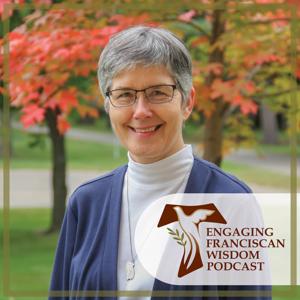


Join Dr. Patty Jimenez as she shares the joys of being raised with Franciscan values, translates theological terms and teachings into everyday language, and the creates spaces of belonging for young Latina woman raised in the United States.
For a video version of this episode, see: https://youtu.be/etFD7Z-4Vsw
From Patty Jimenez' interview:
"When I returned to school I am reading Bonaventure, Scotus, and Francis and Clare's writings, I'm going, some of this stuff is pretty lofty. But when I broke it down to the essentials of hospitality, of care for creation, this is what my family lived every day, especially the women in my family; it was really powerful to see that written theologically, to see that expressed and be like, oh yeah, this is us."
Regarding moving between cultures: "I think first is to not make assumptions. It's really important to ask a lot of questions. Oftentimes people just kind of jump in based on what is on the surface level, but they don't really know what's behind it. … I've seen that happen over and over again in so many situations, making assumptions about other people without taking consideration about what we are doing or not doing that is causing what's happening."
"When you deal with a lot of cross-cultural issues, oftentimes just feeling heard causes a shift. That's sometimes all people need, is to be heard."
"We all belong. If we've ever felt that we didn't, it's usually because we haven't been adequately provided for or cared for. That has resonated for me as a Latina that's been raised here in the United States. And so I take a huge responsibility now of how do I create belonging for US born and raised Latinas. At times we have to, if we feel like, 'hey, I don't belong', maybe it's the Spirit that's moving us to create spaces of belonging for others."
Vernacular theologian: "How do you translate really lofty theological terms or teachings into everyday terms so that anyone can understand it? And so for me it's translated in what we Latina theologians or pastor ministers speak of la vida cotidiana, our everyday life. And so how do we integrate it and speak in a language that is accessible to most people nowadays?"
For a full transcript, please include episode number and email: [email protected].
References:
Brother Ed Dunn and las Posadas at the Border: read about the impact of the San Diego and Tijuana border experience in Patty's life: http://www.ushispanicministry.com/la-posada-at-the-border/
Franciscan School of Theology: "There is a hidden treasure in Catholic Theology called the "Franciscan Tradition." As Pope Francis reminds us, St. Francis of Assisi is a saint of peace, a saint of the poor, a saint respectful of each person's God-given uniqueness, and a saint with a great love for all God's creatures." See: https://www.fst.edu/about/
Secular Franciscans: https://www.secularfranciscansusa.org/ . You may also find it interesting to listen to Carolyn Townes' reflections on being a Secular Franciscan in Episode 27, including links to further information at https://engagingfranciscanwisdom.org/walking-the-path-of-grief-and-loss-to-joy-as-a-lay-franciscan-episode-27
Francis and the Sultan: a contemporary telling of the story: https://cac.org/francis-and-the-sultan-2019-10-10/ . An original source: The Life of Saint Francis XX:57, by Thomas of Celano at: https://www.franciscantradition.org/francis-of-assisi-early-documents/the-saint/the-life-of-saint-francis-by-thomas-of-celano/672-fa-ed-1-page-231#ges:searchword%3Dsultan%26searchphrase%3Dall%26page%3D1
Wolf of Gubbio: read in The Deeds of Blessed Francis & His Companions XXIII, FA:ED, vol. 3, pp. 482-485 at: https://www.franciscantradition.org/francis-of-assisi-early-documents/the-prophet/the-deeds-of-blessed-francis-and-his-companions-1328-1337/2386-fa-ed-3-page-485
Restorative Justice: there is much information online. A sample description: "The three core elements of restorative justice are the interconnected concepts of Encounter, Repair, and Transform. Each element is discrete and essential. Together they represent a journey toward wellbeing and wholeness that victims, offenders, and community members can experience. Encounter leads to repair, and repair leads to transformation." See: https://restorativejustice.org/what-is-restorative-justice/
Recetas: This initiative, founded by Patty, is dedicated to empowering Latinas to live joyous, well-balanced lives while deepening connections with themselves, their community, and their culture. Consider seven areas of wellness: emotional, environmental, personal, physical, professional, psychological and spiritual. See: https://recetonas.com . To see their shop: https://shop.recetonas.com . Handles for all social media: @therecetonas
Centering Prayer is a contemporary form of contemplative prayer. See: http://www.contemplativeoutreach.org/. Consider also a smart phone app called "Centering Prayer," offered by Contemplative Outreach. You will find many regional websites online listing area centering prayer groups. For those who live in Minnesota, see: https://www.minnesotacontemplativeoutreach.org/groups.html
Vernacular Theology: "Bernard McGinn … coined the term Vernacular Theology. This form of theology focused on an audience of ordinary women and men who sought to find God in their daily experiences instead of the educated elite or the monks and nuns in the enclosure." Excerpt from Francis as Vernacular Theologian by Dominic Monti, OFM: https://www.franciscantradition.org/images/stories/custodians/03_Francis_as_Vernacular_Theologian.pdf
Patty Catholic School photo
Patty Jimenez being confirmed in Mexico
Join Franciscan Associate Arlen Casco as she narrates in video form what we're calling "Christmas in February: a journey through Latin America." It will be an exploration by several Associates of how Christmas, that is, the coming of Jesus among us as a human being, is celebrated in their respective countries of Mexico, Nicaragua, Ecuador, Columbia and Venezuela. The video is spoken in Spanish and subtitled in English, while the audio is in Spanish.
For the original video version with English subtitles, see: https://youtu.be/3X6kH4YLhME
We hope you find a welcome in this bonus episode of word, song and visuals. You will be led on this journey by Franciscan Associate Arlen Casco in Nicaragua who interviews Sol, Beni, Estrella, Camilo and Maria José, and has produced this lovely window into cultural expressions and traditions across Latin America.
This episode is the first of an occasional series called TAO, an acronym for "Testimonios Actuales y Ordinarios" which in English means "Current and Ordinary Testimonies." While these episodes will continue to be produced in Latin America especially for Spanish-speaking Associates, they will be shared with subtitles in English as bonus episodes on Engaging Franciscan Wisdom.
Special Note: If you speak Spanish, you may want to look up the Spanish versions of each Engaging Franciscan Wisdom podcast. The same Franciscan Associate Arlen Casco coordinates the Spanish version; see Sabiduria Franciscana
For further information, please email: [email protected].
Join Franciscan Sister Callista Robinson as she breaks open her experience as an African American woman of faith, rooted in her own culture. A life-long learner and teacher, her hospitality and compassion serve to build bridges of relationships across cultures.
For a video version of this episode, see: https://youtu.be/x9N0uDm-A_E
From Sister Callista's interview:
"Franciscan values of compassion, serving the very poor and underserved, have really influenced me as a Franciscan Sister. And peacemaking and social justice, those are Franciscan values. It seems to me you cannot talk to a Franciscan without hearing that person say something about social justice and how we have to go out to those who are not served. … Another Franciscan value that we have is we're very hospitable."
Wisdom to share: "Have a conversation with God, which we call prayer, an open and honest conversation where you let God do the talking and you do the listening. And from there each person will receive the wisdom that they need, whether that is to be more trustful, to be more compassionate, to be more accepting of others from a different culture, whatever that might be. Listening and talking with God – but more listening rather than talking."
For a full transcript, please include episode number and email: [email protected].
References:
Sr. Callista Robinson, OSF – 35th Annual Black Excellence Awards Honoree: https://milwaukeetimesnews.com/35th-annual-black-excellence-awards/honorees/sr-callista-robinson-osf
School Sisters of Saint Francis: https://www.sssf.org/
Loretto Academy, Chicago, an integrated high school for girls: https://www.preservationchicago.org/loretto-academy-institute-of-the-blessed-virgin/
Sisters of the Blessed Sacrament, founded by Saint Katharine Drexel; their mission was to evangelize and educate African Americans and Native Americans:https://www.katharinedrexel.org/st_katharine_drexel_overview/founding-of-the-sisters-of-the-blessed-sacrament/
Saint Anselm Catholic School, Chicago: https://stanselmchicago.com/?page_id=7
Franciscan Sisters of Little Falls, Minnesota, history: https://www.fslf.org/aboutus;
Sister Thomasine Schmolke: https://thecentralminnesotacatholic.org/little-falls-franciscan-sister-writes-new-history-of-her-community
Vatican Council II: a five-minute video about the Council by Franciscan friar Casey Cole: https://www.youtube.com/watch?v=jyVq1hnxAqg .To hear other podcast guests references as well as to see show note links (click on 'Read More'), type 'Vatican' into the search bar of this website, and several options will come up to explore.
National Black Sisters Conference (NBSC), founded to support each other as African Americans: https://www.nbsc68.com/
LCWR (Leadership Conference of Women Religious): https://lcwr.org/
Center for Consecrated Religious, at CTU (Chicago Theological Union): https://ctu.edu/cscl/
Network: https://networklobby.org/about/catholicsocialjustice/
Saint Francis of Assisi Parish, Milwaukee: https://www.stfrancismil.org/
Brother Booker Ashe Lay Ministry Program, Milwaukee: https://blackandindianmission.org/news/congrats-brother-booker-ash-lay-ministry-graduates
Adult Learning Center, Milwaukee: https://www.alcmke.org/
Black History Month: https://asalh.org/about-us/origins-of-black-history-month - also see: https://blackhistorymonth.gov/
Saint Francis de Sales Seminary, Archdiocese of Milwaukee: https://www.sfs.edu/SFSHome
Dr. Antoinette Mensah, MD, Director of Archdiocesan Office for World Mission and the Society for the Propagation of the Faith, Archdiocese of Milwaukee: https://cx.uwp.edu/antoinette-mensah.html
Sister Callista with students from Harambee Community School in Milwaukee
Show Notes:
Join former Franciscan Community Volunteer Nnedi Anoskie-Ogunu as she shares her learnings of what strengthens her connection with God and others, ranging from the place of welcoming communities to developing an interior spiritual life.
For a video version of this episode, see: https://youtu.be/z0QhmFbJ8Ss
From Nnedi's interview:
"When I was in Nigeria, I was eager to come to the US because we'd seen all these images about the US and I was excited to experience all of it. But then when I came, it was much different from what I knew. … And then school, I faced some racism from teachers, administration, students. It was a very hard transition. That was rough. You're going through so many internal changes trying to figure out what your feelings are, and everyone is doing the same. So, we're all gonna bump into each other in very unhealthy ways."
"I've always been drawn to community where I feel welcomed. Of course, when I was growing up in Nigeria, that was not a community that I chose, I was born into it. I was just part of it, right? And as an adult, you're able to choose where you belong or where you find belonging, and I've been able to do that. And making it part of a spiritual practice was not something that occurred to me until I came to you all in Minnesota. The intentionality behind even our gatherings was something that has stayed with me. And those gatherings are what built our community, right?"
"It's very important for me to feel a sense of community with the people that I work with; the line of work that I'm interested in doing cannot be done without community. I'm very much into social justice, and I think that none of us can survive, can thrive without being, without having belonging anywhere. And part of the work that I do through "Faith and Public Life" is to create spaces and make sure that everyone feels a sense of belonging and not excluded because of things that are out of their control, you know, their skin color, how they pray, things like that."
"I try to be mindful when I'm in community with other people, that someone may be showing up a certain way in my community, that there are stories there that I may not know. It's up to us to continue to create safe communities, safe intentional communities, where they can bring their full selves."
"I had been told almost all my life that I should be a nun. I think it's just because I had spiritual practice; I had a love for God and enjoyed things like that, so to them it meant to be a nun. And I always wondered why it wasn't enough that I was a lay person, and that my love for God was evident - all of us should be living a life that is evident of our love for God and our love for one another. It gave me the opportunity to come and be with sisters, see what the life was like, and see if there was something that it stirred in me during my time there. And while I was there, I discovered that you all were normal people that loved life, loved one another. I think the first night there we played a game and that was the most peace I felt in a foreign place before, and I knew that I was in a right place. And since then there was such a strong welcoming. I didn't have to explain certain things, even though there were cultural barriers. There was still a willingness and openness to learning about me that felt like this was home, right?"
"For me, when I get to a certain point with my friends, with my relationships, I feel like it's almost transcended friendship, I will call them, I'll call my friends my sisters. And so since my time with the Sisters of Little Falls, I call you all sisters. Not because of the title, but because I have also taken you as family in a way that I feel like you all have taken me as family. So you all feel like my sisters and I just, I feel blessed to be part of this community; even though I'm far away, I still feel very much part of it."
"Names are very, very important to me because mine has been part of my journey. And it's reflected like different stages of my life. When I was in Nigeria, I went by Nnedi. I knew myself as Nnedi. I knew myself as Nnedimma. That was, that was who I was, right. And then when we came to the United States, my parents really wanted me to assimilate. And they didn't want me to have a name that would "other" me further. And I started going by my middle name. So Nnedimma is my first name. Annunciata is my middle name. And it's shortened to Ann. … it's been years in the making of me contemplating wanting to change back to Nnedimma. … I truly have shed this skin that Ann was so uncomfortable in, … So now I'm getting to know Nnedima as an adult, as a woman who has really come into her own, also now as a married person."
"Native American spirituality and Franciscanism have been a huge part of my spiritual life right now. … Franciscan spirituality can be practiced by anyone. … In my quest to be more in tune with Care for Creation, my primary focus is with God's people because I feel if we are good to God's people, and everyone has the things that they need to thrive and there's no exploitation of people, then there will be no exploitation of Mother Earth. "
"Franciscan spirituality is it invites you into the mess, and doesn't just leave you to figure it out, right? It doesn't leave you to struggle alone. It allows you to do it with community that can strengthen you, that can support you, that can love you."
"In the Bible they refer to iron sharpens iron and I think that is what community is. You sharpen each other to become your fullest selves. And when we do that, I think part of the hardship that we're facing is that we're not living into who God has called us to be. We don't have an interior life that allows us to explore what it is we're meant to do in a safe space and live into it without holding back."
"What is feeding my soul at this time is getting in touch with myself, with Nnedi, as an emotional person. I think I've struggled with that in the past, being able to express the full range of my emotions without holding myself back. … What that looks like is talking to God through journaling and being in therapy. Those have been key things that is allowing me to practice or to welcome God into my life and recognize that my emotions are also gifts from God, and not see them as a burden. So being able to work through that in therapy and to talk with Emmanuel, reflecting out loud, has been very important to my current experiences of spirituality."
"I didn't realize this part about my spiritual journey, hoping that by exploring the full range of my emotions, I can become more connected to God. I didn't realize that until I started talking and articulating it and I'm like, yes, that is the hope that I have…that is what I'm pursuing, that connection with God, that connection with myself. I can't be comfortable with the humanness of God if I'm not comfortable with my own humanness."
[Encouragement to others] "Be patient with yourself. I think sometimes I get so impatient with not seeing the progress that I expect to see at a certain time. There's no formula to this. We're all stumbling and remembering that we're human. You deserve the grace that you extend to other people. So extend that same grace to yourself. Be patient with yourself and work on loving yourself; part of that is figuring out what makes you happy, what brings you joy, who brings you joy. So leaning into those things will help you remember who you are."
For a full transcript, please include episode number and email: [email protected].
References added re: strengthening our connection with God:
1 Celano 43: "[Francis], living within himself and walking in the breadth of his heart, prepared in himself a worthy dwelling place of God."
"Emotional Range and On-Going Conversion: Franciscan Joy," a talk by Darleen Pryds, PhD. of the Franciscan School of Theology: https://www.youtube.com/watch?v=4etRlkWhlhg . Darleen has also been interviewed on this podcast, and has been a guest host as well. You can find these episodes by typing her name in the search bar of this website.
Accompanying photos:
Nnedi & Emmanuel Anosike-Ogunu, 2022
Nnedi's Grandma Josephine
Nnedi as a Franciscan Community Volunteer out on adventure with her group.
Join Jamie Deering as she shares stories and considers with curiosity what it is to be present to oneself and others as we allow God to flow through us in the midst of different ways of thinking, seeing and being in the world.
For a video version of this episode, see: https://youtu.be/PZ9MDBvRbe8
From Jamie's interview:
"One of the first and primary ways that God grabbed a hold of me and that I knew the presence of God in me and in the world, was through music. When I was four years old, I began piano lessons and when I was in elementary school, there was a choir and I was so excited to be part of this, creating music with our bodies and with our souls, which has felt to me like a special portal, a special pathway to God. … The thread of music through my entire life is what has anchored me in knowing and experiencing God's presence."
"It was so important for me as my kids were growing up to be sure that they had this experience of the diversity of humankind and the diversity of thought and movement and ideas. … It was such a blessing and gift to be exposed to different ways of thinking, different ways of being in the world. I served in the Peace Corps, as you know, and lived in Macedonia for a little under two years. That plus my experiences in a variety of churches throughout my formative spiritual formation years was understanding the power of a community to form, to be so influential, in how our worldview, I'll stick with me, how my worldview was formed."
"Recently a friend of mine distinguished for me this word, interdependence, and we've been having conversations. We come from different cultures and so I've been curious about, again, the formation of this person coming, growing up in a different culture. And my growing up in the American culture, in sort of a spirit of independence; this other culture was a spirit of interdependence. I've been learning more about what that is and connecting that to all the experiences that I've had; they have been helpful in pointing me to what it means to be interdependent and communal in thinking."
"There are some things in contemplation we can do to set down striving; this concept of being with our thoughts then gets integrated in somatic presence with being in our bodies, being in my body. What is my body experiencing right now? Because our bodies live in present time. And so to the degree that I can be in my body, I can be present in present time. So there's that sense of being with. Then in spiritual direction, being with another, companioning another. Again, it's so important for me to be able to know what it is that's going on in me, physically, emotionally, mentally, spiritually, so that I can hold space. So I can offer that space to another person for them to be with whatever is going on in them."
"Haecceitas … this notion that we are all uniquely gifted by God for work here on earth for God. Presence in God through us, manifesting God through us in the world. I feel this mysterious, mystical, and special gift that my gifts now are partnered so beautifully with the Franciscan Sisters, and what might God be bringing into the world through us."
"There's an expression in contemplative prayer of the wellspring of love, the wellspring of God; that is probably the primary image that I use when I'm leading contemplation, because the wellspring is always available to us. Always. We just sit by the wellspring, contemplating the wellspring, being with the wellspring of love."
"Living life from a place of curiosity - I find that to be very Franciscan. And expanding beyond that, the spiritual journey, to live from curiosity. To be listeners seeking to understand another, is also very Franciscan, rather than be understood. …The wellspring cultivates curiosity and the ability to be with another and hold space for another's essence, to see another in their essence."
For a full transcript, please include episode number and email: [email protected].
References:
Saint Francis, The Praises of God: https://www.catholic.org/prayers/prayer.php?p=180
Peace Corps, Macedonia: https://www.peacecorps.gov/north-macedonia/
Contemplative Practice: see Shalem Institute for Spiritual Formation: https://shalem.org/
Spiritual Direction and Spiritual Coaching: see Jamie's website: https://soulisticcoach.com/
Haecceitas: a Franciscan term coined by John Duns Scotus re: the unique value, dignity, 'thisness', of every person and everything; two references: https://cac.org/irreplaceable-thisness-2018-03-18/ , and https://www.ssfamericas.org/post/a-hagiography-of-blessed-john-duns-scotus
Franciscan Sisters of Little Falls, Minnesota: https://www.fslf.org/
Franciscan Programs Ministry, including Engaging Franciscan Spirituality course: https://www.fslf.org/pages/Franciscan-Programs-Ministry
Third Order Regular Rule, reference to admonishing with compassion:
Sheffield train station fountain in England, image of the Trinity as fountain fullness of God; see photo below, see a YouTube of the fountain: https://www.youtube.com/watch?v=9RPXt-MvN0Q
From the publisher's feed