
Sign up to save your podcasts
Or

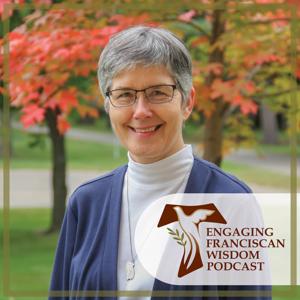


Join Sister Meg Earsley as she shares the delight of discovery and learning through cultural immersion in intentional communities, both in the unexpected joy of religious life and in her immersion with the incredible people of Bolivia.
For a video version of this episode, see: https://youtu.be/11L8Oue8Y5Y
From Sister Meg's interview:
"My community is blessed with a real attitude of inclusion. Even our constitutions have a title called Unity and Diversity. We are united as a community, but we are accepting and promoting of all of our gifts; how we find those gifts is a blessing in itself."
"I had never lived in a larger community; before joining community, I appreciated and enjoyed living alone. My biggest fear of coming to community is like, am I going to be able to even do community? I have no idea. But I found it to be an incredible joy, although I valued my time alone because of the quiet and the only having to consider my own thoughts and ideas, being in community has a richness of communal sharing. … Living community, being in this living situation together and then being a support to each other, is something I had never experienced. This is a really good thing. This whole mutual support is something I could sure get used to. I have really enjoyed living in intentional community."
"Unity is based on the acceptance of the diversity. … Assimilation to me means that you're going into another culture and all of who you are is expected to be folded into that and to become like that culture, whatever that culture is that you're going into. I think some of that is necessary. But there's also the other side of things where bringing your uniqueness and who you are is also very necessary when you're coming into another community, another culture. Then how do those things work together? I think that that is the joy of the whole, the phrase and the living of unity and diversity is, there's an acceptance and each person's uniqueness."
"If I hadn't heard the call to become a religious sister, I wouldn't have ever experienced it. I would've gone through my whole life saying how much I loved being alone; one of my favorite things was to say, because I didn't have to bring other people into my emotions into my heart. At the time I didn't have a word for it, but like I don't want to have to bring other people into that space of mine because then I have to consider them. Before I do things, and I have to give them the time and energy, the love and compassion, right? And so now I've been living that for four years and I don't even know how I could ever do anything else – that's probably one of my greatest joys."
"Can we reimagine what community looks like and how we live in community, to expand out to other religious communities, lay, or whatever? … The Franciscan Federation is looking with our Emergent Group of what does intentional community look like now, and how that's a need, a want and a desire in, for sure our country; I wouldn't be surprised at other places too. And then how can, how do we live that, and what does that look like now?"
"There is so much beauty, especially to the people, incredible people (of Bolivia). Going back to suspending judgment. I'm thinking of the word detachment, a Franciscan value; I think we might use the word here of holding things lightly. For some reason, detachment seems like, I don't care, but holding things lightly says that there might be things that are valuable.
Food safety's a great example. People would have things sitting out all day. So even at the convent, food would just sit out, we'd have it for lunch, it would sit out till dinner, and then we'd cook it, warm it back up and eat it, right? So holding things lightly is knowing that for my culture, having a rice and chicken dish sitting out all day would be very unhealthy. We would all get sick and be in big trouble with food poisoning at the hospital. This is the judgment I could have, but the holding it lightly is to say that these sisters are … eating the food this way all the time and they're not sick. So maybe I can hold that lightly, set aside the food safety value that I came to Bolivia with, and see what happens. And you might guess, I didn't get sick, not even once, not even after the armadillo! That speaks so highly to me; I had to question then why do I think that if food sits out all day, I'm gonna get sick, right? I realized that in our culture, even having a small chance of something happening means that we shouldn't do it. In this case, food safety; so even if it was a 1% chance that that food sitting out all day might make us sick, then we probably would throw it away. So I probably won't anymore. Understanding that is a cultural value; who knew food safety was a cultural value? … The opportunity to understand that holding things lightly, detachment, might have been my greatest gift of going to Bolivia."
"Two of the biggest gifts that I had while in Bolivia is to be able to practice the gift of presence and really concentrate wholly on relationships, without having outside things like getting things done, having deadlines or goals. I had time in a culture that was totally different to everything I understood, with the language that I couldn't always communicate in. It's harder to try to layer in my values and preferences and those kinds of things if I can't articulate them. Although I would've liked to magically been able to articulate a lot more, I think it was a really good thing because it focused me in the presence and what that actually means. It's so foundational, the start of everything; even if you go to a job, having that presence is so important."
"How do I continue to make that foundational? Now that I've come back to the United States, how do I start to integrate all these things and, having that foundation of presence, the foundation of relationships in everything I do, how do I make that dominant or predominant in my life now and not get busy with all those important things that I need to do. How do I do that?"
"Presence allows you to see who that person is. Yes. I'll go so far as to say, see who, what that tree. Yes. Like I could walk by a tree every day and never notice it. But I stop and look, and I can see what that tree is. I can think about all the different things that is going on with that tree, whether it's the leaves or the roots, or all these different things, and I can really start to understand that tree. So how does that then translate to being present to people, right? … Through their stories and their conversation you start to understand the depth of that individual and how they radiate out into the world; you can really start to see all these connections and the absolute beauty of this interconnectedness and inner touching or touching each other, and how all those things create, I'll say, God's kingdom…."
For a full transcript, please include episode number and email: [email protected].
References:
--Franciscan Sisters of Perpetual Adoration (FSPA): https://www.fspa.org
--Canonical and Apostolic years of the Novitiate; for information of how these years are elements of the larger discernment process for religious life, see: https://www.fspa.org/content/join/become-a-sister/discerning-fspa-life
-- Meg's reflections in Bolivia: https://www.fspa.org/sistermeg
--Franciscan Mission Service: https://franciscanmissionservice.org/
Join our Latin American Associate Leadership Team as they reflect together on the call to live as sisters and brothers across the Americas. Working as a team, they foster conditions for living in the spirit of Saint Francis, weaving unity in diversity—this is Good News!
For a video version of this episode, see: https://youtu.be/pcnNdwxhONU
From Arlen, Veronica and Camilo's interview:
Arlen shares: "Our main function is always to be aware of the community, and of each associate that belongs to the community. In Nicaragua we are 2 groups: one is in Managua and another is in San Diego. Although there is a long distance between these two locations, we try to always be aware of the realities of each associate, their spiritual and material needs. … We contribute in creating spaces for communication and formation in the Franciscan charism and spirituality. I think that is the richness of our functions."
Camilo states: "It is interesting to be part of this Team, knowing that, unlike Arlen and Vero, at this moment from Colombia I am the only one in the association relationship. It has been an opportunity to meet and learn about faith and culture in the three Americas: North America, Central America, and South America. That is beautiful. We have to think about the language, about the appropriate words according to each country, in order to meet and share."
Veronica notes: "The Franciscan charism is expressed through people who serve in the Ecuadorian Amazon, in ecclesial parishes in different places, in ministries of the Word and the Eucharist, etc. And, day by day, I see that Franciscan spirituality also has an impact in our families, to which we all belong. In this way I have seen how the community continues to grow."
Veronica: "A year ago, was when we officially started putting our ideas together -Arlen, Camilo, Verónica- to see how to serve the Spanish-speaking associates. A dynamic of deep reflection was generated among the 3 of us. … In addition to promoting Franciscan values in Zoom teachings and circles, we put them into practice frequently. … We think about who will be in that meeting, when and what time suits better for them. And so, thinking of that specific group, we have connected. The value of Minority has been one of the bases that move our community meetings. Then we are always evaluating as a team: what is it that God did and what can we improve? We live an experience of community life where we get to know each other and discern the next call for service."
Camilo: "I have learned to work more as a team by being part of this team. For example, something as simple as understanding that situations can arise when planning a meeting, when we can or cannot connect, and that we can overcome it together. We have learned that preparing for the unforeseen is wonderful. For example, if we cannot meet together, we can meet asynchronously through chat; it does not obstruct the work and we have achieved a very rich experience. In addition to the minority that Vero mentioned, I have learned in practice to live the simplicity that characterizes Franciscan spirituality and its great power, to think of simple exercises that can include many and foster beautiful and powerful reflections."
Arlen: "Franciscanism is a way of life; when it takes root in your heart it is already very difficult to turn back or get out of the way because it is so valuable, it has so much wealth. I think that in the community we see each other as a family, I see another associate as a brother, as a sister, as a mother, as an uncle... because that trust is being formed, it is being strengthened day by day. I believe that when Franciscan values strengthen the community, then the community expands as well. Saint Francis said, we try to lead by example, with what we do for others and the way in which we live. This calls other people who are around us, because we have this lifestyle and they are always curious, asking who the associates are and what do they do, what is the path to become an associate? I think that this is where the Franciscan values lie."
Camilo: "There are two things that resonate with me when considering our call: the first is in the short term and has to do with embodying or concretizing the Franciscan values in our daily life. Always in our meetings … we ask ourselves and it always moves us: today concretely, how does conversion, minority, become a reality, how do poverty, contemplation and joy become a reality, where I am? I think this is a question that we must constantly ask ourselves. I believe that Franciscan spirituality challenges us to always ask ourselves that question as a community, too, and with all the people among whom we share.
The second call that I see also has to do with our being together; it is to continue connecting beyond the borders that our countries draw, the borders drawn by languages, and even our religions. It is incredible the diversity among us and the enormous efforts that the sisters and associates are making to connect, learning to use zoom and various other technological means, learning how to communicate when some speak Spanish and others speak English, experimenting with how to build that bridge¡ That has made us connect and share courageously."
Veronica: "Our Franciscan community is no longer located just in Minnesota. Its GLOBAL character is a feature of its own. We are very different people, from different generations, who live in different contexts. But the interesting thing is that we respond to a powerful call: to live against the current of the societies we inhabit and bring hope there, where there is despair, we live in simplicity, dispossession, forgiveness, unity in the midst of those very strong voices that tell us to "consume more", where there is war, division. I think that Franciscan Spirituality, as a lifestyle, becomes a reality with the simple examples that we learn from our brothers and sisters: we learn to live with detachment, with solidarity, in the midst of God's creation that calls us to be ONE."
Camilo: "I believe that our world often lacks joy, the ability to smile day by day and … feel loved, recognizing ourselves loved in our day to day. I think that particularly from what I have experienced in this relationship and the relationships that have been woven, it has been that ability to smile, that ability to live with joy, but it also depends on feeling deeply loved and how beautiful that these experiences that we are weaving can be shared and communicated to other people, in other contexts, and that they can feel that goodness and that power of the good news of love, of the joy that Saint Francis has taught us and that is the love of that God who loves us so much and so much he wants the good for all. I believe that we are weaving paths for other people, beyond whether they want to be linked as associates or not, they can share it. That is the beauty, sharing this charism."
For a full transcript, please include episode number and email: [email protected].
References:
Franciscan Associates: There are many forms of Associates, Cojourners, Companions, Affiliates who are in intentional relationships with religious communities and congregations. The Franciscan Sisters of Little Falls, MN who sponsor this podcast, have Associate and Sister relationships that span the Americas, speaking English and Spanish. Here is a brief introduction: https://www.fslf.org/pages/franciscan-associates
Saint Francis hearing the call to rebuild the church: to read the story, see Legend of the Three Companions 5:13: The Legend of the Three Companions: FA:ED, vol. 2, p. 76 (franciscantradition.org)
Engaging Franciscan Spirituality, "Involucrándonos con la Sabiduría Franciscana": a program for growth in Franciscan life. This program is in transition with staff transitions at the Franciscan Programs Ministry. It has equipped four cohorts of men and women to strengthen their spiritual journeys in the spirit of Saints Francis and Clare.
Join Garry and JoAnn Dahl as they reflect together on what it is to choose the path of transformation and not of transaction in relationships, sharing a trajectory of growth in relation to God and others as they seek to bring peace to the planet and one another.
For a video version of this episode, see: https://youtu.be/FCHHS6ONP1s
From Garry and JoAnn's interview:
Garry: "I come from a perspective at this junction in my life where I see everything as gift, that I didn't deserve, or wasn't entitled to, or there wasn't something I merited. It was purely gratuitous, God loving and manifesting God's self in creation. It seems to me that if we want to live in that image and likeness, we have to model that perspective as best we can in all our relationships. I certainly see that in our, my relationship to JoAnn, that who she is and the wonderful person that she is, has been gifted to my life to share and experience. There is a great sense of gratitude for that, but also a humility that, in the same way I didn't deserve to be born into this world; it was gratuitous. The same is true in relationship to another human being who, is on the same journey that I'm on. I have the opportunity to walk that journey in a spirit of love, that love constantly challenges us to let down our guard and open further and to love deeper and experience more completely all the gifts that God shares with us. It is incredibly humbling because it's the avenue by which as we move on our spiritual journey, we've been doing that together as a couple."
JoAnn: "When we talk about choosing each other in marriage, it's true, I chose Garry, Garry chose me. But then in faith, we also believe that God chose us for each other. And when you have a gift mentality or modality, it's a different kind of way you receive. If you go and acquire something, that's different, but if you get something as a gift that has a receptivity to it that is completely different. It requires gratitude, openness and humility because the giver saw something in you that needed that gift. So I think that there's a whole receptivity in seeing another person in any relationship you have as being a gift to you in your life at that time, at that moment. And it makes a difference in how you interact. I think that idea of gift is a crucial kind of mindset."
JoAnn: "Change is inevitable and some changes, I think, are the result of life circumstances. … There's a letting go and an embracing of what's next. And I really think that's part of the marriage journey and any long-term relationship. Letting go of what was and embracing what's next. Garry mentioned that continual conversion, which is rooted in an openness to be willing to let go of whatever barriers to spiritual growth you're harboring and allow God to do the work needed to change you. And that's part of that long-term marriage dance too. … We have a shared common trajectory in that we both want to grow deeper and deeper in relationship with God and with each other."
Garry: "The idea of (being) naked before God, we're not as generous as naked beings in front of other human beings, cuz we don't wanna appear vulnerable or weak or flawed, so we guard ourselves. But in a marriage that's working, I think the other person serves as a mirror. There are parts that I need somebody who can mirror back to me that which I can't see, so that in seeing what I can't see, I might be able to grow through it, or love my way through it as I like to see it."
JoAnn: "Transformation and relationship: You enter into the full unity, that's about relationship and God revealing God to us, and that means that it's transformational rather than transactional. … I think it's about revelation and relationship and not simply redemption. When I'm trying to tick off the boxes of doing all the right things to merit God's love, then I start watching other people and seeing if they're ticking off the right boxes too, and now I become judgmental. So it's better to be vulnerable and let God work whatever changes are necessary inside, being open to transformation and not worrying about if I exacted the right transactions this week."
JoAnn: "Initially growing up, I thought that Francis was the easy Saint, because he's a nice guy who loves nature. Oh, that's great. I can follow that. But then I realized that Francis is pretty challenging because Francis … tries to love as God loves. That's a pretty challenging way to be—that's not the easy saint."
Garry: "I do love that, but Francis didn't get it all right either; just like the rest of us don't get it all right. We try to find a model and a way of living our lives that will bring about the hope for fulfillment that we all desire. He helped open us to the idea of being willing to suffer on behalf of God, and especially suffer with those who are suffering in this world. We are called as Franciscans to reach out to those people as best we can to ease their suffering and to know that they don't walk in this world alone. Francis modeled that and was loved for that, and God worked through him because of that."
Garry: "Then there's the huge challenge for all of us, whether it be you Sister Michelle or JoAnn or I, what is mine to do? What is ours to do to help bring about God's desire for God's people? And that would be his world as well, which he loves. There are so many beautiful things in creation; they were created out of that same love that created us out of love. So how do we encounter our world in a manner that we might be conduits for that transformation that JoAnn was talking about? And how do we heal this world, this time and space in God's wondrous creation? What is our role in bringing about both peace and restoration to our planet and that same peace and restoration to one another?"
For a full transcript, please include episode number and email: [email protected].
References:
Qualities, attitudes and actions important for marriage and relationships to work: Drawing from the interview, Garry and JoAnn name continual conversion, gratitude, receptivity, humility, love, openness, mutual encouragement, common trajectory of growth in relationship with God and with others, shared vulnerability, choose path of transformation and not transaction in relationship, forgiveness, make room for other to be who they are, life-long learning, common spiritual yearning, poverty, suffer with the suffering, bring peace to the planet and to one another/others.
Continual Conversion in Franciscan Spirituality: Consider this video by Darleen Pryds, Ph.D. of the Franciscan School of Theology (FST), entitled: "Emotional Range and On-Going Conversion: Franciscan Joy," https://www.youtube.com/watch?v=4etRlkWhlhg – video #35 of the Franciscan Vision Series (see below for general link).
Conversion, another meditation: Grows out of self-knowledge; we tend to like dramatic conversions like the story of St. Paul. For Francis (and most people), conversions may have dramatic events, but it is more a process or journey. As one's outward life becomes humbler and simpler, one's inner life becomes richer.
-Peace and Good through the year with Francis of Assisi, Pat McCloskey, OFM, cf. p. 67.
Why Did God Become Human? by Dr. Daniel Horan, OFM, John Duns Scotus professor of spirituality at Catholic Theological Union, Chicago: this video (#23) is from the Franciscan Vision Series; here's a link to the playlist of many fine explorations of Franciscan Spirituality, including #23: https://www.youtube.com/playlist?list=PLhm41W5jlZZQtwlhsoiM37SGFMN7Kh5QR
Hebrews 11:1: "Faith is the assurance of things hoped for."
Franciscan Poverty: See this introductory text by Brother Bill Short, OFM, in an excerpt from his book "Poverty and Joy": d2y1pz2y630308.cloudfront.net › 11001 › documents
Canticle of the Creatures, by Francis: https://www.franciscanmedia.org/franciscan-spirit-blog/st-francis-and-his-canticle ; the full text is at: https://www.franciscantradition.org/clare-of-assisi-early-documents/related-documents/franciscan-documents/the-canticle-of-brother-sun-1225/569-ca-ed-1-page-392
Join Brother Mark Schroeder as he is interviewed by guest host Darleen Pryds. Mark explores the priority of living in community, in peace and mutual understanding while being passionate for justice and nonviolence advocacy.
For a video version of this episode, see: https://youtu.be/9oKMNktEKJI
From Brother Mark's interview:
"As a Franciscan, early on, I was active in nonviolent demonstrations, many times ending up in jail. That's beyond the way I was raised and the way I operated when I was a kid. But through that, I really realized the importance of standing up for what you believe, the importance of taking risks. I would've never dreamt of that. And my whole spiritual quest is always, I believe God invites everybody. God invited me into each of these situations so I could learn and grow and see how I handled each one, based on nonviolence."
"The first time I was ever arrested was Lawrence Livermore lab, which is outside of Oakland, where the nuclear weapons and other weaponry are being developed. It was a Good Friday celebration up there, and that was the first time I ever risked arrest and ended up, ironically, … in the Japanese concentration camps in Livermore. They still exist, but they still had the buildings and that's where we were, a gigantic number of people. And so I've always been involved with nuclear weapons, the abolition of them. I still am."
"One has to always be aware of oneself, what's going on. And with that, the only way I can teach about being a Christian is you have be active. Do actions that promote justice and peace and non-violence. When I'm outta whack, then it's not gonna work. So that's why I continue to do the best I can to stay focused."
"I believe anybody that lives in the United States is an addict. It comes in different forms. But if you live in our consumer culture there's addictions, compulsions. So I do my best to stay on top of that. I'm in a 12-step group."
"Fraternity is the most important thing we have. I wanted that always in religious life, … I've grown to realize that I live with people, I choose to live with people. I choose to interact with them daily. … It can be hard sometimes because of different personalities and I'm sure it's hard for some other friar to live with me, but in reality, it's just the joy. … With it [fraternity], I don't have really a care in the world. It's really a spiritual blessing for me to live in community."
"Prayer together is important, but prayer has to be enlivening, not just rote and not just cuz we have to do it. Prayer is important together because it's a countercultural way of relating to each other. Communication is really important. ... Since I've been guardian, we've been meeting every Wednesday at four o'clock and a person can verbalize whatever they wanna say. They don't have to talk about feelings if they're not in the mood. I use mutual invitation and that's where one person starts and then that person picks the next person. … The guys tell me that it's really made us a community and continues to. So there's that kind of communication. Also, the friar lifestyle, having meals together is important. … I encourage every friar to have a spiritual director and or therapist if that's needed. And I always tell 'em price is no object, but to be in religious life, you can't be making decisions on your own. You have to really keep discerning God's will not your will. And the fruit of that for me, is happier, healthier guys living together."
For a full transcript, please include episode number and email: [email protected].
References:
"Jesuits in California": https://www.jesuitswest.org/about-us/the-jesuits/
Discernment: There are many spiritual traditions of discernment; here is a video introduction to Ignatian (Jesuit) discernment: https://www.ignatianspirituality.com/what-is-ignatian-spirituality/the-ignatian-way/what-is-discernment/ - here are some Franciscan discernment resources: https://osfphila.org/discernment-franciscan-style/
Franciscan Province of St Barbara: https://sbfranciscans.org/
Fraternity: a Franciscan perspective on fraternitas in a broader social context; also as related to Pope Francis' writing in Fratelli Tutti: https://sacredheartfla.org/2022/05/13/fraternitas-friar-reflections-the-fifth-week-of-easter/
Social Justice involvements:
Franciscans for Justice: https://www.franciscansforjustice.org/
Nevada Desert Experience: http://nevadadesertexperience.org/
Example of Good Friday Protest at Lawrence Livermore Lab: https://www.indybay.org/newsitems/2011/04/25/18678001.php
https://www.santabarbaramission.org/
Join educator and health care provider, Athena Godet-Calogeras, as she is interviewed by guest host Darleen Pryds. Athena is a master storyteller of her journey ranging from urban life in New York and Chicago to the enchanted mountains of Western New York state.
For a video version of this episode, see: https://youtu.be/5uj2EW1-3T0
From Athena's interview:
"[With] a Franciscan scholar by the name of David Flood, … we began to hold weekly sessions on the Franciscan movement. He's an historian. … When I learned about what Francis and Clare, what they, and the other men and women at that time had to contend with and what they did to live a gospel life, it clicked with my own experience of what I was going through and what I was seeing on the streets of Uptown, which was a very poor, a diverse, ethnically diverse community where everybody could walk the streets, whether they were from halfway houses or in wheelchairs, whatever their color. And I just loved it. …. And I tell ya, it was in Chicago that I really became a Franciscan."
"David would come in and perhaps we'd go through a discussion of the Testament. … He would talk about it from his scholarship, from an historical perspective, as well as his absolute passion for being a Franciscan. And we would have discussion and he would give us different things to read. And at one point during those sessions we said, where else can we read more of this kind, not the pious Saint Francis talking to the birds and that sort of thing. But this, this real man, these real men, Clare, these real women, where can we read more about it? And he said nowhere. That's when a small group of us started the Franciscan magazine in 1977 called Haversack."
"I recall walking one day down Uptown streets and all of a sudden having this wonderful feeling, this is exactly where I belong. This fits so well. It integrates everything. Every part of me. So, so that was, that was the start and it's, it's Franciscan ever since."
"I am by nature an activist. I think it's by nature. When I was in Chicago, I had a big poster of a mother duck with baby ducks on the wall and it said, 'Do something, lead, follow, or get out of the way'. Activism is sort of natural for me." (see visual at the end of these show notes)
"I married Jean-Francois and his scholarship continues to inform me … Clare, I've gotten to know more of Clare and the [early Franciscan] women. Where I live now, we don't have a specific Franciscan base. The two of us are Franciscans, and all of our close friends who are active with us in all of the endeavors … they know we're Franciscan and they're attuned to it. And several of us have also formed a faith sharing group called "the breaking of the bread". We're Franciscan without initials, but we are Franciscans."
"I always speak of a Franciscan movement; I do not think that Francis or Clare acted alone. There was a movement, there were people and that is so very important. It's building up the relationships, … keeping the Franciscan history current. I go back to the readings and, again I have Jean-Francois, and every time we have 'the breaking of the bread', a meeting of our group, we have Franciscan texts; those people in the 13th century are dead, but they're still alive. … I've had years and years of reading about Francis and Clare and the men and women in that early movement. That stays with me, and I can always go back to those. I do go back to those pages, but as it is if people remember us, that means we're still alive. So they're still alive, and so am I."
With Veggie Wheels "we go to the people, not only will we give them vegetables and fruit from local farmers, but we will be able to relate. We will meet, we will have that exchange. As we saw in Francis's Testament, where he discovered that the leper was really his brother, his sister. You bring people from different socioeconomic status and you become friends; we get them involved in helping others."
For a full transcript, please include episode number and email: [email protected].
References:
Sisters of St. Joseph of the Third Order of St. Francis: https://ssj-tosf.org/
Vatican Council II: a five-minute video about the Council by Franciscan friar Casey Cole: https://www.youtube.com/watch?v=jyVq1hnxAqg .To hear other podcast guests references as well as to see show note links (click on 'Read More'), type 'Vatican' into the search bar of this website, and several options will come up to explore.
Jean-Francois Godet-Calogeras, Margaret Carney, David Flood: bios with the Franciscan Institute: https://www.franciscanpublications.com/pages/franciscan-institute-scholars-authors
Saints Francis and Clare: https://osfphila.org/about/francis-and-clare-of-assisi/
The Testament, by Saint Francis: https://www.franciscantradition.org/francis-of-assisi-early-documents/the-saint/writings-of-francis/the-testament/140-fa-ed-1-page-124
Saint Francis meets the leper: see https://www.franciscanmedia.org/franciscan-spirit-blog/st-francis-meets-the-leper . See also the earliest biography of Saint Francis by Thomas of Celano (1C 17): https://www.franciscantradition.org/francis-of-assisi-early-documents/the-saint/the-life-of-saint-francis-by-thomas-of-celano/636-fa-ed-1-page-195
Haversack magazine issues: https://app.box.com/s/e0z1cpxq9br9n30ntucfcgn2zzpdipyz
Scripture related to the choice of "haversack" as the title:
--Luke 9:3 Take nothing for your journey, no staff, nor bag, nor bread, nor money—not even an extra tunic." (cf. Mtt 10:10; Mk. 6:8; Lk 10:4)
--Luke 22:36 "But now, the one who has a purse must take it, and likewise a bag…"
Being Mortal: Medicine and What Matters in the End by Atul Gawande: http://atulgawande.com/book/being-mortal/
Frontline Episode based on Being Mortal: https://www.youtube.com/watch?v=lQhI3Jb7vMg ----
Enchanted Mountains Village: The Village to Village Network: https://www.vtvnetwork.org/ . The idea is to create a community of people 55+ to allow people to age well and happily in their homes through exchange of services, mutual support, and cultural and fun events. The Enchanted Mountains Village was officially launched on October 17, 2021, and is established as a non-profit organization: https://www.enchantedmountainsvillage.org/
Veggie Wheels https://www.cattfoundation.org/news/article/current/2020/08/26/100140/veggie-wheels-continues-service-through-pandemic-challenges
Video (on Facebook) https://www.facebook.com/watch/?v=661853231092130
From the publisher's feed