
Sign up to save your podcasts
Or

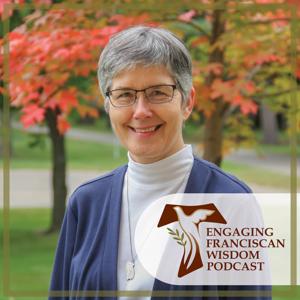


Join practitioner and scholar Jean-François Godet-Calogeras, interviewed by guest host Darleen Pryds, as he tells his story of growth and social engagement from village to village in Belgium and the United States, from happiness to greater happiness as he lives the passion and joy of Franciscan life.
For a video version of this episode, see: https://youtu.be/KRc0LZh5Zws
From Jean-François's interview:
"Reading the writings of Francis that is full of quotes from the gospel, I started reading the gospel as I had never read it before. And found out that the gospel happened and was written in a historical context, and the same thing with the writings of Francis, expressed within an historical context, a way of life. And it very quickly became a passion. I could not imagine my life outside of that."
"I was looking for a passion, and the passion came with the writings of Francis that took me back and deeper into the gospel, the good news of Jesus. … At that point, I became very happy. Much happier than I had been before. I always loved the students, but I was dissatisfied by the institutional context. And since then, and other experiences, I'm not a very institutional guy. I'm more of an artist or of the present. I'm an historian and I love history, but it's to help me understand and live the present. Not to be with all stones."
"I'm not doing it on purpose, but I have been more than once labeled rebel. And it's just because I see things that for me make sense, but then I get in trouble. During that time, I discovered the writings of Clare of Assisi. … Clare was not a nun in enclosure. Clare was a sister with the brothers. And it was basically the same way of life. The man on the road in movement, the women in a place that they called monastery. Culturally, it was just as the world was moving. Women were not normally traveling and mingling with people, but that doesn't mean that they were locked in, in prison. So, I realized that story of First and Second Order, like first and second class, doesn't really fit."
"I realized again that the Third Order Regular, it was not a third class. And then it became very clear to me that there was one movement. One spiritual family with Francis and Clare, the brother and the sister at the root of that, inspired by the gospel of Jesus. And that movement developed in a very inclusive way to the beginning, but then of course with some complicities and good intention, it had to be organized. It had to be canonically organized."
"It became clear that I had to leave [the Friars], and I did. … It felt horrible. It felt terrible. It felt that after 18 years or so I was losing my life. I wasn't me anymore. But I faced that. Friends were very, again, very supportive, very instrumental and some, Margaret Carney and others, when traveling to Europe would stop and visit me in my little house in the village, in Belgium. During the time that I was five years in my village, one friend told me that her mother had heard that I was not a Franciscan anymore. And she responded to her mother that no, he's not in the Order of Friars Minor anymore, but he is a Franciscan. That has been a moment of grace to me to realize that, yes, my Franciscan soul was not attached to any institution, and I was grateful for what I had received in the institution. And it's a lot that is part of myself, but I realized I am Franciscan, and I can explain what it means to me. It's a way of life and I will continue."
For a full transcript, please include episode number and email: [email protected].
References:
Saints Francis and Clare of Assisi: https://osfphila.org/about/francis-and-clare-of-assisi/
The Wolf of Gubbio: read at Read in The Deeds of Blessed Francis & His Companions XXIII, FA:ED, vol. 3, pp. 482-485 at: https://www.franciscantradition.org/francis-of-assisi-early-documents/the-prophet/the-deeds-of-blessed-francis-and-his-companions-1328-1337/2386-fa-ed-3-page-485.
The Little Flowers of Saint Francis: https://www.franciscantradition.org/francis-of-assisi-early-documents/the-prophet/the-little-flowers-of-saint-francis/2467-fa-ed-3-page-566
Desbonnets and Sabatier: The French Friar minor Théophile Desbonnets was the first one to publish the early Franciscan documents in one volume: Saint François d'Assise: Documents (Paris: Éditions franciscaines, 1968). Paul Sabatier is the father of the modern Franciscan studies. His masterpiece is his Vie de saint François d'Assise (Paris: Librairie Fischbacher, 1894).
A Short List of Publications by Jean-François:
Écrits de François d'Assise, French translation with introduction and notes, in François d'Assise: Écrits, Vies et Témoignages (Paris: Éditions du Cerf – Éditions franciscaines, 2010).
Reference to Gibecq cheese: From 1978 to 1980 Jean-François worked with Jean Frison, a farmer in Gibecq (Western Wallonia) who was starting Agrisain, a cooperative of farmers.
https://www.lavenir.net/regions/wallonie-picarde/ath/2021/09/08/jean-frison-gibecq-fondateur-de-coprosain-est-decede-QET6ABL2BFBX3DKUQRIZMKUSE4/
The International Project on the new Rule for the Third Order Regular, approved in 1982; for more information see History of the TOR Rule: A Source Book (St. Bonaventure: Franciscan Institute Publications, 2008)
As a Franciscan Jean-François lived in many places! Among the places mentioned in this episode are Louvain and its university; the General Curia (headquarters) of the Order of Friars Minor in Rome; five months in solitude in Oostduinkerke; five years in a small village, Mont, near Namur, and currently in Allegany, NY https://www.allegany.org/
Resources:
Haversack: A Franciscan review published from 1977 to 1999; available at: https://app.box.com/s/e0z1cpxq9br9n30ntucfcgn2zzpdipyz
Franciscan Institute: The Franciscan Institute on the campus of Saint Bonaventure University
Veggie Wheels: https://www.cattfoundation.org/news/article/current/2020/08/26/100140/veggie-wheels-continues-service-through-pandemic-challenges
Join Franciscan Sister Carmen Barsody as she shares her learnings from life in a Nicaraguan barrio and in the Tenderloin of San Francisco. In conversation with guest host Darleen Pryds, Carmen invites us from fear into freedom to do what we feel called to do in the world, that all may have life and have it to the full.
For a video version of this episode, see: https://youtu.be/zCxCvtnPtUo
From Sister Carmen's interview:
"When I moved to Nicaragua I came to work in an ecumenical setting, which was even more expansive and more exciting. It was our community's choice just to move into a Barrio and live amongst the people, with the people, and allow our life to evolve out of that. Rather than to move into a community with an idea of we were going to bring something to them. And I was very enriched by living in Nicaragua and also even more enlightened. Learned a lot more because Nicaragua had had much more direct intervention by the United States and the Contra war had just finished. I was in a country that, at the time that we arrived, more than 50% of the people were under the age of 15, because so many had been killed in the war. And so much of our work there was just bringing people together again as brothers and sisters."
"We worked a lot with women who were struggling to find their own independence, their own freedom to not be enslaved by their domestic partners. We worked on many realms, but most of the day to day is very much like what I am here with Faithful Fools, much of the day gets directed by who might arrive at the door or what need arises and needs a response, as well as working with some more formal meetings and intentional conversations and classes and things like that."
In San Francisco, California: "We wanted to create a kind of container, an invitation, for people to walk and work together. One of the first opening acts we call it, was our street retreats. We created a day long retreat, in which people come into the community not to volunteer, not to have a tour, but to come into the community of the Tenderloin with the spirit of a retreat, a day of reflection. The mantra that we often use is "what holds me separate, what keeps me separated, as I walk the streets, what connects me?" It's really a sense of bringing ourselves into relationship with a place, with people, that we are encouraged to stay away from, that we're encouraged to not come into the Tenderloin. It's that part of the city you're not supposed to come into. But I think also in founding the Fools that we call it a place of practice. People come from many walks of life, many faith commitments or social values that they're wanting to practice. So this really becomes a place to say, what does it look like in direct relationship with people, what does it look like to live it out."
"One of the things that we know as human beings is some of what gets projected onto communities like the Tenderloin of substance abuse issues or violence or abandonment or whatever is not exclusive to communities like the Tenderloin. They are something that many, many people know. And I think for me, I'm actually, it's easier to work in a community where there's an honesty about that rather than in communities where it's hidden or there's a silence, or we don't talk about it."
"Lewis Hyde in his book, "Trickster Makes This World", speaks of how a fool or a trickster does not change in different environments. You know, like sometimes you go amongst the wealthier and all of a sudden you've got this kind of persona that is different than if I'm on the streets. And I think a strong interior sense of self brings forth a constancy, an integrity of being, that doesn't change or doesn't place greater value on one person than another. … To me, that's who (Saint) Francis was. Francis was a fool. Francis really, no matter whether he was speaking to the Bishop or speaking to the people on the streets or in the community or from house to house, was steady in his being and how he wanted to be, even in its imperfection."
"It's a hard thing for some people when they come to Faithful Fools. I remember one person saying I paid a lot of money to have this title behind my name, because here I'm just Carmen and it's who I just wanna be is Carmen. And even if people come with their gifts or their talents or their skills, we are all just fools. And that takes a while for people to realize. I remember for myself just a visual I would do very consciously, and still do, is if I'm in conversation with somebody, I just do a self-check to see whether I really have myself at the same level. And if I realize I've got a little bit more air than I want to have, I image myself on one of these barber stools and just kinda turning myself down energetically till I feel like, okay, now I'm really here. Now I'm really with this person in the place that I wanna be. And I feel like that's how Francis, where Francis was most comfortable."
"Even if you feel fear, be fearless and feel free to do what you feel called to do in the world."
For a full transcript, please include episode number and email: [email protected].
References:
Faithful Fools Street Ministry: see: https://www.faithfulfools.org/our-history
and https://www.faithfulfools.org/resources
Street Retreats: https://www.faithfulfools.org/about-street-retreats
Books:
St. Francis and the Foolishness of God by, Marie Dennis and Joseph Nangle
Trickster Makes This World, by Lewis Hyde
Foolish Wisdom: Stories, Activities, and Reflections, by Ken Feit, I.F. Joseph F. Martin (Editor): https://www.google.com/books/edition/Foolish_Wisdom/iqe3PQAACAAJ?hl=en
Francis of Assisi: "We must never desire to be above others, but, instead, we must be servants and subject to every human creature for God's sake." (verse 47; see also: 1 Peter 2:13) https://www.franciscantradition.org/francis-of-assisi-early-documents/the-saint/writings-of-francis/later-admonition-and-exhortation/63-fa-ed-1-page-48
Scripture reference: That all people may have life, and have it to the full (cf. John 10:10)
Sisters Carmen Barsody and Michelle L'Allier with Heidi Mesa, 1997
Sister Carmen and Kay Jorgensen, with local companions
Carmen and Mercedes
Join Jenny Atlee as she opens us to the world of accompaniment amid violence in Nicaragua, Honduras and beyond. Jenny's experiences and learnings invite us into the world of personal and collective trauma, followed by stories that highlight pathways to healing and peace, especially through equine therapy.
From Jenny's interview:
"Trauma is exposure to overwhelming events when you cannot keep yourself safe. What your whole body is operating out of is an automatic nervous system response, which is to fight, to flee to collapse, to play dead. Those are survival responses in overwhelming situations; it can take many forms. It can be physical abuse, emotional abuse, an accident natural disaster; it can be witnessing trauma or abuse or violence. And so as individuals, we experience trauma."
"Maria Yellow Horse Brave Heart, a Native American woman gave us the definition for historic trauma, which is the deliberate perpetration of violence and harm against a people, over time and across generations. An example of that would be the genocide that happened against indigenous people in this country or slavery in this country. These are historic traumas."
"Then there's collective trauma where a group of people experience an overwhelming traumatic event. So Uvalde in Texas, Buffalo, New York, those communities are right now in the full blown collective trauma. That will be working itself out as we move forward.
Then there's intergenerational trauma, which is how trauma can get past individual or collective or historic, and can get passed down through the generations. Thomas Hugo has been a great leader in this, has done a lot of work in Germany. Documenting how the Holocaust, that huge historic and collective trauma, is intergenerational and that it tends to get more complex and compounded as it moves to the generations, if it is not attended to and resolved."
"The word trauma is so valuable because it shifts the key question of trauma from what's the matter with us and what's wrong with us, to what happened to us? And that's a pivotal shift when we're looking through a trauma lens. What happened to us? Why do we have nightmares? Why are we hypervigilant? Why do we have no energy? Why are we exhausted and burnt out and can't ever recover? What happened to us can sometimes help us find answers and not pathologize people who've been traumatized. A lot of this also has to do with systemic injustice and systemic violence that perpetrates collective and historic trauma."
"I think they [horses] are a mystery, these huge, enormous animals. You know, 1500 pounds. When they choose to connect with you and come and place their enormous head right on your heart and tears come forward and memories come out that you didn't even know you had, there is mystery about that. How did they know to touch that? And we always say, it's so potent and efficient, their healing. They go right to what it is that most needs attention that often we're trying to protect or push aside or no, not now, or not that or tuck it behind us. We'll talk about this for that. And they just go right through and say, how about this one? How about we just talk about this one? And it remains a mystery how they do that. They are prey animals and human beings are predators. And as prey animals, they know things about how to be together and stay safe together that we can learn a lot about as human beings. … They need to stay safe in their social unit, with very sophisticated systems of communication and collaboration. … They can operate as they are meant to operate as a herd. We have so much to learn from them about a peaceful way of communicating and being with each other. We see that lion lamb unity when we partner with horses."
"We don't know all of what the horses are doing. We know that they're grounding, that they're regulating heartbeat, regulating breath rate. Their large nervous systems are training, our nervous systems into a wave that is more regulated and more grounded and more healed so that we can remember what that feels like. In trauma we get stuck in our flight-fight and we forget what it feels like to feel: oh, there's peace here too. They take us back there so we can remember it and then we can access it again. Some of what trauma does is it takes that away. We don't even know how to get back to it and they give us that back in our bodies."
"In terms of my essential nature, where I am is,really a contemplation intuition story. This is where I am, this is where I'm most at home. And yet my path and my work in the world has been one of action and analysis, where I needed to have facts and figures, and I needed to be able to document things in such a way that they would stand up under the utmost scrutiny. I talk about it as two wings of a bird; we need both wings to be strong in order to fly and to have that balance. One is more my nature, and one I have to work to develop more than other; but I have really needed to rely on both. Both have their place in my growth and integration of experience and making meaning and articulating my experience so that it can transform and evolve. That's how I see it, as two wings of a bird and they partner together in a very strong way."
"Seeing the world through a trauma informed lens can help us to start to tend to this trauma field that we're living in. No one is immune from it; it impacts everybody. And create safe spaces where we can recover a felt sense of peace and safety and power that we can trust and heal this culture. I think that Franciscan spirituality, indigenous spirituality, trauma informed lens, and all the teachers and mentors who are resourcing, provide some links for developing this work. And for me, ultimately the horses. This is what will help us heal our culture so that we have a chance of finding peace. Horses, for right now, are leading the way, and we'll continue to struggle to find the words to communicate their mystery."
For a full transcript, please include episode number and email: [email protected].
References:
Sanctuary Movement of the 1980's: https://en.wikipedia.org/wiki/Sanctuary_movement . This was an ecumenical movement inspired in part by Harriet Tubman and the Underground Railroad: https://www.nps.gov/articles/harriet-tubman-and-the-underground-railroad.htm
Witness for Peace: https://en.wikipedia.org/wiki/Witness_for_Peace . Who were the Contra? https://en.wikipedia.org/wiki/Contras
Judith Herman's book Trauma and Recovery: political violence impact on individual and collective trauma; see https://www.amazon.com/Trauma-Recovery-Aftermath-Violence-Political/dp/0465061710/
Red Thread, Jenny's book on resilience and trauma, tells stories of the people she accompanied in the midst of political violence in Nicaragua: https://www.amazon.com/Red-Thread-Spiritual-Journal-Accompaniment/dp/0918346258
Honduran military coup, June 2009: https://www.amazon.com/Trauma-Recovery-Aftermath-Violence-Political/dp/0465061710/ .
Honduras Accompaniment Project: accompanies the nonviolent social movement in Honduras https://friendshipamericas.org/programs/honduras-accompaniment-project/
Historical Trauma, work by Dr Maria Yellow Horse Brave Heart: https://blog.nativehope.org/understanding-historical-trauma-and-native-americans#:
Intergenerational Trauma, work by Thomas Hugo: https://www.amazon.com/Intergenerational-Trauma-Ghosts-Times-Past/dp/152386558X
Equine Therapy model of Arenas for Change (ARCH): https://arenasforchange.com/ - partnering with horses to help heal the violence in our culture so we can all have more peace. Another model of is called Equine Assisted Growth and Learning Association (EAGALA); see https://www.eagala.org/index
Saint Francis and the Wolf of Gubbio: Read in The Deeds of Blessed Francis & His Companions XXIII, FA:ED, vol. 3, pp. 482-485 at: https://www.franciscantradition.org/francis-of-assisi-early-documents/the-prophet/the-deeds-of-blessed-francis-and-his-companions-1328-1337/2386-fa-ed-3-page-485. A contemporary exploration of this story in light of care of creation: Befriending the Wolf: Blessing all God's Creation: https://www.youtube.com/watch?v=XNHbgnAdaVk
Join MJ and Jerry as they share stories and learnings about teaching skills and tools to heal our hearts, connect within and with others, and turn from violence to wellness and peacemaking.
From MJ and Jerry's interview:
"My mom was an activist and took me to Dr. King's marches and movements. But my dad said, what do you two want? And I said, Dad, you know, we want peace. And he said, how are you going to make it happen? When he said that, I said, Dad, you're right. If we want peace, we have to teach peace."
"One little boy said, MJ, you're not going to live very long. And I said, why? And he said, well, you don't like guns. And there's a lot of bad people out there. And right away, I thought, wow, this is the stirrings. We need to equip people with the tools, the instruments, so to speak. Lord, make me an instrument of your peace. I asked myself this question okay, how am I going to teach peace? What's it going to be? And Jerry was such a supporter of let's go for it together. Let's be like Dr. King said, it takes more creativity to make peace than war."
"We started peace camp… Kids are coming home with positive language. They're saying let's be a peacemaker, not a peace breaker; they're loving the peace train…there is no violence; it's run on love. Then we got into tools for peace and not weapons of war."
"We would go and hang out and Jerry helped start a garden. They were having cookouts. We would just join. So it wasn't like we were bringing, but they also taught me. Some of the youth would say, MJ, if you take away our guns or our weapons you need to give us, replace them with something. And that really struck me. So, I have felt empowered that if we're gonna interrupt violence, we have to replace them with tools … tell them how to use it. Because of the fear, and especially now in this culture, when violence has been so on the uptick, we have pivoted to more focusing on social, emotional wellness. Because we know that the violence is coming out of lost connections and feeling that I don't count or I've lost my heart, my root, my centeredness."
"We need to own that if we want peace, we have to work for it, give it space, give it a spotlight so that it will elevate the courage. At peace camp, the kids of all ages feel safety. They'll say, oh, I like it here. And I say why? And they say, because people are nice and you're like, well, shouldn't that be the way of the world? But that's not what we're all experiencing. So I don't like the phrase now anti-bullying or, you know, banners saying compassion, mindfulness, all those code words, because I feel like we have to really own that it takes focus and work."
"The circle was healing because it's a listening time, trying to share not only our struggles, but our good times and also our dreams…. When Black Lives Matter broke out during the pandemic, I kept saying, if we keep shouting at each other and becoming more and more divided, when we come together how can we listen and share? So we started these circles and providing a safe place for people to become self-aware, but also aware of what another person is going through or what is causing them to think a certain way."
"The littleness in Little Friends For Peace, is definitely that "littleness" of St. Francis. Your lifestyle and your vision, your approach to people, how it disarms violence in people's hearts and in fact their whole sense of walking lightly on the face of our Mother Earth…. It's our little way of trying to make a little difference in a big world, but it's the how to find joy in the little things and the smile and the kind word and the listening that will interrupt violence…. We are going to have to keep disarming our own heart and finding ways to build those connections."
For a full transcript, please include episode number and email: [email protected].
References:
Church of the Saviour, Washington DC: a network of independent, ecumenical Christian faith communities and ministries that have grown out of the original COS community which was founded in the 1940's. See https://inwardoutward.org/
Little Friends For Peace: their mission is to counter violence and contribute to a worldwide culture of peace by sharing skills to prevent, resolve, and transform conflict with individuals, families, teams, and communities. Information about their book and tool cards, about how to bring the Peace Camp to your church or school, about participating in a circle or training, or about their International Programs is on the website: http://www.lffp.org/ . See also Saint Francis International School: http://www.lffp.org/saint-francis-international-school-peace-camp.html
Peace House Community: founded by the Sisters of Saint Joseph of Carondolet; this is where MJ and Jerry met some Franciscan Sisters: https://peacehousecommunity.org/
Pax Christi: a Catholic peace movement with 120 member organizations worldwide that promotes peace, respect of human rights, justice & reconciliation throughout the world. Grounded in the belief that peace is possible and that vicious cycles of violence and injustice can be broken, Pax Christi International addresses the root causes and destructive consequences of violent conflict and war. See: https://paxchristi.net/
The Quixote Center: a multi-issue social justice organization founded in 1976, and who work alongside partner organizations to bring about lasting systemic change in the Americas, stand in solidarity and friendship with those who seek to improve the lives of the very poor, and provide guidance, technical assistance, and funding to support their work and allow their movements and programs to mature and take hold… See: https://www.quixote.org/
Sadakos Cranes for Peace: https://www.birdsofpeace.org/sadako-and-1000-paper-cranes
Join Brent Anderson as he tells stories from his experiences in the Enchanted Mountains of the Alleghany River Valley, in rural Uganda, and in the challenges of health care in Sacramento. Brent opens up learnings gleaned from work with trauma, poverty, healing divisions, and equipping people with skills do dialogue across polarities, thus deepening relationships and strengthening communal resilience.
From Brent's interview:
"As a chaplain…. I learned so much more about the movement of Spirit in and through the lives of my patients that were experiencing it in such a practical way. You know, from the powerful ways the Spirit moves in our vulnerability and our pain, and also what really is mattering to people; many graced moments of "the ordinary". But I was also present to the utterly extraordinary. I got to hear over a hundred first-hand near-death experiences. As people would recount these vivid encounters when they reached kind of that brink of death and then have this experience of this luminous divine healing light, or encountering past family members. … The ministry was like an extreme sport. It was the extremes of trauma and the extremes of grace. Sometimes in the exact same encounter."
"The area of town where our clinic and hospital are is an area where there's a lot of poverty where people have significant social challenges, higher rates of traumatic upbringings, and that also does include human trafficking. This clinic team, feeling the horror of the reality of human trafficking, wondered if they could do something more about it. And so fast forward … to just two years later, this team had successfully established the nation's very first medical home for human trafficking survivors; it's a key part now of a multi-agency process that wraps survivors with the kind of multiple layers of support. They found their passion in service and went on to literally write the book in trauma informed care for survivors of human trafficking. … Our physicians, our nurses, our medical assistants all coalesced around this ministry. And this medical home model for survivors of human trafficking is now being replicated nationwide."
"For me, the most important part of spiritual direction is Franciscan presence. It's so core to the work. The inner quiet and the prevalent attention creates spaciousness to welcome the soul of the other. I think of it as Franciscan hospitality, but at the level of soul. … I think that's the power of Franciscan presence in spiritual direction that helps people be open to the healing and the integrated work of the Spirit."
"I think the Franciscan values of active peacemaking and tending in an integral ecology contains the wisdom that our world needs right now to bridge the divides that we have today. I'm stunned that all of our children go through an education system where they learn about science and history and math and a foreign language, but they never learn the language of the heart and how to deeply listen to the soul of another human being. And while trained chaplains and spiritual directors do this with Franciscan presence on a professional level, I think we'd live in such a more connected and loving place if even a critical mass of us had some training in how to hold this kind of space for each other."
For a full transcript, please include episode number and email: [email protected].
References:
St. Bonaventure University: https://www.sbu.edu/ and Mount Irenaeus Franciscan Mountain Community: https://mountainonline.org/
Franciscan School of Theology (FST): https://www.fst.edu/ ; FST was previously in Berkeley, part of the Graduate Theological Union: https://www.gtu.edu/schools-and-centers#schools
Alleghany River and the Enchanted Mountains: https://enchantedmountains.com/page/about ; for some comic relief in this substantial conversation, rope swing over a river: https://datagenetics.com/blog/september42014/index.html
Semester at Sea: https://www.semesteratsea.org/
Spiritual Exercises, Jesuit 30-day retreat: https://thejesuitpost.org/2021/09/jesuit-101-the-spiritual-exercises-the-heart-of-the-jesuits/
Greccio, the story of the first live nativity, initiated by Saint Francis, in Greccio Italy, 1 Celano 30:84-87: https://www.franciscantradition.org/francis-of-assisi-early-documents/the-saint/the-life-of-saint-francis-by-thomas-of-celano/695-fa-ed-1-page-254
"If you want peace, work for justice" – a quote by Pope Paul VI. An introductory article that links to the original text and further resources: https://www.catholicjournal.us/2011/08/04/if-you-want-peace-work-for-justice/
Millennium Villages: https://www.millenniumpromise.org/millenniumvillages
World Health Organization Global Fund: an article re: HIV and health systems https://www.who.int/news/item/30-06-2021-who-and-global-fund-sign-cooperation-agreement-to-scale-up-hiv-tb-and-malaria-interventions-and-strengthen-health-systems
Child mortality from easily preventable disease: https://www.who.int/news-room/fact-sheets/detail/children-reducing-mortality
History of Leprosy: https://en.wikipedia.org/wiki/History_of_leprosy ; an exploration of Saint Francis' doing penance, showing mercy with lepers: https://friarmusings.com/2012/11/09/francis-of-assisi-a-period-of-crisis-embracing-the-leper/
Near-Death Experiences: https://en.wikipedia.org/wiki/Near-death_experience
CommonSpirit Health (formerly Dignity Health) Human Trafficking, trauma response, training resources:
https://commonspiritpophealth.org/programs-tools/violence-human-trafficking/
Wendy Barnes: https://www.dignityhealth.org/hello-humankindness/human-trafficking/survivor-led-and-survivor-informed and her book: "And Life Continues: Sex Trafficking and My Journey to Freedom": https://www.amazon.com/Life-Continues-Trafficking-Journey-Freedom/dp/1502304171
Healing Divisions, founded by Brent Anderson: https://healingdivisions.org/ ;
"Conflict to Connection: Science & Spirituality for Engaging Across Divides" Zoom retreat:
https://healingdivisions.org/conflict-to-connection
Healing Divisions Spiritual Direction Ministry: https://healingdivisions.org/spiritual-direction ,
Spiritual Directors International: https://www.sdicompanions.org/ ; spiritual directors accompany individuals or groups in deepening their spiritual lives and their relationship with God. See interview with Teresa Blythe: https://youtu.be/b6l7UN9wxEg; for further exploration, listen to Sister Michelle at: https://40minutesoffaith.com/podcast/spiritualdirection
From the publisher's feed