
Sign up to save your podcasts
Or


The Justice Department and various regulatory agencies continue to emphasize the importance of continuous improvement, testing and review as part of robust assessment procedures in an effective compliance program. The Treasury Department's Office of Foreign Asset Control has specifically stated that a sanctions compliance program should include "a comprehensive, independent, and objective testing or audit function" so that a company can determine "how their program[] [is] performing and should be updated, enhanced, or recalibrated to account for a changing risk assessment or sanctions environment." The Health and Human Services -- Office of Inspector General has made similar statements underscoring the need to conduct compliance audits and testing.
An important part of every compliance program focuses beyond the design and operation of the program to the important issue of whether the program itself is working. In this respect, DOJ and regulatory agencies have noted that CCOs should be striving to develop "continuous" monitoring systems and avoid "snapshots" in time. In order to execute such monitoring, compliance has to maintain broad access to operational data across all key functions in a company. This data has to be used to update regularly risk assessments, compliance policies and procedures and financial controls.
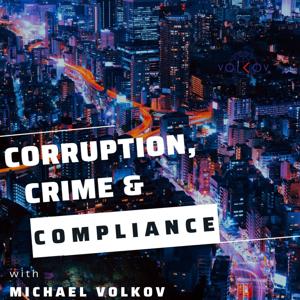
In this Episode, Michael Volkov takes a broad review of testing and auditing of ethics and compliance programs.
 View all episodes
 By Michael Volkov

4.9
4242 ratings
The Justice Department and various regulatory agencies continue to emphasize the importance of continuous improvement, testing and review as part of robust assessment procedures in an effective compliance program. The Treasury Department's Office of Foreign Asset Control has specifically stated that a sanctions compliance program should include "a comprehensive, independent, and objective testing or audit function" so that a company can determine "how their program[] [is] performing and should be updated, enhanced, or recalibrated to account for a changing risk assessment or sanctions environment." The Health and Human Services -- Office of Inspector General has made similar statements underscoring the need to conduct compliance audits and testing.
An important part of every compliance program focuses beyond the design and operation of the program to the important issue of whether the program itself is working. In this respect, DOJ and regulatory agencies have noted that CCOs should be striving to develop "continuous" monitoring systems and avoid "snapshots" in time. In order to execute such monitoring, compliance has to maintain broad access to operational data across all key functions in a company. This data has to be used to update regularly risk assessments, compliance policies and procedures and financial controls.
In this Episode, Michael Volkov takes a broad review of testing and auditing of ethics and compliance programs.
27,011 Listeners

3,530 Listeners

4,420 Listeners
20 Listeners

113,121 Listeners

56,944 Listeners
15 Listeners

14 Listeners
17 Listeners
56 Listeners
2,592 Listeners
12 Listeners
5,832 Listeners

16,525 Listeners

7,014 Listeners