
Sign up to save your podcasts
Or

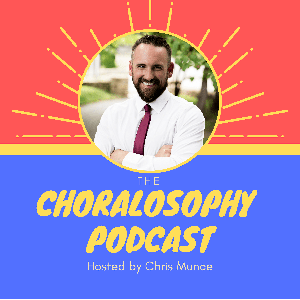

Beat is felt in the body, constructed in the brain, and CAN be taught. Rhythm is the next layer of time division. Choirs are notorious for not being great at it… Mine are no exception. A few years ago I got tired of choirs that struggle with rhythm and beat. So, we began installing more tools. We are nowhere near where we need to be, but we are getting there!
In Part 4, we will go through the various rhythm tools that solve 99% of rhythm problems for singers, and players alike. We STILL want students to hear music happening, as fluently as language, in their head. And as Carol Krueger said wisely in episode 90, we want them to “be able to grab a score, and go sit under a tree and read it like it’s Moby Dick.” But how do we do this? (Pitch is only one part of the puzzle. Be sure to go back to Part 1-3 if you
The secret is the sequence, the repetition and the QUESTIONS! The ones we ask, and eventually the ones they learn to ask.
Tune in, and have your thinking stimulated and challenged. Then, weigh in yourself with your related ideas and experiences on Facebook in the Choralosophers group or over on choralosophy.substack.com Also, don’t forget to grab a reading rope for your classroom wall from the shop! Music Reading Rope
7 Years of Choralosophy: The View from the Other Side of the Mic by Chris Munce
Seven years ago, Choralosophy was an experiment. Today, it’s a career. It is a job, no different than your job, albeit a bit more public? Today is the show’s 7th birthday. Here is what I’ve learned:
Read on SubstackFor future rehearsal clips, find me on TikTok, Insta and Facebook
Choralosophy Podcast (@choralosophy) • Instagram photos and videos
 View all episodes
 By Christopher M Munce

4.6
131131 ratings
Beat is felt in the body, constructed in the brain, and CAN be taught. Rhythm is the next layer of time division. Choirs are notorious for not being great at it… Mine are no exception. A few years ago I got tired of choirs that struggle with rhythm and beat. So, we began installing more tools. We are nowhere near where we need to be, but we are getting there!
In Part 4, we will go through the various rhythm tools that solve 99% of rhythm problems for singers, and players alike. We STILL want students to hear music happening, as fluently as language, in their head. And as Carol Krueger said wisely in episode 90, we want them to “be able to grab a score, and go sit under a tree and read it like it’s Moby Dick.” But how do we do this? (Pitch is only one part of the puzzle. Be sure to go back to Part 1-3 if you
The secret is the sequence, the repetition and the QUESTIONS! The ones we ask, and eventually the ones they learn to ask.
Tune in, and have your thinking stimulated and challenged. Then, weigh in yourself with your related ideas and experiences on Facebook in the Choralosophers group or over on choralosophy.substack.com Also, don’t forget to grab a reading rope for your classroom wall from the shop! Music Reading Rope
7 Years of Choralosophy: The View from the Other Side of the Mic by Chris Munce
Seven years ago, Choralosophy was an experiment. Today, it’s a career. It is a job, no different than your job, albeit a bit more public? Today is the show’s 7th birthday. Here is what I’ve learned:
Read on SubstackFor future rehearsal clips, find me on TikTok, Insta and Facebook
Choralosophy Podcast (@choralosophy) • Instagram photos and videos

90,994 Listeners
78,636 Listeners

32,100 Listeners

38,856 Listeners

14,378 Listeners

30,101 Listeners

3,071 Listeners

87,529 Listeners

56,508 Listeners

69,540 Listeners

85,636 Listeners
1,637 Listeners

16 Listeners
0 Listeners

634 Listeners