
Sign up to save your podcasts
Or


In the latest episode of LIT NYC, host Alyssa Katz talks with J. Hoberman about his new opus, Everything Is Now: The 1960s New York Avant-Garde—Primal Happenings, Underground Movies, Radical Pop.
“Certainly the cheap rents are essential. And the fact that there were areas of the city, of Manhattan, which had been in a way deserted because various light industries had left and there were spaces that artists were willing to colonize. You know, the original lofts were nothing like these designer lofts that you see. Cold water, some of them didn't have electricity. It required a lot of ingenuity on the part of the artists to even make these places livable, but the fact that you had these places was a stimulus to a community and see that's another thing that I wanted to stress in this book,” Hoberman says, noting that they made art at a time when the government was busting comedians and banning films here.
“I guess people can appreciate that there was a time before cell phones, but a lot of the people in this book didn't have telephones at all. That was a luxury that they couldn't afford. So how did they meet? How did they connect? There were bars and cafes that they went to, there were neighborhoods that they lived in, there was a sense of community that the city fostered kind of in its indifference.”
 View all episodes
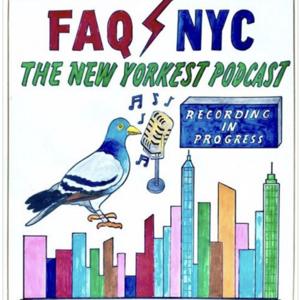
 By FAQ NYC

4.7
193193 ratings
In the latest episode of LIT NYC, host Alyssa Katz talks with J. Hoberman about his new opus, Everything Is Now: The 1960s New York Avant-Garde—Primal Happenings, Underground Movies, Radical Pop.
“Certainly the cheap rents are essential. And the fact that there were areas of the city, of Manhattan, which had been in a way deserted because various light industries had left and there were spaces that artists were willing to colonize. You know, the original lofts were nothing like these designer lofts that you see. Cold water, some of them didn't have electricity. It required a lot of ingenuity on the part of the artists to even make these places livable, but the fact that you had these places was a stimulus to a community and see that's another thing that I wanted to stress in this book,” Hoberman says, noting that they made art at a time when the government was busting comedians and banning films here.
“I guess people can appreciate that there was a time before cell phones, but a lot of the people in this book didn't have telephones at all. That was a luxury that they couldn't afford. So how did they meet? How did they connect? There were bars and cafes that they went to, there were neighborhoods that they lived in, there was a sense of community that the city fostered kind of in its indifference.”

38,430 Listeners

6,881 Listeners

9,238 Listeners
8,474 Listeners
4,113 Listeners

1,576 Listeners

65 Listeners
163 Listeners
2,082 Listeners
670 Listeners

416 Listeners

16,525 Listeners
267 Listeners

131 Listeners

663 Listeners