
Sign up to save your podcasts
Or

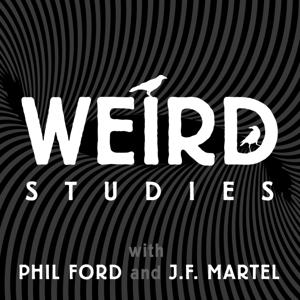

David Lynch's Lost Highway was released in 1997, five years after Twin Peaks: Fire Walk With Me elicited a fusillade of boos and hisses at Cannes. The Twin Peaks prequel's poor reception allegedly sent its American auteur spiralling into something of an existential crisis, and Lost Highway has often been interpreted as a response to -- or result of -- that crisis. Certainly, the film is among Lynch's darkest, boldest, and most enigmatic. But of course, we do the film an injustice by reducing it to the psychological state of its director. Indeed, one of the contentions of this episode is that all artistic interpretation constitutes a kind of injustice. But as you will hear, that doesn't stop Phil and JF from interpreting the hell out of the film. Just or unjust, fair or unfair, interpretation may well be necessary in aesthetic matters. It may be the means by which we grow through the experience of art, the way by which art makes us something new, strange, and other. Perhaps the trick is to remember that no mode of interpretation is, to borrow Freud's phrase, the one and only via regia, but that every one is just another highway at night...
REFERENCES
David Lynch (dir.), Lost Highway
Alfred Hitchcock (dir.), Vertigo
Learn more about your ad choices. Visit megaphone.fm/adchoices
 View all episodes
 By SpectreVision Radio

4.8
586586 ratings
David Lynch's Lost Highway was released in 1997, five years after Twin Peaks: Fire Walk With Me elicited a fusillade of boos and hisses at Cannes. The Twin Peaks prequel's poor reception allegedly sent its American auteur spiralling into something of an existential crisis, and Lost Highway has often been interpreted as a response to -- or result of -- that crisis. Certainly, the film is among Lynch's darkest, boldest, and most enigmatic. But of course, we do the film an injustice by reducing it to the psychological state of its director. Indeed, one of the contentions of this episode is that all artistic interpretation constitutes a kind of injustice. But as you will hear, that doesn't stop Phil and JF from interpreting the hell out of the film. Just or unjust, fair or unfair, interpretation may well be necessary in aesthetic matters. It may be the means by which we grow through the experience of art, the way by which art makes us something new, strange, and other. Perhaps the trick is to remember that no mode of interpretation is, to borrow Freud's phrase, the one and only via regia, but that every one is just another highway at night...
REFERENCES
David Lynch (dir.), Lost Highway
Alfred Hitchcock (dir.), Vertigo
Learn more about your ad choices. Visit megaphone.fm/adchoices
577 Listeners
2,675 Listeners
762 Listeners
1,289 Listeners
341 Listeners

378 Listeners
398 Listeners
583 Listeners

1,665 Listeners

354 Listeners
1,050 Listeners
377 Listeners
202 Listeners
284 Listeners
307 Listeners