
Sign up to save your podcasts
Or

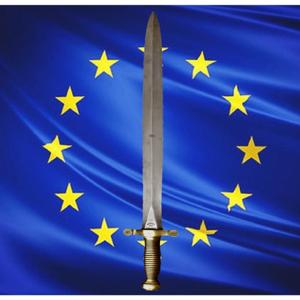


Il riflesso speculare dello SCAF
In fondo, la sindrome dello SCALP Navale è il riflesso speculare dello SCAF: mentre l’aviazione da combattimento è crollata sotto il peso di un’integrazione mal gestita, la marina sta crollando sotto il peso di una mancata integrazione per paura di essere mal gestita. Le due patologie, apparentemente opposte, producono lo stesso risultato: la dipendenza strategica dagli standard americani, che si tratti dell’F-35 nei cieli o del Tomahawk e dei silos MK-41 in mare.
La vera lezione da trarre da questo corpus SCAF-MGCS-Cloud da combattimento-SCALP Naval è che l’Europa navale non ha bisogno di un programma comune per affondarsi da sola: il semplice accumulo di decisioni nazionali razionali è sufficiente a produrre un risultato collettivamente irrazionale. Venticinque classi di fregate e cacciatorpediniere, con ogni cantiere navale sovrano che protegge il proprio «strumento di famiglia»: è la tragedia dei beni comuni applicata agli armamenti. Non si tratta più di fantasticare su una fusione industriale irrealistica sul modello dello SCAF, ma di fare l’opposto di ciò che l’ha affossato: accettare che un unico standard sovrano — anche se francese — valga meglio di una moltitudine di standard nazionali, tutti condannati all’insignificanza strategica.
FCAS’s Inverted Mirror
At bottom, the SCALP Naval syndrome is FCAS’s inverted mirror: where combat aviation collapsed under the weight of poorly governed integration, the navy collapses under the weight of non-integration born of the fear of being poorly governed. The two pathologies, seemingly opposite, produce the same result — strategic dependence on American standards, whether the F-35 in the sky or the Tomahawk and MK-41 silos at sea.
The real lesson of this FCAS-MGCS-Combat Cloud-SCALP Naval body of work is that European navies do not need a joint programme to sabotage themselves: the mere accumulation of rational national decisions is enough to produce a collectively irrational result. Twenty-five classes of frigates and destroyers, each sovereign shipyard guarding its own ‘family tool’: this is the tragedy of the commons applied to weapons procurement. It is no longer a matter of fantasising about an unrealistic industrial fusion on the FCAS model, but of doing the opposite of what killed FCAS: accepting that a single sovereign standard — French though it may be — is worth more than a multitude of national standards all condemned to strategic irrelevance.
SCAF:s spegelbild
I grund och botten är SCALP Naval-syndromet en spegelbild av SCAF: där stridsflyget har kollapsat under tyngden av en dåligt styrd integration, kollapsar marinen under tyngden av en bristande integration av rädsla för att bli dåligt styrd. De två tillstånden, som till synes är motsatta, leder till samma resultat – ett strategiskt beroende av amerikanska standarder, vare sig det gäller F-35 i luften eller Tomahawk och MK-41-silor till havs.
Den verkliga lärdomen av detta SCAF-MGCS-Cloud-stridssystem-SCALP Naval är att den europeiska marinen inte behöver något gemensamt program för att sänka sig själv: en enkel ackumulering av rationella nationella beslut räcker för att åstadkomma ett kollektivt irrationellt resultat. Tjugofem klasser av fregatter och jagare, där varje självständigt varv skyddar sitt ”familjeverktyg” – det är tragedin med allmännyttiga resurser tillämpad på försvarsindustrin. Det handlar inte längre om att fantisera om en orealistisk industriell sammanslagning efter SCAF-modellen, utan om att göra raka motsatsen till det som tog kål på den: att acceptera att en enda suverän standard – även om den vore fransk – är bättre än en mångfald nationella standarder som alla är dömda till strategisk obetydlighet.
Le miroir inversé du SCAF
Au fond, le syndrome du SCALP Naval est le miroir inversé du SCAF : là où l’aviation de combat s’est effondrée sous le poids d’une intégration mal gouvernée, la marine s’effondre sous le poids d’une non-intégration par peur d’être mal gouvernée. Les deux pathologies, opposées en apparence, produisent le même résultat — la dépendance stratégique aux standards américains, qu’il s’agisse du F-35 dans le ciel ou du Tomahawk et des silos MK-41 en mer.
Le vrai enseignement de ce corpus SCAF-MGCS-Cloud de combat-SCALP Naval, c’est que l’Europe navale n’a pas besoin d’un programme commun pour se saborder : le simple cumul de décisions nationales rationnelles suffit à produire un résultat collectivement irrationnel. Vingt-cinq classes de frégates et destroyers, chaque chantier souverain protégeant son « outil de famille », c’est la tragédie des biens communs appliquée à l’armement. Il ne s’agit plus de fantasmer une fusion industrielle irréaliste sur le modèle du SCAF, mais de faire l’inverse de ce qui l’a tué : accepter qu’un seul standard souverain — fût-il français — vaille mieux qu’une multitude de standards nationaux tous condamnés à l’insignifiance stratégique.
21세기 해군 강국이란 무엇인가?
호위함 경쟁 이면에는 더 광범위한 질문이 자리 잡고 있다. 21세기 해군 강국이란 무엇인가? 프랑스의 사례 — 확고한 교리, 지속적인 주계약자 역할, 성공적인 수출 — 는 일관된 산업 정책이 여전히 필수 조건임을 보여준다. 하지만 잠수함 사례는 이것이 충분하지 않음을 증명한다. 일정 수준의 기술력을 넘어서면 수출은 지리정치적 자의성에 휘둘리게 되며, 이 경우 실력보다는 동맹 관계가 우선시된다. 그리고 함대가 없는 우크라이나는 이제 해군 강국이 톤수보다는 신속한 반복 개발 속도를 통해 구축될 수 있음을 상기시켜 주며, 항공모함과 전함을 기반으로 한 1세기 동안의 해군 교리를 뒤집고 있다.
이러한 인식에서 세 가지 길이 열린다.
첫 번째는 유럽의 전략적 자립과 관련된다. 해군력 강화가 SCAF와 같은 주권주의적 사고방식에 무한정 가로막히게 될 것인가?
두 번째는 교리 그 자체와 관련된다. 키예프와는 달리, 우회해야 할 대상이 아니라 방어해야 할 톤수를 보유한 강대국에 우크라이나의 사례가 어느 정도까지 적용될 수 있을까?
마지막으로 세 번째는 프랑스와 관련된 문제다. 중국이 4년마다 프랑스 해군 함대 한 척 분량의 함정을 진수하는 세상에서, 진정한 문제는 더 이상 산업적 차원이 아니라 예산적 차원일지도 모른다. 즉, 장인 정신이 깃든 우수 모델이 대량 생산 모델 앞에서 얼마나 오래 버틸 수 있을까?
Was ist Seemacht im 21. Jahrhundert?
Hinter der Fregattenschlacht steht eine größere Frage: Was ist Seemacht im 21. Jahrhundert? Der französische Fall – stabile Doktrin, durchgehende Systemführerschaft, erfolgreicher Export – zeigt, dass eine kohärente Industriepolitik eine notwendige Bedingung bleibt. Doch die U-Boote beweisen, dass sie nicht hinreichend ist: Jenseits eines bestimmten technologischen Niveaus kippt der Export in geopolitische Willkür, wo das Bündnis über das Verdienst siegt. Und die Ukraine erinnert ohne eigene Flotte daran, dass sich Seemacht heute eher über die Iterationsgeschwindigkeit als über die Tonnage aufbauen lässt – eine Umkehrung eines Jahrhunderts an Seedoktrin, das auf Flugzeugträger und Schlachtschiff gebaut war.
Drei Türen öffnen sich aus dieser Feststellung.
Die erste betrifft die europäische strategische Autonomie: Wird die Konsolidierung der Marineindustrie unbegrenzt an denselben souveränistischen Reflexen scheitern wie das Kampfflugzeugprogramm SCAF?
Die zweite betrifft die Doktrin selbst: Wie weit lässt sich das ukrainische Beispiel auf eine Macht übertragen, die – anders als Kiew – Tonnage zu verteidigen statt zu umgehen hat?
Die dritte schließlich betrifft Frankreich: In einer Welt, in der China alle vier Jahre eine französische Flotte zu Wasser lässt, ist die eigentliche Frage vielleicht nicht mehr industrieller, sondern budgetärer Natur – wie lange hält ein Modell handwerklicher Exzellenz einem Modell der Masse stand?
What Constitutes Naval Power in the Twenty-First Century?
Beneath the frigate battle lies a bigger question: what constitutes naval power in the twenty-first century? The French case — stable doctrine, continuous prime contracting, export success — shows that a coherent industrial policy remains a necessary condition. But submarines prove it is not sufficient: beyond a certain technological threshold, exports tip into geopolitical arbitrariness, where alliance trumps merit. And Ukraine, without a fleet, reminds us that naval power can now be built through the speed of iteration rather than tonnage — reversing a century of naval doctrine built on the aircraft carrier and the battleship.
Three doors open from this observation.
The first concerns European strategic autonomy: will naval consolidation keep running indefinitely into the same sovereigntist reflexes as the SCAF fighter programme?
The second concerns doctrine itself: how far can the Ukrainian example transfer to a power that, unlike Kyiv, has tonnage to defend rather than to circumvent?
The third, finally, concerns France: in a world where China launches the equivalent of the French fleet every four years, the real question may no longer be industrial but budgetary — how long can a model of artisanal excellence hold out against a model of mass?
21世紀における海軍大国とは何か?
フリゲート艦をめぐる争いの背後には、より広範な問いが横たわっている。21世紀における海軍大国とは何か? フランスの事例――安定した軍事ドクトリン、継続的な造船能力、成功した輸出――は、一貫した産業政策が依然として必要条件であることを示している。しかし、潜水艦の事例は、それだけでは不十分であることを証明している。ある一定の技術水準を超えると、輸出は地政学的な恣意性に左右されるようになり、実績よりも同盟関係が優先されるようになるのだ。そして、艦隊を持たないウクライナは、海軍大国がもはや総トン数ではなく、開発のスピードによって築かれるようになったことを思い起こさせる――これは、空母や戦艦を基盤として築かれてきた一世紀にわたる海軍ドクトリンを覆すものである。
この認識から、3つの道が開かれる。
第一は、欧州の戦略的自律性に関するものだ。海軍の統合は、SCAFと同様の主権主義的な反射的反応に、いつまでも阻まれ続けるのだろうか。
第二は、教義そのものに関するものだ。キエフとは異なり、回避すべきではなく防衛すべき総トン量を持つ大国において、ウクライナの事例はどの程度適用可能なのか。
そして第三に、フランスそのものに関わる問題だ。中国が4年ごとにフランス海軍1隻分の艦隊を就役させているこの世界において、真の問題はもはや産業的なものではなく、予算的なものかもしれない――職人技による卓越したモデルは、大量生産モデルに対してどれほど持ちこたえられるのだろうか?
Qu’est-ce qu’une puissance navale au XXIᵉ siècle ?
Sous la bataille des frégates se joue une question plus large : qu’est-ce qu’une puissance navale au XXIᵉ siècle ? Le cas français — doctrine stable, maîtrise d’œuvre continue, export réussi — montre qu’une politique industrielle cohérente reste une condition nécessaire. Mais les sous-marins prouvent qu’elle n’est pas suffisante : au-delà d’un certain niveau technologique, l’export bascule dans l’arbitraire géopolitique, où l’alliance prime sur le mérite. Et l’Ukraine, sans flotte, rappelle qu’une puissance navale peut désormais se construire par la vitesse d’itération plutôt que par le tonnage — inversant un siècle de doctrine navale bâtie sur le porte-avions et le cuirassé.
Trois portes s’ouvrent à partir de ce constat.
La première touche à l’autonomie stratégique européenne : la consolidation navale butera-t-elle indéfiniment sur les mêmes réflexes souverainistes que le SCAF ?
La seconde touche à la doctrine elle-même : jusqu’où l’exemple ukrainien est-il transposable à une puissance qui, contrairement à Kiev, a un tonnage à défendre plutôt qu’à contourner ?
La troisième, enfin, touche à la France : dans un monde où la Chine met à l’eau une flotte française tous les quatre ans, la vraie question n’est peut-être plus industrielle, mais budgétaire — combien de temps un modèle d’excellence artisanale tient-il face à un modèle de masse ?
戦争の構造的コストに直面するフランス
ジェローム・デナリエが示すことは、ラファール戦闘機という単一の事例にとどまらない。それは、軍事力そのものを評価するための枠組みの変化である。航空機、装甲車、弾薬といった備蓄量を数えるだけでは、もはや実際の軍事能力を測るには不十分だ。今や重要なのは、その備蓄を継続的な供給へと転換し、厳しい状況下でも長期にわたり生産、修理、交換を継続する能力である。しかし、まさにそこにフランスの弱点が露呈している。防衛産業は技術的には最先端にあるものの、ユーロプラズマやタルブ鋳造所の事例が如実に示すように、重要な分野において分断化が進み、資本不足に陥っているのだ。
著者が記述する「3つの支払い」というメカニズム――放棄、再建、そして不完全――は、火薬や弾薬の分野に限ったことではない。電子部品、希土類、宇宙技術、産業用サイバーセキュリティなど、他の分野でも同様の動態が見られる可能性が高い。ある能力が戦略的であると宣言されるたびに、それに伴う首尾一貫した経済モデルが伴わなければ、その代償は消えるわけではなく、単に時間的に先送りされるだけであり、その過程でさらに重くなるのである。
したがって、本記事が今後数ヶ月に向けて投げかける真の課題は、単に予算上の問題にとどまらない。それは、フランス、ひいては欧州全体が、次の危機が起きてからではなく、その前に――つまり、どこに投資すべきかを選択できるうちに――こうした脆弱な部分を特定できるかどうか、つまり、依存関係が最も大きな代償を伴う事態になって初めてその存在に気づくのではなく、事前に把握できるかどうかという点にある。
From the publisher's feed

42 Listeners