
Sign up to save your podcasts
Or

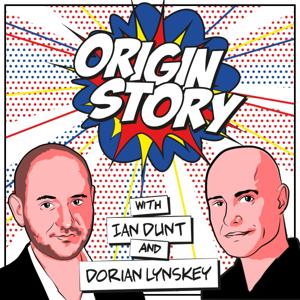

Welcome back to Origin Story and part two of the story of European union. Last time we left Europe in 1955, with Jean Monnet’s European Coal and Steel Community bringing European nations together without military force for the first time.
We pick up the story with another game-changing Europhile, the Belgian politician Paul-Henri Spaak. He convenes the Messina Conference on the “common market”, which leads in 1957 to the Treaty of Rome and the birth of the European Economic Community. Six nations come together “to lay the foundations of an ever-closer union among the peoples of Europe”.
This is a period of both unprecedented economic prosperity and maddening political inertia, as France’s nationalist president Charles de Gaulle slams on the brakes, drives everyone to distraction, and says a furious “Non!” to UK membership. Although Britain has realised at last that it belongs in Europe, it takes a decade of frustration before prime minister Edward Heath can seal the deal. A whopping victory for “Yes” in the 1975 referendum seems like the last word on the matter, but there’s trouble ahead — and not just in Britain.
By 1980, the EEC has added only three new member states and made its first tentative steps towards monetary union. The great visionaries Kalergi and Monnet have passed away. The UK’s new prime minister Margaret Thatcher looks set to become the next De Gaulle. And the EEC is wrestling with huge challenges like decision-making, agriculture, regional inequality and the accession of poorer nations emerging from authoritarianism. We end with the arrival of Jacques Delors and the next great leap forwards: at last, a true European Union is on the cards.
How did Spaak convince European leaders to turn a coal-and-steel arrangement into a proper economic community? Why was Charles de Gaulle so determined to sabotage the alliance he sought to lead? Why did Britain finally decide to come off the sidelines of Europe and how did it become a politically explosive issue? What did Europe learn about the perils of stagnation? And what faultlines in the project are we still dealing with today?
• Support Origin Story on Patreon
• Buy the Origin Stories books on Centrism, Fascism and Conspiracy Theory
• Subscribe to Origin Story on YouTube
Reading list
• Anonymous – ‘Europe: Then It Will Live...’, Time (6 October 1961)
• Roderick Beaton – Europe: A New History (2026)
• Richard von Coudenhove-Kalergi – Crusade of Pan-Europe: Autobiography of a Man and a Movement (1943)
• W.B. Curry – The Case for Federal Union (1939)
• House of Commons – Schuman Plan debate (27 June 1950)
• Roy Jenkins – A Life at the Centre (1991)
• Tony Judt – A Grand Illusion? An Essay on Europe (1996)
• Tony Judt – Postwar: A History of Europe Since 1945 (2005)
• Tom McTague – Between the Waves: The Hidden History of a Very British Revolution 1945-2016 (2025)
• Jean Monnet – Memoirs (1978)
• George Orwell – ‘Toward European Unity’ (1947)
• Fintan O’Toole – Heroic Failure: Brexit and the Politics of Pain (2018)
• Ernesto Rossi and Altiero Spinelli – The Ventotene Manifesto (1941)
• Robert Saunders – Yes to Europe!: The 1975 Referendum and Seventies Britain (2018)
• Martin Sustrik – ‘Jean Monnet: The Guerilla Bureaucrat’, LessWrong (20 March 2021)
• Simon Usherwood and John Pinder – The European Union: A Very Short Introduction: Fourth Edition (2018)
Written and presented by Ian Dunt and Dorian Lynskey. Producer: Simon Williams. Videographer: Connor Newson. Music by Jade Bailey. Art by Jim Parrett. Logo by Mischa Welsh. Group Editor: Andrew Harrison. Origin Story is a Podmasters production
www.podmasters.co.uk
Learn more about your ad choices. Visit podcastchoices.com/adchoices
 View all episodes
 By Podmasters

4.8
9393 ratings
Welcome back to Origin Story and part two of the story of European union. Last time we left Europe in 1955, with Jean Monnet’s European Coal and Steel Community bringing European nations together without military force for the first time.
We pick up the story with another game-changing Europhile, the Belgian politician Paul-Henri Spaak. He convenes the Messina Conference on the “common market”, which leads in 1957 to the Treaty of Rome and the birth of the European Economic Community. Six nations come together “to lay the foundations of an ever-closer union among the peoples of Europe”.
This is a period of both unprecedented economic prosperity and maddening political inertia, as France’s nationalist president Charles de Gaulle slams on the brakes, drives everyone to distraction, and says a furious “Non!” to UK membership. Although Britain has realised at last that it belongs in Europe, it takes a decade of frustration before prime minister Edward Heath can seal the deal. A whopping victory for “Yes” in the 1975 referendum seems like the last word on the matter, but there’s trouble ahead — and not just in Britain.
By 1980, the EEC has added only three new member states and made its first tentative steps towards monetary union. The great visionaries Kalergi and Monnet have passed away. The UK’s new prime minister Margaret Thatcher looks set to become the next De Gaulle. And the EEC is wrestling with huge challenges like decision-making, agriculture, regional inequality and the accession of poorer nations emerging from authoritarianism. We end with the arrival of Jacques Delors and the next great leap forwards: at last, a true European Union is on the cards.
How did Spaak convince European leaders to turn a coal-and-steel arrangement into a proper economic community? Why was Charles de Gaulle so determined to sabotage the alliance he sought to lead? Why did Britain finally decide to come off the sidelines of Europe and how did it become a politically explosive issue? What did Europe learn about the perils of stagnation? And what faultlines in the project are we still dealing with today?
• Support Origin Story on Patreon
• Buy the Origin Stories books on Centrism, Fascism and Conspiracy Theory
• Subscribe to Origin Story on YouTube
Reading list
• Anonymous – ‘Europe: Then It Will Live...’, Time (6 October 1961)
• Roderick Beaton – Europe: A New History (2026)
• Richard von Coudenhove-Kalergi – Crusade of Pan-Europe: Autobiography of a Man and a Movement (1943)
• W.B. Curry – The Case for Federal Union (1939)
• House of Commons – Schuman Plan debate (27 June 1950)
• Roy Jenkins – A Life at the Centre (1991)
• Tony Judt – A Grand Illusion? An Essay on Europe (1996)
• Tony Judt – Postwar: A History of Europe Since 1945 (2005)
• Tom McTague – Between the Waves: The Hidden History of a Very British Revolution 1945-2016 (2025)
• Jean Monnet – Memoirs (1978)
• George Orwell – ‘Toward European Unity’ (1947)
• Fintan O’Toole – Heroic Failure: Brexit and the Politics of Pain (2018)
• Ernesto Rossi and Altiero Spinelli – The Ventotene Manifesto (1941)
• Robert Saunders – Yes to Europe!: The 1975 Referendum and Seventies Britain (2018)
• Martin Sustrik – ‘Jean Monnet: The Guerilla Bureaucrat’, LessWrong (20 March 2021)
• Simon Usherwood and John Pinder – The European Union: A Very Short Introduction: Fourth Edition (2018)
Written and presented by Ian Dunt and Dorian Lynskey. Producer: Simon Williams. Videographer: Connor Newson. Music by Jade Bailey. Art by Jim Parrett. Logo by Mischa Welsh. Group Editor: Andrew Harrison. Origin Story is a Podmasters production
www.podmasters.co.uk
Learn more about your ad choices. Visit podcastchoices.com/adchoices

393 Listeners
140 Listeners
66 Listeners
190 Listeners
54 Listeners

97 Listeners
153 Listeners
3,336 Listeners

1,183 Listeners
797 Listeners

386 Listeners
45 Listeners
37 Listeners
43 Listeners
69 Listeners