
Sign up to save your podcasts
Or

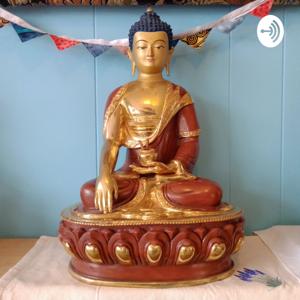


Venerable Robina Courtin continues teaching on Lama Zopa Rinpoche's book, How to Face Death Without Fear (https://bit.ly/KLZR_DeathWithoutFear).
How to Face Death Without Fear is a collection of Rinpoche's teachings on how to think about death and reincarnation, how to help our loved ones at the time of death (including our pets) and how to prepare for our own death. Venerable Robina edited the collection, and as she explains in the preface: "Because for most of us death is a difficult thing to come to terms with—our loved one’s or our own—working out which practices to do can be daunting. Therefore Rinpoche’s actual advice, the things to do—contained in parts 3, 4, and 5, the heart of the book—have been identified as eighty-seven distinct practices, numbered and structured chronologically to help us know what to do when.”
Course notes: https://bit.ly/DeathWithoutFearNotes
Links related to video:
How to Face Death Without Fear book: https://bit.ly/KLZR_DeathWithoutFear
Mantras for Animals playlist on Spotify: http://bit.ly/MantrasForAnimals
***
Venerable Robina Courtin continues teaching on Lama Zopa Rinpoche's book, How to Face Death Without Fear (https://bit.ly/KLZR_DeathWithoutFear).
How to Face Death Without Fear is a collection of Rinpoche's teachings on how to think about death and reincarnation, how to help our loved ones at the time of death (including our pets) and how to prepare for our own death.
Venerable Robina edited the collection, and as she explains in the preface: "Because for most of us death is a difficult thing to come to terms with—our loved one’s or our own—working out which practices to do can be daunting. Therefore Rinpoche’s actual advice, the things to do—contained in parts 3, 4, and 5, the heart of the book—have been identified as eighty-seven distinct practices, numbered and structured chronologically to help us know what to do when.”
Links related to video:
How to Face Death Without Fear book: https://bit.ly/KLZR_DeathWithoutFear
The Undead, by Dick Teresi: https://bit.ly/TheUndead_Book
The Tibetan Art of Parenting, by Anne Hubbell Maiden, Edie Farwell: http://bit.ly/TibetanArtOfParentingBook
Death, Intermediate State, and Rebirth in Tibetan Buddhism
By Lati Rinpoche and Jeffrey Hopkins: http://bit.ly/DeathIntermediateStateRebirthBook
Mind of Clear Light : Advice on Living Well and Dying Consciously. His Holiness the Dalai Lama , Edited by Jeffrey Hopkins: http://bit.ly/MindOfClearLightBook
Prayer to be reborn in the land of bliss by Lama Tsongkhapa: http://bit.ly/LandOfBlissPrayer
Mantras for Animals playlist on Spotify: http://bit.ly/MantrasForAnimals
***
Venerable Robina Courtin teaches on Lama Zopa Rinpoche's book, How to Face Death Without Fear (https://bit.ly/KLZR_DeathWithoutFear).
How to Face Death Without Fear is a collection of Rinpoche's teachings on how to think about death and reincarnation, how to help our loved ones at the time of death (including our pets) and how to prepare for our own death.
Venerable Robina edited the collection, and as she explains in the preface: "Because for most of us death is a difficult thing to come to terms with—our loved one’s or our own—working out which practices to do can be daunting. Therefore Rinpoche’s actual advice, the things to do—contained in parts 3, 4, and 5, the heart of the book—have been identified as eighty-seven distinct practices, numbered and structured chronologically to help us know what to do when.”
Links related to video:
How to Face Death Without Fear book: https://bit.ly/KLZR_DeathWithoutFear
Heart Spoon prayer by Pabongka Rinpoche: https://www.lamayeshe.com/article/hea...
Prayer to be reborn in the land of bliss by Lama Tsongkhapa: http://bit.ly/LandOfBlissPrayer
Mantras for Animals playlist on Spotify: http://bit.ly/MantrasForAnimals
***
Death is not fearful (9:36)
The bottom line is to help the person who is dying become peaceful (18:39)
Death is definite...Imagine you have a flight at the end of the day (30:20)
Wake up call! Heart spoon (46:24)
What does it mean to not waste your life? What does it mean to live a good life? The view of karma; self creation (54:00)
Q: "You say "dying in a Pure Land ... be in bliss." But aa I am on the Bodhisattva path how do you prevent this or return to Samarsa? I want to RETURN and free all sentient beings from samsara and ONLY then can I rest in peace! " (1:00:12)
How to create a conducive environment for a dying person (1:11:23)
Before you walk in to your Christmas breakfast/lunch/dinner/drinks - STOP!
Sit for 7 minutes and 5 seconds.
Fill yourself up with everything you need to make this the Best Christmas Ever for you and all the people you connect with! Then: walk in with courage and confidence - you've got this! 😄
*** May anyone who sees, hears, thinks of, remembers or has anything to do with even a moment of this meditation create causes for enlightenment within their mindstream.
Christmas Eve public talk from Venerable Robina Courtin: “How to bring the Dharma to Christmas Dinner”!
The festive season can often be experienced as stressful and hectic, with increased family and social commitments and the pressure to spend, spend, spend! In this public talk, Venerable Robina discusses ways we can apply a Buddhist perspective to find peace and create harmony amidst the Christmas mayhem.
This Christmas Eve talk was inspired by Lama Yeshe’s “Silent Mind, Holy Mind” teachings at Kopan Monastery in 1971, about Christmas and Buddhist practice. You can read some of these teachings on the FPMT website here: https://www.lamayeshe.com/article/christmas-dharma.
You are welcome to join us on Zoom every Monday night at 7:30pm Melbourne, Australia time (AEST/AEDT) as we engage with this Vajrasattva Practice!!
Join Zoom Meeting: https://us02web.zoom.us/j/81983188531?pwd=Uk1KLzBuYTcrMndWTTR0RjRjcWVPdz09
Meeting ID: 819 8318 8531 Passcode: 362338
***
Venerable Robina Courtin (https://www.robinacourtin.com) leads a short (22 minute) Vajrasattva practice including the Four Opponent Powers and the the 100 syllable Vajrasattva Mantra.
You can do this practice at the end of each day just by playing the audio and following the instruction. How good is that?
Begin by taking refuge, play through the audio following the visualisation and instruction and perform your own dedication after the audio ends with "be delighted, totally rejoice!!".
You can also read Kyabje Lama Zopa Rinpoche's advice on Vajrasattva practice.
Venerable Robina Courtin teaches on "Mahamudra: How to Discover Our True Nature.", a book of Lama Yeshe's teachings edited by Venerable Robina. The original teachings by Lama Yeshe were given in Bendigo, Australia in 1981; hosted by Atisha Centre.
Lama Yeshe tells us that mahamudra is “the universal reality of emptiness, of nonduality...with mahamudra meditation there is no doctrine, no theology, no philosophy, no God, no Buddha. Mahamudra is only experience.” (http://bit.ly/MahamudraFPMTShop)
Chapter 9 "Now seek the self and find Mahamudra" (4:26)
Now let's meditate on Mahamudra: The mindfulness fish... (18:09)
Ego is like a thief (22:30)
The label cannot be the parts (26:09)
Identifying the nuclear energy of ego...(29:51)
"Learn to like a problem like you like ice-cream" (35:27)
The mindfulness fish captures egos concept! (43:52)
Seeing the truth annihilates the lie (48:59)
When you cut the root, you end fear (59:59)
Q: How do you know if you are a reincarnation of someone? (1:01:40)
Q: Is realisation of emptiness synonymous with nirvana? (1:03:13)
Q: What is non duality (1:05:11)
Q: What is the personality- is it just a bundle of tendencies . Lama Zopa and Lama Yeshe seem so different in nature. (1:06:07)
Q: How do I work with the process of recognising my delusions and applying the teachings? [Paraphrasing the question] (1:10:50)
Q: Buddhas will manifest in the aspect (with respect to personality or style) that is most beneficial for the beings that they have a strong karmic connection with, correct? (1:16:24)
Q: How do you know what your yidam is? (1:20:46)
Q: If there is no inherent self, how then does karma manifest to us personally from past lives whether good or bad? Wouldn't that karma be attached to something that has continuity? Wouldn't that karma stop at the cessation of that person's existence? (1:22:22)
Q: Am I accurate in assuming that developing the wisdom wing is what helps change conditioning and eventually karma? Are karma and conditioning interdependent? (1:25:03)
Q: How are Sutra and Tantra different in the focus on realizing emptiness? How important is this realisation on each Path? (1:29:59) Q: What do we do when we think we know what our main delusion is? (1:31:38)
Q: Would it be better to focus on pureland rebirth or human? (1:32:28)
Q: What is it about Tantra that makes it faster and more effective? (1:35:59)
Q: Is there an ending of this process – death, birth, endeavour for enlightenment, become a buddha – are there endless beings that will need to do this so it is endless? And when did this start or has happened always? (1:44:19)
Q: Is there an indicator to let us know we're ready to practice Tantra, or can we start anytime? (1:49:34)
Recitation of the root text: Highway of the Conquerors - The Mahamudra Root Text of the Precious Genden Oral Tradition (1:51:35)
*** May anyone who sees, hears, thinks of, remembers or has anything to do with even a moment of these teachings, create the causes for enlightenment within their mindstream. The merit created through the uploading and accessing, viewing, listening to or remembering of these teachings is dedicated to the long life and continued teaching of all teachers of the Mahayana, to the immediate rebirth of Judy (and all those beings who have recently died) into Amitabha’s pure realm, to the benefit of the people whose names were added to the dedication list during the weekend course and to all beings in all the six realms.
Venerable Robina Courtin teaches on "Mahamudra: How to Discover Our True Nature.", a book of Lama Yeshe's teachings edited by Venerable Robina. The original teachings by Lama Yeshe were given in Bendigo, Australia in 1981; hosted by Atisha Centre.
Lama Yeshe tells us that mahamudra is “the universal reality of emptiness, of nonduality” and its unique characteristic is its emphasis on meditation: “With mahamudra meditation there is no doctrine, no theology, no philosophy, no God, no Buddha. Mahamudra is only experience.” (http://bit.ly/MahamudraFPMTShop)
The use of the word "emptiness" - Empty of *what*? (0:26)
When the penny drops... (6:42)
The emptiness of something is *not* the nothingness of something (10:20)
On the Heart Sutra... (11:05)
Q: In science once you understand logically a topic, the penny drops. Why is it not the same in Buddhist science? Emptiness is logically easy to understand, why does this emptiness penny not drop that easily, even though we understand intellectually? (21:55)
Q: Would "Reality" be a word that the Buddha would use for that which truly exists? (23:25)
Q: So then the I does exist in in some subtle way that it seems like it exists. And the “I “ exists upon the mind calling it the “I”?(23:54)
Q: Can't the fact that everything is made of the same elements - just in different combinations = also explain emptiness, since it's all the same thing anyway? (26:03)
Q: Can the emptiness of pink be a label for the absence of any other colour? The absence of red, etc. (27:06)
Q: Is it like looking at one of those optical illusion paintings where when you stare at it for long enough a picture of a form is within the patterns? (28:12)
Q: Can you elaborate on the role of intention… is intention what we often confuse to be the “I” in so far as it often runs the show. (28:54)
We don't even *need* an "I" that runs the show - an analysis (29:27)
Q: The only person who can cognize the absence of tea is the person who expects to find tea. I get that. But what if the person looking for the I expects NOT to find the I. How then, can the absence of the I be cognized. (35:58)
Q: Am I correct in this? I exist exactly where there is no I...[with question clarification] (36:34)
Q: What directs the intention? Is it karma or habit? If so, what creates a new habit? (40:29)
The real meaning of the word "karma" (41:27)
Q: What is the role of the ego in relation to intention, is it merely labeled as well? (41:51)
Q: Does that mean that intention will be driven purely by virtue once we remove the habitual delusions and karmic imprint (44:56)
Q: If we realise the emptiness of “I”, and the “I” is a dependent arising, do we also realise our interconnection with every other sentient being? Is this synonymous with “oneness”, “one consciousness” and having a non-conceptual experience of this? (45:24)
Q: Pardon ignorance, what is the role of emptiness in Buddhism? (50:52)
Q: As a relative beginner to Buddhist practice how often should I meditate and what type of meditation is best? (52:04)
*** May anyone who sees, hears, thinks of, remembers or has anything to do with even a moment of these teachings, create the causes for enlightenment within their mindstream. The merit created through the uploading and accessing, viewing, listening to or remembering of these teachings is dedicated to the long life and continued teaching of all teachers of the Mahayana, to the immediate rebirth of Judy (and all those beings who have recently died) into Amitabha’s pure realm, to the benefit of the people whose names were added to the dedication list during the weekend course and to all beings in all the six realms.
Venerable Robina Courtin teaches on "Mahamudra: How to Discover Our True Nature.", a book of Lama Yeshe's teachings edited by Venerable Robina. The original teachings by Lama Yeshe were given in Bendigo, Australia in 1981; hosted by Atisha Centre.
Lama Yeshe tells us that mahamudra is “the universal reality of emptiness, of nonduality” and its unique characteristic is its emphasis on meditation: “With mahamudra meditation there is no doctrine, no theology, no philosophy, no God, no Buddha. Mahamudra is only experience.” (http://bit.ly/MahamudraFPMTShop)
Lama Yeshe’s famous teaching style is fully present in this book, according to the book’s editor, Ven. Robina Courtin: “His words are not only experiential but also direct, funny, deceptively simple, and incredibly encouraging—enlightenment seems possible.” (from the FPMT website http://bit.ly/Mahamudra1)
9 round breathing meditation (5:28)
How our mind shapes our physical world (13:22)
The two truths: conventional and ultimate truth (21:30)
"There's nothing wrong with your heart dear, it's just your behaviour!"(24:59)
It's bad enough that things appear to us as self-existent...the killer is that we believe it! (34:55)
Generally, there are three levels of Dependant Arising (38:23)
Most of the time we are not even getting things accurate *conventionally* (41:23)
Defining what *is* existent (43:13)
Grasping at a fantasy "I"; an analysis (46:49)
How to avoid falling into "the abyss of the great mistake!" (59:02)
Getting on the right track; the two truths go together, they don't contradict.(1:01:16)
*** May anyone who sees, hears, thinks of, remembers or has anything to do with even a moment of these teachings, create the causes for enlightenment within their mindstream. The merit created through the uploading and accessing, viewing, listening to or remembering of these teachings is dedicated to the long life and continued teaching of all teachers of the Mahayana, to the immediate rebirth of Judy and all those beings who have recently died into Amitabha’s pure realm, to the benefit of the people whose names were added to the dedication list during the weekend course and to all beings in all the six realms.
Venerable Robina Courtin teaches on "Mahamudra: How to Discover Our True Nature.", a book of Lama Yeshe's teachings edited by Venerable Robina. The original teachings by Lama Yeshe were given in Bendigo, Australia in 1981; hosted by Atisha Centre.
Lama Yeshe tells us that mahamudra is “the universal reality of emptiness, of nonduality” and its unique characteristic is its emphasis on meditation: “With mahamudra meditation there is no doctrine, no theology, no philosophy, no God, no Buddha. Mahamudra is only experience.” (http://bit.ly/MahamudraFPMTShop)
Lama Yeshe’s famous teaching style is fully present in this book, according to the book’s editor, Ven. Robina Courtin: “His words are not only experiential but also direct, funny, deceptively simple, and incredibly encouraging—enlightenment seems possible.” (from the FPMT website http://bit.ly/Mahamudra1)
Q: The best way to view our mind habits.....is to focus on it? ie viewing a child with love or annoyance...and see the mind habits behind this? (1:13)
Q: Does the guru have to be a "lama" .. can it be a venerable? (5:45)
Q: When Lama Tsong Khapa saw the Light Buddha Manjushri - did he then describe what he saw and an artist then drew an image of this? And is this how we know what Green Tara, Medicine Buddha and all the Light Buddhas look like? (7:12)
Q: I see such new level of lack of morality and fear in society now and I feel and see this everywhere I look...this has really unsettled me and I am asking your opinion on how to not get so upset about all the horrible pervasive anger /misery in the world. (8:07)
Q: I have ‘restless leg syndrome’ (inability to sit for long). My question is on the authenticity of practising Calm Abiding while walking (maybe slowly & mindfully)? (10:55)
How to "Meditate on your mind" (25:08)
Letting go (of anger) (48:12)
Q: I found it difficult to not label it. (1:03:10)
Q: I get lost in the words "watch" the mind. Am I only interested in the vision that I see when my eyes are shut (the tv screen) or am I "watching" or listening to the conversation that comes up as well? (1:03:47)
Q: What are the antidotes to excited energy and sluggishness when they appear? (1:04:47) Q: Where should one start if in an acute emotional/psychological state? (1:08:20)
Q: It felt (mahamudra meditation) like I was in a bathroom with a wall mirror on each side and you look in the mirror and see your image reflected endlessly (1:10:15)
Q: In regards to the story of the sherpa monk, couldn't the monk have purified his karma by the buddhist practice without having died at that time when he went back home? Also wouldn't the decision to allow him to die by not getting the doctor for the monk cause bad karma because of the decision leading to his death even though it was done with a compassionate mind? (1:11:19)
Venerable Robina reading Lama Yeshe's teaching about emptiness (Chapter 8 from the Mahamudra book: https://bit.ly/MahamudraFPMTShop) (1:15:21)
*** May anyone who sees, hears, thinks of, remembers or has anything to do with even a moment of these teachings, create the causes for enlightenment within their mindstream. The merit created through the uploading and accessing, viewing, listening to or remembering of these teachings is dedicated to the long life and continued teaching of all teachers of the Mahayana, to the immediate rebirth of Judy and (all those beings who have recently died) into Amitabha’s pure realm, to the benefit of the people whose names were added to the dedication list during the weekend course and to all beings in all the six realms.
From the publisher's feed

8,326 Listeners