
Sign up to save your podcasts
Or



January 6th 2024
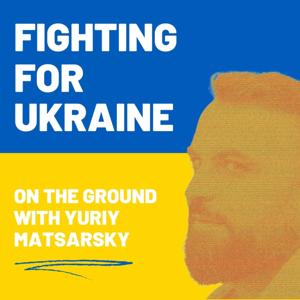
Yuriy breaks down the recent military and political upheavals in Syria, revealing the broader implications for Putin's Russia and the global stage. Delving deep from the frontlines, Yuriy uncovers the hidden narratives and draws strategic insights on striking back against aggression.
Check out Yuriy's latest blog on his substack here: https://substack.com/home/post/p-153574207
You can email Yuriy, ask him questions or simply send him a message of support: [email protected]
Yuriy’s Podbean Patron sign-up to give once or regularly: https://patron.podbean.com/yuriy
Buy Yuriy a coffee here: https://bmc.link/yuriymat
Subscribe to his substack: https://yuriymatsarsky.substack.com/
----more----
TRANSCRIPT: (Apple Podcasts & Podbean app users can enjoy accurate closed captions)
It is January 6th.
What is happening in Syria right now is not just the collapse of the Assad regime: it is also a loud and resound and defeat for Putin's Russia. You can't even imagine how significant this defeat is. Unfortunately, Western politicians don't fully grasp this. Otherwise, we would draw proper conclusions from this failure.
Let's start with the fact that during the early years of Syrian civil war, Moscow did not offer much help to Assad. Most of the assistance was limited to miserable food supplies sent as humanitarian aid to Syrians. I remember seeing firsthand in 2012 how bags of gray, cheapest Russian pasta delivered with great pomp to Latakia airport were discarded by the roadside. When I asked locals why they treated the aid that way, they replied, "We won't reject help when it's offered, but we can't eat this stuff. Have you seen this pasta? Even our dogs won't touch that garbage."
Putin turned his attention to Syria only after starting the war against Ukraine in 2014, that's when Russia got involved in a foreign war. From the outset, Putin pursued several objectives in Syria: trying to find common ground with the West, which was already fighting ISIS there, supporting the kindred dictatorship of Assad and testing weapons and military tactics for later use against Ukraine. For years, Syria became the top topic of Russian propaganda. It was declared Russia's closest ally. TV broadcasts proclaimed Syria as the birthplace of orthodox Christianity, emphasizing the need to protect it from Islamists. Instead of pasta bullets, missiles and mercenaries were sent to Latakia and Damascus.
Here I need to pose and remind you that the only way this podcast is monetized is through your donations. It's tough without them. Please check the episode description for all the necessary details on how to support me. Thank you.
Back to Syria. Russia poured tens of billions of dollars into the conflict. These funds were spent on weapons, infrastructure, propaganda, and even Russian language textbooks, which suddenly became mandatory in Syrian schools. Enormous sums were spent on the war that was supposed to be Putin's triumph. He even visited Syria himself boasting about how he had won and how everything would now be wonderful.
In return for these billions, the Russians secured from Assad the continued operation of a Soviet era level base in Tartus. This base became the primary supply hub for Russian allies and mercenaries in Libya, the Central African Republic, and our countries of region. And now, all of this has suddenly vanished. Assad, Russia's best friend, is gone. A country so significant for Christianity has been surrendered. Russia is on the verge of losing its basis, and billions have been wasted for nothing.
And what does Putin do? Nothing. His propaganda machine simply blames Iran, claims that the Syrians did something wrong, or insists that the Russian operation there ended long ago. There's been no nuclear escalation, no mass mobilization, nothing. Their main ally has simply been abandoned it. And this is precisely how Russia will abandon occupied parts of Ukraine. Propaganda will spin the narrative, but it was actually a victory, not a defeat, that all objectives were achieved and everything is fine.
What's happening in Syria demonstrates to the entire world that Putin will abandon everything and everyone, relinquish any conquests if he's hit hard enough. Don't fear Putin. Strike him. He must lose.
January 2nd 2024
Yuriy reflects on the bleak reality of a new year amidst ongoing war and the absence of miracles. He describes the unrelenting horrors of conflict and the hope for the warmth of spring.
Check out Yuriy's latest blog on his substack here: https://substack.com/home/post/p-153574207
You can email Yuriy, ask him questions or simply send him a message of support: [email protected]
Yuriy’s Podbean Patron sign-up to give once or regularly: https://patron.podbean.com/yuriy
Buy Yuriy a coffee here: https://bmc.link/yuriymat
Subscribe to his substack: https://yuriymatsarsky.substack.com/
----more----
TRANSCRIPT: (Apple Podcasts & Podbean app users can enjoy accurate closed captions)
It's January 2nd.
Here comes the new year. Congratulations. A new year, but the same old war. It's just as it was. The insane deranged horde of murderers and rapists hasn't gone anywhere. Hasn't disappeared, hasn't retreated to where stinking holes in their vile country. There's been no Christmas Miracle, no New Year's miracle. There are no miracles at all. We were all lied to. There can be no miracles in the world where the governments of peaceful countries can calmly watch for years as Russian maniacs kill Ukrainian children and women every day. There can be no miracles in the world, that still hasn't found a way to deal with a monster in the Kremlin and instead trades with him and makes deals.
There are no miracles. New year is just a day to change the calendar. Christmas means even less. Supposedly, it was the day when the Savior was born, but Russian theier paint his face on their uniforms, and this Savior doesn't object. They decorate their planes with his icons, planes that bomb schools, and maternity wards, and he forgives them. They lie to the whole world, claiming they kill thousands of people and destroy entire cities in his name. And what about him? What does the savior do? Who is his saving?
When the Nazi concentration camp Auschwitz was liberated, an inscription was found on one of its walls left by a Jewish prisoner who perished there: "if there is a God, he will have to beg me for forgiveness."
You know what's changed since when? Not much. The Nazis today, aren't Germans, they're Russians. The concentration camps aren't in Nazi occupied Poland, but in Russian occupied Eastern Ukraine. The letter Z has replaced with swastika. That's the only difference. And here we are with this stupid new year, with its empty, never fulfilled hopes for something better.
Well, maybe there is one benefit to this New Year. It means the first month of winter is over. The spring is closer, but we only need to hold on for two more months until the warmth begins. Spring is always easier. When it's warm, when you are not soak it in cold rain and you are not shivering in a damp basement during a shelling. Spring will be better. The main thing is to make it until when.
December 24th 2024
Yuriy recounts his tense experience during the 2010 Kyrgyzstan Revolution, where he was mistaken for an Al-Qaeda member. A simple act involving vodka cleared his name and granted him freedom...
Check out Yuriy's latest blog on his substack here: https://substack.com/home/post/p-153574207
You can email Yuriy, ask him questions or simply send him a message of support: [email protected]
Yuriy’s Podbean Patron sign-up to give once or regularly: https://patron.podbean.com/yuriy
Buy Yuriy a coffee here: https://bmc.link/yuriymat
Subscribe to his substack: https://yuriymatsarsky.substack.com/
----more----
TRANSCRIPT: (Apple Podcasts & Podbean app users can enjoy accurate closed captions)
It is December 24th.
I hope you enjoyed my story about Madame President in Kyrgystan. I have plenty of other stories from my past life and I'm happy to share them with you. It helps me distract myself from our rather grim present, and it might help you understand me better. Today, I'll tell you more about the same trip during which I met President Rosa Otunbayeva. This one is a story about Al-Qaeda.
During the 2010 Revolution in Kyrgyzstan, some of the main events took place in a city called Osh. It was a hometown of a president who had been ousted by the Revolution and most of his inner circle. They tried to consolidate where power there, but they failed due to a fierce resistance of the people. I was in the local regional government building when it was stormed by protestors. The building was defended by supporters of ousted President Kurmanbek Bakiyev. They formed a human chain armed with sticks, rebar, and stones, facing a massive crowd building similar weapons.
About a half a mile away, a unit of local police, about a hundred officers, stood in the grove. We did not intervene but simply observed the brawl. Fortunately, it ended rather quickly and without significant bloodshed. The former president's supporters fled when they realized they were vastly numbered. Only when did the police approach the building. Their major bummed a cigarette off me- I still smoked back then- and complained about how the world was seeing Kyrgyz people at their worst: arm ed with sticks and stones. The police lined up along the facade of a government building while a rally of a victorious crowd began in the square in front of it.
I watched the scene unfold, standing among the crowd. The weather was beautiful. People were happy, the only eye sore was the massive Lenin monument around which the pro-democracy rally took place. A relic of Soviet times. There are still thousands of such Lenin statues across the post-Soviet space.
In the middle of the crowd, two young Kyrgyz men in suits approached me. One whispered that they were from the local branch of main security service- the National Security Committee -and discretely showed me his ID near waist level so our wouldn't see the ever carefully moved his jacket aside to reveal a pistol underneath. The first one will likely asked me to follow them and warned what it was in my best interest to comply.
We left the crowd and walked through nearly deserted streets. Most residents were either at the square or hiding at home fearing further street battles. After about 10 minutes, we arrived at the police station and entered it. It was just as empty. My two escorts led me to a back room where a middle aged civilian man sat looking visibly nervous.
Now with all three of them, they began questioning me. They were convinced I was one of the instigators of the revolution in the city. They asked who had sent me and even answered, we without question: Al-Qaeda. Their propaganda had been spreading the narrative for weeks, that Al-Qaeda was behind the unrest, trying to turn kirstan into caliphate. And there I was, obviously not a local, with a long beard wearing cargo pants, which are popular among journalists and jihadists alike. Naturally were decided, I was a terrorist.
I started explaining that I was a reporter, merely observing events and that I had nothing to do with Al-Qaeda. At this, the men in the room pulled out a bottle of vodka and the plastic cup from his drawer. He poured about half the cup and handed it to me. Here, Bin Laden "Prove you are not an Islamist", he said, fully aware that Muslims are strictly forbidden from drinking alcohol.
Kyrgystan is almost entirely a Muslim country, yet I often saw vodka there. It freely sold, consumed at celebration and casually, while those who don't drink are regarded as very religious. I drank with vodka and asked if I could have some more. The three of them burst into laughter and told me I'd proven I was not a jihadist and was free to go.
So that's my Christmas story for you. If you enjoyed it, feel free to send me your regards using the details in the episode description.
December 20th 2024
Yuriy recounts the chaos of the 2010 Kyrgyzstan revolution, culminating in a surprising interview with the interim president. Dressed in a dusty pair of cargo pants and a T-shirt featuring a stoned frog, our hero makes an unexpected impression that you won't want to miss.
You can email Yuriy, ask him questions or simply send him a message of support: [email protected]
Yuriy’s Podbean Patron sign-up to give once or regularly: https://patron.podbean.com/yuriy
Buy Yuriy a coffee here: https://bmc.link/yuriymat
Subscribe to his substack: https://yuriymatsarsky.substack.com/
----more----
TRANSCRIPT: (Apple Podcasts & Podbean app users can enjoy accurate closed captions)
It is December 20.
Let me tell you the promised story about the Kyrgyz president and the stoned frog. It happened in 2010. That year in April, there was a revolution in Kyrgyzstan corruption in power, poverty among the people, interethnic and inter-regional conflicts- all of these had been building up for a long time and finally exploded. I was sent there to cover the events. I remember arriving in the capital, Bishkek, just as the revolutionaries were seizing the large presidential administration building. The staff had set fire to a pile of documents in the basement and the tons of burning and paper filled everything with smoke.
The then president fled quickly to his homeland in southern Kyrgyzstan. Kyrgyzstan is divided in half by the Tien Shan mountain range. People from the south often don't get along well with those from the north and vice versa. The geography kept them separated and politicians often exploited this division for their own benefit, pitting people from different regions against each other. Long story short, after the revolution triumphed in the capital, the events shifted to the south where the ousted president was trying to consolidate power with the help of local elites and actual mafias. Naturally, I went there too.
Those were very tense weeks. I came under fire several times, was arrested by local security services on suspicion of collaborating with Al-Qaeda and the house I initially stayed in was burned to the ground. In short, it was the kind of real field journalism that makes the profession worth pursuing.
While I was running around the south the new interim government was established in the capital. A journalist friend of mine from Bishkek called to say that the new interim president just appointed by Parliament, wanted to give her first interview to my media outlet. At the time, I worked for an outlet, highly respected in Central Asia. I found a driver willing to take me to Bishkek, and off we went. The president's office agreed the interview would be the next day. That gave me time to recover a bit, wash my clothes and prepare questions.
But just as I checked into my hotel- I still remember its name, 'Dostuk' which means friendship in Kyrgyz- they called me to say plans had changed. Madame President Rosato BWA expected me in an hour. The hotel was 40 minute walk from the interview location, leaving me almost no time. After several weeks in the fields, I had no clean clothes left. Well, almost none. The only clean item was a T-shirt I'd randomly packed. Someone had given it to me as a gift. I'd never have bought it myself. It featured the word 'Amsterdam' and a stoned frog holding a joint. With no other options. I put it on.
I thought I might buy something more appropriate on the way, but every shop was either looted or boarded up. So I arrived at the president office wearing the frog t-shirt and dusty cargo pants. The sophisticated and elegant woman tried her best to hide any surprise at my appearance, but trust me, it was nearly impossible not to be surprised. So I laid my cards on the table immediately, explaining what I had just arrived from the south an hour earlier after spending a lot of time observing events that nearly turned into a civil war. I told her I had no opportunity to find more appropriate clothing.
We've went out of the way the interview began. But for the first hour it was not me asking the questions, instead, Madame President was asking me about what had been happening in the south. By then the stoned frog didn't bother her anymore.
December 11th 2024
Yuriy recounts his extraordinary encounter with Syrian dictator Bashar al-Assad during a journalistic assignment in the early days of the Syrian war. He provides a vivid portrayal of Assad's unexpected demeanor and reflects on the dictator's troubled background and eventual downfall.
You can email Yuriy, ask him questions or simply send him a message of support: [email protected]
Yuriy’s Podbean Patron sign-up to give once or regularly: https://patron.podbean.com/yuriy
Buy Yuriy a coffee here: https://bmc.link/yuriymat
Subscribe to his substack: https://yuriymatsarsky.substack.com/
----more----
TRANSCRIPT: (Apple Podcasts & Podbean app users can enjoy accurate closed captions)
It is December 11,
Friends, I apologize for my long silence- it's just what with the onset of winter, I fell ill and it was incredibly difficult for me to write or even speak. Besides, I had almost no free time. But now is right moment to tell you a story I've been meaning to share.
I've already mentioned it, but working as a journalist gave me the opportunity to visit places I had only dreamed of: the fort in Gaza, where Napoleon stayed during his Egyptian campaign; the Temple City of Lalish in Iraq, sacred to all Yazidis. As a journalist, I also got to meet my favorite musician, the legendary Chicago Bluesman, Lurrie Bell, and many other fascinating people.
And I also happened to meet the Syrian dictator, Bashar al-Assad. As it turned out, meeting with him was not all that difficult. It was 2012, the war in Syria was just beginning, and he was as open to the press as possible. At that time, I was working in the Middle East and decided to take a chance by sending a West for an interview to the Syrian Ministry of Information- and they approved it.
There were a few unexpected challenges though. For instance, I did not own a suit and had to borrow one from a foreign colleague. A government official I coordinated the interview with, lent me a tie, and even the shoes werent mine. I borrowed those too, so I showed up entirely dressed in our people's clothes. The only time I looked worse was when I unexpectedly found myself transported from the trenches directly to the office of Kyrgyzstan president. I was wearing dirty cargo pants with knee pads and t-shirt featuring a frog smoking a massive joint. If you are interested, I'll tell you that story separately some day, but for now, back to al-Assad.
We met at his residence in Damascus. I was escorted there under the watchful eye of local intelligence agents after a thorough search. The residence, which I assume is one of many, was built in a European style. You know, a small mansion like the ones you'd find in Berlin or Vienna. Al-Assad himself, opened the door. He spoke English fluently- much better than I do. But that was not, what struck me most.
What truly surprised me, that this bloody tyrant, a man who mercilessly ordered the killing and torture of unarmed people was, a total hen pecked man. Along with us in the residence was his media consultant, Luna al-Shibl, whom I already knew as the person who had approved my interview request. Everyone around referred to her exclusively as 'Madame Luna.'
As we talked, she wandered around the room, sat at Assad's computer, and gave him advice in Arabic. At times it seemed as though he was waiting for her instructions. He did not look very confident overall. When he spoke slogans -ranting about global terrorism, how he was the sole defender against it and similar nonsense- he seemed to come alive. He probably even believed his own propaganda. But when the conversation shifted to other topics, he wilted and his already small chin seemed to disappear entirely.
He struck me as a confused man who did not belong in his position. Don't get me wrong- I'm not defending him in any way. Not at all. He's a criminal who has killed countless people and nearly destroyed his own country, and at the same time, he was insecure and it was obvious that his parents did not care much for him. It was his brother, Basil, who was supposed to become president. Basil was chosen by his father, president Hafez al-Assad, as the sole successor to the throne. But Basil died in a car accident , and Hafez began molding Bashar into the new dictator.
I think his extreme cruelty partly stems from his need to prove to everyone that he was worthy of the seat he was placed in, that he was a genuine Middle Eastern despot who did not care about human lives. And the end of his reign as a dictator is fitting.
I congratulate with Syrian people on the downfall of a horrific dictatorship. And I remind you, if you like what I'm doing, you can support me and my family. All the details are in the episode description. Thank you.
December 5th 2024
Yuriy uncovers a deeply personal chapter of his family history. He talks about how his grandfather, caught in the clutches of Nazi slavery during World War II, displayed astounding bravery in his quest for freedom — a legacy that fuels Yuriy's fight for Ukraine's independence today.
You can email Yuriy, ask him questions or simply send him a message of support: [email protected]
Yuriy’s Podbean Patron sign-up to give once or regularly: https://patron.podbean.com/yuriy
Buy Yuriy a coffee here: https://bmc.link/yuriymat
Subscribe to his substack: https://yuriymatsarsky.substack.com/
----more----
TRANSCRIPT: (Apple Podcasts & Podbean app users can enjoy accurate closed captions)
It is December five.
I am the grandson of a slave. My grandfather, after whom I was named was a slave. A real one. He was born a freeman. Not in the modern sense. Of course, Ukraine was when occupied by the Bolsheviks, and people had almost no rights. When my grandfather was a very young man, second World War began. Very soon he was drafted into the Red Army and sent to the front.
After a few months, he was captured by the Germans. At first, he was held in a prisoner's camp, but later he was sent to work at a factory in Germany. That was when he became a slave. The Third Reich was built by slaves- people stripped of rights, forced to work under inhumane conditions, beaten, killed at any moment and left with no chance of freedom had the Nazis won with war. There were millions of such slaves: Jewish and Roma people, Soviet prisoners, homosexuals, and anti-fascists. All of them worked day and night waiting for a horrific death by starvation, beatings, or complete physical exhaustion.
But my grandfather was young, intelligent, and brave, realizing he had no chance of surviving in slavery. He decided to escape and he succeeded. A miracle, but miracles do happen from time to time.
After same time, he rejoined the Soviet army, but for many years he hid the fact, but he had been a prisoner of war and forced into slavery. Do you know why he kept it in a secret? Because Soviet soldiers were forbidden to surrender. Surrender was a crime. If anyone had found about his past as a slave, he would have become a slave again- not at the Nazi factory, but in a Soviet gulag. The Soviet Union to real reli on the forces labor of millions.
My grandfather was a slave and risked becoming one again. But he lived to see Ukraine liberated from the Russians to see independence, to see freedom, but the Russians love the gulag: they are deeply annoyed that we no longer want to be slaves, that we refuse to accept it.
If someone asks me what we are fighting for, I can honestly say that I fight so that my grandchildren, unlike me, will never be able to say their grandfather was a slave.
November 20th 2024
Yuriy reflects on the 1,001 days since the full-scale invasion began and discusses how both naive civilians and experienced soldiers underestimated the war’s duration, initially believing in a quick resolution...
Here is the article Yuriy mentions in the episode: https://substack.com/home/post/p-151861795?source=queue
You can email Yuriy, ask him questions or simply send him a message of support: [email protected]
Yuriy’s Podbean Patron sign-up to give once or regularly: https://patron.podbean.com/yuriy
Buy Yuriy a coffee here: https://bmc.link/yuriymat
Subscribe to his substack: https://yuriymatsarsky.substack.com/
----more----
TRANSCRIPT: (Apple Podcasts & Podbean app users can enjoy accurate closed captions)
it is 20th of November.
Today marks exactly 1,000 days since I joined the army. This means the full-scale invasion has been ongoing for 1,001 days. I insist on this term full-scale invasion because the war began much earlier on the winter of 2014. This was not 1,000 days ago, but 3,926 days ago. This 1,001 days mark the time when the war affected all Ukrainians region, not only the homes of residents of Crimea and Dansk, but literally everyone.
Yesterday, I wrote a piece on Substack about how this war was perceived 1,000 days ago by people like me, civilians, who decided to challenge the Russian onslaught and volunteered for the Army. You can read that piece. There is a link to it in this episode's description. Here I will just briefly summarize it. We were very naive and genuinely believed this could all end quickly. End naturally with our victory.
But it's important to include the perspective of professional soldiers, or at least who had experienced fighting Russia in Albas in 2014 and the following years. Here's the thing, they also thought it would be relatively quick. However, from where point of view, this "quick" scenario was entirely different from what we imagined.
Professional soldiers in those early days did not go out to win, but to die. They went to buy the country time to evacuate government institutions and military reserves closer to the western border.
They- and alongside them us- were supposed to act as a break on the Russian army, slowing their advance with our lives. Slow down, not stop. The idea was that by the time the invaders could come closer to a few Western regions where the remnants of state apparatus evacuated to these invaders would already be exhausted and more likely to negotiate.
But things turned out very differently. But anyway, this is far from over. A long war still lies ahead.
November 11th 2024
Yuriy reflects on personal experiences and emotions tied to a celebration that wasn't as cheerful as expected. He delves into the nuances of how joyful occasions can sometimes carry a weight of melancholy.
You can email Yuriy, ask him questions or simply send him a message of support: [email protected]
Yuriy’s Podbean Patron sign-up to give once or regularly: https://patron.podbean.com/yuriy
Buy Yuriy a coffee here: https://bmc.link/yuriymat
Subscribe to his substack: https://yuriymatsarsky.substack.com/
----more----
TRANSCRIPT: (Apple Podcasts & Podbean app users can enjoy accurate closed captions)
It is November 11.
Today is my birthday. I turned 44. When I joined the Army I was 41 when the war started with the annexation of Crimea and the occupation of Donbas I was 33. So, a quarter of my life has been directly tied to the war. I've spent almost a thousand days in the military and we are going through very difficult days right now.
North Koreans are fighting against against us. Iranian drones and missiles are flying at us and unfortunately, it is still unclear what Western World will decide regarding, regarding further support for us.
Almost a thousand days in the Army... Trust me, that's a lot for someone who never thought about building a military career and was already planning a quiet pre retirement life. pre retirement life without previously very frequent Middle East trips or other adventures.
These almost a thousand days in the Army means really a lot because in 2022, I was given only a couple of weeks to live. All our nation was given only two weeks. Free world was ready to sacrifice us for, I still don't know for what. Maybe for an illusion that for the Russians, destruction of Ukraine will be enough and they will not go any farther. Stupid and dangerous illusion. And very pricey. But we survived. And thanks to my brave brothers and sisters in arms, I can live to one more birthday. Today is also my mother's birthday. She gave birth to me on her own special day, and it's also my brother's birthday. He's only 20 minutes older than me. But I don't even want to mention him with traitor who's still sitting in Moscow.
When I first celebrated my birthday in the Army in November, 2022, I had a hope for a miracle. After all, it was on November 11 that the first World War ended, so why couldn't this war ends on November 11 as well? But nothing happened then and nothing in 2023 ever. And now in 2024, it's just another day of war. Nothing special, just the same as the nearly thousand days before it.
I've never had any particular rituals connected to my birthday, and even if I had, I would not be able to keep them. Many of the people who used to congratulate me have died. Some have cowardly the fled the country, and others are now going through the own tragedies linked to the loss or injury of well loved ones, so they certainly don't have time for me.
A gloomy celebration, right? But really none of our holidays are joyful right now. Still. I'm grateful to have you and to be able to tell you everything honestly. Well then, happy birthday to me.
Nov 4th 2024
Yuriy outlines the new phase of conflict where Ukraine faces off against both Russian and North Korean forces, examining the geopolitical ramifications and the hesitations of Western allies.
You can email Yuriy, ask him questions or simply send him a message of support: [email protected]
Yuriy’s Podbean Patron sign-up to give once or regularly: https://patron.podbean.com/yuriy
Buy Yuriy a coffee here: https://bmc.link/yuriymat
Subscribe to his substack: https://yuriymatsarsky.substack.com/
----more----
TRANSCRIPT: (Apple Podcasts & Podbean app users can enjoy accurate closed captions)
It is 4th of November.
Our work has entered a new phase. This is obvious. First of all, we are now facing two regular armies: the Russian and the North Korean. Over 10,000 soldiers of that stupid greedy Kim have already taken positions with the Russians near the Ukrainian border, and thousands more are currently preparing in military camps in the Far East. This completely changes the configuration of the war.
Previously, all the Putin allies, the likes of Lukashenko, the half-dead Iranian, Ayatollahs and Kim, numbed by his own life of luxury- limited their support to supplying weapons, or providing territory for invasion. Now, everything has changed. We are facing two regular armies and both from countries with nuclear weapons.
And where is our nuclear arsenal? We had one. Oh right, we gave it up in the 1990s in exchange for promises to respect our sovereignty and to keep our borders intact. And who made those promises? Russia, who took our weapons and now is destroying our country. And who was the guarantor of those promises? Who assured us that life without the bomb would be better and safer? The United Kingdom and the United States. Google the Budapest memorandum if you don't know this story.
Please don't think that I'm an ungrateful wretch who's forgotten all the weapons and other aid the Western countries have given us. I actually remember and deeply appreciate it, but I also know that we could destroy the Northern Korean expeditionary forces right now, before they have the chance to kill wound or rape anyone. Yet we don't have permission from Washington or our capitals to do so. They've told us directly: as soon as we cross the border, hit them with our weapons. Until then, no, no, no.
We are also not allowed to use Western missiles to destroy the Russian air fields from which planes launch daily to bomb our cities. We're also forbidden to strike at their drone stockpiles. Have you seen these drones? They are huge, the size of the car, packed with explosives powerful enough to demolish an entire building. Just in the past few days, strikes by wars, drones on Ukrainian apartments have killed two children.
These drones- and this is another indicator of a changing nature of the war- are now being used much more frequently here even deadlier explosives. Thermobaric ones. When they explode, they burn everything around them, including people. I've seen how they work. No horror film could show you this, but we all see it every day.
Remember that you can support me. It's still extremely important. Without this help, things would be much harder for me than they are now. All details are in the description. I'll be back soon with shall we say a special episode because my birthday is coming up soon
October 23rd 2024
Yuriy recounts the tragic effects of the war on everyday life, emphasizing the shift in mindset even among children. As he shares heart-breaking stories of loss and fear, the harsh reality of living in a constant state of danger becomes evident.
You can email Yuriy, ask him questions or simply send him a message of support: [email protected]
Yuriy’s Podbean Patron sign-up to give once or regularly: https://patron.podbean.com/yuriy
Buy Yuriy a coffee here: https://bmc.link/yuriymat
Subscribe to his substack: https://yuriymatsarsky.substack.com/
----more----
TRANSCRIPT: (Apple Podcasts & Podbean app users can enjoy accurate closed captions)
It's October 23.
Russians killed a 14-year-old girl in Sumy. They simply sheltered with city and hit her while she was walking her dog. The dog is gravely injured and its honor is dead. In Kherson a Russian FPV drone killed a doctor while he was driving to a patient. Near Kharkiv, a bread truck driver died after ran over a mine, left by Russians. Russian missiles flew several thousand kilometers and killed a mother and her three daughters in Lviv.
Russians kill civilians every day. Every single day. All over Ukraine. Imagine we are the largest country in Europe- almost twice the size of Germany, yet there are no safe places here. Our insane neighbor can strike anywhere. And it's been like this for nearly three years now. In these three years, we have turned into a nation of fatalists. I constantly hear people, both civilians and soldiers, talking about the future, saying things like "if I survive" or "if I'm not killed by them."
It's become so common that it no longer sounds jarring as it did few years ago. Everyone talks like this now, warning that we might not be able to do something or travel somewhere if they get wounded or killed by the next Russian attack. This has long become a crucial factor in planning anything. But for a long time, I fought this, only applied to adults. And do you know why? Because I hadn't been around children for a while. But recently, I had to be.
About a week ago, I was waiting out a very loud shelling taking shelter under the canopy of an entrance of some building I was walking by when the shelling started. It's already a habit -if you get caught outside during a shelling, find some sort of roof to avoid getting hit by shrapnel. Next to me was a young woman with a boy of about six years old. When an explosion went off very close by the child had a full blown panic attack. He turned pale, started shaking, and it seemed like he was about to pass out from fear. His mother, hugging him, started telling him how we would break a pie together in the evening, how we would go for a walk when the shelling stopped, and how we would watch his favorite cartoon before bed.
Listen, I just hadn't thought about this. I didn't really understand how children experience the war. They live in constant fear and it's much harder for them than for adults. And they no longer say, "when I grow up" they say "if I grow up." At the very least, that boy asked his mother, if I grow up and finish school, will the war still be going on?
From the publisher's feed
7,625 Listeners
156 Listeners

110 Listeners

111,799 Listeners
7,155 Listeners
169 Listeners
12,544 Listeners
2,539 Listeners
368 Listeners
1,071 Listeners

367 Listeners

3,018 Listeners
427 Listeners
1,878 Listeners
343 Listeners