
Sign up to save your podcasts
Or

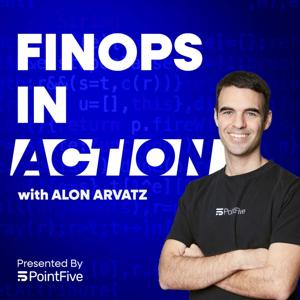


Are "bad tagging" and "unused resources" really the problem, or just the symptoms of a bigger one?
In this episode of FinOps in Action, I sit down with senior FinOps manager Chitra Jadhav to explore what it truly takes to build a FinOps practice that lasts not just one that generates a list of recommendations nobody acts on.
Drawing on eight years of building FinOps programs from the ground up across six or more organizations, Chitra explains how governance, culture, and cross functional collaboration are the real foundations of cloud cost optimization and why FinOps is only as powerful as the trust and authority an organization is willing to give it.
From Architecture Review Boards to Production Readiness Reviews, this conversation unpacks how FinOps can embed itself into the engineering lifecycle before waste ever happens, and why the shift to AI spend makes getting those basics right more urgent than ever.
Here’s what we talked about:
Chapters:
00:47 Meet Chitra Jadhav
01:56 Why FinOps Matters
03:37 Starting From Scratch
03:52 Maturity Assessment Basics
04:48 Stakeholder Engagement Model
05:56 Where FinOps Reports
07:16 Defining Governance
08:14 FinOps Checkpoints ARB PRR
10:42 What Is an ARB
12:51 Running ARB Without Bloat
16:38 Shift Left to Optimization
18:22 Champion Model and Visibility
21:05 Authority Trust and Culture
25:29 Realistic Goals and Commitments
29:20 Beyond Native Recommendations AI
33:02 AI Spend and Future Wrap
🎧 Subscribe for more FinOps leadership conversations → https://www.finopsinaction.com/
Quote of the Show:
"Instead of paying that money and incurring that waste, you are taking some steps proactively by making sure that you are present at these discussions." - Chitra Jadhav
Links:
Ways to Tune In:
What if your biggest cloud inefficiency isn’t how much you’re using, but how long your workloads are running?
In this special episode of FinOps in Action, PointFive’s Co-Founder and CPO, Gal Ben David sits down with Matan Ben-Ishay, leading FP&A, Engineering, and Cloud Infrastructure at Credit Karma, to unpack a real world cloud efficiency discovery that led to tens of millions of dollars in savings without reducing usage or cutting performance.
Matan shares how a simple assumption about “cheaper” CPUs quietly inflated costs, why billing data alone didn’t reveal the problem, and how true FinOps impact only happens when finance and engineering work side by side.
We also covered how FinOps wins happen at the intersection of finance, engineering, and product and how understanding accounting concepts is a career advantage in FinOps.
Here’s what we talked about:
Chapters:
00:00 FinOps Is Everyone’s Job
00:16 Special Episode Setup
01:27 Meet Matan Ben-Ishay
02:14 The Incentives Mistake
05:12 Speed vs Cost in AI
07:30 How to Motivate Engineers
10:19 Scaling Best Practices Org-Wide
13:27 Where FinOps Should Sit
18:02 Guardrails and Shared Ownership
20:55 Fleet Guardrails Matter
21:38 Hidden Waste Over Time
22:47 Can We Prevent Waste
25:56 Tactical vs Strategic Waste
27:00 FinOps on GCP Reality
29:14 Commitment Forecasting Playbook
32:30 FinOps Parenting Hacks
35:31 Personal Picks and Growth
37:53 Closing and Where to Connect
🎧 Subscribe for more FinOps leadership conversations → https://www.finopsinaction.com/
Quote of the Show:
Links:
Ways to Tune In:
How do you make cloud data costs transparent and actionable when thousands of users share the same platform?
In this episode of FinOps in Action, I sit down with Oliver Milke from TD, who shares how he built a Data FinOps practice from the ground up inside a large financial institution, starting as a team of one and scaling into a dedicated function.
Coming from a background in economics and finance, Oliver offers a unique perspective on cloud cost optimization. Rather than focusing solely on infrastructure, his team goes one level deeper: tracking and allocating costs at the data layer, down to individual tables, workloads, and user groups.
The conversation explores why traditional FinOps models fall short for shared data platforms, how transparency drives accountability, and what it takes to operationalize cost awareness across thousands of users. Oliver also breaks down the role of education, chargeback, and engineering collaboration in building a sustainable FinOps practice.
Here’s what we talked about:
Chapters:
00:00 - Data FinOps Origins
00:20 - Show Intro Guest Setup
01:40 - What Is Data FinOps
03:37 - Cloud Migration Spark
05:03 - Finance Mindset Meets Engineering
06:22 - FinOps Hub Cost Transparency
07:59 - Monthly Reviews And Chargeback
10:09 - Optimization Strategy Overview
12:17 - Databricks Efficiency Playbook
17:31 - Spot Instances Adoption
19:45 - Education As A Pillar
23:24 - Building The FinOps Team
25:59 - Advice For New Practitioners
28:06 - AI In FinOps Next Wave
30:55 - Running For Campfire Circle
33:03 - Closing And Where To Connect
🎧 Subscribe for more FinOps leadership conversations → https://www.finopsinaction.com/
Quote of the Show:
“We recognized that this cannot be a one-off, but it needs to be a permanent ongoing thing.” - Oliver Milke
Links:
Ways to Tune In:
Are “idle resources” really the problem, or just the easiest one to fix?
In this episode of FinOps in Action, I sit down with cloud architect and engineer Shailaja Beeram to explore a fundamentally different perspective: cost inefficiencies don’t start in the billing file, but in architectural decisions made long before deployment.
Drawing on over 15 years of experience across AWS, Azure, and GCP, Shailaja explains how the way systems are designed, scaled, and evolved over time has a far greater impact on cloud spend than most teams realize.
From “zombie” networking resources to overlooked outbound traffic patterns, this conversation unpacks the hidden layers of cloud cost and why FinOps and architecture must converge to solve them.
Here’s what we talked about:
Chapters:
00:00 - Architecture Drives Cost
00:34 - Meet the Guest Architect
01:46 - When Cost Became the Job
03:04 - Networking Zombie Resources
05:32 - NAT Gateway Design Traps
07:11 - Spotting Hidden Traffic
10:34 - Azure Functions NAT Story
12:30 - Private Endpoints and Drift
16:53 - Shift Left Cost Awareness
19:20 - Balancing Risk and Cost
22:46 - Advice for Both Sides
26:41 - AI Impact on FinOps
27:53 - Volunteering and Closing
30:37 - Outro and Sponsor
🎧 Subscribe for more FinOps leadership conversations → https://www.finopsinaction.com/
Quote of the Show:
Links:
Ways to Tune In:
Are you actually measuring the value of your cloud spend or just tracking the cost?
In this episode of FinOps in Action, I sit down with Kevin Mueller, Principal Architect of Cloud FinOps at Presidio, to unpack one of the most talked-about and most misunderstood concepts in FinOps: unit economics.
With over 20 years of experience spanning software engineering, AWS SaaS architecture, and cloud financial management, Kevin shares a grounded, practical perspective on why most organizations struggle to implement unit economics and how to actually get started.
The conversation explores the gap between visibility and action, why traditional cost allocation models fall short, and how engineering, product, finance, and sales all benefit when cloud spend is tied directly to business value. Kevin also dives into real-world examples, from optimizing SQL queries and Kubernetes workloads to navigating the growing complexity of AI-driven infrastructure.
If you’ve ever wondered how to move beyond dashboards and into meaningful optimization, or how to prove that your cloud investment is truly productive, this episode is for you.
Here’s what we talked about:
Chapters:
00:00 - Cloud Cost Tradeoffs
01:31 - Kevin’s FinOps Journey
03:13 - Unit Economics Reality Check
04:18 - Defining Unit Economics
05:46 - How to Implement It
09:26 - Metrics That Drive Action
14:10 - Allocation Products vs Teams
20:26 - Tagging Without Pain
23:02 - Kubernetes Cost Challenges
24:51 - K8s Optimization Basics
26:18 - Architecture Choices with Units
28:04 - AI as Shared Spend
30:13 - Measuring AI Value
32:28 - AI for FinOps Teams
35:41 - Life on the Farm
37:54 - Wrap Up and Where to Connect
🎧 Subscribe for more FinOps leadership conversations → https://www.finopsinaction.com/
Quote of the Show:
Links:
Ways to Tune In:
Why do cloud costs stay high even after you build all the right dashboards?
In this episode of FinOps in Action, I sit down with Cristian Magherusan-Stanciu, Founder and Cloud Optimization Specialist at Leaner Cloud. With over 20 years in systems engineering and a background at Nokia, HERE Technologies, and AWS, Cristian built AutoSpotting, an open source tool that has helped more than 10,000 customers save money on EC2.
Cristian shared his hard-won framework for turning cloud cost insights into real savings, why automation alone will never be enough, and how AI has multiplied his output as a solo operator by an order of magnitude.
We also covered the hidden business context that can turn a routine optimization into a $30K/month win, and why cost avoidance is just as important as cost reduction when your cloud bill keeps growing.
Here’s what we talked about:
Chapters:
00:00 - Dashboards Don't Save Money
00:19 - Show And Guest Intro
01:47 - Take Action First
04:00 - From Level Zero To Savings
06:08 - Prioritize Engineer Time
07:35 - Automation Without Breaking Things
10:07 - Working With DevOps And Devs
12:05 - When Engineers Push Back
14:17 - Cost Vs Risk And Context
16:09 - Big Wins That Repeat
20:00 - Common Waste Patterns
21:17 - The 30K Database Shutdown
24:19 - Proving Value Amid Growth
31:44 - AI Boosting FinOps Output
🎧 Subscribe for more FinOps leadership conversations → https://www.finopsinaction.com/
Quote of the Show:
Links:
Ways to Tune In:
Why do so many FinOps practitioners miss the biggest savings opportunities, and what does getting technical have to do with it?
In this episode of FinOps in Action, I sit down with Nick Sudarikov, Finance Director of Technology Operations at InvestCloud, to break down how a background in finance and capital markets can actually make you a sharper, more effective FinOps practitioner.
Nick shares how he went from investment banker to hands on FinOps engineer, built a local AI powered stack to query billing data in plain English, and uncovered years of forgotten cloud spend hiding in plain sight.
We also cover why most cost tools will never catch your biggest waste, how to map cloud spend to real business value, and what it actually takes to have meaningful conversations with engineering teams.
Here’s what we talked about:
Chapters:
00:00 - Cost Tool Reality Check
00:17 - Show Intro and Guest
01:36 - Why FinOps Needs Hands On
03:28 - Automation and AI Effort
04:23 - From Finance to Tech
06:57 - Early Cloud and Cost Lessons
10:58 - Startups vs Enterprise Scale
12:04 - Legacy Workloads and Risk
14:32 - Value Chain Before Optimizing
17:30 - Finding Hidden Waste Patterns
19:48 - Local AI for Billing Data
26:30 - Future AI and Closing
🎧 Subscribe for more FinOps leadership conversations → https://www.finopsinaction.com/
Quote of the Show:
Links:
Ways to Tune In:
Why are your cloud costs so high and what actually fixes them?
In this episode of FinOps in Action, I sit down with Jason Ward, Lead FinOps Practitioner at C.H. Robinson, to break down how to take control of cloud spend without slowing down engineering.
Jason shares how he went from mechanic to FinOps leader, built a FinOps function from scratch, and uncovered massive savings, including a 90% cost reduction from a single optimization.
We also cover how to work with engineers (not against them), why most cost recommendations fail, and what it really takes to build a sustainable FinOps practice.
Here’s what we talked about:
Chapters:
00:00 - Why Engineers Ignore Small Savings
01:45 - From Mechanic to Cloud Engineer
03:48 - Discovering Cloud Cost Impact
04:48 - Starting FinOps at CH Robinson
06:17 - Early Wins VM Right Sizing
07:19 - Handling Engineer Pushback
09:51 - Tooling Shift to Datadog
11:12 - AKS Tuning 90 Percent Savings
13:15 - Building a Real FinOps Program
14:29 - Executive Buy In and Chargeback
17:38 - Kubernetes Scaling and Hybrid Costs
24:31 - AI Spend and Career Wrap Up
🎧 Subscribe for more FinOps leadership conversations → https://www.finopsinaction.com/
Quote of the Show:
Links:
Ways to Tune In:
What does it really take to turn cloud cost chaos into a sustainable FinOps practice, and why do most organizations get it wrong from the start?
In this episode of FinOps in Action, I sit down with Loic Fournier, Senior Technical Account Manager at AWS and 2025 AWS Technical Field Community Legend. With over 25 years in technology, from mainframes to modern cloud, Loic has become one of the most recognized voices in AWS cost optimization.
Loic shared how the biggest mistake organizations make is treating FinOps as a one-time project rather than an ongoing practice, and what it actually takes to build governance that sticks across people, processes, and technology.
We also covered the AWS native tools available to every organization for free, the link between cost optimization and sustainability, and how AI workloads are reshaping FinOps priorities heading into 2026.
Here’s what we talked about:
Chapters:
🎧 Subscribe for more FinOps leadership conversations → https://www.finopsinaction.com/
Quote of the Show:
Links:
Ways to Tune In:
Why does cloud cost optimization only start after it’s already too late?
In this episode of FinOps in Action, I sit down with Jai Padmanabhan, who shares why cloud cost is no longer just a finance concern; it’s a core responsibility for engineering teams. Drawing on decades of experience leading platforms in complex and regulated environments, Jai explains how the shift to the cloud fundamentally changed how organizations think about cost, and why treating it as an afterthought leads to reactive, high-pressure optimization later on.
He breaks down how teams can build cost awareness into their day-to-day workflows, from setting budgets and enforcing guardrails to leveraging automation that scales infrastructure up and down based on real demand.
Jai also explores the trade-offs between efficiency and reliability, emphasizing why SLAs should always take priority in production and how over-optimization can introduce unintended consequences. From storage strategies in regulated industries to the hidden complexity of data transfer costs, he shares practical insights on where organizations commonly overspend and how to avoid it.
Here’s what we talked about:
Chapters:
00:00 - FinOps First Class & Guest Intro
01:14 - Cost Becomes Engineering
06:59 - Kubernetes Autoscaling
10:26 - Risk Versus Savings
12:48 - Dev Prod Mindset
14:36 - Storage In Regulated
18:31 - Big Savings Surprises
22:24 - Day One Playbook
24:40 - AI Spend Management
27:57 - Security And Compliance
31:58 - Final FinOps Advice
37:03 - Connect And Wrap
🎧 Subscribe for more FinOps leadership conversations → https://www.finopsinaction.com/
Quote of the Show:
Links:
Ways to Tune In:
From the publisher's feed
202 Listeners