
Sign up to save your podcasts
Or

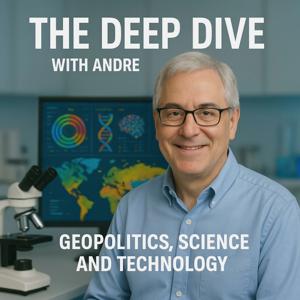

The provided text explores semantic conflicts during the initial encounters between European and Indigenous peoples in the Americas, arguing that these were not mere cultural clashes but fundamental collisions of semiotic systems. It highlights the profound differences between European logocentrism (prioritizing written word for truth and law) and Indigenous oral-kinesthetic traditions (valuing living, embodied knowledge linked to land). The sources further explain how these differing worldviews led to irreconcilable conceptual divides in areas like land ownership (commodity vs. kin), law (contract vs. covenant), and cosmology (conversion vs. coexistence). Crucially, the text emphasizes the role of interpreters as power brokers, whose translations significantly shaped perceptions and outcomes, often perpetuating misunderstandings that spiraled into systemic violence and dispossession. Ultimately, the sources illustrate how these initial semantic failures created a lasting legacy, continuing to influence modern legal battles and spur efforts for Indigenous semantic sovereignty.
Note: That is an arid listening.
Research done with the help of artificial intelligence, and presented by two AI-generated hosts.
 View all episodes
 By Andre Paquette


3.7
33 ratings
The provided text explores semantic conflicts during the initial encounters between European and Indigenous peoples in the Americas, arguing that these were not mere cultural clashes but fundamental collisions of semiotic systems. It highlights the profound differences between European logocentrism (prioritizing written word for truth and law) and Indigenous oral-kinesthetic traditions (valuing living, embodied knowledge linked to land). The sources further explain how these differing worldviews led to irreconcilable conceptual divides in areas like land ownership (commodity vs. kin), law (contract vs. covenant), and cosmology (conversion vs. coexistence). Crucially, the text emphasizes the role of interpreters as power brokers, whose translations significantly shaped perceptions and outcomes, often perpetuating misunderstandings that spiraled into systemic violence and dispossession. Ultimately, the sources illustrate how these initial semantic failures created a lasting legacy, continuing to influence modern legal battles and spur efforts for Indigenous semantic sovereignty.
Note: That is an arid listening.
Research done with the help of artificial intelligence, and presented by two AI-generated hosts.
14,395 Listeners

5,537 Listeners
12,232 Listeners
4,187 Listeners
1,625 Listeners

22 Listeners

16,321 Listeners