
Sign up to save your podcasts
Or

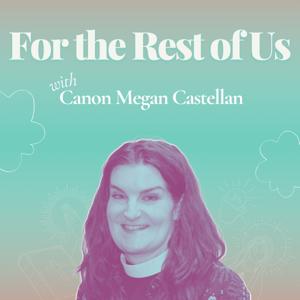


What happens when the Pope starts sounding “radical”… but is actually just quoting the Bible?
In this episode of For the Rest of Us, Megan andAdam unpack liberation theology—what it is, where it comes from, and why it keeps making headlines today.
From the reforms of Second Vatican Council to the work of theologians like Gustavo Gutiérrez, they explore how Christianity became deeply connected to real-world issues like poverty, injustice, and political oppression.
They also dive into:
Why the Pope’s recent sermons surprised people (even though they’re rooted in Scripture)
The concept of the “preferential option for the poor”
How liberation theology spread across the world—from Latin America with Oscar Romero to movements inspired by Martin Luther King Jr. and Desmond Tutu
Why this theology has made church leaders (and governments) uncomfortable
And then… things take a turn.
A shocking modern political moment leads to a deep dive into the Avignon Papacy—and why invoking it today is a very bad idea.
It’s theology, history, and current events all colliding in one conversation.
As always, thanks for listening to For The Rest Of Us. Make sure to leave us a rating and review, and share with a friend.
Megan and Adam are back just in time for Holy Week—and this one’s got everything: ancient liturgies, dramatic storytelling, a mysterious 4th-century traveler, and yes… a near run-in with the fire department. 🔥
This week, Megan takes the lead (as she should) guiding us through the Triduum—the “big three days” of the church year: Maundy Thursday, Good Friday, and the Easter Vigil. If you’ve ever wondered why these services feel so different (and honestly, a little chaotic), there’s a reason: they’re meant to be experienced as one long, unfolding liturgy that carries us through betrayal, grief, silence… and finally, resurrection.
Along the way, we meet Egeria, a 4th-century pilgrim who basically became the original church liturgy blogger—documenting how early Christians in Jerusalem marked Holy Week. A huge amount of what we do today—Palm Sunday processions, the Stations of the Cross, the Easter Vigil—traces back to her firsthand accounts. Not bad for someone history almost forgot.
Megan and Adam unpack:
Why Palm Sunday feels like emotional whiplash (palms → Passion in one service?!)
The beautiful, unsettling stripping of the altar on Maundy Thursday
Why Good Friday is supposed to feel incomplete and uncomfortable
And why the Easter Vigil is basically the Church’s version of a full-on liturgical Lollapalooza (fire, darkness, storytelling, baptisms, and finally… ALLELUIA)
There’s also a deeper thread running through it all: this isn’t just tradition for tradition’s sake. Holy Week invites us into a story that is raw, emotional, and yes—traumatic. It reminds us that God doesn’t avoid human suffering, but enters directly into it. And that makes Easter not just joyful—but hard-won.
Also discussed:
Why churches sometimes feel “off” during these services (on purpose)
How modern liturgy was shaped by a 20th-century renewal movement
Why you might suddenly feel the absence of God in a very tangible way
And Megan’s completely correct (and slightly controversial) Easter candy choices
Whether you’re a Holy Week regular or just trying to figure out what “Triduum” even means, this episode is your guide to the most dramatic, meaningful, and honestly kind of wild stretch of the Christian year.
So grab your candle, maybe avoid lighting any unauthorized fires, and come along for the journey.
As always, thanks for listening to For The Rest Of Us. Make sure to leave us a rating and review, and share with a friend.
Well, hey gang! It is Adam from For the Rest of Us.
Hey, you may have noticed that you haven't gotten a new episode from us in a little bit, and I wanted to apologize for that.
Megan and I had recorded some episodes, and they kind of got lost in the sauce, as it were. But if you check your podcast feed right about now, you're going to get two back-to-back episodes, and you're going to notice they're a little dated, but we still hope you enjoy the episodes.
And we're going to be back next week with a brand new episode, and we can't wait to catch up with you on For the Rest of Us.
In this episode of For the Rest of Us, Megan and Adam tackle one of the most complicated and emotionally charged topics they’ve ever covered: war in the Middle East, biblical interpretation, and how some Christians connect modern geopolitics to the Second Coming.
The conversation explores how certain readings of the Bible—especially promises about land and Israel—have shaped modern political and religious attitudes toward the modern state of Israel and the broader Middle East. Megan explains how some religious movements see current conflicts not just as political events, but as part of a prophetic timeline, which can deeply influence public opinion, political advocacy, and even U.S. foreign policy.
They also talk about how religious language can sometimes be used cynically in the context of war—how theology, nationalism, fear, and power can become tangled together in ways that are not always faithful or humane. At the same time, the episode pushes back against oversimplified narratives and reminds listeners that real people—families, children, communities—are the ones who suffer whenever religion and violence become intertwined.
Throughout the conversation, Megan emphasizes the importance of nuance, historical awareness, and empathy. The Middle East is not a biblical board game, and modern nations are not simply stand-ins for ancient kingdoms. Understanding the difference matters, especially for Christians trying to think faithfully about politics, war, and peace.
This episode doesn’t try to solve the conflict or give easy answers, but it does try to give listeners better tools for understanding how theology, politics, and history intersect—and why Christians should be cautious anytime someone sounds a little too excited about war being a sign of the end times.
It’s a thoughtful, honest, and very For the Rest of Us conversation about faith, scripture, and the real world we actually live in.
Note: This episode emphasizes the importance of understanding religious motivations with nuance and advocates for compassion and human dignity amid complex geopolitical conflicts.
As always, thanks for listening to For The Rest Of Us. Make sure to leave us a rating and review, and share with a friend.
In this episode of For the Rest of Us, Megan and Adam take a look at some important stuff in our Anglican history: Thomas Cranmer and the Book of Common Prayer. They talk about where it came from and why Anglicans pray the way we do
Megan walks us through Cranmer’s unlikely rise during the English Reformation, beginning in the turbulent reign of Henry VIII. What began as a royal marriage crisis eventually opened the door to sweeping changes in the life of the church, placing Cranmer at the center of a movement that would reshape Christian worship in England.
At the heart of that change was a simple but radical idea: people should understand the prayers they are praying. Cranmer helped move worship from Latin into English and created a unified form of liturgy that ordinary people could actually participate in. The result was the 1549 Book of Common Prayer, a text that transformed Anglican worship and still shapes how millions of Christians pray today.
The changes weren’t without controversy. Moving from the Latin Mass to English services sparked backlash and even rebellion. At the same time, Cranmer continued refining the liturgy and theology of the church—especially around the Eucharist—leading to the revised 1552 Book of Common Prayer.
But the story of Cranmer isn’t just about liturgy. It’s also about the dangerous politics of Tudor England. After the death of Edward VI, a succession crisis involving Lady Jane Grey eventually brought Mary I of England to the throne. Under her reign, Protestant reformers were persecuted, and Cranmer was imprisoned, tried for heresy, and ultimately executed.
Along the way, Megan and Adam reflect on the courage of reformers like Hugh Latimer and Nicholas Ridley, whose witness reminds us that prayer and faith often endure even in the most dangerous moments of history.
Despite the turmoil of his life and death, Cranmer’s legacy lives on. The language and structure of the Prayer Book continue to shape Anglican worship around the world, offering a shared rhythm of prayer that connects generations of Christians.
If you’ve ever opened the Prayer Book and wondered how it came to be, this episode is your guide to the history, theology, and enduring power of common prayer.
As always, thanks for listening to For The Rest Of Us. Make sure to leave us a rating and review, and share with a friend.
In this episode of For the Rest of Us, Megan and Adam step into one of the most recognizable—and most misunderstood—days in the church year: Ash Wednesday.
They unpack what’s actually happening when we walk forward to receive ashes, hear the words “Remember that you are dust,” and begin the long, slow season of Lent. Far from being a gloomy ritual about shame, Ash Wednesday is framed here as something far more honest and hopeful: a clear-eyed acknowledgment of our mortality and a loving invitation to repentance.
Megan explains how the ashes themselves carry deep roots in Christian history, symbolizing both our fragility and our belonging. The conversation lingers on how counterintuitive the day really is. In a culture that insists on strength, polish, and self-optimization, the church publicly names vulnerability. We are dust. We are finite. And we are deeply loved anyway.
They also explore the now-familiar practice of “Ashes to Go”—taking the imposition of ashes out of the church building and onto sidewalks, train platforms, and street corners. What started as an experiment has become a powerful sign of solidarity: the reminder that repentance and grace aren’t reserved for those who make it into the pews. They meet people where they are. Literally.
Repentance, in this episode, is reframed not as divine disappointment but as an opportunity. It’s about turning toward love, not shrinking in fear. It’s a safe space for honesty. God’s love is not up for negotiation, and Lent isn’t about earning it. Instead, it’s about clearing space to notice it.
Along the way, Megan and Adam reflect on how Lenten practices can take many forms—giving something up, taking something on, or simply choosing greater intentionality. Whatever shape it takes, the season begins the same way: with ashes, with community, and with the radical reminder that our shared human vulnerability is not a weakness but a meeting place.
If you’ve ever wondered why Christians line up to be marked with dust, this conversation offers an answer that is both grounded and unexpectedly freeing.
As always, thanks for listening to For The Rest Of Us. Make sure to leave us a rating and review, and share with a friend.
When the world feels loud, chaotic, and just a bit too much, sometimes what we need most is an old prayer that knows how to hold us together.
In this episode, Megan walks Adam (and all of us) through the Great Litany—one of the oldest prayers in the Episcopal Church and, honestly, one of its coziest. Often described as an “Anglican blankie,” the Great Litany is a long, responsive prayer designed to be prayed in moments of fear, crisis, and uncertainty… which explains why it keeps showing up whenever history gets rough.
Together, Megan and Adam dig into where the Great Litany comes from, why Thomas Cranmer thought the church needed one solid, all-purpose prayer, and how its steady rhythm has helped Christians pray through plagues, wars, natural disasters, and national anxiety. They talk about how litanies work—why chanting or responding together matters—and how this kind of prayer reminds us we’re never praying alone, even when we feel isolated.
They also reflect on how the Great Litany continues to show up today: during times of personal grief, communal stress, and moments when words feel hard to find. There’s comfort in knowing that people have been praying these same petitions for centuries—and yes, there’s even an app for that now.
If you’ve ever needed a prayer that doesn’t require the right mood, the right words, or the right energy—just your presence—this episode is for you. The Great Litany doesn’t fix everything, but it does remind us who we are, who God is, and that we’re held by something bigger than the moment we’re in.
As always, thanks for listening to For The Rest Of Us. Make sure to leave us a rating and review, and share with a friend.
What does it look like to answer a call when the world is literally on fire?
In this episode of For the Rest of Us, Megan and Adam introduce us to Florence Li Tim-Oi, the first known woman priest in the Anglican Communion—and a saint whose story is anything but neat, tidy, or safe.
Born in Hong Kong in 1907, Florence felt called to ministry at a young age, even when there was no clear path for women to be ordained. That call only grew stronger during the Japanese invasion of China, when war cut off entire communities from the sacraments. Ordained first as a deaconess, Florence was given extraordinary permission by Bishop Ronald Hall to preside at the Eucharist so isolated Christians could continue to receive communion. Later, in 1944, she crossed enemy lines to be officially ordained as a priest—quietly, urgently, and without fanfare.
Her courage didn’t end there. Under the rise of communism in China, Florence faced surveillance, hardship, and forced labor. She was separated from public ministry and lived much of her life in obscurity. Still, she never stopped understanding herself as a priest, faithfully serving in the ways she could, even when recognition and institutional support were taken away.
This conversation isn’t just about history—it’s about vocation, resilience, and what it means to stay faithful when the church and the world make it difficult. Florence Li Tim-Oi’s life invites us to reconsider whose stories get told, whose callings are affirmed, and how the Spirit has always been at work far beyond official permission structures.
If you’ve ever wondered what quiet courage looks like—or why the church needs to remember women like Florence—this episode is for you.
As always, thanks for listening to For The Rest Of Us. Make sure to leave us a rating and review, and share with a friend.
This one is a tough one gang, but a necessary one. This episode, Megan and Adam sit with a story that has reentered the national conversation—and the life of the Episcopal Church—in a deeply sobering way: martyrdom
They reflect on recent violence involving ICE, especially the fatal shooting of Renee Nicole Good, a 37-year-old mother of three who was killed by an ICE agent during federal immigration enforcement activity in Minneapolis. Good’s death has sparked protests, grief, and intense public discourse about law enforcement, accountability, and human dignity.
Against this backdrop, Megan and Adam explore martyrdom not as a romantic ideal but as a lens through which the church can understand sacrifice, witness, and faithful action. They bring in the legacy of Jonathan Myrick Daniels, an Episcopal seminarian martyred during the civil rights movement while protecting a young Black girl—a story that echoes painfully with contemporary concerns about injustice and vulnerability.
Through prayerful reflection and historical grounding, this episode invites listeners to consider what it means to follow Jesus in a world where standing up for the vulnerable can carry a cost. Along the way, they talk about the Episcopal commitment to social justice, the theological shape of martyrdom, and even practical reflections like why having a will matters—all against the larger question of how our lives intersect with systems of power and suffering.
This isn’t easy material—but it’s faithful, humane, and deeply necessary.
As always, thanks for listening to For The Rest Of Us. Make sure to leave us a rating and review, and share with a friend.
Season 2 kicks off with Megan and Adam diving straight into one of the often overlooked—but most unsettling—stories of the Christmas season: the Feast of the Holy Innocents.
This episode looks honestly at King Herod, not as a cartoon villain but as a very real ruler terrified of losing power—and what that fear costs the most vulnerable people around him. Megan and Adam explore the sharp contrast between Herod’s fragile, violent grip on authority and the radically different kingship of Jesus, who enters the world not as a conqueror but as a dependent child.
Along the way, they reflect on the Holy Family’s flight into Egypt as a refugee story, reminding us that displacement, fear, and relocation are not modern problems—they’re woven deeply into scripture itself. The conversation gently but clearly connects this ancient story to the ongoing vulnerability of children today and asks what it means to follow a God whose heart consistently bends toward the powerless, the immigrant, and the overlooked.
We close the episode closes by turning toward the new year—not with guilt-driven resolutions, but with a practical and spiritual invitation to choose care, restraint, and compassion in a world that thrives on outrage
As always, thanks for listening to For The Rest Of Us. Make sure to leave us a rating and review, and share with a friend.
From the publisher's feed

90,778 Listeners

171,952 Listeners

57,597 Listeners

109 Listeners

102 Listeners
17 Listeners
7 Listeners